INDEPENDENT LONDON TRAVEL GUIDES

Dreaming London

PLAN • EXPLORE • EXPERIENCE LONDON

Author: Sophie

  • Best Day Trips from London by Train: Which One Fits Your Trip?

    Best Day Trips from London by Train: Which One Fits Your Trip?

    London can fill a week, but a well-chosen day trip adds a completely different side of England. The key is not asking which destination is ‘best’ in the abstract. Ask what you want: a castle, university architecture, the sea, Roman history or a cathedral city. Then choose a place with a journey time and sightseeing density that make sense for one day.

    Windsor: easiest for royal history

    Windsor is the natural choice if Windsor Castle is a priority. The town is compact, the castle dominates the visit and the Thames provides an easy walk afterward. It works well for travellers who want a major historic site without a complicated full-day transport plan.

    Castle opening arrangements can change for royal or ceremonial reasons, so check the Royal Collection Trust before travelling.

    • Best for: royal history and shorter day trips.
    • Do not assume every part of the castle is open every day.
    • Good for: families and first-time England visitors.

    Oxford: architecture, colleges and a walkable centre

    Oxford rewards travellers who enjoy university history, libraries and architecture. The centre is compact enough for a day, but individual colleges have different visitor rules and opening times. Pick two or three priorities rather than trying to enter every famous building.

    A guided walking tour can add context because much of Oxford’s story is behind gates and in institutional traditions that are not obvious from the street.

    Cambridge: river atmosphere and college views

    Cambridge shares Oxford’s university identity but feels different, especially around the River Cam and the Backs. Punting can be fun, but it should not consume the entire day unless that is your main goal. As in Oxford, college access varies, so check the places you most want to enter.

    Brighton: the easiest change of mood

    Brighton is the choice when you want sea air, Regency architecture, independent shops and a day that feels less formal than Oxford or Windsor. The beach is pebbled, not sandy, and British coastal weather can be windy even in summer.

    Walk from the station through the Lanes toward the seafront, then decide whether you want the Royal Pavilion, pier, beach time or a longer coastal walk.

    Bath: rewarding but a longer day

    Bath offers Roman heritage, Georgian architecture and a compact historic centre, but it requires more travel time and can be expensive by rail at popular times. It is worth doing when Roman Baths and Georgian townscape genuinely interest you, not just because Bath appears on every England checklist.
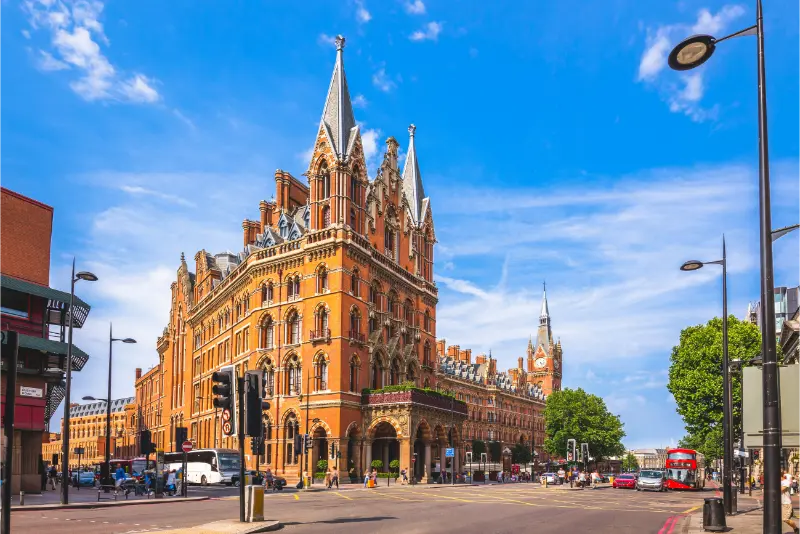
    St Pancras Renaissance Hotel London

    Book major attractions and rail tickets strategically, then leave time to walk rather than jumping from ticket to ticket.

    Canterbury: cathedral city with medieval streets

    Canterbury works well for travellers who want a cathedral-focused historic day. The centre is walkable and has a very different scale from London. Check cathedral visiting times because worship, services and special events can affect tourist access.

    Hampton Court: technically London-adjacent, practically a day trip

    Hampton Court Palace can consume most of a day once you include interiors, gardens and transport. It is an excellent alternative to leaving the London region entirely, especially for Tudor history. In good weather, the Thames-side setting adds to the visit.

    How to choose without wasting a day

    If you have only three days in London, stay in London unless one destination is a personal priority. With four or five days, Windsor or Brighton can be easy additions. With a week, Oxford, Cambridge, Bath or Canterbury become easier to justify. The opportunity cost matters: every day trip means giving up a full London neighbourhood day.

    • Royal history: Windsor or Hampton Court.
    • University atmosphere: Oxford or Cambridge.
    • Coast and nightlife: Brighton.
    • Roman and Georgian history: Bath.
    • Cathedral and medieval streets: Canterbury.

    Train planning tips

    Rail fares in Britain can vary substantially by time and ticket type. Search the operator or National Rail journey planner rather than relying on a fixed fare in an article. Check the return conditions, the London station you depart from and whether your ticket is tied to a specific train.

    Build a small buffer before your return. Missing the last convenient train can turn an easy day trip into an expensive problem.

    • Buy from official train operators or recognised rail retailers.
    • Check planned engineering works, especially on weekends.
    • Keep the day simple: one main attraction, a walk and one good meal usually beats six rushed stops.
    • If it is your first London visit, compare this with our three-day London itinerary before giving up a city day.

    Use the dedicated guide when a destination becomes the main event

    This comparison article helps you choose, but once you have chosen, switch to the detailed guide. We now have standalone day-trip articles for Windsor Castle, Oxford, Cambridge, Brighton, Canterbury and Bath. Each covers realistic pacing, what to prioritise and what to skip.

    This matters because a day trip is easy to over-plan. The destination may look compact on a map, but train arrival, walking from the station, timed entry, lunch and the return journey remove more time than expected. One strong attraction plus a coherent walk usually produces a better day than six admissions.
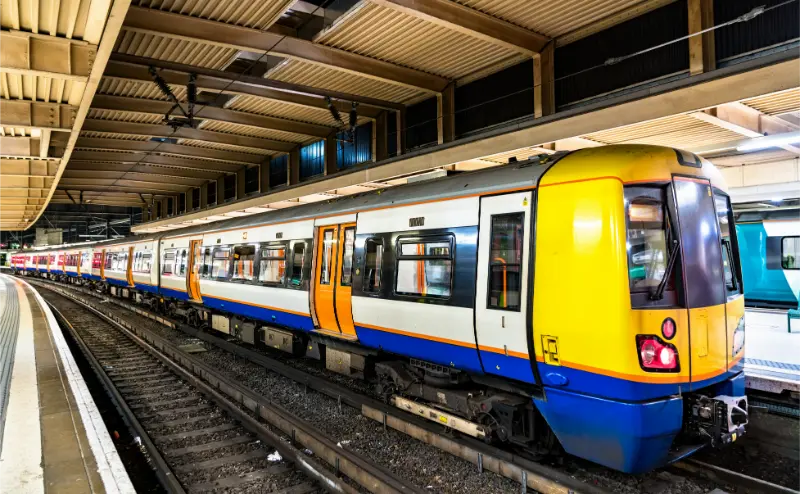
    London Euston Station Train

    Which trip works best by season?

    Spring and early autumn are excellent for Oxford, Cambridge and Canterbury because walking is central to the experience. Summer makes Brighton more attractive, although the coast can still be windy and busy. Winter can suit Windsor or Bath because the main historic attractions provide substantial indoor time, but short daylight means you should start early.

    Weather should influence the choice but not control it completely. Oxford in rain can still work if you prioritise interiors; Brighton in heavy wind may feel much less rewarding if the seafront is the reason you are going. Check the hourly forecast the day before and keep one London fallback plan if your rail ticket allows flexibility.

    When advance train tickets help—and when they reduce flexibility

    British rail pricing can reward advance planning, but cheaper advance tickets may be tied to a specific train. That is useful when you know exactly when you want to leave; it is less useful when your day revolves around a castle, cathedral or museum with uncertain visit length. Read the ticket conditions before buying, not after you decide to stay an extra hour.

    For weekend travel, check National Rail or the train operator for engineering work. Replacement buses or altered departure stations can transform a simple day trip into a much longer journey. This is one of the few pieces of planning that is worth repeating shortly before travel even when you booked months earlier.

    Day trips with children: minimise the number of transitions

    For families, the easiest trip is not necessarily the shortest journey. A direct train, short walk from the station and one compelling attraction can be much easier than a theoretically nearby destination requiring several changes. Windsor often works well because the castle gives the day a clear purpose. Brighton works when children value the seaside more than historic interiors. Hampton Court is especially convenient because it delivers a palace-and-gardens day without leaving the London region.

    Bring a snack for the train, identify toilets before leaving the station and avoid booking the return so tightly that lunch or a tired child creates panic. The goal is to change the scenery, not reproduce a rushed London sightseeing day somewhere else.

    What is not really a simple train day trip?

    Stonehenge is the clearest example. You can travel by rail toward Salisbury, but the monument itself requires an onward connection, so the trip is not comparable with stepping off a train in Oxford or Bath and walking into the historic centre. Our Stonehenge and Bath guide explains why combining destinations requires careful time management.

    The Cotswolds are also different. Rail can get you to gateway towns, but the villages that create the classic Cotswolds image are dispersed. Without a car or tour, you need to be selective. See our Cotswolds day-trip guide before assuming a rail-only itinerary will cover several villages.

    A final decision shortcut

    • Choose Windsor if a castle and royal history are the priority.
    • Choose Oxford for architecture, libraries and university atmosphere.
    • Choose Cambridge for colleges plus the River Cam and punting.
    • Choose Brighton when you want the biggest contrast with central London.
    • Choose Bath for Roman history and Georgian architecture.
    • Choose Canterbury for cathedral history and a compact medieval centre.
    • Choose Hampton Court when you want a palace day with simpler logistics.

    If you cannot decide and this is your first three-day London trip, the answer may be to skip the day trip. London itself still has enough distinct neighbourhoods to give you a completely different day without spending two or three hours on trains.
    London Landmark Skyline Banner

    Remember the hidden cost: you are spending a London day

    A day trip has two prices: the train ticket and the London time you give up. If your itinerary still lacks Greenwich, the Tower of London, a neighbourhood evening or a museum you care about, the opportunity cost may be higher than the fare. This is why I rarely recommend leaving London during a very short first visit.

    On a five- to seven-day trip, the equation changes. One day outside the capital can refresh the trip and make London feel even more distinctive when you return. Choose the destination that offers a contrast you actually want, not the one that appears most often on package-tour lists.

    Rail timetables, advance fares and attraction opening days vary by date. Confirm the outward and return journey before booking a day-trip attraction.

    Organised day trips: when they are useful

    Independent rail is ideal for many cities, while places with dispersed rural sights can be easier on a tour. compare day trips from London on GetYourGuide and compare actual time at the destination, not only the number of stops advertised.

    Two major day-trip options in more depth

    For a university-city day with a straightforward rail journey, use our Oxford day trip guide. If you are considering a coach itinerary that combines prehistoric England with a historic city, read our Stonehenge and Bath guide before booking.

    Two more major day-trip choices

    For a compact university city, use our Cambridge day trip guide. For countryside and villages, compare train, tour and car options in our Cotswolds from London guide.

    Three day trips that now have full standalone guides

    For the seaside choose Brighton; for cathedral and pilgrimage history choose Canterbury; for Roman archaeology and Georgian architecture choose Bath.

    Two more day trips worth comparing

    If you want prehistoric history, see the standalone Stonehenge day-trip guide. For coastal walking and wartime history, compare the White Cliffs of Dover guide.
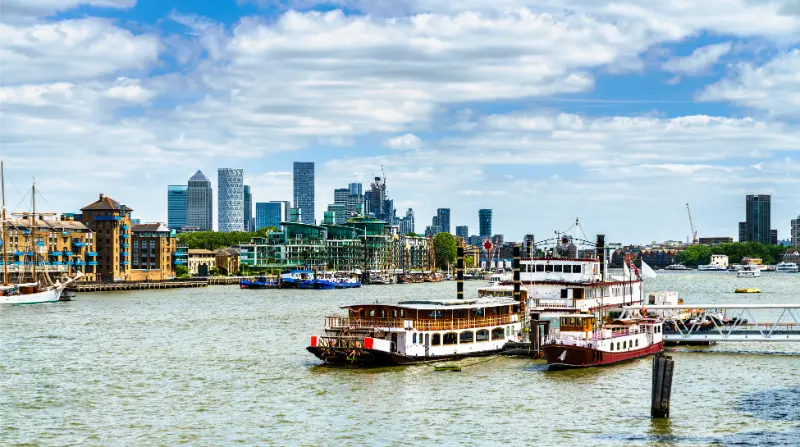
  • London by Boat: How to Use the Thames as Part of Your Sightseeing Day

    London by Boat: How to Use the Thames as Part of Your Sightseeing Day

    Seeing London from the Thames changes the city’s geography. Landmarks that feel disconnected on the Tube line up along the river, bridges become reference points and the transition from Westminster to the City and Docklands is easy to understand. River travel is not always the cheapest or fastest option, but it can turn transport time into sightseeing.

    River buses versus sightseeing cruises

    Scheduled river buses are transport services with multiple piers, while sightseeing cruises are designed around commentary, slower pacing or fixed tourist itineraries. Neither is automatically better. Choose a river bus when the boat is part of getting from A to B; choose a sightseeing cruise when narration or a dedicated cruise experience is the goal.

    The most useful visitor route: central London to Greenwich

    A journey from Westminster or the central piers toward Greenwich is one of the strongest first-time uses of the river. You pass or see major landmarks along the way and arrive in a district that can fill half a day. Return by DLR or rail to experience a completely different transport mode.

    TfL’s visitor information notes that regular river services operate across multiple piers along the Thames. Routes, stopping patterns and fares can change, so use the current official river map rather than memorising an old timetable.

    • Destination: Greenwich for Cutty Sark area, market, maritime museums and park.
    • Return: DLR gives views of Docklands and connects back into the Underground network.
    • Official maps: TfL visitor maps.

    A short river ride can be enough

    You do not need a long cruise to benefit from the river. A shorter hop between central piers can break up a walking day and give you a new perspective on the South Bank, bridges and Westminster. It is particularly useful when feet are tired but you still want to keep sightseeing.

    Weather and seating

    Open rear or upper deck areas are excellent in dry weather but can be windy even when central streets feel mild. Bring an extra layer. If photography matters, board early enough to choose a window or outdoor position, but do not block aisles and doors.

    Payment and ticketing

    Ticketing rules differ between operators and products. Contactless payment may be accepted on some scheduled services, but daily caps and fare structures are not necessarily identical to Tube and bus travel. Check the operator and TfL information for the exact service you plan to use.

    This is one reason not to write a trip budget using one old fare found on a blog. Verify on the day or shortly before travel.

    A complete river day itinerary

    Start in Westminster, walk the South Bank to London Bridge, pause at Borough Market or Bankside, then board a river service east to Greenwich. Explore the maritime centre and Greenwich Park, then return by DLR. This creates a day with walking, food, a boat, a viewpoint and two distinct parts of London without constant Tube transfers.

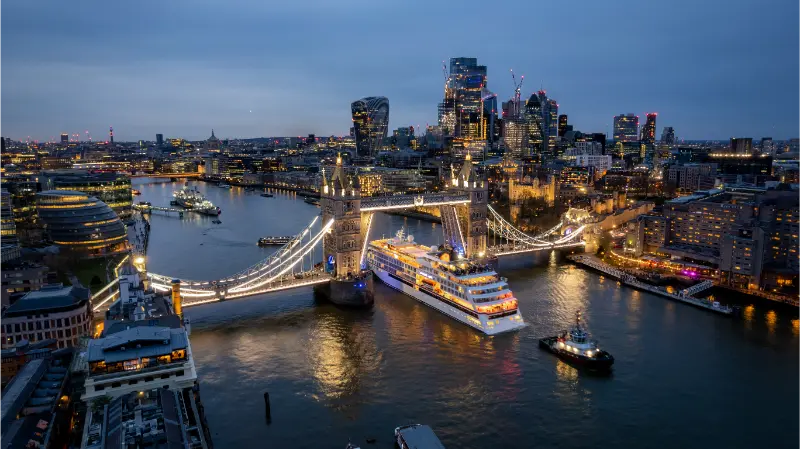
    Boats On River Thames from Tower Bridge London
    • Morning: Westminster → South Bank walk.
    • Midday: Bankside/Borough area.
    • Afternoon: boat to Greenwich.
    • Evening: DLR back toward Canary Wharf or central London.

    When the river is not the best choice

    If you have a timed attraction across town, use the fastest reliable transport rather than forcing a boat ride. River services can be affected by weather, pier closures or operational changes. Treat the boat as a deliberate experience, not a universal substitute for the Underground.

    • For general transport: London transport explained.
    • For Greenwich details: use our neighbourhood and walking guides to build the rest of the day.
    • For children: river travel can be a useful sightseeing break between walking-heavy sections.

    What the River Bus actually is in 2026

    London’s scheduled River Bus network is operated by Uber Boat by Thames Clippers. TfL currently describes services calling at 24 piers between Putney in the west and Barking Riverside in the east. This is useful because it means the river is not only a central sightseeing loop: it can connect neighbourhoods across a much larger stretch of London.

    For visitors, the practical core is still the Central and East sections around Westminster, Embankment, Bankside, London Bridge, Tower, Canary Wharf and Greenwich. Boats are covered, most have a small outside deck, and TfL states that River Bus boats are wheelchair accessible with ramps used for boarding. Always check the specific pier and service if accessibility is essential.

    Current official information: TfL River Bus.

    Contactless and Oyster: useful, but the river has its own fare logic

    TfL confirms that contactless and Oyster pay as you go can be used on Uber Boat by Thames Clippers. You touch in when boarding and touch out at the end, including at interchanges. The important detail is that River Bus uses its own zonal fare structure, so do not assume the same daily cap rules as ordinary Tube and bus travel.

    If budget is the priority, compare the boat fare with the equivalent Tube or DLR journey. If the boat replaces a sightseeing cruise and transport journey at the same time, the value calculation changes completely. This is why the river can be a smart splurge even when it is not the cheapest way to move.

    Westminster to Greenwich: what you actually see from the water

    The central-to-Greenwich journey works because the city changes continuously. Westminster and the London Eye give way to the South Bank, Bankside and St Paul’s sightlines; farther east, Tower Bridge and the Tower of London mark the transition toward the old docks and modern Canary Wharf. By the time you reach Greenwich, the river has explained London’s geography far better than an Underground journey could.

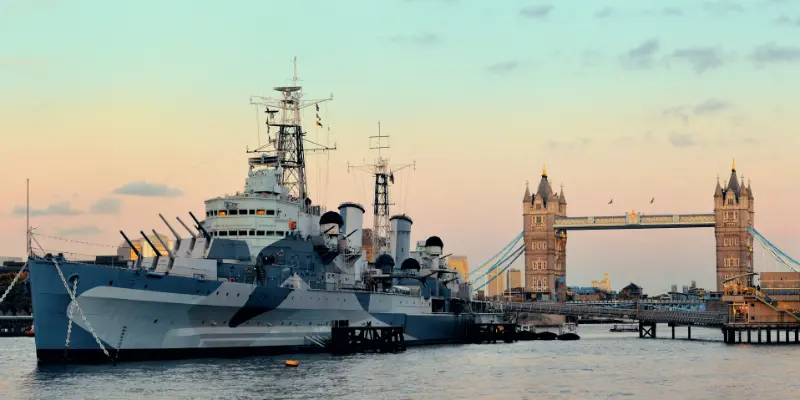
    HMS Belfast Tower Bridge and River Thames London

    Once there, use our Greenwich guide, Cutty Sark guide and Royal Observatory guide to decide how much of the afternoon to spend ashore.

    Canary Wharf as a useful intermediate stop

    Canary Wharf can break up a long eastbound river journey and show a side of London that many first-time visitors miss. From the pier, the modern financial district contrasts sharply with the older City skyline you have just passed. London Museum Docklands, at West India Quay, adds the historical context of trade, docks and migration behind that transformation.

    This combination is particularly strong for repeat visitors: boat from central London, Docklands museum and waterside walk, then continue by DLR, Elizabeth line or another river service. It turns transport into a narrative about how London expanded eastward.

    River Bus or sightseeing cruise for families?

    Families often enjoy the River Bus because movement is part of the experience and there is no expectation to sit silently through long commentary. A sightseeing cruise can be better when children are old enough to enjoy stories about landmarks or when the adults want narration without researching what they are seeing.

    Weather matters less than many people assume because the boats are covered, but outside decks can be windy. Keep coats accessible rather than buried under luggage. If anyone is prone to motion sickness, the Thames is generally calmer than open water but conditions can still vary.

    An evening boat ride can replace a paid viewpoint

    After dark, the value of the river is not height but movement: illuminated bridges, the London Eye, St Paul’s sightlines and the City towers appear and disappear as the boat turns. For some travellers, that is more memorable than paying for another static skyline platform.

    Check the last useful service for your route before committing to an evening plan. River timetables are not the same as the Night Tube, and pier or service changes can affect the return journey.

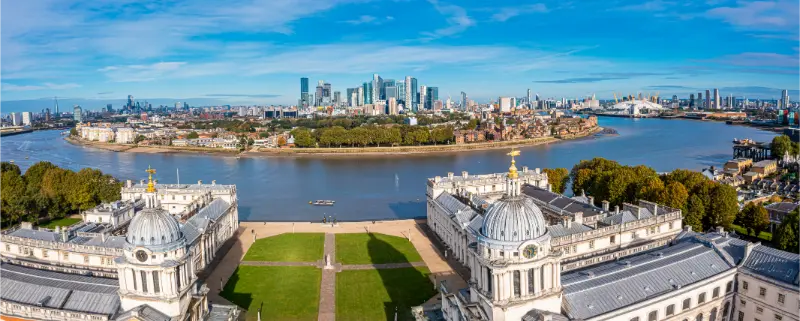
    Queen's House Greenwich and Canary Wharf Aerial View

    Choosing the right pier saves more time than choosing the “best” seat

    Central London has several useful piers, and the nearest one to your current route is usually the right one. Westminster works naturally after Parliament; Embankment fits Trafalgar Square and Covent Garden; Bankside fits Tate Modern and Shakespeare’s Globe; Tower fits the Tower of London and Tower Bridge. Walking twenty extra minutes to a different pier rarely improves the river experience enough to justify the detour.

    Check the live stopping pattern because not every service calls at every pier. If you are travelling to Greenwich for a timed attraction, leave a buffer rather than relying on the final theoretically possible boat.

    Where to sit for views and photography

    Outdoor deck space is limited on many River Bus boats, so you may not always get the position you imagined. Windows still provide strong views, but reflections can be a problem for photography. A polarising filter can help; otherwise hold the camera close to the glass and avoid bright clothing reflecting into the frame.

    The best side of the boat changes as the river bends. Do not spend the entire journey chasing one rail. The value of the trip is the sequence of views, and most major landmarks can be seen from different angles as the boat approaches and passes them.

    Accessibility is one of the River Bus strengths

    TfL states that Uber Boat by Thames Clippers vessels are wheelchair accessible and use ramps for boarding, and most boats have accessible toilets. Individual pier access still matters, however, so check the exact origin and destination if step-free travel is essential. Water levels and operational conditions can also affect boarding procedures.

    For a broader step-free itinerary, combine this information with our Accessible London guide rather than treating the river in isolation.

    River timetables and fares are separate from most Tube fare assumptions. Check TfL and Uber Boat by Thames Clippers for the sailing you intend to use.

    Cruises versus River Bus

    For a narrated sightseeing experience rather than public transport, compare Thames cruises on GetYourGuide. Compare the boarding pier and route carefully so the cruise fits the rest of your day.

  • Hidden London Without the Hype: 15 Quieter Places Worth Adding to Your Trip

    Hidden London Without the Hype: 15 Quieter Places Worth Adding to Your Trip

    There is almost no truly secret place in a city visited by millions of people. A better goal is finding places that are less obvious, easy to combine with famous sights and genuinely rewarding. The following stops are not presented as undiscovered. They are useful because they add texture to a day you may already be planning.

    St Dunstan in the East

    The ruins of this former church, damaged during the Second World War and later turned into a public garden, sit between the Monument and Tower Hill. It is one of the easiest atmospheric detours in central London because it requires only a few minutes from major routes.

    Postman’s Park

    Near St Paul’s, this small park contains the Watts Memorial to Heroic Self-Sacrifice, commemorating ordinary people who died while saving others. It is a reflective stop and a useful contrast to the monumental City around it.

    Leadenhall Market early in the day

    Leadenhall Market is not unknown, but timing changes the experience. Go early on a weekday or during a quiet weekend window to appreciate the Victorian roof and surrounding City lanes before lunch crowds build.

    Ely Court and the lanes around Hatton Garden

    The tiny passage leading toward Ye Olde Mitre is a reminder of how London’s older street pattern survives behind modern roads. Combine it with Holborn, legal London and Clerkenwell rather than making a special cross-city trip.

    Little Venice outside peak weekend hours

    The canal junction near Paddington is most enjoyable as the start of a walk rather than a standalone attraction. Follow the water toward Regent’s Park or Camden and the city changes gradually around you.

    Rotherhithe riverfront

    Rotherhithe offers old riverside pubs, narrow streets and views toward Canary Wharf. It works particularly well for visitors interested in maritime London who have already done Greenwich. The Mayflower pub and nearby river path provide an anchor.

    Wapping High Street and river stairs

    Wapping’s warehouses, converted dock buildings and occasional river access points tell a story very different from Westminster. Walk in daylight, respect private property and remember that historic stairs can be slippery at low tide.

    St Bartholomew the Great and Smithfield lanes

    Around Smithfield, medieval and Victorian layers sit close together. The church of St Bartholomew the Great is one of the strongest historic anchors. Check visitor arrangements before entering because it is an active church with services and events.

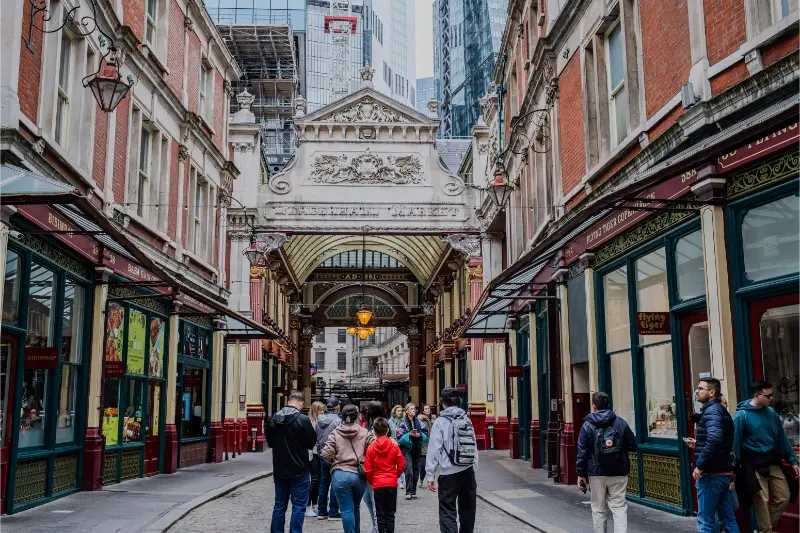
    Leadenhall Market City of London

    Kyoto Garden in Holland Park

    The Japanese-style Kyoto Garden is a peaceful feature inside Holland Park. It is especially useful as part of a Notting Hill–Kensington walk. Go early if you want calm; its reputation means it is no longer a hidden gem at peak times.

    One Tree Hill in Greenwich Park

    Most visitors cluster near the Royal Observatory viewpoint. The Royal Parks specifically notes that One Tree Hill offers another skyline view with a quieter feel. It is a good example of how walking ten minutes beyond the obvious stop can change a famous destination.

    The legal lanes around Temple

    The Inns of Court area can feel almost collegiate, with courtyards and gardens tucked between the Strand and the Thames. Access varies because these are working legal institutions, and gates can close outside business periods. Treat them as living workplaces, not unrestricted tourist attractions.

    Brompton Cemetery

    Managed by The Royal Parks, Brompton Cemetery combines landscape, architecture and social history. It can be paired with Chelsea, Earl’s Court or South Kensington and offers a quieter perspective on Victorian London.

    Why “hidden London” works best in small doses

    Do not spend two hours crossing the city for a five-minute curiosity. The best lesser-known stops are within 10–20 minutes of something you already want to see. Use this article as a layer over our best things to do in London guide, not as a replacement for the major sights on a first visit.

    • City day: St Dunstan + Postman’s Park + Leadenhall.
    • Greenwich day: One Tree Hill + riverside back streets.
    • West London day: Kyoto Garden + Notting Hill residential streets.
    • River history day: Wapping + Rotherhithe.

    13. Crossbones Garden of Remembrance in Southwark

    Close to Borough Market and London Bridge, Crossbones is a small memorial space connected with the history of people buried in the former unconsecrated graveyard here, including many poor and marginalised Londoners. It is emotionally very different from the major attractions nearby and should be visited with respect rather than treated as a quirky photo stop.

    The garden has volunteer involvement and access arrangements can vary, so check current information before making it the sole purpose of a journey. Its real strength is location: it adds social history to a Southwark day that might otherwise be dominated by food, Shakespeare and riverside sightseeing.

    14. St John’s Gate and the Clerkenwell lanes

    Clerkenwell is one of the best districts for seeing how fragments of old London survive between offices, restaurants and modern streets. St John’s Gate is an unmistakable historic anchor, while nearby Clerkenwell Green, Smithfield and narrow lanes create a walk with layers of monastic, industrial and legal history.

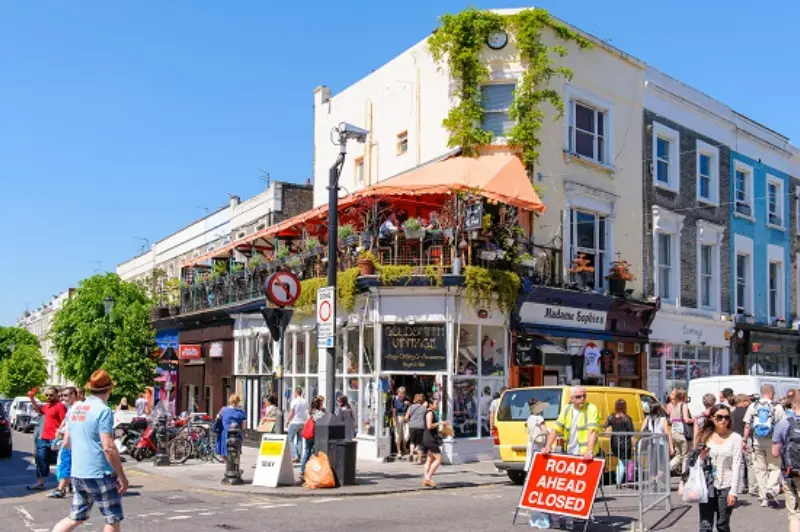
    Portobello Road Market Notting Hill London

    Do not expect every historic interior to be freely accessible whenever you arrive. Treat the neighbourhood itself as the attraction, then check specific museums or churches if you want to go inside. Clerkenwell works especially well as a bridge between the City, Farringdon and Bloomsbury.

    15. Red Cross Garden near Borough

    Red Cross Garden is a small historic garden created through the social-reform work associated with Octavia Hill. It is not spectacular in the way a royal park is, and that is exactly why it belongs in this article. It offers a quiet, human-scale pause only a short walk from some of south London’s busiest visitor routes.

    Combine it with Borough Market, the George Inn, Southwark streets or Crossbones rather than travelling across the city specifically for the garden. Hidden London works when the detour deepens the day without dominating it.

    How to verify whether a “secret” place is actually open

    The internet is full of London lists containing private courtyards, church interiors, roof gardens and institutional spaces that are not guaranteed to be open. Before travelling, check the official website or the organisation that manages the site. Gates around the Inns of Court, churches and gardens can close for services, events, maintenance or security reasons.

    A useful warning sign is an article that gives precise access instructions but no date and no official source. London changes too quickly for that. For example, Brompton Cemetery is managed by The Royal Parks and remains a working cemetery, so visiting information should come from the current Royal Parks page rather than an old travel list.

    Build “hidden” stops into the clusters you already have

    The most efficient combinations are simple: St Dunstan + Leadenhall while exploring the City of London; Postman’s Park + Smithfield while moving between St Paul’s and Farringdon; Kyoto Garden during a Kensington or Notting Hill day; One Tree Hill during Greenwich; and Rotherhithe or Wapping as part of a Thames-history route.

    This is also the best protection against disappointment. A tiny garden or historic lane is charming as a 15-minute discovery and frustrating as the centrepiece of a 50-minute cross-city journey.

    People Relaxing in A London Park

    Quiet does not mean empty—and “local” does not mean permissionless

    Several places in this list are residential, religious, commemorative or working spaces. A hidden courtyard may be someone’s workplace; a cemetery is still a place of burial; a colourful mews is a street where people live. Keep voices low, do not photograph through windows and never block doors for portraits.

    This matters particularly around Wapping, Rotherhithe, Notting Hill and the Inns of Court, where the appeal often comes from small-scale streets rather than formal visitor attractions. The best way to keep these places enjoyable is to behave as though you are a guest in someone else’s neighbourhood—because you are.

    When a hidden place is not worth the detour

    If reaching a minor stop requires two Tube changes and forty minutes each way, ask what you are giving up. On a first visit, St Dunstan in the East is worthwhile because it sits naturally between City sights; the same ruin would be a poor use of time if it were isolated in an outer borough. Context is what turns a small place into a good recommendation.

    Repeat visitors can be more adventurous. Once you have seen the main clusters, a half-day in Clerkenwell, Rotherhithe or around Brompton Cemetery can be more rewarding than another headline attraction. That is when “hidden London” becomes a genuine theme rather than an Instagram scavenger hunt.

    Use opening hours as a filter, not an afterthought

    Small churches, gardens and institutional spaces often have narrower or less predictable access than major attractions. Before adding one to the route, check whether it is open at the time you will actually pass it. If the timing is uncertain, label it as an optional detour rather than a fixed appointment.

    This simple habit prevents the most common hidden-London disappointment: arriving at a locked gate after travelling specifically for a place that would have been delightful only as a nearby bonus.

    Access to churches, courtyards, gardens and small historic sites can be restricted for services, events or private use; verify any place that is central to your route.

    Specialist walks for less obvious London

    Some hidden-London themes are much stronger with expert context. compare specialist London walks on GetYourGuide, especially for architecture, underground history or small-group neighbourhood routes.

  • Rainy Day in London: A Flexible Itinerary That Still Feels Like London

    Rainy Day in London: A Flexible Itinerary That Still Feels Like London

    Rain in London is rarely a reason to abandon sightseeing, but it should change the shape of your day. The worst strategy is trying to follow a sunny-weather itinerary with an umbrella open for eight hours. The better strategy is to alternate substantial indoor stops with short outdoor connections and use buses, covered markets and arcades when the weather is heaviest.

    Morning option: South Kensington museum cluster

    The Natural History Museum, V&A and Science Museum sit close together, making South Kensington one of the easiest places to improvise when weather deteriorates. Choose one as the main destination. If conditions improve, walk through Kensington Gardens; if rain persists, move to a second museum only if you still have energy.

    ROUTE MAP

    Rainy-day London – indoor anchors map

    Use the map as a planning overview. The numbered markers follow the order suggested in this guide; exact walking and transport choices can change with closures, weather and your bookings.

    1. Natural History Museum
    2. V&A
    3. Science Museum
    4. British Museum
    5. Covent Garden
    6. Leadenhall Market
    7. Tate Modern

    Free general admission at major national museums does not mean every exhibition is free, and timed entry can still be useful during busy periods.

    Alternative morning: British Museum and Bloomsbury

    The British Museum gives you several hours under one roof, but the surrounding Bloomsbury area is also practical for short rain breaks because cafes, bookshops and squares are close together. When showers ease, walk ten minutes rather than taking the Tube for every move.

    Covered London: markets and arcades

    Old Spitalfields Market, Leadenhall Market and parts of Borough Market offer shelter, though you should not expect every route between them to be covered. In the West End, historic shopping arcades such as Burlington Arcade create short dry links and are interesting architectural stops in their own right.

    Covered spaces become crowded when it rains. Use them as part of a route, not as free waiting rooms where you block traders and entrances.

    Use buses strategically

    A bus is not always faster than the Tube, but on a rainy day it lets you see the city while staying dry. Routes through central London can function as moving sightseeing corridors when traffic is reasonable. Use TfL’s live journey planning rather than relying on an old blog post for a specific route number or timetable.

    • Sit downstairs if you need a quick exit; upstairs if you want views.
    • Keep your payment method ready before boarding.
    • For fares and contactless basics, see our transport guide.

    A rainy afternoon in the City

    The City is excellent in bad weather because sights are dense. Visit St Paul’s or another chosen interior, walk a short stretch to covered Leadenhall Market, then use a timed viewpoint such as Sky Garden if you already hold a booking. On very cloudy days, remember that high-level views may be limited; the building experience can still be enjoyable, but the skyline is weather-dependent.

    Natural History Museum London

    A rainy afternoon on the South Bank

    Tate Modern, the National Theatre, Southbank Centre and riverside restaurants allow you to move between indoor spaces with relatively short outdoor sections. If rain becomes drizzle, the Thames is atmospheric rather than ruined. Reflections on wet pavements can be excellent for photography.

    What to carry

    A compact umbrella is useful, but a lightweight waterproof jacket is often easier in crowded streets. Waterproof shoes matter more than a giant umbrella because puddles and repeated short walks wear you down. A small reusable bag protects paper tickets, maps or electronics if your day bag gets damp.

    • Avoid very large umbrellas on narrow pavements.
    • Carry a power bank: bad-weather days often mean heavier phone navigation use.
    • Keep one indoor backup near every major outdoor plan.

    Do not overreact to the forecast

    London forecasts can show rain icons for days that still contain long dry periods. Check hourly conditions in the morning and again before leaving an indoor attraction. A wet start can become a clear afternoon. Keep outdoor viewpoints and parks flexible rather than cancelling them a day in advance.

    For seasonal context, see our best time to visit London guide.

    Three levels of rain require three different plans

    Light showers should barely change the day: keep the walk, carry a compact umbrella or waterproof layer and use a museum or cafe only when the shower peaks. Persistent rain is when neighbourhood clustering matters: choose South Kensington, Bloomsbury, the City or the South Bank so indoor stops are close together. Heavy rain plus wind is the moment to abandon exposed parks and viewpoints and commit to a substantial interior such as the British Museum, Natural History Museum, Science Museum, V&A, National Gallery or Imperial War Museum.

    The point is not to “beat” the weather. It is to stop wasting time in transit between places that are unpleasant in bad conditions. A day with one museum, a long lunch and a theatre performance can be better than an eight-stop itinerary completed while wet and tired.

    A rainy-day plan with children

    Children need more than shelter; they need variety. A four-hour art museum may keep everyone dry but still fail as a family day. South Kensington is particularly useful because the Natural History Museum and Science Museum offer very different experiences within a short distance. The London Transport Museum is another strong option for younger visitors in Covent Garden.

    Covent Garden Christmas Decorations London

    Build movement into the day. Use a short bus ride, a covered market or a quick puddle-friendly walk between indoor stops rather than expecting children to stay quietly inside for six hours. Our London with kids guide has broader age and pacing advice.

    Rain can improve some London experiences

    Wet weather is not universally bad for photography. Reflections on the South Bank, dark stone around the City and glowing shopfronts in Soho can look more atmospheric after rain than under flat midday sun. Covered arcades, Leadenhall Market and the interiors of historic stations also become more appealing when the weather outside is poor.

    What rain does ruin is the value proposition of a high viewpoint when cloud sits on the skyline. If your Sky Garden or Shard booking is flexible, check live conditions. If it is fixed, go with realistic expectations: the interior experience may still be enjoyable, but visibility is never guaranteed.

    Evening rescue plan: theatre, cinema, music or a long meal

    If the weather deteriorates after 5pm, do not automatically return to the hotel. London’s evening culture is one of its strengths. A West End show can turn a disappointing outdoor day into a memorable one; smaller live-music venues and cinemas provide alternatives when theatre prices are high. See our West End theatre guide before buying last-minute seats.

    A long pub meal or afternoon tea can also work, but book only if the experience genuinely appeals to you. Rain is not a reason to spend money on an activity you would otherwise skip.

    What not to do when the forecast is bad

    • Do not cross London repeatedly just because every indoor attraction looks tempting.
    • Do not buy several same-day tickets before you know how slowly the group will move.
    • Do not assume “covered market” means the entire journey to and from it is sheltered.
    • Do not wear shoes that become uncomfortable after thirty minutes of wet pavement.
    • Do not cancel every park or river plan the night before; London weather often changes by the hour.

    Two complete rainy-day combinations that minimise outdoor time

    Option 1: Bloomsbury + Covent Garden. Start at the British Museum with a focused two- or three-hour route. Have lunch in Bloomsbury or Seven Dials, then move to Covent Garden for the London Transport Museum, covered market spaces and cafes. Finish with a West End show. The outdoor links are short, and you can use buses or the Tube if the rain becomes heavy.

    Option 2: South Kensington + Kensington. Choose either the Natural History Museum, Science Museum or V&A as the main morning attraction. Eat nearby, then use a second museum only if everyone still has energy. If the rain eases, walk through Kensington Gardens; if it does not, continue to a booked afternoon tea, gallery or indoor Kensington stop.

    The important word is combination. Each plan keeps you in one part of London. The weather becomes exhausting when every backup attraction sits in a different neighbourhood.

    Leadenhall Market City of London

    Wet-weather transport mistakes

    When rain starts, everyone reaches for the Tube. Central stations can therefore become busier at exactly the moment you are tempted to use them for one-stop journeys. A bus may be more comfortable for a short central hop, while walking five minutes under a waterproof jacket may still be faster than descending into a deep station.

    Do not stand at a station entrance trying to reorganise the entire day. Step into a cafe, museum foyer or covered space, check TfL live information and make one clear decision. Ten calm minutes of replanning can save an hour of wet, unnecessary travel.

    When rain is forecast for the whole trip

    Do not move every indoor attraction onto the first wet day. London forecasts are uncertain, and stacking all museums into one day can leave you with nothing flexible later. Instead, protect one or two weather-sensitive priorities—perhaps Greenwich Park, a long canal walk or an outdoor viewpoint—and distribute indoor anchors across several days.

    This makes the entire itinerary resilient. A rainy Tuesday can become museum-heavy without forcing Wednesday to become an exhausting all-outdoor marathon.

    Wet-weather plans depend on live capacity and transport. Check museum booking pages and TfL status before switching your itinerary at short notice.

    Rainy-day tickets without overbooking

    When the forecast turns, compare indoor London activities on GetYourGuide. Check same-day availability and cancellation rules rather than filling the entire wet-weather day with prepaid indoor attractions.

    Rain-proof attractions near Westminster

    County Hall gives families two useful indoor options: SEA LIFE London and, for groups comfortable with scares and live actors, the London Dungeon.

  • Historic Pubs in London: Where to Go and How Pub Culture Actually Works

    Historic Pubs in London: Where to Go and How Pub Culture Actually Works

    A London pub can be a meal, a social room, a piece of architectural history or simply a good place to sit after several hours of walking. The best way to enjoy pub culture is not to collect supposedly ‘oldest’ pubs; those claims are often complicated. Instead, choose places with a strong setting, documented history and a route that fits your day.

    Prospect of Whitby: riverside atmosphere in Wapping

    Visit London describes the Prospect of Whitby as one of the city’s oldest riverside pubs, with roots dating to the sixteenth century. Its location on the Thames makes it more interesting when combined with a Wapping walk rather than treated as an isolated pilgrimage.

    Go for the setting and the river history, not because a single superlative can settle centuries of rebuilding and renaming.

    Ye Olde Mitre: hidden-lane London

    Tucked into Ely Court near Holborn, Ye Olde Mitre is famous for its difficult-to-spot location and long history. It works beautifully after a City or legal-London walk because reaching it feels like finding a small pocket that modern London grew around.

    The George Inn: the galleried survivor

    Near Borough Market, the George Inn is valued for its surviving galleried architecture and connection to the old coaching-inn tradition. It is easy to integrate into a Southwark day that includes Borough Market, the Thames and Bankside.

    The Mayflower: Rotherhithe by the river

    The Mayflower in Rotherhithe is closely associated with the story of the Pilgrim Fathers and the Thames. The surrounding area is part of the appeal: old riverside lanes and views across the water make the journey feel different from a West End pub crawl.

    The Seven Stars and Fleet Street pubs

    The Seven Stars near the Royal Courts of Justice and historic pubs around Fleet Street are best explored as part of a walking route through legal and journalistic London. Visit London notes the Seven Stars dates to 1602, while nearby pubs carry layers of literary and newspaper history.

    How ordering works in a London pub

    In many traditional pubs you order drinks at the bar rather than waiting for table service. Food systems vary: you may order at the bar, scan a QR code, use an app or receive full table service. Look for table numbers before ordering food, and never assume one system applies everywhere.

    If a pub is crowded, know what you want when you reach the bar. Queueing is informal rather than a single supermarket-style line; staff generally keep track of who arrived next. Pushing forward or waving money is poor form.

    Marylebone Pedestrian Street London
    • Ask for a pint or half pint when ordering draught beer.
    • For cask ale, ask what is on and feel free to request a recommendation.
    • Check the menu for service charge before adding an additional tip.

    Sunday roast: book when it matters

    A Sunday roast is one of the most satisfying pub meals for visitors, but popular pubs can book out. If a specific roast is important, reserve ahead and check serving hours. Roast options and availability can run out later in the day.

    For broader food context, our London food guide explains other classic dishes and markets.

    Pub etiquette that makes the experience easier

    A pub is not automatically a loud nightlife venue. Some are family-friendly during the day; others become adult-focused in the evening. Outdoor drinking areas can have local restrictions, and closing routines are more structured than many visitors expect. Follow staff instructions when last orders are called.

    Historic pubs are also working businesses. Photograph interiors discreetly, avoid blocking narrow corridors and do not treat regular customers as part of the décor.

    • Official inspiration: Visit London traditional pubs.
    • Best approach: one or two pubs integrated into a walk, not an exhausting checklist.
    • Alcohol is optional: many pubs offer alcohol-free beer, soft drinks, coffee or food.

    The Spaniards Inn: historic atmosphere beside Hampstead Heath

    The Spaniards Inn works best when it is part of a Hampstead day. Its appeal is not just age but location: after walking the village or the Heath, the pub feels like a genuine destination rather than a themed interior dropped into a tourist route. Visit London highlights its long literary associations, including connections with Dickens and Keats, although—as with many old pubs—stories and legends have accumulated around the building over centuries.

    If you are already following our Hampstead and Hampstead Heath guide, a pub stop here can provide the sit-down break that a long Heath walk often needs. Weekends can be busy, so do not assume you can arrive with a large group and immediately find a table.

    Lamb & Flag: a West End pub that makes sense before or after theatre

    Covent Garden has plenty of places that feel designed around visitor traffic, which is why a historic pub can add useful texture to the area. The Lamb & Flag sits in the network of lanes west of the main piazza and has documented eighteenth-century roots. It is a sensible stop before a West End show or after exploring Covent Garden, provided you treat it as a working pub rather than a museum exhibit.

    For theatre evenings, timing matters. Have one drink before the show rather than gambling on food service if you are already close to curtain time. After the performance, check last orders and transport rather than assuming central London remains equally busy all night.

    Central London Street at Night

    Build a pub walk around history, not alcohol volume

    A strong historic-pub route might connect two or three pubs with meaningful streets between them. In the City and Holborn, Ye Olde Mitre can be combined with Hatton Garden, legal London and Fleet Street. In Southwark, the George Inn works with Borough Market, Southwark Cathedral and the Thames. In Wapping and Rotherhithe, riverside pubs belong to a maritime walk rather than a rapid crawl.

    This approach is better for photography, food and memory—and safer than treating historic pubs as a drinking challenge. Order halves if you want to sample different beers, alternate with water and remember that alcohol-free options are now common. The building, setting and conversation are the point.

    Cask ale, keg beer and what to ask for

    Visitors sometimes feel they need specialist beer knowledge to order confidently. You do not. If hand-pulled cask ales are available, ask the bar staff what is fresh and what style is easiest if you are unfamiliar with British bitter or pale ale. A half pint is completely normal and useful when you want to try something without committing to a full pint.

    Keg lagers, stouts, craft beers, cider, wine and spirits are also standard in many pubs. There is no obligation to order “traditional” beer. If you do not drink alcohol, order what you actually want; a historic pub visit is still worthwhile for food, architecture and atmosphere.

    Service charge, tipping and table reservations

    Drinks ordered at the bar generally do not require the tipping ritual common in some countries. For table-service meals, check the bill because a discretionary service charge may already be included. If it is, you do not need to add a second automatic percentage unless you genuinely want to.

    For Sunday lunch, football days and famous central pubs, booking can be sensible. For a spontaneous weekday pint, flexibility is usually part of the pleasure. Our London nightlife guide covers later evenings, while the London food guide gives broader context for pub meals and classic dishes.

    Do not chase “the oldest pub in London”

    Several pubs make some version of an “oldest” claim, but the answer depends on what you mean: oldest site, oldest licence, oldest surviving building, oldest riverside pub or oldest continuously operating premises. Fires, rebuilding, name changes and licensing history make the superlative far less useful than it sounds.

    Use documented features instead. The George Inn matters because it is the capital’s surviving galleried inn. The Prospect of Whitby matters because of its long riverside history in Wapping. Ye Olde Mitre matters because of its hidden location and long-documented history. Those are stronger reasons to visit than an argument over one title.

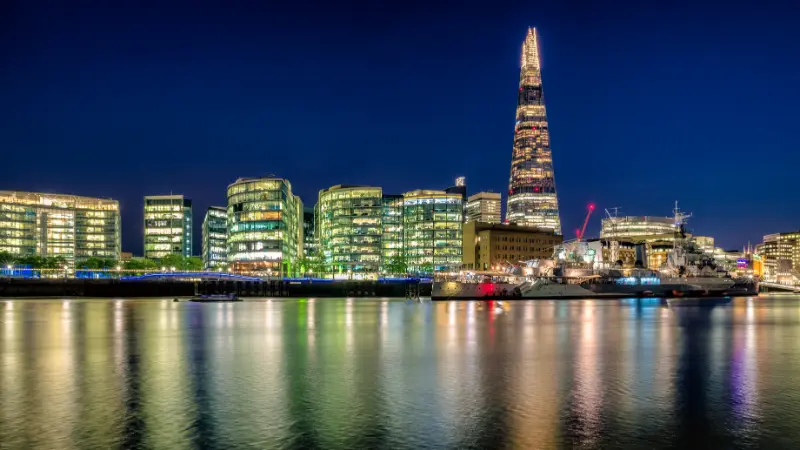
    The Shard HMS Belfast and River Thames at Night London

    When to take children into a pub

    Many London pubs welcome families during the day, particularly when food is served, but policies vary by venue and time. Some become adult-only later in the evening, and licensing conditions can affect where children may sit. If you are travelling as a family, check the pub’s own policy before building dinner around it.

    A lunch stop is usually easier than a late-night visit: there is more space, food is central to the experience and the atmosphere is calmer. For family-specific pacing, see our London with kids guide.

    Historic interiors are often small

    The charm of old pubs also creates practical limitations. Narrow staircases, tiny bars, low ceilings and tightly packed tables are part of the architecture, not an inconvenience designed for tourists. Large groups may be split, wheelchairs may need a specific accessible entrance, and luggage can be genuinely obstructive. If access is important, check the pub’s current information rather than assuming a centuries-old building has the same layout as a modern venue.

    Try to visit without large suitcases, especially around lunch and after-work hours. You will enjoy the building more, and so will everyone trying to move through it.

    Pub kitchens, Sunday roast service and reservation policies vary by venue. Confirm the pub’s own hours rather than assuming drinks and food follow the same schedule.

    Pub walks: choose history over quantity

    If you want a guided pub experience, compare historic London pub walks on GetYourGuide. A strong tour should explain the streets, buildings and drinking culture; avoid products whose main selling point is simply consuming as much as possible.

    Turn pub culture into an evening plan

    For areas, late transport and live-music choices beyond traditional pubs, continue with our London nightlife guide.

    Go deeper into pub food

    If food is as important as the pub itself, continue with our British pub food guide and Sunday roast guide.

  • London Museums Beyond the British Museum: 12 Places Worth Your Time

    London Museums Beyond the British Museum: 12 Places Worth Your Time

    The British Museum, Natural History Museum and National Gallery deserve their reputations, but London’s museum strength is much deeper. Smaller institutions can be easier to enjoy, more focused and better matched to a specific interest. This guide is for travellers who want to go beyond the standard checklist without drifting into obscure places simply for the sake of being different.

    Victoria and Albert Museum: design tells the story

    The V&A is not a minor alternative; it is one of the world’s great museums of art, design and decorative culture. It works particularly well for visitors interested in fashion, furniture, photography, architecture and objects that reveal how people actually lived. Pair it with South Kensington’s other museums, but resist trying to do three major museums in one day.

    Sir John Soane’s Museum: a house that feels like a puzzle

    Set in the former home of architect Sir John Soane, this museum is memorable because the building and collection are inseparable. Tight rooms, layered displays and architectural fragments create an experience completely different from a modern gallery. Capacity can be limited and special spaces may have specific access arrangements, so check the official site.

    The Wallace Collection: art in a historic townhouse setting

    The Wallace Collection near Marylebone is ideal for travellers who prefer a manageable museum. Paintings, armour, furniture and decorative arts sit within Hertford House, giving the collection a domestic scale. It combines easily with Marylebone, Oxford Street or Regent’s Park.

    London Museum Docklands: understand the river and the docks

    If you plan to visit Greenwich or Canary Wharf, this museum adds context that many visitors miss. London’s growth cannot be understood without the Thames, trade and the docks. The museum’s location in a historic warehouse also connects subject and setting.

    Horniman Museum and Gardens: a reason to go south-east

    The Horniman in Forest Hill combines anthropology, natural history, musical instruments, gardens and family-friendly displays. It is especially useful for families who want a museum day outside the central tourist core. The journey is longer, but the reward is a more local-feeling London day.

    Design Museum: focused, modern and easy to pair with Kensington

    The Design Museum is a strong choice for architecture, product design, fashion and contemporary visual culture. Its Kensington location makes it easy to combine with Holland Park, Kensington High Street and a walk toward Notting Hill.

    Wellcome Collection: medicine, bodies and big questions

    Near Euston, the Wellcome Collection explores health, medicine and the human experience through exhibitions that often cross science, art and society. Temporary exhibitions change, so it is worth checking what is currently on rather than visiting only because the building appears on a list.

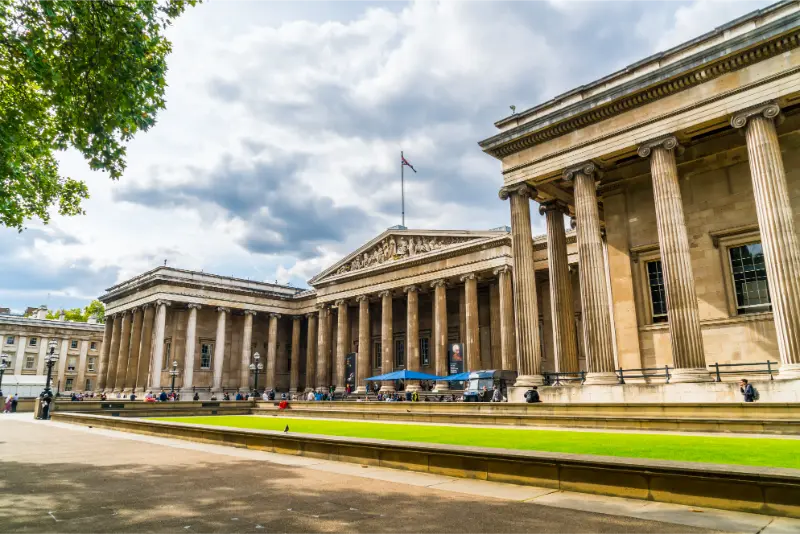
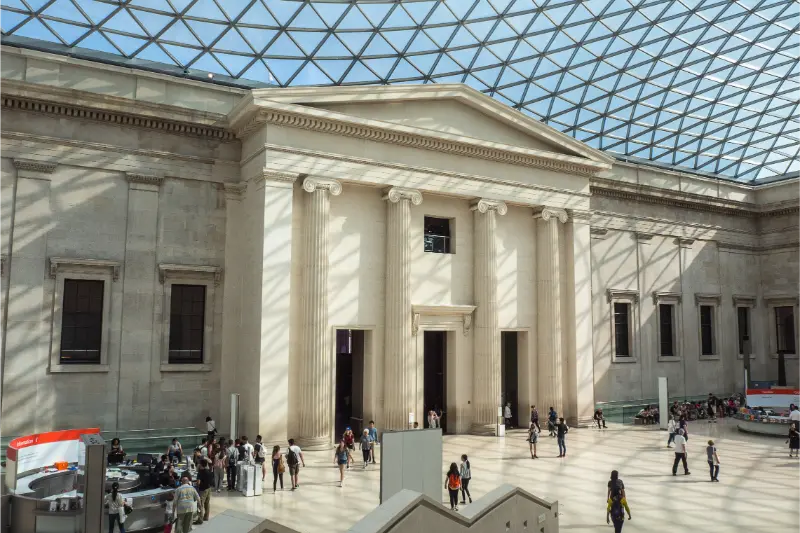
    British Museum Visitors London

    The Postal Museum: infrastructure can be fascinating

    The Postal Museum tells the story of communication and London’s postal network. Its underground railway experience is the attention-grabber, but the broader museum is valuable for understanding the hidden systems that made the city work. Timed experiences can sell out, so advance booking matters more here than at free walk-in museums.

    London Transport Museum: best when you care how the city works

    In Covent Garden, the London Transport Museum goes beyond old buses and Tube signs. It explains how transport shaped suburbs, design and daily life. It is particularly good after you have already used the Underground for a few days because the exhibits connect directly to your own experience.

    The Foundling Museum: social history in Bloomsbury

    This smaller museum tells the story of the Foundling Hospital and its links with art, music and philanthropy. It makes a thoughtful pairing with Bloomsbury rather than a stand-alone cross-city mission.

    How to avoid museum fatigue

    Two hours of focused attention is often better than five hours of dutiful wandering. Choose museums by subject, not fame. Use one museum as the anchor of a neighbourhood day, then walk, eat and explore outside. London’s free national collections make it easy to return another day rather than forcing yourself through every gallery.

    • Check temporary exhibition charges even when general admission is free.
    • Reserve timed entry when an institution recommends it.
    • For a rainy day, combine one large museum with one small museum rather than three blockbusters.
    • See also: free London attractions and London with kids.

    11. The Courtauld Gallery: masterpieces without the scale of a mega-museum

    The Courtauld Gallery at Somerset House is one of the strongest options for travellers who love painting but do not want another enormous national collection. Its scale makes it possible to look properly rather than speed-walk through dozens of rooms. It is particularly useful on a Covent Garden or Strand day because you can pair art with the river, the West End and nearby architecture.

    Unlike many of London’s large national museums, ticketing and exhibition arrangements can involve paid admission, so check the official Courtauld site for your date. The point of including it here is not that it is obscure; it is that it offers unusually high artistic quality in a visit that can remain focused and manageable.

    12. Bank of England Museum: money, finance and the City in context

    The Bank of England Museum is a specialist stop for anyone curious about money, inflation, banking history or the role of the central bank. It makes most sense as part of a City of London day rather than as a cross-town destination by itself. Pair it with the Royal Exchange, Bank junction, Leadenhall Market or a walk toward St Paul’s.

    Natural History Museum London

    Because it is a working-institution museum, opening days and security arrangements matter more than at a seven-day tourist attraction. Check the official site before making a special journey. This is exactly the kind of small museum that rewards a visitor with a specific interest and disappoints someone who goes only because it appears on a generic list.

    An important 2026 update: London Museum is changing

    The old Museum of London site at London Wall is closed, and the institution has rebranded as London Museum. London Museum Docklands remains open at West India Quay and is free to visit. The new London Museum at Smithfield is scheduled to open on 28 November 2026. That makes 2026 a transition year, so older articles that tell you to visit the former London Wall building are out of date.

    For Docklands specifically, the museum’s river-and-port story is one of the best ways to understand why Canary Wharf exists and how trade shaped east London. If your trip includes Greenwich, Canary Wharf or a Thames boat journey, it has unusually strong contextual value.

    Which museum should you choose by interest?

    • Architecture and unusual interiors: Sir John Soane’s Museum.
    • Decorative arts and armour: the Wallace Collection.
    • Design and contemporary material culture: the Design Museum or V&A.
    • London’s docks, trade and river: London Museum Docklands.
    • Families and mixed interests: Horniman Museum and Gardens or London Transport Museum.
    • Infrastructure and hidden systems: the Postal Museum.
    • Social history: Foundling Museum.
    • Medicine and ideas: Wellcome Collection.
    • Painting in a compact setting: the Courtauld Gallery.
    • Finance and the City: Bank of England Museum.

    If you are choosing among the major museums too, our dedicated guides to the National Gallery, Tate Modern, Tate Britain, National Portrait Gallery and Imperial War Museum are designed for first-time visits rather than exhaustive collection lists.

    Free does not mean you should stay all day

    One of London’s great advantages is the number of museums with free permanent collections, but free entry can create a strange pressure to “get value” by seeing everything. Do the opposite. Spend ninety focused minutes with the subjects that interest you, leave while you are still engaged and use the saved energy to explore the neighbourhood outside.

    The Wallace Collection is a good example: its permanent collection is free and the building itself is part of the pleasure. Sir John Soane’s Museum is also free, but its tight spaces create a completely different rhythm. Museum quality is not measured by floor area or the number of galleries completed.

    Build a museum day by neighbourhood, not by collection size

    Several of these museums become much stronger when paired geographically. Sir John Soane’s Museum works with Lincoln’s Inn, Holborn and the legal quarter. The Wallace Collection fits Marylebone and Regent’s Park. The Design Museum belongs naturally with Kensington and Holland Park. London Museum Docklands makes sense with Canary Wharf or a Thames journey. The Foundling Museum and Wellcome Collection can be combined with Bloomsbury and King’s Cross.

    London Landmarks Illustration with Double Decker Bus

    This approach prevents the classic museum-day mistake: spending more time on the Tube than in the galleries. One specialist museum plus a neighbourhood walk often teaches you more about London than two large institutions separated by forty minutes of travel.

    Check what “free” includes

    Free permanent collections may sit alongside paid temporary exhibitions, ticketed experiences or timed events. The Wallace Collection, for example, offers free entry to its permanent collection, while temporary exhibitions can be ticketed. London Museum Docklands is currently free and open without advance booking for its main galleries. Policies can change, so confirm the exact exhibition you want rather than assuming the whole building follows one rule.

    For specialist museums with limited capacity, the absence of an admission fee does not always mean you can arrive at the busiest time without a wait. Build a little flexibility into the day.

    Museum opening hours, gallery closures and temporary exhibitions change throughout the year. Check the museum itself for the latest access information.

    When a museum tour is worth paying for

    Major London museums are easy to enter independently, but interpretation can be the difficult part. compare London museum tours on GetYourGuide if you prefer a focused route with a guide rather than trying to cover an enormous collection alone.

    More London museums worth adding

    For British art, see our Tate Britain guide. For a chronological history of public figures, use the National Portrait Gallery guide. Modern conflict history is covered in our Imperial War Museum London guide, while families and design fans should see the London Transport Museum guide.

    More London museums and major attractions

    New in-depth visitor guides cover Palace of Westminster Royal Albert Hall Design Museum Wallace Collection Courtauld Gallery Royal Academy of Arts HMS Belfast Somerset House Barbican Centre Royal Mews. Use these individual guides when you need current ticketing context, realistic visit times and nearby itinerary ideas rather than a simple list of names.

  • Best Views in London: Free Viewpoints, Skyline Parks and Paid Icons

    Best Views in London: Free Viewpoints, Skyline Parks and Paid Icons

    London has no single ‘best view’ because the skyline changes depending on where you stand. From Greenwich you see the city as a distant composition; from the City’s high-rise platforms you are inside the skyscraper cluster; from the South Bank the Thames becomes the foreground. A strong itinerary mixes one elevated platform with one natural viewpoint rather than paying for every high attraction.

    Sky Garden: free, central and bookable

    Sky Garden at 20 Fenchurch Street remains one of the most popular free elevated experiences. The official site states that public access is free during designated visiting hours and that free tickets are released for advance booking, with availability generally shown up to several weeks ahead. Walk-ins may be possible when capacity allows, but advance booking is the safer plan.

    Its real advantage is location: you are inside the City, close to the Monument, Leadenhall Market and the Tower of London. Build it into a City walking day rather than travelling across London only for the view.

    • Book through: official Sky Garden booking.
    • Allow time for airport-style security and arrival procedures.
    • Weather matters: cloud and haze can dramatically change visibility.

    Greenwich Park: the classic skyline from a hill

    The hill near the Royal Observatory gives one of London’s most recognisable panoramas: historic Greenwich in the foreground, Canary Wharf beyond and the central skyline farther west. The Royal Parks also highlights One Tree Hill as a quieter viewpoint inside the park.

    This is not just a photo stop. Pair the view with the maritime centre and arrive or leave by river for a complete day.

    • Cost: free park access.
    • Best for: a broad city panorama with historic foreground.
    • Official park page: Greenwich Park.

    Primrose Hill: simple, free and best as part of a walk

    Primrose Hill offers a wide view over central London without tickets or security queues. It is best combined with Regent’s Park, Camden or the canal. The hill is popular at sunset, so do not expect solitude on a clear evening.

    Parliament Hill on Hampstead Heath: the landscape view

    This is the option for travellers who want skyline and open space rather than skyscraper interiors. Hampstead Heath feels much farther from central London than it really is, and the panorama works especially well after a village-and-heath walk.

    Paths can be muddy after rain, so this is one viewpoint where footwear matters.

    The Shard and London City Hall at Sunset

    The South Bank and bridges: views without going high

    Some of London’s best compositions are at river level. Waterloo Bridge provides a long east-west view, Millennium Bridge aligns dramatically with St Paul’s, and the riverside between Westminster and Tower Bridge constantly changes perspective. This is why our London walking guide treats the Thames as a sightseeing route in its own right.

    Paid icons: when they are worth it

    The London Eye and The View from The Shard offer very different experiences. The Eye is about a slow moving panorama over Westminster and the Thames; The Shard gives a much higher perspective from the south side of the river. They can be memorable, but you do not need both on a short trip.

    Choose a paid viewpoint when the experience itself matters to you, not because you think London requires a skyline ticket. Free alternatives can provide equally strong photographs from different angles.

    A viewpoint strategy that avoids disappointment

    Never schedule a non-refundable high viewpoint solely for a perfect sunset. London weather is too changeable. Instead, place free viewpoints on flexible days and use timed attractions when they fit the broader itinerary. If the sky is grey, consider using your time for museums or neighbourhoods and return to an outdoor hill later.

    • Check sunset time, but arrive well before it.
    • Bring a lens cloth: rain and condensation are common photography annoyances.
    • For more free ideas, see free things to do in London.

    Horizon 22: another major free high-level view

    Horizon 22 has changed the free-viewpoint equation in the City. The viewing platform is on Level 58 and offers a broad 300-degree panorama across London. Standard visits are free but ticketed, so it competes directly with Sky Garden for travellers who want height without paying London Eye or Shard prices. The official site currently lists timed opening hours that vary between weekdays and weekends, so check your exact date rather than copying a schedule from an old article.

    The visual experience is different from Sky Garden. Horizon 22 places the emphasis on height and a clean viewing platform; Sky Garden combines the view with planted terraces and a more recognisable indoor-garden setting. If you can book only one, choose based on the rest of your City route rather than trying to rank them universally.

    • Official information: Horizon 22.
    • Best pairing: Bishopsgate, Leadenhall Market, the City and Tower Hill.
    • Cost: standard public viewing is free, but advance tickets are the safest plan.

    Sky Garden versus Horizon 22 versus a paid viewpoint

    If your priority is simply to see London from high above, the two free City platforms can remove the need to buy another skyline ticket. If you want the experience of riding the London Eye or being inside the Shard itself, then the paid attraction can still be worth it. The key is to decide whether you are paying for the view or for the attraction.

    Canary Wharf Skyline from River Thames London

    Our detailed Sky Garden guide, View from The Shard guide and London Eye guide compare the practical trade-offs. On a short visit, one high platform plus one outdoor hill is usually enough variety.

    The best views for photographers are not always the highest

    Height can flatten a city. From very high viewpoints, London becomes a map of roofs and towers; from bridges and hills, landmarks overlap in more recognisable ways. Millennium Bridge gives St Paul’s a strong foreground axis, Greenwich Park layers historic Greenwich beneath Canary Wharf, and Primrose Hill creates a broad skyline with parkland in front.

    If photography matters, think about direction as well as height. Morning light, afternoon backlighting and reflections on glass can completely change a shot. Indoor platforms are convenient in cold weather but introduce window reflections; outdoor hills give cleaner photographs but depend more on wind and rain.

    Views with children, older travellers and limited mobility

    Not every viewpoint requires a climb. The London Eye, Sky Garden, Horizon 22 and The Shard use lifts as part of the visitor experience, though each venue has its own access and security arrangements. Natural viewpoints such as Primrose Hill and Greenwich Park involve slopes; Hampstead Heath can include uneven paths. Check the official accessibility page if gradients or long standing periods are a concern.

    For families, the best viewpoint is often the one attached to a broader day. Greenwich works because museums, river travel and park space surround the view. The London Eye works because the experience itself is contained and predictable. Primrose Hill works well after Camden when children still have energy but no one wants another indoor ticket.

    My practical rule: one free height, one landscape view

    For a first London visit, I would usually choose one elevated platform in the City and one landscape view such as Greenwich Park, Primrose Hill or Parliament Hill. That combination shows both sides of London: the dense modern skyline from within it, and the city as a distant composition. Add a river-level walk and you have three perspectives without buying multiple near-duplicate experiences.

    Weather, visibility and when not to use your booking

    London visibility can change within an hour. Low cloud is the biggest problem because it can hide the skyline even when street level is merely grey. Haze matters too, especially for long-distance photography. Before leaving for a free viewpoint, check the live weather and decide whether the booking is still worth the travel time.

    For paid viewpoints, read the ticket conditions before purchase. Some products are flexible, others are tied to a date or time, and weather guarantees vary. Never assume poor visibility automatically produces a refund. If the skyline is the entire reason you are buying the ticket, flexibility has real value.

    People Relaxing in A London Park

    How early should you book free viewpoints?

    Popular free platforms release tickets in batches and high-demand periods can disappear quickly. The exact release pattern can change, so use the official booking page rather than advice copied from an old forum. If you miss your preferred slot, keep the rest of the itinerary intact: Primrose Hill, Parliament Hill, Greenwich Park and bridge views require no skyline reservation.

    This is one reason I prefer to place free outdoor hills on flexible days and booked high-rise platforms inside a City day. If the weather is poor, you still have museums, markets, churches and historic streets around you instead of a journey made solely for one view.

    A note on sunrise and sunset expectations

    Many high-rise viewing platforms do not operate through every sunrise or late-night period, and ticket availability can make the exact golden-hour slot difficult to secure. Treat sunset as a bonus rather than the only acceptable time. Clear mid-morning conditions can produce better long-distance visibility than a hazy evening, while winter afternoons can deliver dramatic low light much earlier than visitors expect.

    If you specifically want sunset, arrive before the light changes so security and lift queues do not consume the best minutes. Outdoor hills give you more timing freedom, but bring an extra layer: elevated parks can feel much colder and windier than surrounding streets.

    Viewpoint booking systems, opening hours and access rules change. Confirm the official page before making a skyline stop the fixed anchor of your day.

    Paid viewpoints and skyline experiences

    If weather is good and a high-level view matters to you, compare London skyline experiences on GetYourGuide. Compare refund or rescheduling rules before booking a weather-dependent slot.

    Two dedicated skyline guides

    For a free high-level City view, use our Sky Garden guide. If maximum height matters more than price, compare it with our View from The Shard guide.

  • London Markets: Which Ones Are Actually Worth Visiting?

    London Markets: Which Ones Are Actually Worth Visiting?

    London markets are not interchangeable. Borough is food-led and intensely popular, Portobello changes character by day, Columbia Road is specifically about flowers on Sundays, and Greenwich mixes crafts, food and a wider day out. The best market is therefore the one that matches your interests and your schedule. Visit London’s official market guide lists dozens across the city, so this guide focuses on how to choose rather than pretending you need to see them all.

    Borough Market: best for food, not for a quiet browse

    Borough Market is the obvious choice for travellers who want an iconic food market next to major central sights. Its location near London Bridge, Southwark Cathedral and the Thames makes it easy to integrate into a sightseeing day. The trade-off is popularity: peak lunch periods can be extremely busy.

    Go with a plan. Decide whether you want breakfast, lunch ingredients, a specific producer or simply atmosphere. Wandering hungry at the busiest hour often leads to queues rather than discovery.

    • Combine with: Tate Modern, Bankside, Southwark Cathedral and Tower Bridge.
    • Best strategy: arrive before the main lunch surge when possible.
    • Do not treat surrounding streets as overflow dining rooms; keep entrances and pavements clear.

    Maltby Street Market: a smaller food-focused alternative

    Maltby Street sits in Bermondsey under railway arches and feels more compact than Borough. It can be an excellent choice for a food-led weekend stroll, especially when paired with Bermondsey Street and the Thames. Opening days are more limited than major seven-day markets, so check before travelling.

    Portobello Road: antiques, neighbourhood and changing rhythms

    Portobello Road is not one static experience. Different days emphasise different traders, and the surrounding Notting Hill streets are part of the appeal. If your goal is serious antiques browsing, verify the market schedule rather than assuming any weekday will look like Saturday.

    Early arrival improves photography and browsing, while later hours bring denser crowds. Respect residents when photographing houses nearby.

    Columbia Road Flower Market: one street, one specific reason to go

    This Sunday market is visually memorable because the street becomes a dense corridor of plants and flowers. It is best for visitors who genuinely enjoy the atmosphere rather than those trying to squeeze in every famous market. Pair it with Shoreditch, Brick Lane or a walk toward Regent’s Canal to justify the journey.

    The road becomes crowded. If you want photographs, arrive earlier; if you want to hear the market in full voice, later can be more theatrical.

    Old Spitalfields and Brick Lane: two different East London experiences

    Old Spitalfields is covered and organised, while Brick Lane’s market culture spreads through streets, halls and side spaces. Visiting both in one day gives a useful contrast between curated market shopping and the messier energy of the East End.

    Leadenhall Market City of London

    This is also a good place to focus on architecture, migration history and street life rather than shopping alone.

    • Best for: design, vintage, food and street photography.
    • Combine with: Shoreditch and the City fringe.
    • Check individual market days because not every section operates identically every day.

    Greenwich Market: easiest to turn into a complete day

    Greenwich Market works particularly well for travellers because it sits inside a destination with museums, river transport and a major park. Even if the market itself takes only an hour, the overall trip can fill half a day or more. This makes it a stronger choice than a stand-alone market journey for first-time visitors.

    Camden Market: huge variety, huge crowds

    Camden remains one of London’s most recognisable market areas, with food, fashion, souvenirs and alternative culture spread over a large zone. It is convenient for first-time visitors but can be overwhelming. Instead of trying to inspect every stall, give yourself a fixed time window and then continue along Regent’s Canal or up to Primrose Hill.

    Broadway Market: a neighbourhood market day

    Broadway Market is most interesting when you treat it as part of Hackney rather than a tourist attraction in isolation. Combine market browsing with London Fields, Regent’s Canal and nearby independent shops. It is a good option for repeat visitors who already know central London.

    How to choose the right London market

    Food lovers should prioritise Borough or a smaller specialist food market; vintage and East London atmosphere point toward Brick Lane and Spitalfields; flowers mean Columbia Road; a broad sightseeing day points to Greenwich; and a first taste of alternative London points to Camden. Always verify opening days. Markets are living trading spaces, and schedules can change around holidays, events and seasons.

    Market days matter more than market names

    A common London mistake is assuming that a famous market looks the same every day. Portobello Road is the clearest example: the mix of antiques, general goods and traders changes through the week, with Friday and Saturday particularly important for the main market experience. Columbia Road, by contrast, is fundamentally a Sunday flower market. Other places such as Borough, Camden and Old Spitalfields operate more frequently, but individual traders and the atmosphere still vary by day.

    Always check the official market page shortly before travelling, especially around bank holidays and Christmas. A market is a working trading environment, not a museum with a fixed permanent display. The changing schedule is part of what makes it interesting.

    Borough, Portobello and Brick Lane deserve their own strategy

    Three of the most famous markets now have dedicated guides on Dreaming London because each rewards a different approach. For food planning, see our Borough Market guide. If antiques, vintage shopping and Notting Hill are the priority, use the Portobello Road Market guide. For Sunday energy, vintage stalls and East London food, the Brick Lane Market guide is more useful than treating Brick Lane as a quick add-on to Shoreditch.

    Covent Garden Christmas Decorations London

    The reason to separate them is simple: crowd patterns, opening rhythms and the surrounding neighbourhoods are completely different. A good market day is not just about stalls; it is about what you do before and after the market.

    How to eat at a market without turning lunch into a queue marathon

    At the busiest food markets, do one reconnaissance lap before buying. Look at portion size, queue movement and whether there is somewhere sensible to stand or sit. A long queue can mean a stall is excellent, but it can also mean service is slow or social media has concentrated demand on one item. London markets are strongest when you sample what genuinely appeals to you rather than trying to reproduce a viral checklist.

    If two people are travelling together, sharing smaller dishes lets you try more without wasting food. Keep napkins or a small reusable cloth handy, and remember that eating while standing in a dense pedestrian flow makes the market less pleasant for everyone. Step to the side before stopping.

    Buying antiques, vintage and souvenirs: a few practical rules

    For antiques or higher-value vintage pieces, ask questions. Reputable traders are usually happy to explain what they know about an item, but provenance and age can be complicated. Do not assume every old-looking object is antique, and do not buy something fragile without thinking about airline baggage and customs rules for your return country.

    For souvenirs, markets can be more interesting than generic gift shops, particularly at Greenwich, Spitalfields and smaller design-led markets. The best purchase is often something made or designed locally rather than a mass-produced London motif that you could buy anywhere.

    A realistic two-market day

    Two markets can work if they are geographically connected. Old Spitalfields + Brick Lane is the obvious East London combination. Borough Market + Maltby Street can work for serious food travellers, but it is food-heavy and better treated as a walk through Southwark and Bermondsey rather than two consecutive meals. Portobello Road + a central market is usually less efficient because west-to-east travel consumes the middle of the day.

    On a first trip, one market plus its neighbourhood is enough. Pair Borough with the South Bank, Greenwich Market with Greenwich, Camden with the canal and Primrose Hill, and Brick Lane with Shoreditch. That is how markets become part of a London day instead of boxes to tick.

    Camden Lock Market Aerial View London

    Market etiquette and crowd planning

    Markets are public spaces but also workplaces. Do not stand directly in front of a stall while deciding where to go next, and avoid blocking narrow aisles for group photographs. At food markets, move away from the counter once you have collected your order. At antiques or vintage stalls, ask before handling fragile items.

    Peak crowding is predictable: weekend late mornings and lunch periods are the hardest times at the famous markets. If you want atmosphere, that can be part of the fun; if you want to browse carefully, arrive earlier. Families with pushchairs and travellers who dislike dense crowds should prioritise wider, covered markets or quieter periods rather than assuming every market will feel comfortable.

    Cards, cash and spending control

    London is highly card-friendly, but payment methods are set by individual traders. Carrying a small backup amount of cash is sensible without making a special trip to exchange large sums. More important is setting a market budget before you arrive. Street food, drinks, vintage finds and small gifts can make a “free” market stop one of the most expensive hours of the day.

    If you are buying food to take home, consider how long it will stay unrefrigerated and whether your accommodation has storage. Markets are wonderful for tasting London, but not every attractive product is practical for a traveller.

    Market trading days and individual stall attendance vary. Check each market’s official information shortly before travelling, especially around bank holidays.

    Market tours: useful when food or history is the point

    Independent browsing is easy, but compare London market and food tours on GetYourGuide if you want tastings or a guide who can explain how a market fits its neighbourhood.

    Two market guides for deeper planning

    Antiques and west London are covered in our Portobello Road Market guide. For Sunday street trading, vintage, food and East End history, use our Brick Lane Market guide.

    Markets specifically for food

    If eating rather than shopping is the priority, compare the city’s strongest choices in our best food markets in London guide.

  • Best Walks in London: 8 Routes That Show You the City Properly

    Best Walks in London: 8 Routes That Show You the City Properly

    Walking is not just the cheapest way to see London; for many parts of the city it is the most informative. Streets that look disconnected on the Tube map are often only minutes apart. These routes are designed as flexible frameworks rather than forced turn-by-turn itineraries. Distances are approximate in spirit rather than a promise of exact mileage, because detours into museums, markets and riverside paths can transform a two-hour walk into a full day.

    1. Westminster to Tower Bridge along the South Bank

    Start around Westminster Bridge, cross to the South Bank and follow the Thames east. You pass the London Eye, Southbank Centre, National Theatre, Tate Modern area, Shakespeare’s Globe, Borough Market zone and finally Tower Bridge. It is one of the best first-day walks because the skyline constantly explains where you are.

    Do not try to enter every attraction. Choose one interior stop and let the river do the rest. The route is especially attractive from late afternoon into evening, when bridges and the City skyline begin to light up.

    • Start: Westminster or Waterloo.
    • Finish: London Bridge, Tower Hill or Tower Gateway.
    • Best detour: cross Millennium Bridge for St Paul’s, then return to the south bank if energy allows.

    2. Little Venice to Camden via Regent’s Canal

    This route reveals a softer side of central-north London. Begin near Little Venice, follow the towpath east past houseboats and waterside stretches, and continue toward Regent’s Park and Camden. Sections can feel surprisingly removed from traffic even though you are in inner London.

    Canal towpaths are shared spaces. Keep to the side, expect cyclists and narrow sections, and avoid blocking the path for photographs. After heavy rain, some stretches can be muddy.

    • Best for: repeat visitors and slower mornings.
    • Finish with: Camden Market or Primrose Hill.
    • Alternative: leave the canal earlier for Regent’s Park if the towpath feels crowded.

    3. St James’s Park, Green Park and Hyde Park

    A chain of royal green spaces lets you walk from Westminster toward Kensington with remarkably little traffic. Start at St James’s Park, pass Buckingham Palace, cross Green Park and continue toward Hyde Park and Kensington Gardens. This is useful on sunny days and also works as a decompression route between museums and central sights.

    The Royal Parks manages eight major parks across London, and entry to the parks themselves is free. Seasonal opening times and specific facilities vary, so use the official park pages when planning an early or late visit.

    • Best for: families, picnics and jet-lag days.
    • Add: Serpentine, Kensington Gardens or the museums of South Kensington.
    • Official information: The Royal Parks.

    4. City of London lanes to St Dunstan and Tower Hill

    Start near St Paul’s and deliberately avoid the fastest road. Thread through old lanes, churchyards and the financial district, then continue toward Leadenhall Market, St Dunstan in the East and Tower Hill. The City works best on foot because medieval street patterns survive underneath modern towers.

    Thames River Cruise near Tower Bridge London

    Weekdays show the working Square Mile at full speed; weekends are quieter and better for architecture. Some cafes and lunch spots close or reduce hours at weekends, so the atmosphere changes significantly.

    5. Greenwich riverfront and park loop

    From Greenwich Pier or Cutty Sark, follow the river, explore the maritime core and then climb through Greenwich Park. The famous viewpoint near the Royal Observatory is worth the effort, but the park also rewards detours away from the main axis. The Royal Parks highlights One Tree Hill as a quieter place for skyline views.

    A river arrival and DLR return makes the day more varied and avoids retracing your steps.

    • Best for: skyline views and maritime London.
    • Allow: 3–5 hours with stops.
    • Combine with: London with kids if travelling as a family.

    6. Hampstead village to Parliament Hill

    Use our Hampstead and Hampstead Heath guide for the full-day version; for this shorter walk, start in Hampstead’s narrow streets, continue onto the Heath and finish at Parliament Hill for a broad skyline view. The route is less about ticking monuments and more about atmosphere: brick houses, steep lanes, woodland and open grassland.

    The Heath can be uneven and muddy after wet weather, so footwear matters more here than on a central sightseeing day.

    7. Richmond riverside to Richmond Park edge

    Begin by the Thames in Richmond, follow the river for a stretch, then climb toward the park. Richmond Park’s perimeter Tamsin Trail is just over seven miles, but you do not need to complete the full circuit. A partial walk can still deliver open landscapes and a sense of scale rare in a capital city.

    Deer are wild animals. Keep distance, never feed them and follow signs, particularly during rutting and birthing seasons.

    Canary Wharf from Greenwich Park London
    • Best for: a half-day escape from central London.
    • Extend: Isabella Plantation when seasonal colour is strong.
    • Official information: Richmond Park.

    8. Notting Hill to Kensington: colour without the rush

    Start away from the busiest section of Portobello Road and use residential streets, mews and garden squares to create a broader walk through Notting Hill. Continue south toward Kensington Palace and Kensington Gardens. Market days bring energy; non-market mornings reveal the neighbourhood itself.

    Remember that colourful homes are private residences. Keep doorways clear, avoid intrusive photography and treat the area as a lived-in neighbourhood rather than a film set.

    How to make London walking days work

    Use TfL’s official maps to understand Tube, bus, rail, river and cycle connections before you set out. Save a route offline, but do not become a slave to it. The pleasure of walking London is noticing what sits between the famous points. Comfortable shoes, a small water bottle and one backup indoor stop are more useful than an overfilled itinerary.

    Choosing a walk by surface, weather and mobility

    Not every London walk is equally easy. The South Bank and central royal parks have long paved sections and frequent places to stop, while Hampstead Heath and parts of Richmond Park can be uneven, muddy or steep after rain. Regent’s Canal towpaths include narrow stretches, and busy market areas can be uncomfortable for anyone who needs more personal space or a predictable pace.

    If step-free access matters, plan the walking route and the return journey together. A beautiful linear walk is less useful if the nearest station at the finish does not work for your access needs. TfL’s current accessibility information is a better source than an old route screenshot, because lifts and escalators can be temporarily unavailable. Our Accessible London guide covers the wider planning questions.

    How far should you actually walk in a sightseeing day?

    Visitors often underestimate the invisible walking inside museums, stations and attractions. A route that looks like five kilometres on a map can easily become ten or more once you add galleries, platforms, detours, shopping and searching for lunch. That is why the routes in this guide are frameworks rather than targets.

    For most travellers, one substantial walk plus one major interior attraction is a stronger day than two long walks separated by multiple Tube journeys. If you are travelling with children, older relatives or anyone unused to city walking, build in a sit-down meal and a park or river stop. Comfortable shoes matter, but pacing matters more.

    Sunrise, sunset and evening walks

    London changes dramatically with the light. Westminster and the South Bank are attractive early because traffic and crowds are lighter; the City is atmospheric after office hours when the financial district empties; Primrose Hill and Greenwich Park become popular around sunset; and the Thames between Westminster and Tower Bridge is one of the easiest evening routes because major landmarks are illuminated and public transport is never far away.

    Colorful Houses and Cobblestone Alley Notting Hill London

    Do not make a sunset dependent on a precise arrival minute. Cloud, seasonal daylight and crowd levels can all change the experience. Aim to reach the area well before sunset, then let the walk continue into blue hour. For skyline ideas, compare the free options in our best London views guide.

    Toilets, water and food: the unglamorous details that improve a walk

    A route is more enjoyable when you know where the natural breaks are. Museums, larger railway stations, markets and major parks are useful anchors for toilets and refreshments, but facilities can be paid, temporarily closed or subject to venue opening hours. Carry water and do not wait until everyone is tired and hungry before looking for lunch.

    On the South Bank, Borough Market and Bankside create an obvious food break. On the canal walk, Camden provides the easiest concentration of choices. In Richmond or Hampstead, it is often better to eat in the town or village before committing to a long park section. These small decisions keep a walking day from turning into a search for the nearest cafe.

    Navigation without staring at your phone

    Save the broad route offline, but use visible landmarks whenever possible: the Thames, St Paul’s dome, the Shard, park edges and major bridges make excellent reference points. In the City, street patterns are more confusing, so a map is genuinely useful; in the royal parks or along the river, over-navigation can make the day feel more mechanical than necessary.

    For the two most popular long routes in this article, we also have detailed standalone guides: South Bank from Westminster toward Tower Bridge and Little Venice to Camden along Regent’s Canal. Use those when you want turn-by-turn planning and specific stops.

    Path works, park access and riverside diversions can change; check Royal Parks, TfL and the relevant riverside authority if a particular section is essential.

    Guided walks for history rather than navigation

    You do not need a guide simply to follow the Thames, but a thematic walk can add architecture, crime, literature or social history. compare London walking tours on GetYourGuide if that extra layer interests you.

  • London Neighbourhoods: How to Explore the City Beyond the Famous Sights

    London Neighbourhoods: How to Explore the City Beyond the Famous Sights

    London makes more sense when you stop treating it as one enormous centre and start seeing it as a collection of neighbourhoods. Westminster feels ceremonial, Soho compact and restless, Bloomsbury bookish, Shoreditch creative, Greenwich maritime, Hampstead almost village-like. For a first visit, this approach also saves time: instead of crossing the city repeatedly, group sights, meals and walks into one area at a time. If you are still planning the basics, start with our first-time London guide and transport guide.

    Westminster and St James’s: the ceremonial core

    This is the London of Parliament, Westminster Abbey, Buckingham Palace, Whitehall and royal parks. The mistake is rushing between icons without walking the smaller connective spaces. From Parliament Square, walk through St James’s Park rather than taking the Tube for one stop; continue toward The Mall, St James’s and Piccadilly. Early morning is especially rewarding because the streets are calmer and the architecture is easier to appreciate.

    Allow at least half a day if you want interiors rather than photographs from outside. Westminster Abbey, Churchill War Rooms and major royal attractions can absorb hours. Build around one paid attraction, then use parks and streets as the thread connecting it.

    • Best for: first-time visitors, royal history and landmark photography.
    • Good pairing: Westminster → St James’s Park → Piccadilly → Covent Garden on foot.
    • Avoid: scheduling several timed attractions back-to-back with no walking buffer.

    Soho, Covent Garden and Seven Dials: central London at street level

    These areas are close on the map but have different personalities. Covent Garden is polished and performance-heavy, Seven Dials is a useful pedestrian crossroads, and Soho remains one of the best places to see how central London changes block by block. Walk rather than ride: the value is in side streets, old pubs, theatres, music history and small food businesses.

    For dinner, book only when you have a specific destination in mind. Otherwise, keep some flexibility. A spontaneous meal in Chinatown, Soho or Fitzrovia can be more enjoyable than zig-zagging across London for a viral restaurant.

    • Best for: evenings, theatre, food and people-watching.
    • Useful stations: Leicester Square, Tottenham Court Road, Piccadilly Circus and Covent Garden.
    • Quieter alternative: walk north into Bloomsbury after the West End crowds build.

    Bloomsbury: museums, squares and a calmer central base

    Bloomsbury is one of the most useful areas for travellers who want central access without spending every hour among the busiest tourist streets. The British Museum is the obvious anchor, but the neighbourhood’s squares, university buildings and bookshops reward slow exploration. Russell Square, Bedford Square and nearby streets make a pleasant contrast to Oxford Street.

    It also works well as an accommodation base because several Tube lines and major rail terminals are accessible without being directly inside the West End nightlife zone. Compare it with the areas in our where to stay in London guide.

    Shoreditch and Spitalfields: street art, markets and old East End layers

    Shoreditch is often reduced to street art and nightlife, but the more interesting visit combines modern creative London with older East End streets. Start around Spitalfields, walk through Brick Lane, then drift toward Shoreditch High Street rather than following a rigid checklist. Look up: shopfronts, former warehouses and surviving historic buildings tell as much of the story as murals.

    Portobello Road Market London

    Weekends are livelier but also busier. If photography matters, a weekday morning is easier. Market schedules vary, so check the individual market before making a special journey.

    • Best for: street photography, vintage shopping, casual food and nightlife.
    • Pair with: the City of London or a walk toward Columbia Road when market days align.
    • Do not assume every ‘street art’ work is permanent; walls change constantly.

    Greenwich: a London day that feels like a separate town

    Greenwich is one of the easiest ways to make a London trip feel broader without leaving London. The maritime core, market, Cutty Sark area, Old Royal Naval College and Greenwich Park sit within a compact zone. The hill in Greenwich Park gives a famous skyline view; the Royal Parks notes that the park also has a quieter viewpoint at One Tree Hill.

    The most satisfying arrival is often by river, because the changing skyline becomes part of the experience. Return by DLR to see a different side of east London. This creates a journey rather than a simple out-and-back attraction visit.

    • Allow: half a day at minimum; a full day if entering museums and the Observatory.
    • Good for: families, photography, maritime history and a slower pace.
    • Official park information: Greenwich Park.

    Hampstead and Richmond: when you need a break from central London

    Hampstead and Richmond show why repeat visitors often fall in love with outer London. Hampstead combines village streets, historic houses and the Heath; Richmond combines a riverside centre with one of Europe’s most remarkable urban parks. Richmond Park covers about 2,500 acres and is a National Nature Reserve, so it is not a quick ornamental park stop.

    These areas work best when you stop chasing landmarks. Give them several hours, wear comfortable shoes and let the day be about walking, lunch and landscape.

    • Choose Hampstead for: north London atmosphere, viewpoints and literary associations.
    • Choose Richmond for: river walks, deer habitat and a full green-space day.
    • In Richmond Park, keep a respectful distance from deer and follow park guidance.

    A simple rule for planning neighbourhood days

    Pick one anchor attraction, one meal area and one long walk. That is usually enough. London rewards spare time because a mews, churchyard, market lane or riverside detour often becomes more memorable than the tenth scheduled stop. If you have only three days, use our realistic three-day itinerary as the backbone and add neighbourhood depth where your interests are strongest.

    Marylebone and Fitzrovia: central without feeling constantly touristy

    Marylebone is one of the most useful neighbourhoods for travellers who want to stay or spend time near the West End without living inside its busiest streets. Marylebone High Street, the streets around Manchester Square and the approach to Regent’s Park feel markedly calmer than Oxford Street only a short walk away. It is also a practical bridge between our Marylebone guide, the Wallace Collection, Regent’s Park and the shopping corridor around Oxford Circus.

    Camden Market London

    Fitzrovia, east of Marylebone, is less visually uniform but excellent for eating and for moving between Bloomsbury, Soho and Regent’s Park. The area works well when you have a museum or theatre booking later in the day and want a neighbourhood with cafes, small restaurants and streets that reward wandering without requiring a separate sightseeing mission.

    • Choose Marylebone for: a polished but relatively calm central atmosphere.
    • Choose Fitzrovia for: food, an easy walk to Soho and practical access to several central districts.
    • Pair them with: Regent’s Park, the Wallace Collection or the northern West End.

    Kensington and Chelsea: museums first, residential London second

    South Kensington is an obvious museum hub, but the broader Kensington and Chelsea area is more interesting when you let the day expand beyond Exhibition Road. After the Natural History Museum, Science Museum or V&A, walk toward Kensington Gardens, Kensington High Street or the quieter residential streets to the south. Our Kensington guide and Chelsea guide show how to turn a museum visit into a full neighbourhood day.

    Chelsea is better for a slower afternoon than for a checklist. King’s Road is the obvious spine, but side streets, garden squares and the Thames matter just as much. If your London trip is already heavy on Westminster and the City, west London gives you a different scale: fewer monumental sights, more architecture, shops, cafes and residential detail.

    Camden, King’s Cross and the canal: three versions of north-central London

    Camden is loud, commercial and crowded at peak times, but it becomes more rewarding when you connect it to Regent’s Canal, Primrose Hill or the walk toward King’s Cross. Our Camden guide is designed around exactly that approach. King’s Cross, meanwhile, has changed from a transport-only zone into a destination with Coal Drops Yard, Granary Square and canal-side public space. See our King’s Cross and St Pancras guide for a route that works even if you are not catching a train.

    The canal is the useful connective tissue. A visitor who sees Camden only as a market and King’s Cross only as a station misses how walkable this part of London can be. If the weather is good, use the water as your route and save the Underground for the longer jump back to your hotel.

    Brixton and south London: go for a distinct London story, not a checklist

    Brixton is worth visiting because it adds music, market culture and Black British history to a London itinerary that can otherwise become very west-and-centre focused. It is not a neighbourhood to rush through for one photograph. Start around Brixton Market and the covered arcades, notice the music references and murals, and give yourself time to eat. Our Brixton guide explains the area in more depth.

    For a first visit of only two or three days, Brixton may be a lower priority than Westminster or Greenwich. On a longer trip, however, it helps correct the false impression that London is mostly palaces, Georgian squares and museums. The city’s identity is also shaped by post-war migration, music scenes, markets and neighbourhoods far beyond Zone 1.

    Queen's House Greenwich and Canary Wharf Aerial View

    How to choose the right neighbourhood for the time of day

    Some areas work best in the morning, others after dark. Westminster is easier before the main sightseeing crowds; markets often reward an earlier start; Soho, Chinatown and Covent Garden become more interesting from late afternoon into evening; Richmond and Hampstead are better when you have enough daylight for parks and walking. This matters more than trying to rank one neighbourhood above another.

    A useful planning rule is to give each day a geographical identity. For example: Westminster + St James’s; South Kensington + Kensington Gardens; City + Tower Hill; Shoreditch + Brick Lane; Greenwich on its own; or Camden + Regent’s Canal. This reduces transport time and makes meals easier because you can choose places where you already are instead of crossing London for a single reservation.

    Neighbourhood businesses, markets and transport patterns evolve quickly; use current venue and TfL information when a specific stop is essential to your route.

    A guided neighbourhood walk can add context

    For areas where social, music or migration history matters, compare neighbourhood walking tours on GetYourGuide. Choose a specialist route rather than a generic central-London highlights walk.

    Shopping and nightlife by area

    Two activities where neighbourhood choice matters most are shopping in London and London nightlife. Both guides explain which districts fit different styles.

    Two more neighbourhoods worth understanding

    Go south for markets, music and Black British history with our Brixton guide. In the West End, use our Chinatown and Leicester Square guide to connect food, Soho and theatreland.

    More London neighbourhoods to explore

    • Canary Wharf & Docklands
    • Bloomsbury
    • St James’s
    • Battersea & Nine Elms
    • St John’s Wood & Abbey Road
    • Islington & Angel
    • Clerkenwell & Smithfield
    • Bermondsey
    • Paddington
    • Spitalfields & Liverpool Street

    More London neighbourhood guides

    Ten new in-depth neighbourhood guides cover areas that previously had accommodation advice but no full visitor itinerary: Hackney and Dalston Peckham and Nunhead Clapham London Hammersmith London Chiswick London Ealing London Stratford London Fulham and Parsons Green Walthamstow London Whitechapel and Aldgate. Each guide focuses on what to see, how to walk the area, transport, food, practical timing and how the district connects with the rest of London.

    More detailed London guides

    • St John's Wood and Abbey Road: Beatles, Lord's and a Quiet North London Walk
    • Islington and Angel London: Upper Street, Camden Passage, Canal and Local Theatre
    • Bermondsey London: Maltby Street, Galleries, Warehouses and a Better Riverside Route
    • Peckham and Nunhead London: Rooftop Art, Rye Lane, Parks and a Local South London Day
    • Clapham London: Common, Old Town, Venn Street and a Relaxed South London Day
    • Ealing London: Pitzhanger Manor, Walpole Park, Film History and a Local West London Day
    • Stratford London: Olympic Park, V&A East, Sport and a Modern East London Day
    • Fulham and Parsons Green London: Palace, Parks, Football and Thames Walks
    • Walthamstow London: Market, William Morris, Village and Wetlands
    • Whitechapel and Aldgate London: Art, Brick Lane, Markets and East End History