

Where you stay in London shapes the trip more than the star rating on the hotel door. The city is too large for a single ‘perfect centre’, and two addresses both described as central can produce completely different daily journeys. The best area is the one connected to your priorities.
I compare neighbourhoods by transport, atmosphere, evening convenience and trade-offs. Prices change constantly, so this guide does not rank individual hotels. Instead, it helps you recognise a genuinely practical location when you find an accommodation offer.
London trip at a glance
| Area | Best for | Main trade-off |
|---|---|---|
| Bloomsbury | First visits, museums, rail links | Quieter nightlife |
| South Bank | River views and sightseeing | Premium prices in prime locations |
| Victoria | Transport and short stays | Some streets feel businesslike |
| Paddington | Heathrow access and families | Less evening atmosphere |
| Covent Garden / Soho | Theatre, dining, walking | Cost and noise |
| South Kensington | Museums and elegant streets | Expensive; quieter late evening |
| Shoreditch | Nightlife and creative London | Noise; less classic atmosphere |
| Greenwich | Slower stays and families | Longer ride to west London |
Bloomsbury: balanced and convenient
Bloomsbury is one of my favourite first-visit bases because it feels central without placing you in the loudest entertainment streets. The British Museum is nearby, and stations around Russell Square, Holborn, Euston and King’s Cross connect to different parts of the city. Garden squares give the district a calmer rhythm.
The exact station matters. A hotel marketed as Bloomsbury may sit closer to Euston Road or Holborn, which changes your useful routes. The area suits travellers who value museums, bookshops and straightforward transport. It is less suitable if your priority is nightlife outside the door.
Hotels worth comparing: The Bloomsbury Hotel (upscale central option close to the British Museum and West End); The Montague on the Gardens (boutique-style choice on a quieter garden-square setting); and Royal National Hotel (large practical option that can work for families and value-conscious stays). Hotel prices and room types change by date, so compare the exact room, cancellation terms and recent reviews before booking.
South Bank and Bankside: London at the window
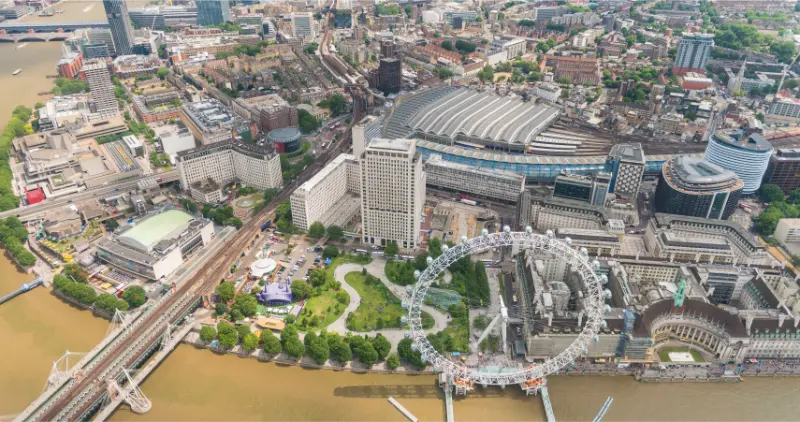
Staying south of the Thames near Waterloo, London Bridge or Bankside puts river walks, theatres, Borough Market and several landmarks within easy reach. The evening skyline is a genuine advantage, and walking can replace many short transport journeys.
The trade-off is price, especially for rooms with views, and some stretches feel busy during events. Check which bridge or station is actually closest. ‘South Bank’ covers a long area, and walking from Lambeth to London Bridge is not the same as stepping outside beside your chosen attraction.
Hotels worth comparing: Park Plaza County Hall London (family-friendly base near the London Eye and Waterloo); London Marriott Hotel County Hall (higher-end choice for landmark views and a special stay); Novotel London Waterloo (practical mid-range option for families and sightseeing); and Ruby Lucy Hotel London (more design-led option close to Waterloo and the South Bank). Hotel prices and room types change by date, so compare the exact room, cancellation terms and recent reviews before booking.
Victoria and Westminster: efficient for short trips
Victoria is practical for travellers using Gatwick services or coaches, and it offers walkable access to Buckingham Palace and Westminster. It works particularly well for a two- or three-night stay when transport efficiency matters more than neighbourhood charm.
Street character changes quickly. Some blocks are polished and expensive; others are dominated by hotels and offices. Look at recent guest comments about noise and room size. Westminster addresses can be costly and surprisingly quiet at night, which may be ideal for sightseeing but less appealing for casual dining.
Hotels worth comparing: The Clermont London, Victoria (very convenient for Victoria Station and short city breaks); Riu Plaza London Victoria (modern option that works well for sightseeing and transport); and Rubens at the Palace (more traditional higher-end stay beside Buckingham Palace). Hotel prices and room types change by date, so compare the exact room, cancellation terms and recent reviews before booking.
Paddington and Bayswater: airport convenience
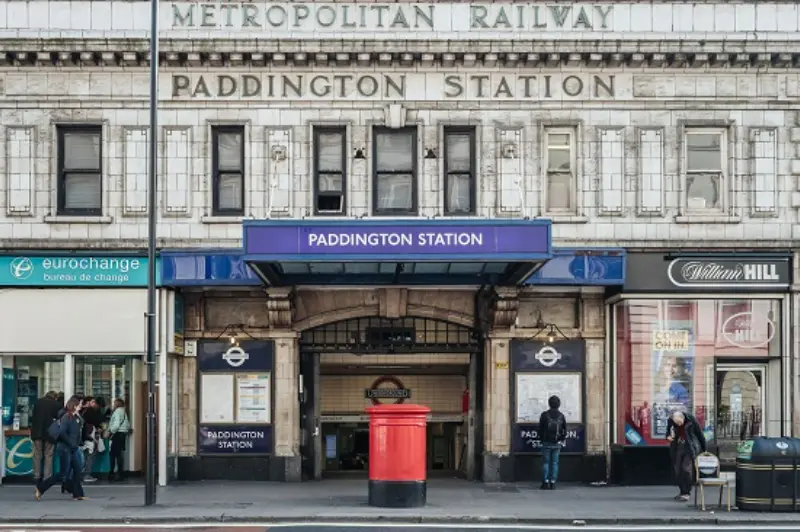
Paddington is a logical base for Heathrow connections via the Elizabeth line or Heathrow Express. It also offers Tube routes and easy access to Hyde Park. Families often appreciate aparthotels and restaurants around Paddington and Bayswater, while Notting Hill lies nearby.
Do not book solely because an express train terminates here. If most of your trip is in east or southeast London, another base may save more time overall. Around any major station, inspect the precise street and room reviews rather than assuming all nearby blocks feel alike.
Hotels worth comparing: Point A Hotel London Paddington (compact value-focused option near Paddington); The Westbourne Hyde Park (aparthotel-style option useful for longer or family stays); Hilton London Paddington (higher-end station-side choice for maximum transport convenience); and Blakemore Hyde Park (mid-range alternative between Bayswater and Hyde Park). Hotel prices and room types change by date, so compare the exact room, cancellation terms and recent reviews before booking.
Covent Garden, Soho and the West End: maximum atmosphere
These areas place theatre, restaurants, Chinatown, Trafalgar Square and shopping within walking distance. They are excellent for visitors who want to leave a show and continue the evening without a long journey. First-time sightseeing is easy, and the streets feel unmistakably London.
You pay for that convenience. Rooms can be small, and late-night noise, deliveries and crowds are real. Ask for a room away from the street if sleep matters. A hotel several blocks outside the busiest core may deliver nearly the same convenience with a calmer night.
Hotels worth comparing: The Resident Covent Garden (well-located boutique option for theatres and first visits); NoMad London (luxury design-led choice in the heart of Covent Garden); The Resident Soho (central boutique option that keeps most of the West End walkable); and Hazlitt's (characterful historic choice for couples and repeat visitors). Hotel prices and room types change by date, so compare the exact room, cancellation terms and recent reviews before booking.
South Kensington and Earl’s Court: museums and elegance
South Kensington is ideal for the Natural History Museum, Science Museum and V&A, with elegant architecture and access to parks. Earl’s Court can offer a broader range of prices while retaining good transport. These districts suit couples, families and museum-focused trips.
Dining can be expensive in the most polished streets, and travel to the City takes longer than a map suggests. Check planned engineering work if you rely heavily on one Tube line. For children, proximity to a park or museum can be worth more than shaving a few minutes from every central journey.
Hotels worth comparing: The Ampersand Hotel (boutique choice close to South Kensington station and museums); The Milestone Hotel Kensington (luxury option near Kensington Gardens); ibis Styles London Gloucester Road (value-conscious choice with strong District and Piccadilly line access); and Holiday Inn London Kensington High St. by IHG (larger mid-range option near High Street Kensington). Hotel prices and room types change by date, so compare the exact room, cancellation terms and recent reviews before booking.
Shoreditch and the East End: food, art and nightlife
Shoreditch, Spitalfields and nearby east-London districts suit repeat visitors and travellers who prioritise restaurants, bars, markets and contemporary culture. Connections from Liverpool Street are excellent, including the Elizabeth line, while the City is walkable.
This is not the quiet choice. Weekend streets can be loud, and the atmosphere is very different from ceremonial London. Read location reviews carefully and decide whether nightlife outside the hotel is an advantage or a warning. Families can enjoy the area by day but may prefer a calmer base.
Hotels worth comparing: citizenM London Shoreditch (design-led option for nightlife and a lively East London base); Montcalm Royal London House, Autograph Collection (higher-end choice near the City and Shoreditch); Point A Hotel London Shoreditch (compact value-focused option); and Point A London Liverpool Street (practical budget-conscious base near Liverpool Street). Hotel prices and room types change by date, so compare the exact room, cancellation terms and recent reviews before booking.
Greenwich: a slower London experience
Greenwich feels distinct, with maritime history, a market, park views and riverside space. It can be a wonderful base for families or longer stays, especially when accommodation offers more room than the West End. DLR, rail and boats make the journey part of the experience.
The distance becomes noticeable if your plans focus on Kensington, Notting Hill or repeated West End evenings. Choose Greenwich because you want its atmosphere, not simply because a room is cheaper. Plan days geographically and avoid returning across London between every activity.
Hotels worth comparing: InterContinental London – The O2 by IHG (higher-end riverside option suited to events and a special stay); ibis London Greenwich (practical value choice near central Greenwich); and Holiday Inn Express London Greenwich by IHG (straightforward family-friendly option with predictable facilities). Hotel prices and room types change by date, so compare the exact room, cancellation terms and recent reviews before booking.
How to assess a hotel listing
Open the map and trace the actual walking route from the entrance to the station. A short straight line may hide a major road, stairs or an inconvenient crossing. Then search the journey to the attraction you expect to visit first and the district where you may spend an evening. This reveals more than a vague claim such as ‘minutes from central London’.
Read recent reviews for repeated practical issues: street noise, lift reliability, room temperature, luggage storage and breakfast queues. Ignore isolated complaints, but pay attention when different guests describe the same problem. Check whether the lowest price is refundable and whether taxes, breakfast or extra beds are included.
Apartment-style accommodation can help families and longer stays, but confirm legal operation, reception arrangements and what happens after a delayed flight. A staffed hotel may be worth more when arrival time is uncertain. Never send payment outside a trusted booking process because a message claims your reservation will otherwise be cancelled.
Finally, look at the late-evening route. A pleasant ten-minute walk in daylight can feel different after a show, particularly with children or luggage. Street View, station exit information and recent neighbourhood reviews help you make a calm decision without judging an entire area by reputation alone.
Common mistakes to avoid
- Booking by borough name without checking the exact walking route to a station.
- Choosing the cheapest outer-zone hotel and ignoring daily travel time.
- Assuming every central street is quiet after midnight.
- Paying for an airport express location that does not suit the rest of the itinerary.
- Ignoring lift access, stairs and luggage logistics at the nearest station.
The biggest accommodation mistake is choosing by postcode label alone. ‘Central London’ can still mean an awkward walk to the useful station, while a Zone 2 hotel beside a fast Tube or Elizabeth line stop can be easier every morning. Plot the hotel entrance, not just the neighbourhood name, and test one realistic route to the places you care about. Also check the late-evening walk from the station; a five-minute difference matters more after a West End show than it does on a booking map.
Practical planning checklist
- Confirm opening days and last admission on official websites.
- Save bookings and the accommodation address for offline access.
- Check the live TfL journey planner before leaving each morning.
- Keep one indoor and one outdoor option in the same area.
- Use the same contactless card or device consistently for eligible journeys.
- Allow time for security, meals, station corridors and unplanned discoveries.
Before paying a non-refundable rate, check room size, air-conditioning if travelling in summer, lift access, breakfast conditions, luggage storage and the exact cancellation terms. London hotel rooms vary enormously within the same star category. Families should also confirm the real bed configuration rather than assuming ‘family room’ means separate proper beds.
Continue planning your London trip
Compare accommodation by exact location
After choosing the neighbourhood, compare London accommodation on Booking.com. Check the map position, nearest useful station and cancellation terms instead of filtering only by star rating.
Frequently asked questions
Is Zone 2 too far?
No. A direct, frequent Zone 2 connection can be better than an awkward Zone 1 address. Look at door-to-door time to your likely evening area.
Which area is best for families?
Paddington, South Kensington, Bloomsbury and Greenwich are strong options, depending on budget and plans. Prioritise room layout, a nearby park and simple transport.
Where should nightlife lovers stay?
Soho puts classic West End nightlife on the doorstep, while Shoreditch offers a more east-London scene. In both cases, noise is part of the decision.
Should I stay near the airport?
Usually only for a very early departure, late arrival or overnight connection. For a sightseeing trip, a well-connected London base is more useful.
Final thoughts
The right London base is the one that removes friction from your particular trip. A museum-heavy stay, a theatre weekend and a family visit do not need the same neighbourhood. Spend less time asking which district is ‘best’ and more time matching a station, evening atmosphere and room type to the days you actually plan to have.

Hotel inventory, rates and transport works change constantly; recheck the property’s current facilities and the relevant TfL route before committing to a non-refundable booking.
Planning for solo travel or accessibility
If you are choosing a base specifically for an independent trip, see our solo London guide. Travellers who need step-free transport or specific hotel features should also use the Accessible London guide before booking.
Narrow the area first, then compare the actual hotel
Once two or three neighbourhoods look right, compare the hotel itself rather than collecting more area names. Room size, air conditioning, lift access, family-room configuration, cancellation terms and the exact walk to the nearest useful station can matter more than a small difference in nightly price.
For a more targeted shortlist, use the first-time visitor accommodation guide, the family accommodation guide or the budget accommodation guide. All three are already published and approach the same decision from a different type of trip.
Affiliate widget. DreamingLondon may earn a commission from qualifying bookings at no extra cost to you.