
London does not have one food market that is “best” for every visitor. Borough Market is the most famous and strongest all-round choice for produce, prepared food and history, but it can be the wrong answer if you want an East London Saturday, a compact indoor food hall near Covent Garden, a riverside weekend lunch or a less formal street-food atmosphere. Choosing by neighbourhood and day of the week is far more useful than ranking markets from one to ten.
Visit London’s 2026 market guides continue to highlight Borough, Camden, Greenwich, Brick Lane, Broadway Market, Maltby Street, Seven Dials and other food-focused locations. The exact trader mix changes, so this article compares the character and logistics rather than promising that one specific stall will always be there.
Which London food market should you choose?
| Market | Best for |
| Borough Market | First-time food lovers, produce, British and international food |
| Maltby Street Market | Compact weekend food crawl near Bermondsey |
| Camden Market | Large global street-food selection plus shopping |
| Greenwich Market | Food plus crafts and a full Greenwich day |
| Broadway Market | Saturday East London neighbourhood atmosphere |
| Seven Dials Market | Indoor food hall near Covent Garden |
| Brixton Village | Restaurants and global food under covered arcades |
| Southbank Centre Food Market | Weekend food beside the Thames |
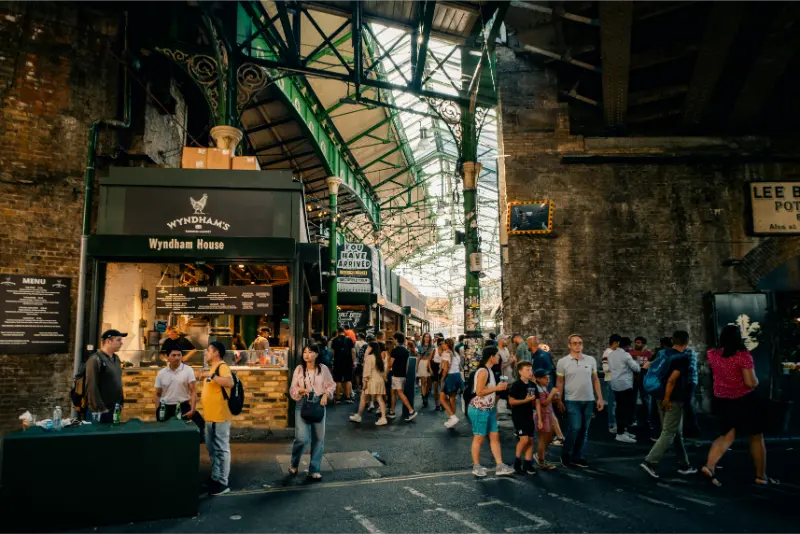
Borough Market: the first-timer’s food market
Borough Market deserves its fame because it combines prepared food with serious produce traders and a location that fits naturally into a first London itinerary. The market’s own identity is broader than street food: bread, cheese, meat, fish, fruit, vegetables and specialist ingredients matter as much as lunch. Visit London’s current guide lists regular market trading across the week, with the busiest atmosphere toward Friday and Saturday.
The mistake is arriving at peak Saturday lunch time, seeing a queue and concluding the whole market is a tourist trap. Go earlier, walk the full market before buying and use our dedicated Borough Market guide for the layout and quieter timing. Combine it with South Bank or Tate Modern rather than travelling there solely for one viral sandwich.
Maltby Street Market: smaller and more concentrated
Maltby Street’s appeal is scale. The railway arches and Ropewalk area create a compact weekend food experience where you can browse without the vast flow of Borough or Camden. It works well when Bermondsey is already part of the day. Because operating days and individual traders can change, verify the official market information before a special trip.
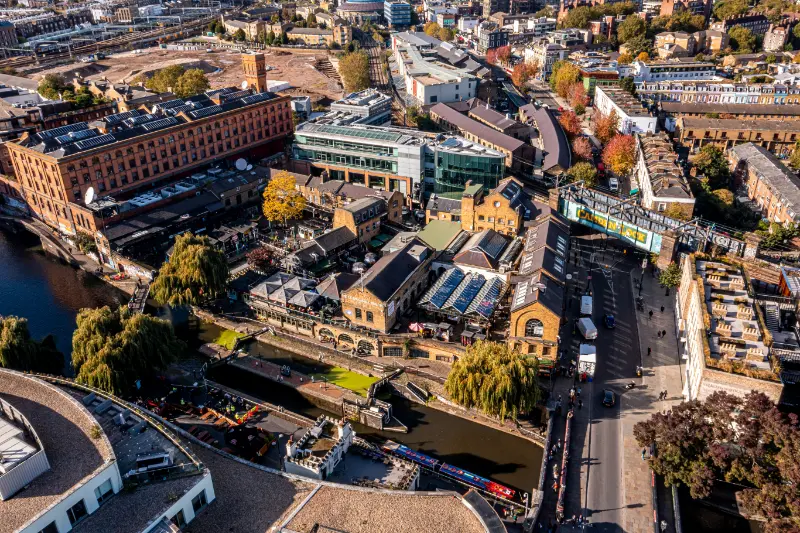
Camden Market: best for maximum choice
Camden is not a food-only market, which is exactly why it suits mixed groups. One person can browse vintage and alternative shops while another samples street food. The food offer is broad and international, but the area can be extremely crowded. Use our Camden guide to approach from the canal side and avoid spending the whole visit in the densest corridor.
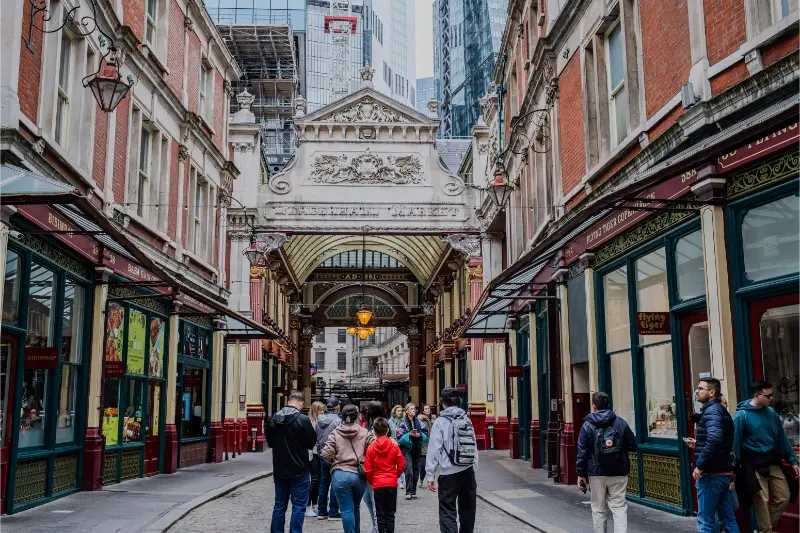
Greenwich Market: make food part of a destination day
Greenwich Market works best when the market is one component of Greenwich rather than the only reason to travel east. Combine lunch with the Cutty Sark, riverside, park and—subject to its current operating status—the Royal Observatory. Our Greenwich guide explains the bigger route. The covered market is also useful in uncertain weather.
Broadway Market: a Saturday neighbourhood choice
Broadway Market is strongest as part of a weekend in Hackney and London Fields. Visit London notes the Saturday street market alongside the permanent cafés, pubs and food businesses on the road. The value is the neighbourhood context: eat, walk along Regent’s Canal or continue into East London instead of treating it as a central-London attraction transplanted east.
Seven Dials Market: the weather-proof central option
Seven Dials Market is an indoor food hall close to Covent Garden, making it practical for groups who want different cuisines without separating. It is not a traditional produce market in the Borough sense. Think of it as a curated collection of food counters and communal seating in an extremely central location. It is useful before theatre, during rain or when individual restaurant reservations feel too restrictive.
Brixton Village: best when you want restaurants, not just stalls
Brixton’s covered arcades mix restaurants, cafés and shops rather than offering only temporary street-food stalls. That makes it stronger for a meal where everyone wants to sit down. It also connects food to Brixton’s music and Black British history. Use our Brixton guide rather than arriving, eating and leaving without understanding the area.
Southbank Centre Food Market: easiest river add-on
Visit London currently lists the Southbank Centre Food Market as a Friday-to-Sunday option. It is convenient if your day already includes the London Eye, National Theatre, Tate Modern direction or a Thames walk. It is not worth crossing London solely because “food market” appears in the itinerary; its strength is location and spontaneity.
How to avoid market overload
- Choose one major food market per day.
- Walk once before buying so the first queue does not make the decision for you.
- Share small dishes if your group wants to taste several traders.
- Carry water and napkins; seating can be limited at busy times.
- Check opening days because some markets are strongly weekend-focused.
- Avoid planning an afternoon tea or huge dinner immediately afterwards.
Food markets with children
Markets can be excellent for families because everyone can choose different food, but crowds, hot containers and lack of seating can be tiring. Go earlier than peak lunch, identify toilets before ordering and pick a backup sit-down café. Greenwich and Camden work particularly well when paired with family attractions; Borough is easier with older children who enjoy tasting and browsing.
Food-market tours: when they add value
A guided tour makes most sense when you want history and curated tasting rather than simply lunch. Borough and the East End have enough history that a good guide can connect food to migration, trade and neighbourhood change. If you prefer to choose spontaneously, self-guided is cheaper and more flexible.
Affiliate link. Dreaming London may earn a commission from qualifying bookings at no extra cost to you.
Frequently asked questions
Which market is best for a first visit?
Borough Market is the strongest all-round first choice, especially because it fits easily with South Bank and the City. Camden is better for mixed shopping and food; Greenwich is better for a full destination day.
Which food markets are best on Sunday?
Several major markets trade on Sundays, but opening patterns differ. Always confirm current days on the official market website because street-market schedules change more often than permanent food halls.
Do London food markets take cards?
Most traders accept cards or contactless, and many are cashless. Carry a backup payment method; see our London money guide.
Bottom line
Choose London food markets by geography, day and eating style. Borough for the strongest first-time food experience, Camden for huge variety, Greenwich for a destination day, Broadway for Saturday East London, Seven Dials for central indoor convenience and Brixton for sit-down global food. One well-chosen market is better than racing through three.
Markets change by day, not just by season
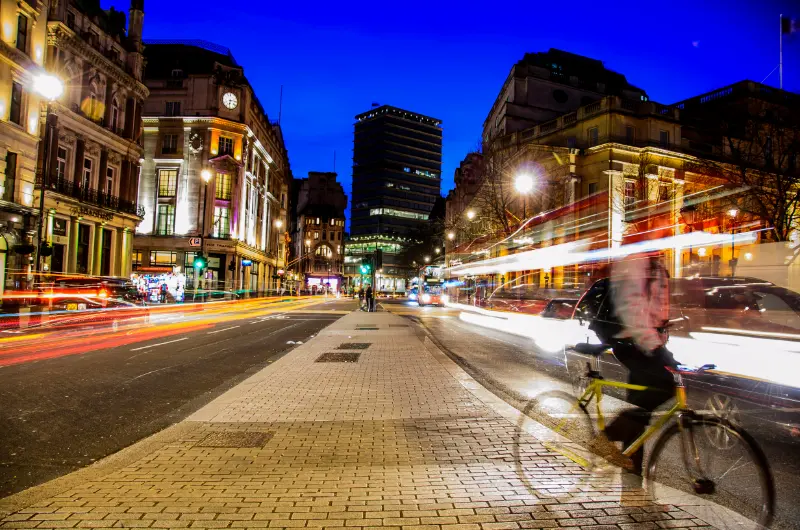
A market can feel completely different on Tuesday morning and Saturday lunch. Permanent traders may operate all week while outdoor stalls appear only on selected days. That is why “open” is not enough information: check whether the part you actually want is trading. For a specialist weekend market such as Broadway or Maltby Street, the day is part of the attraction.
Seasonal events, Christmas trading and temporary closures can also change access. Use official market websites shortly before the visit and treat opening hours in any travel article—including this one—as planning guidance rather than a guarantee.
Extra planning note
Photography is part of modern market tourism, but traders are working. Do not block a queue or handle produce for a photo without permission. If you sample something offered by a trader, listen to the explanation and consider buying if you genuinely like it. Markets remain viable because people purchase, not because they function as free food museums.
Extra planning note 2
Photography is part of modern market tourism, but traders are working. Do not block a queue or handle produce for a photo without permission. If you sample something offered by a trader, listen to the explanation and consider buying if you genuinely like it. Markets remain viable because people purchase, not because they function as free food museums.
Extra planning note 3
Photography is part of modern market tourism, but traders are working. Do not block a queue or handle produce for a photo without permission. If you sample something offered by a trader, listen to the explanation and consider buying if you genuinely like it. Markets remain viable because people purchase, not because they function as free food museums.
Extra planning note 4
Photography is part of modern market tourism, but traders are working. Do not block a queue or handle produce for a photo without permission. If you sample something offered by a trader, listen to the explanation and consider buying if you genuinely like it. Markets remain viable because people purchase, not because they function as free food museums.