
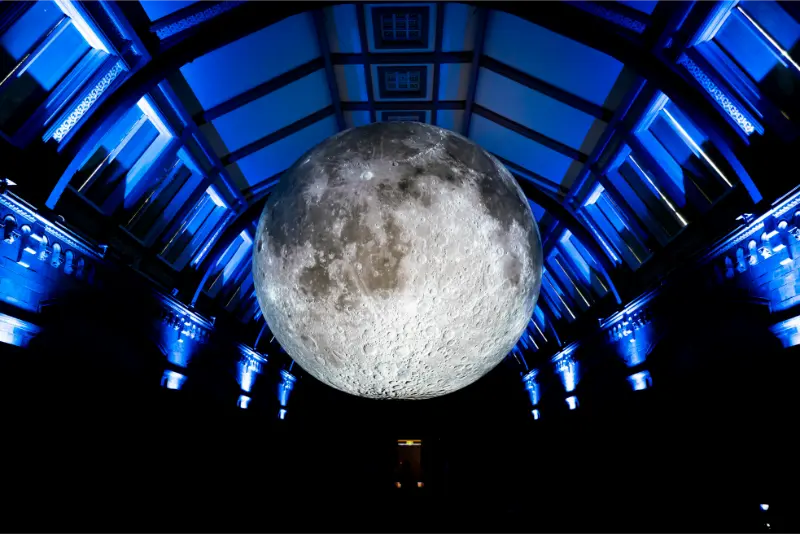
Rain in London is rarely a reason to abandon sightseeing, but it should change the shape of your day. The worst strategy is trying to follow a sunny-weather itinerary with an umbrella open for eight hours. The better strategy is to alternate substantial indoor stops with short outdoor connections and use buses, covered markets and arcades when the weather is heaviest.
Morning option: South Kensington museum cluster
The Natural History Museum, V&A and Science Museum sit close together, making South Kensington one of the easiest places to improvise when weather deteriorates. Choose one as the main destination. If conditions improve, walk through Kensington Gardens; if rain persists, move to a second museum only if you still have energy.
ROUTE MAP
Rainy-day London – indoor anchors map
Use the map as a planning overview. The numbered markers follow the order suggested in this guide; exact walking and transport choices can change with closures, weather and your bookings.
- Natural History Museum
- V&A
- Science Museum
- British Museum
- Covent Garden
- Leadenhall Market
- Tate Modern
Free general admission at major national museums does not mean every exhibition is free, and timed entry can still be useful during busy periods.
Alternative morning: British Museum and Bloomsbury
The British Museum gives you several hours under one roof, but the surrounding Bloomsbury area is also practical for short rain breaks because cafes, bookshops and squares are close together. When showers ease, walk ten minutes rather than taking the Tube for every move.
Covered London: markets and arcades
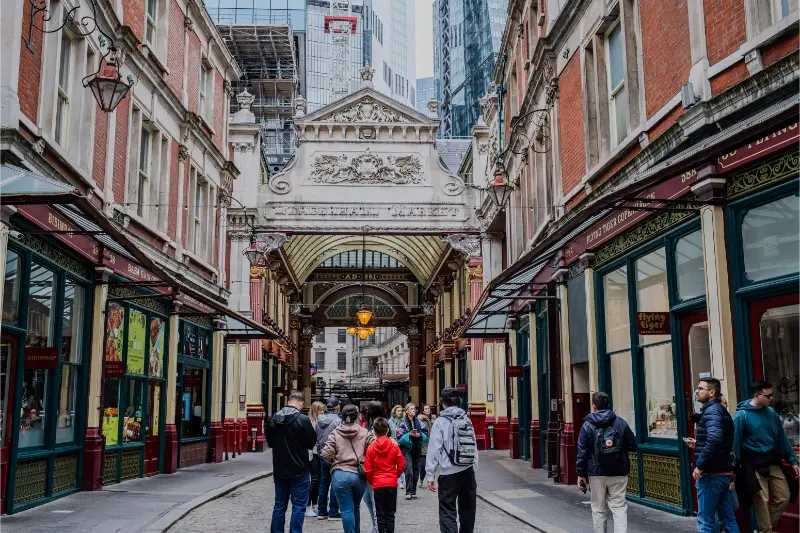
Old Spitalfields Market, Leadenhall Market and parts of Borough Market offer shelter, though you should not expect every route between them to be covered. In the West End, historic shopping arcades such as Burlington Arcade create short dry links and are interesting architectural stops in their own right.
Covered spaces become crowded when it rains. Use them as part of a route, not as free waiting rooms where you block traders and entrances.
Use buses strategically
A bus is not always faster than the Tube, but on a rainy day it lets you see the city while staying dry. Routes through central London can function as moving sightseeing corridors when traffic is reasonable. Use TfL’s live journey planning rather than relying on an old blog post for a specific route number or timetable.
- Sit downstairs if you need a quick exit; upstairs if you want views.
- Keep your payment method ready before boarding.
- For fares and contactless basics, see our transport guide.
A rainy afternoon in the City
The City is excellent in bad weather because sights are dense. Visit St Paul’s or another chosen interior, walk a short stretch to covered Leadenhall Market, then use a timed viewpoint such as Sky Garden if you already hold a booking. On very cloudy days, remember that high-level views may be limited; the building experience can still be enjoyable, but the skyline is weather-dependent.
A rainy afternoon on the South Bank
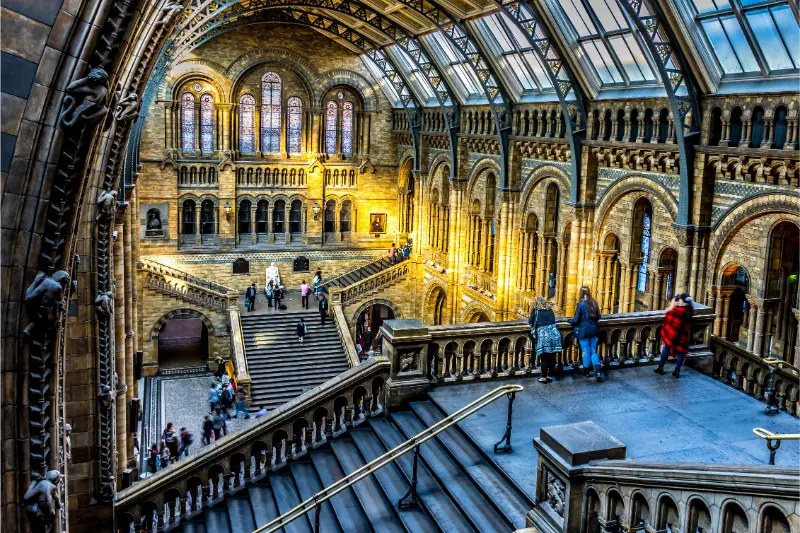
Tate Modern, the National Theatre, Southbank Centre and riverside restaurants allow you to move between indoor spaces with relatively short outdoor sections. If rain becomes drizzle, the Thames is atmospheric rather than ruined. Reflections on wet pavements can be excellent for photography.
What to carry
A compact umbrella is useful, but a lightweight waterproof jacket is often easier in crowded streets. Waterproof shoes matter more than a giant umbrella because puddles and repeated short walks wear you down. A small reusable bag protects paper tickets, maps or electronics if your day bag gets damp.
- Avoid very large umbrellas on narrow pavements.
- Carry a power bank: bad-weather days often mean heavier phone navigation use.
- Keep one indoor backup near every major outdoor plan.
Do not overreact to the forecast
London forecasts can show rain icons for days that still contain long dry periods. Check hourly conditions in the morning and again before leaving an indoor attraction. A wet start can become a clear afternoon. Keep outdoor viewpoints and parks flexible rather than cancelling them a day in advance.
For seasonal context, see our best time to visit London guide.
Three levels of rain require three different plans
Light showers should barely change the day: keep the walk, carry a compact umbrella or waterproof layer and use a museum or cafe only when the shower peaks. Persistent rain is when neighbourhood clustering matters: choose South Kensington, Bloomsbury, the City or the South Bank so indoor stops are close together. Heavy rain plus wind is the moment to abandon exposed parks and viewpoints and commit to a substantial interior such as the British Museum, Natural History Museum, Science Museum, V&A, National Gallery or Imperial War Museum.
The point is not to “beat” the weather. It is to stop wasting time in transit between places that are unpleasant in bad conditions. A day with one museum, a long lunch and a theatre performance can be better than an eight-stop itinerary completed while wet and tired.
A rainy-day plan with children
Children need more than shelter; they need variety. A four-hour art museum may keep everyone dry but still fail as a family day. South Kensington is particularly useful because the Natural History Museum and Science Museum offer very different experiences within a short distance. The London Transport Museum is another strong option for younger visitors in Covent Garden.

Build movement into the day. Use a short bus ride, a covered market or a quick puddle-friendly walk between indoor stops rather than expecting children to stay quietly inside for six hours. Our London with kids guide has broader age and pacing advice.
Rain can improve some London experiences
Wet weather is not universally bad for photography. Reflections on the South Bank, dark stone around the City and glowing shopfronts in Soho can look more atmospheric after rain than under flat midday sun. Covered arcades, Leadenhall Market and the interiors of historic stations also become more appealing when the weather outside is poor.
What rain does ruin is the value proposition of a high viewpoint when cloud sits on the skyline. If your Sky Garden or Shard booking is flexible, check live conditions. If it is fixed, go with realistic expectations: the interior experience may still be enjoyable, but visibility is never guaranteed.
Evening rescue plan: theatre, cinema, music or a long meal
If the weather deteriorates after 5pm, do not automatically return to the hotel. London’s evening culture is one of its strengths. A West End show can turn a disappointing outdoor day into a memorable one; smaller live-music venues and cinemas provide alternatives when theatre prices are high. See our West End theatre guide before buying last-minute seats.
A long pub meal or afternoon tea can also work, but book only if the experience genuinely appeals to you. Rain is not a reason to spend money on an activity you would otherwise skip.
What not to do when the forecast is bad
- Do not cross London repeatedly just because every indoor attraction looks tempting.
- Do not buy several same-day tickets before you know how slowly the group will move.
- Do not assume “covered market” means the entire journey to and from it is sheltered.
- Do not wear shoes that become uncomfortable after thirty minutes of wet pavement.
- Do not cancel every park or river plan the night before; London weather often changes by the hour.
Two complete rainy-day combinations that minimise outdoor time
Option 1: Bloomsbury + Covent Garden. Start at the British Museum with a focused two- or three-hour route. Have lunch in Bloomsbury or Seven Dials, then move to Covent Garden for the London Transport Museum, covered market spaces and cafes. Finish with a West End show. The outdoor links are short, and you can use buses or the Tube if the rain becomes heavy.
Option 2: South Kensington + Kensington. Choose either the Natural History Museum, Science Museum or V&A as the main morning attraction. Eat nearby, then use a second museum only if everyone still has energy. If the rain eases, walk through Kensington Gardens; if it does not, continue to a booked afternoon tea, gallery or indoor Kensington stop.
The important word is combination. Each plan keeps you in one part of London. The weather becomes exhausting when every backup attraction sits in a different neighbourhood.
Wet-weather transport mistakes
When rain starts, everyone reaches for the Tube. Central stations can therefore become busier at exactly the moment you are tempted to use them for one-stop journeys. A bus may be more comfortable for a short central hop, while walking five minutes under a waterproof jacket may still be faster than descending into a deep station.
Do not stand at a station entrance trying to reorganise the entire day. Step into a cafe, museum foyer or covered space, check TfL live information and make one clear decision. Ten calm minutes of replanning can save an hour of wet, unnecessary travel.
When rain is forecast for the whole trip
Do not move every indoor attraction onto the first wet day. London forecasts are uncertain, and stacking all museums into one day can leave you with nothing flexible later. Instead, protect one or two weather-sensitive priorities—perhaps Greenwich Park, a long canal walk or an outdoor viewpoint—and distribute indoor anchors across several days.
This makes the entire itinerary resilient. A rainy Tuesday can become museum-heavy without forcing Wednesday to become an exhausting all-outdoor marathon.
Wet-weather plans depend on live capacity and transport. Check museum booking pages and TfL status before switching your itinerary at short notice.
Rainy-day tickets without overbooking
When the forecast turns, compare indoor London activities on GetYourGuide. Check same-day availability and cancellation rules rather than filling the entire wet-weather day with prepaid indoor attractions.
Rain-proof attractions near Westminster
County Hall gives families two useful indoor options: SEA LIFE London and, for groups comfortable with scares and live actors, the London Dungeon.