
Walking is not just the cheapest way to see London; for many parts of the city it is the most informative. Streets that look disconnected on the Tube map are often only minutes apart. These routes are designed as flexible frameworks rather than forced turn-by-turn itineraries. Distances are approximate in spirit rather than a promise of exact mileage, because detours into museums, markets and riverside paths can transform a two-hour walk into a full day.
1. Westminster to Tower Bridge along the South Bank
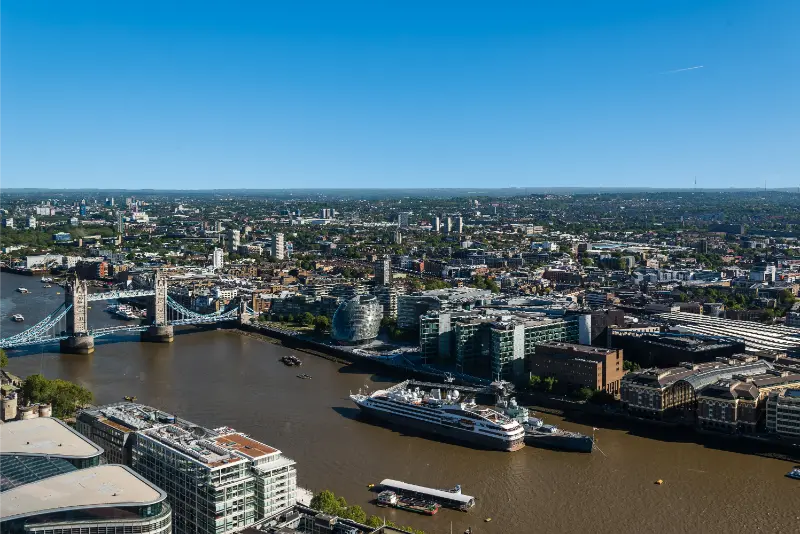
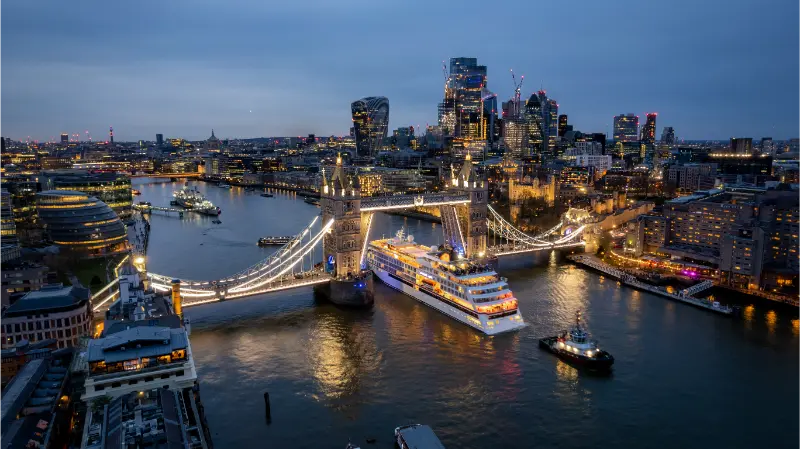
Start around Westminster Bridge, cross to the South Bank and follow the Thames east. You pass the London Eye, Southbank Centre, National Theatre, Tate Modern area, Shakespeare’s Globe, Borough Market zone and finally Tower Bridge. It is one of the best first-day walks because the skyline constantly explains where you are.
Do not try to enter every attraction. Choose one interior stop and let the river do the rest. The route is especially attractive from late afternoon into evening, when bridges and the City skyline begin to light up.
- Start: Westminster or Waterloo.
- Finish: London Bridge, Tower Hill or Tower Gateway.
- Best detour: cross Millennium Bridge for St Paul’s, then return to the south bank if energy allows.
2. Little Venice to Camden via Regent’s Canal
This route reveals a softer side of central-north London. Begin near Little Venice, follow the towpath east past houseboats and waterside stretches, and continue toward Regent’s Park and Camden. Sections can feel surprisingly removed from traffic even though you are in inner London.
Canal towpaths are shared spaces. Keep to the side, expect cyclists and narrow sections, and avoid blocking the path for photographs. After heavy rain, some stretches can be muddy.
- Best for: repeat visitors and slower mornings.
- Finish with: Camden Market or Primrose Hill.
- Alternative: leave the canal earlier for Regent’s Park if the towpath feels crowded.
3. St James’s Park, Green Park and Hyde Park
A chain of royal green spaces lets you walk from Westminster toward Kensington with remarkably little traffic. Start at St James’s Park, pass Buckingham Palace, cross Green Park and continue toward Hyde Park and Kensington Gardens. This is useful on sunny days and also works as a decompression route between museums and central sights.
The Royal Parks manages eight major parks across London, and entry to the parks themselves is free. Seasonal opening times and specific facilities vary, so use the official park pages when planning an early or late visit.
- Best for: families, picnics and jet-lag days.
- Add: Serpentine, Kensington Gardens or the museums of South Kensington.
- Official information: The Royal Parks.
4. City of London lanes to St Dunstan and Tower Hill
Start near St Paul’s and deliberately avoid the fastest road. Thread through old lanes, churchyards and the financial district, then continue toward Leadenhall Market, St Dunstan in the East and Tower Hill. The City works best on foot because medieval street patterns survive underneath modern towers.
Weekdays show the working Square Mile at full speed; weekends are quieter and better for architecture. Some cafes and lunch spots close or reduce hours at weekends, so the atmosphere changes significantly.
5. Greenwich riverfront and park loop
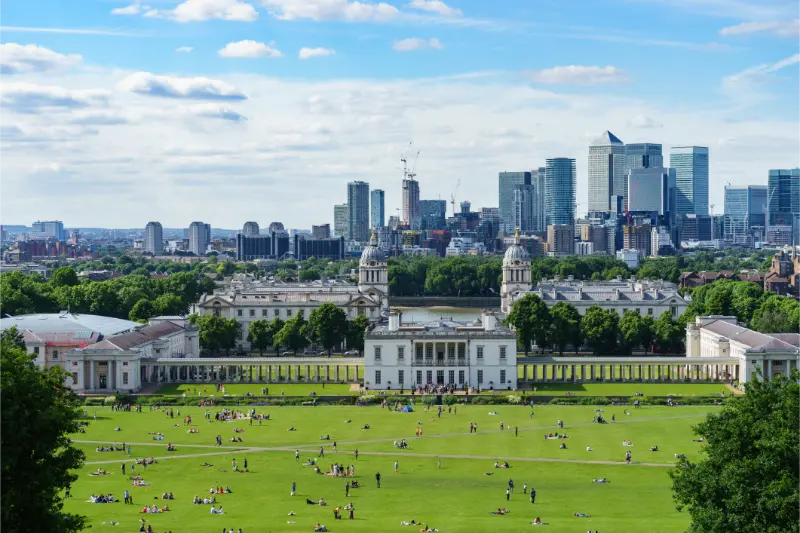
From Greenwich Pier or Cutty Sark, follow the river, explore the maritime core and then climb through Greenwich Park. The famous viewpoint near the Royal Observatory is worth the effort, but the park also rewards detours away from the main axis. The Royal Parks highlights One Tree Hill as a quieter place for skyline views.
A river arrival and DLR return makes the day more varied and avoids retracing your steps.
- Best for: skyline views and maritime London.
- Allow: 3–5 hours with stops.
- Combine with: London with kids if travelling as a family.
6. Hampstead village to Parliament Hill
Use our Hampstead and Hampstead Heath guide for the full-day version; for this shorter walk, start in Hampstead’s narrow streets, continue onto the Heath and finish at Parliament Hill for a broad skyline view. The route is less about ticking monuments and more about atmosphere: brick houses, steep lanes, woodland and open grassland.
The Heath can be uneven and muddy after wet weather, so footwear matters more here than on a central sightseeing day.
7. Richmond riverside to Richmond Park edge
Begin by the Thames in Richmond, follow the river for a stretch, then climb toward the park. Richmond Park’s perimeter Tamsin Trail is just over seven miles, but you do not need to complete the full circuit. A partial walk can still deliver open landscapes and a sense of scale rare in a capital city.
Deer are wild animals. Keep distance, never feed them and follow signs, particularly during rutting and birthing seasons.
- Best for: a half-day escape from central London.
- Extend: Isabella Plantation when seasonal colour is strong.
- Official information: Richmond Park.
8. Notting Hill to Kensington: colour without the rush
Start away from the busiest section of Portobello Road and use residential streets, mews and garden squares to create a broader walk through Notting Hill. Continue south toward Kensington Palace and Kensington Gardens. Market days bring energy; non-market mornings reveal the neighbourhood itself.
Remember that colourful homes are private residences. Keep doorways clear, avoid intrusive photography and treat the area as a lived-in neighbourhood rather than a film set.
How to make London walking days work
Use TfL’s official maps to understand Tube, bus, rail, river and cycle connections before you set out. Save a route offline, but do not become a slave to it. The pleasure of walking London is noticing what sits between the famous points. Comfortable shoes, a small water bottle and one backup indoor stop are more useful than an overfilled itinerary.
- TfL visitor maps: official visitor maps.
- For rainy conditions, switch to museums, covered markets and short neighbourhood loops.
- For first-time logistics, see our London transport guide.
Choosing a walk by surface, weather and mobility
Not every London walk is equally easy. The South Bank and central royal parks have long paved sections and frequent places to stop, while Hampstead Heath and parts of Richmond Park can be uneven, muddy or steep after rain. Regent’s Canal towpaths include narrow stretches, and busy market areas can be uncomfortable for anyone who needs more personal space or a predictable pace.
If step-free access matters, plan the walking route and the return journey together. A beautiful linear walk is less useful if the nearest station at the finish does not work for your access needs. TfL’s current accessibility information is a better source than an old route screenshot, because lifts and escalators can be temporarily unavailable. Our Accessible London guide covers the wider planning questions.
How far should you actually walk in a sightseeing day?
Visitors often underestimate the invisible walking inside museums, stations and attractions. A route that looks like five kilometres on a map can easily become ten or more once you add galleries, platforms, detours, shopping and searching for lunch. That is why the routes in this guide are frameworks rather than targets.
For most travellers, one substantial walk plus one major interior attraction is a stronger day than two long walks separated by multiple Tube journeys. If you are travelling with children, older relatives or anyone unused to city walking, build in a sit-down meal and a park or river stop. Comfortable shoes matter, but pacing matters more.
Sunrise, sunset and evening walks
London changes dramatically with the light. Westminster and the South Bank are attractive early because traffic and crowds are lighter; the City is atmospheric after office hours when the financial district empties; Primrose Hill and Greenwich Park become popular around sunset; and the Thames between Westminster and Tower Bridge is one of the easiest evening routes because major landmarks are illuminated and public transport is never far away.

Do not make a sunset dependent on a precise arrival minute. Cloud, seasonal daylight and crowd levels can all change the experience. Aim to reach the area well before sunset, then let the walk continue into blue hour. For skyline ideas, compare the free options in our best London views guide.
Toilets, water and food: the unglamorous details that improve a walk
A route is more enjoyable when you know where the natural breaks are. Museums, larger railway stations, markets and major parks are useful anchors for toilets and refreshments, but facilities can be paid, temporarily closed or subject to venue opening hours. Carry water and do not wait until everyone is tired and hungry before looking for lunch.
On the South Bank, Borough Market and Bankside create an obvious food break. On the canal walk, Camden provides the easiest concentration of choices. In Richmond or Hampstead, it is often better to eat in the town or village before committing to a long park section. These small decisions keep a walking day from turning into a search for the nearest cafe.
Navigation without staring at your phone
Save the broad route offline, but use visible landmarks whenever possible: the Thames, St Paul’s dome, the Shard, park edges and major bridges make excellent reference points. In the City, street patterns are more confusing, so a map is genuinely useful; in the royal parks or along the river, over-navigation can make the day feel more mechanical than necessary.
For the two most popular long routes in this article, we also have detailed standalone guides: South Bank from Westminster toward Tower Bridge and Little Venice to Camden along Regent’s Canal. Use those when you want turn-by-turn planning and specific stops.
Path works, park access and riverside diversions can change; check Royal Parks, TfL and the relevant riverside authority if a particular section is essential.
Guided walks for history rather than navigation
You do not need a guide simply to follow the Thames, but a thematic walk can add architecture, crime, literature or social history. compare London walking tours on GetYourGuide if that extra layer interests you.