
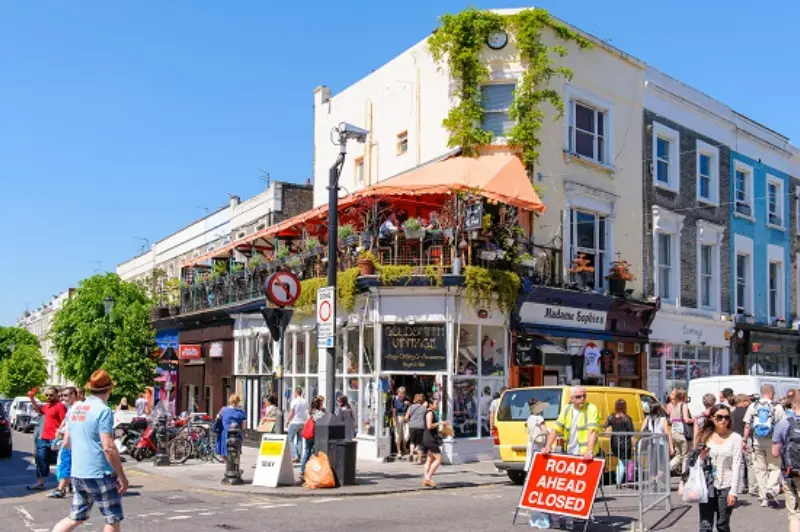
Portobello Road Market is not one market operating at one intensity every day. It is a long street with permanent shops, changing groups of stalls, antiques, vintage fashion, food and neighbourhood life layered together. Saturday is the famous day and the busiest for antiques, but it is not automatically the best choice for every visitor. If you want serious browsing, arrive early. If you mainly want colourful Notting Hill streets and a relaxed walk, a quieter weekday may give you more of the neighbourhood and less crowd management.
The market’s own visitor information currently lists the wider Portobello Road trading area as active across the week, while its antiques section highlights Friday, Saturday and Sunday opening, with Saturday the busiest day and the largest concentration of UK antique traders. Exact stall numbers and hours vary by trader, weather and season. Check Portobello Road Market’s official visitor information before making a special trip for a specific category.
| Best for | Antiques, vintage, street atmosphere, Notting Hill |
|---|---|
| Biggest day | Saturday |
| Good arrival | Early morning for serious browsing |
| Useful stations | Notting Hill Gate or Ladbroke Grove |
| Best pairing | Notting Hill streets + Golborne Road |
Choose the day based on what you actually want
Saturday gives the classic market experience: more traders, more antique stalls, more visitors and more energy. That is ideal if Portobello itself is a priority. It is less ideal if your main goal is photographing pastel houses in peace or walking slowly with a stroller.
Friday can offer antiques with less weekend intensity. Sunday needs more care: outside advertised Summer Sundays and special December dates, the market’s own visitor information says there is normally no street market on Portobello or Golborne Roads. Acklam Kitchen, shops and some vintage/bric-a-brac activity around Portobello Green may still operate, but do not treat an ordinary Sunday as a quieter version of Saturday. See the official day-by-day market information before travelling for a specific section. Other weekdays retain shops and some trading but feel more like a neighbourhood high street.
Start at the correct end
If you arrive from Notting Hill Gate, you naturally approach the southern end and walk north through residential streets toward the antique sections and market core. This works well for first-time visitors because you can combine the market with the neighbourhood’s architecture.
If antiques are the only goal and you want to beat crowds, Ladbroke Grove can put you closer to northern sections. The best starting point is therefore not universal. Our Notting Hill guide explains the wider area so you can choose a route instead of simply following the crowd.
Antiques: browse the arcades, not only the street
One of the easiest mistakes is to walk down Portobello Road looking only at outdoor tables. Antique arcades and indoor booths can contain more specialist dealers, especially for jewellery, silver, ceramics, books, textiles and collectables. Saturday is the strongest day for this part of the market under current trader information.
If you are buying something expensive, slow down. Ask about condition, provenance and returns. A market atmosphere is not a reason to suspend normal purchasing judgment. For small souvenirs, the main challenge is simply carrying them safely for the rest of the day.
Vintage fashion and second-hand browsing
Portobello’s identity has expanded beyond antiques. Vintage clothing and second-hand fashion can appear in shops, stalls and spaces under the Westway. Quality varies, which is part of the experience. Do not expect every “vintage” item to be rare or historically important.
Compare prices if a purchase matters. Notting Hill is internationally famous, and fame affects rents and retail. The best find is not always the cheapest item; it is the piece you can verify, use and carry home without regret.
Food: snack rather than planning the entire visit around one stall
Food traders change more often than architecture, so exact “must-eat” lists age quickly. Use the market for flexible snacks and save a sit-down meal for when crowds or weather make a break useful. Golborne Road adds another layer of cafés and food culture north of the most photographed stretch.
For a broader sense of London food, connect this day with our what to eat in London guide rather than chasing one viral dish.
Photography etiquette matters in Notting Hill
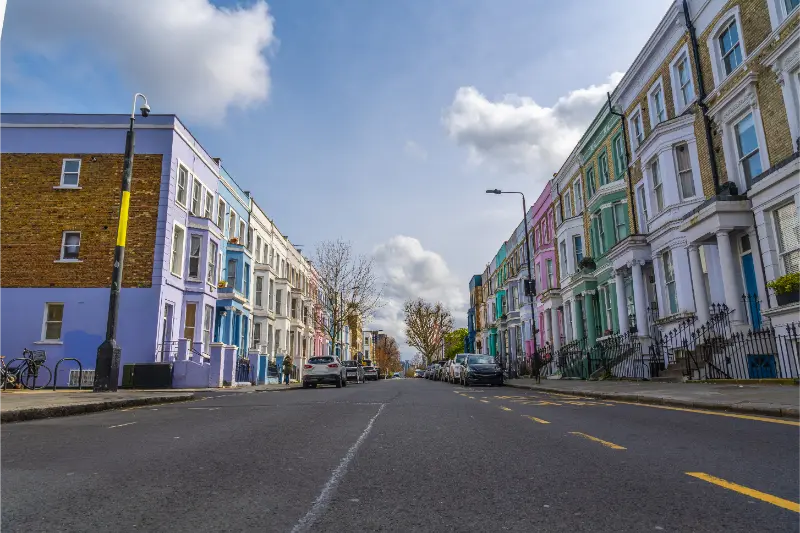
The colourful houses around Notting Hill are homes, not open-air studios. Photograph from public space, do not sit on private steps, block entrances or stage long shoots outside someone’s door. The same principle applies at stalls: ask before taking close-up photographs of traders or valuable objects.
Early morning gives softer light and fewer people, but a market street is supposed to look busy. If you visit Saturday at noon, embrace the atmosphere instead of expecting an empty pastel backdrop.
A realistic two- to three-hour route
Start near Notting Hill Gate, walk toward Portobello Road, browse selectively, continue north past the busiest antique stretch and under the Westway, then finish around Golborne Road. Stop when your attention drops. You do not need to inspect every stall for the walk to feel complete.
If you want more neighbourhood time, detour through residential streets before entering the market rather than after. Once you have spent two hours in crowds, your patience for slow architecture wandering may disappear.
Portobello Road versus Camden Market
Camden is larger, louder and more entertainment-driven, with food halls, alternative fashion and canal energy. Portobello feels more integrated into a residential neighbourhood and is stronger for antiques. They are not substitutes, but if you only have one market morning, choose based on atmosphere rather than fame.
Portobello Road versus Borough Market
Borough Market is primarily a food destination; Portobello is primarily a browsing and neighbourhood destination. Do not visit Portobello hungry expecting Borough’s concentration of specialist food traders.
Guided Notting Hill and market tours
A walking tour can help if you want architecture, film locations, music history and market context in one route. It is less necessary if you simply want to browse. Check whether a tour visits on an active market day and whether shopping time is actually included.
Affiliate link. Dreaming London may earn a commission from qualifying bookings at no extra cost to you.
Where to stay if you love this part of London
Notting Hill and nearby Kensington can be excellent bases if you prefer residential streets, parks and west London access over nightlife. They are not necessarily the cheapest areas. Compare accommodation with our where to stay in London guide.
Common mistakes
- Assuming every day has Saturday’s full antique market.
- Arriving at peak Saturday lunchtime and complaining that it is crowded.
- Only photographing houses and barely looking at the market.
- Blocking residential doorways for photos.
- Skipping indoor antique arcades.
Frequently asked questions
What is the best day for Portobello Road Market?
Saturday is the biggest and busiest day, especially for antiques. Friday can be a useful alternative for antique browsing with less intensity.
Is Portobello Road open on weekdays?
The street’s shops and parts of the market operate across the week, but the mix and scale of stalls change by day.
How long do I need?
Two to three hours is enough for a first market walk with browsing; add more time for the wider Notting Hill neighbourhood.

Which station is best?
Notting Hill Gate is natural for a south-to-north neighbourhood route; Ladbroke Grove can be more convenient for the northern market sections.
The best strategy
Choose the day, time and starting station based on your purpose. Portobello is at its best when you allow it to be both a market and a neighbourhood. Browse, look up at the architecture, continue beyond the most photographed block and give the street enough time to change character.
What changes north of the Westway
Many first-time visitors turn around once the most famous stretch of Portobello feels finished. Continuing toward Golborne Road reveals a less polished and more mixed neighbourhood texture, with cafés, shops and communities that are not organised around the same tourist image. This extension is especially worthwhile if you have already photographed the pastel streets and want more than the postcard version of Notting Hill.
Do not expect a second giant market. The value is the transition itself: how a world-famous street changes once you move beyond its most photographed blocks.
How to shop for antiques without pretending to be an expert
You do not need specialist knowledge to enjoy the antique market. Start with material and use: jewellery, ceramics, prints, books, textiles, silver or small decorative objects. Ask a dealer what makes one piece different from another. Serious traders usually know far more than a generic online list and can explain age, condition and restoration.
If a purchase is expensive, take time before paying. Ask whether the object has repairs, whether hallmarks or signatures are identifiable and whether shipping is practical. For international travellers, customs rules may matter for certain materials or high-value objects.
Notting Hill Carnival changes the entire area
If your London dates coincide with the annual Notting Hill Carnival around the August bank-holiday period, ordinary market-day advice does not apply. Roads, stations, crowds and local access operate differently for one of Europe’s largest street festivals. Plan specifically for Carnival or choose another day for a normal Portobello experience.
A family strategy
With children, set a clear end point before you start browsing. Markets expand time because adults stop unpredictably. Give children a simple hunt — unusual signs, colourful doors, old cameras, a snack — and include a park or open-space break afterward. A two-hour market walk can feel much longer to a child who has no reason to inspect antique jewellery.