
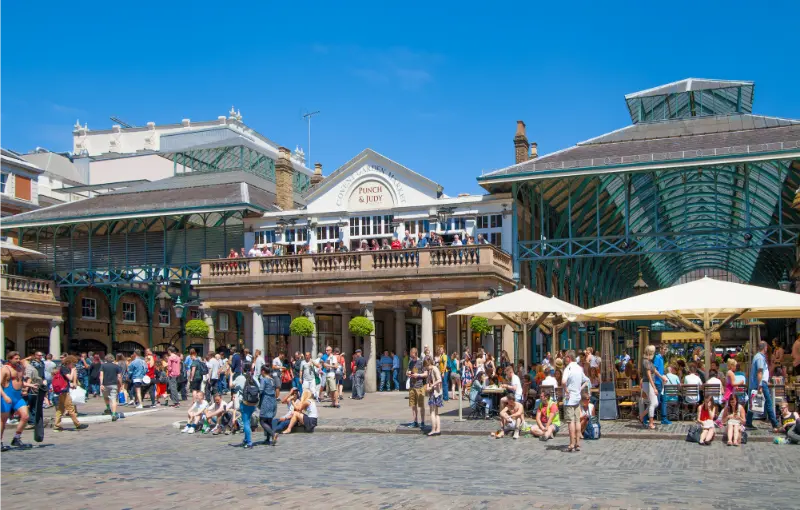
Covent Garden is easy to dismiss as a touristy square with street performers, but that misses why the area works so well. Within a few blocks you can move from a 19th-century market building to opera, small lanes, theatres, historic pubs, independent shops and some of central London’s best pedestrian connections. The smartest way to visit is not to spend two hours circling the Piazza; it is to use Covent Garden as the centre of a wider walk through Seven Dials, Neal’s Yard, the Strand and Soho.
| Best for | First-time visitors, theatre, food, shopping, evening atmosphere |
|---|---|
| Minimum time | 2 hours; half a day with Seven Dials and Soho |
| Nearest stations | Covent Garden, Leicester Square, Charing Cross, Holborn |
| Best tip | Walk in from another station at busy times rather than treating the Tube stop as essential |
Understand what the Market Building actually is
Covent Garden began as the garden of Westminster Abbey’s convent, and the square later developed into London’s major fruit and vegetable market. The present market building dates from the 19th-century redevelopment of the site. Today the function is completely different: the arcades contain shops, restaurants and small stalls, while the Piazza acts as a stage for public life and licensed street performance.
That history matters because it explains the architecture. Look at the relationship between the colonnades, open square and surrounding terraces rather than seeing the market only as a shopping centre. The official Covent Garden history records the market’s long evolution, including the creation of the formal market building in the 1820s. The old wholesale fruit and vegetable market itself eventually moved to Nine Elms in the 1970s.
Visit early for architecture, later for atmosphere
Covent Garden changes dramatically through the day. In the morning, deliveries are ending, performers are fewer and the Piazza is easier to photograph. Around lunch the market fills, and by late afternoon the combination of shoppers, theatre crowds and dinner reservations creates the energy most visitors associate with the area.
There is no single best time. Choose according to what you want. Early is best if you dislike crowds; midday is good if you want the market active; pre-theatre hours are best for atmosphere. If you are staying nearby, passing through twice at different times is often more satisfying than forcing a long visit at the busiest hour.
Do not miss St Paul’s Church and the quieter edge of the Piazza
St Paul’s Church, often called the Actors’ Church, sits on the western side of the Piazza. Its relationship with theatre history makes it a more meaningful stop than another souvenir shop. The churchyard behind it can also provide a calmer few minutes when the front of Covent Garden is crowded.
This is a good example of how to use central London well: whenever a famous square feels overrun, look for the churchyard, side street or parallel lane. The city rarely becomes quiet all at once, but it changes quickly from block to block.
Seven Dials is the natural next step
From Covent Garden, walk northwest toward Seven Dials. The name comes from the seven streets radiating from the small central junction. It is not a monumental sight, but it is one of the most useful pedestrian nodes in the West End because it connects Covent Garden with Soho, St Giles and the theatre district.

Neal’s Yard is nearby and visually distinctive, but it is very small. Treat it as a five- or ten-minute detour rather than building an itinerary around it. The same principle applies to many social-media-famous London spots: their value is often greatest when folded into a larger walk.
- Covent Garden Piazza → Seven Dials is an easy walk.
- Neal’s Yard is a short detour, not a half-day attraction.
- Continue west to Soho or north toward the British Museum.
Theatre: the area makes sense before and after a show
Covent Garden sits in the heart of London’s theatre district, with the Royal Opera House beside the Piazza and many West End theatres within walking distance. If you have tickets, arrive early enough to eat without watching the clock. Restaurants around the West End are accustomed to pre-theatre dining, but reservation pressure can be intense on popular nights.
After a show, resist the instinct to take the Tube for a journey that may be shorter on foot. Leicester Square, Soho and Trafalgar Square are close. Night walking through well-trafficked central streets can be one of the pleasures of a London evening, provided you use normal city awareness and choose routes that fit your destination.
Shopping without spending the entire visit inside chains
The market and surrounding streets mix major brands with smaller businesses. If shopping is part of your trip, give yourself a goal: beauty, stationery, British design, books, clothing or food. Otherwise the area can absorb time without leaving much memory beyond browsing.
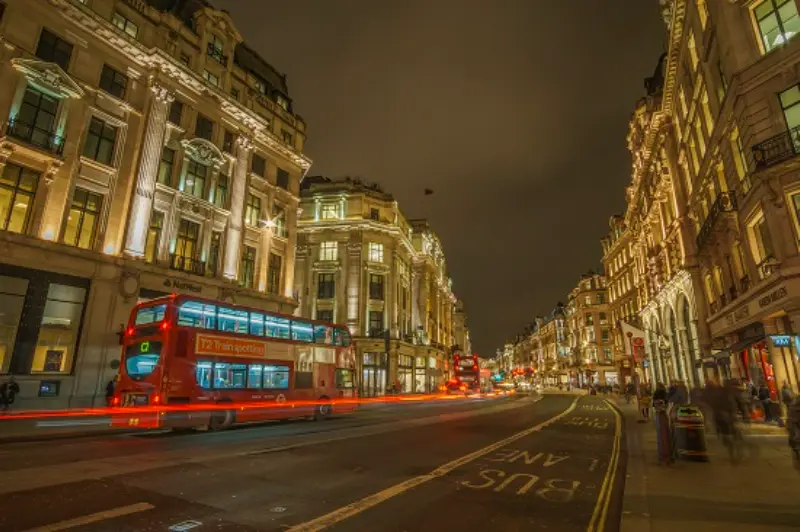
For independent-feeling streets, explore around Seven Dials and side roads toward Soho. For flagship retail, Regent Street and Oxford Street are not far. The best approach is to make Covent Garden one piece of a shopping walk rather than repeatedly crossing central London between stores.
Where to eat and drink
Covent Garden has an enormous range of food, from quick counters to destination restaurants. The challenge is not finding somewhere; it is choosing without losing an hour to indecision. If you have a theatre booking, prioritise reliability and walking distance. If you are exploring casually, move toward Seven Dials, Chinatown or Soho and choose based on what looks appealing rather than what has the longest social-media queue.
Historic pubs are scattered through the West End, and some are more rewarding for atmosphere than for food. If pub culture interests you, use our London pub guide. For broader food planning, see what to eat in London.
A better two-to-four-hour route
Start at Somerset House or the Strand, walk into Covent Garden through the eastern side of the Piazza, explore the Market Building, pass St Paul’s Church, then continue to Seven Dials and Neal’s Yard. From there choose one direction: west into Soho, north toward Bloomsbury and the British Museum, or south through Leicester Square to Trafalgar Square.
This route is stronger than arriving by Tube, circling the Piazza and leaving from the same station. It turns Covent Garden into a hinge between central London neighbourhoods. For more route ideas, see our best walks in London and neighbourhood guide.
How Covent Garden fits into a smarter central-London day
Covent Garden works best as connective tissue between bigger anchors. If you begin at the British Museum, walk south through Seven Dials and arrive before lunch. If the National Gallery is your morning priority, cross from Trafalgar Square through the Strand and use Covent Garden for lunch, shopping and theatre atmosphere. In the evening, the neighbourhood becomes a natural pre-show zone for the West End. This is more efficient than treating the Piazza as a destination that requires a separate Tube journey.
Do not limit the area to the Market Building. Neal Street, Monmouth Street, Seven Dials and the streets toward Drury Lane change the texture quickly. Neal’s Yard is photogenic but tiny; visit because it is on your route, not because social media makes it look like a half-day attraction. If street performers are part of the appeal, give yourself time to stop rather than blocking circulation for one photograph.
What changes the experience most
Timing matters. Late morning lets you see shops and the market area fully awake without immediately colliding with theatre crowds. Late afternoon is livelier and works well before dinner or a performance. Covent Garden Underground station is convenient but can feel constrained at busy times; Leicester Square, Holborn and Charing Cross may fit your route better. Walking in from a neighbouring district is often the nicest arrival.
If you want a guided layer rather than independent browsing, compare Covent Garden walking and food experiences on GetYourGuide. The useful tours are the ones that explain theatre history, food or nearby streets—not a generic circuit that simply repeats what you can read on the plaques.
Frequently asked questions
Is Covent Garden Market free to enter?
Yes, walking around the Piazza and Market Building is free. You pay only for shopping, food, performances that require tickets and other individual activities.
How long should you spend in Covent Garden?
Around two hours is enough for the Piazza, Market Building and nearby lanes. Half a day works better if you add Seven Dials, a meal, shopping or a theatre-related stop.
Is Covent Garden worth visiting if you do not like shopping?
Yes. Its architecture, street life, theatre connections and location between Soho, the Strand and Bloomsbury make it useful even without shopping.
Which station is best?
Covent Garden is closest, but Leicester Square, Charing Cross and Holborn can be practical depending on your route. Walking in often avoids unnecessary transfers.
Official information and final planning note
For details that can change — opening times, temporary closures, booking rules, access arrangements and special events — check the official pages before travelling: Covent Garden official site.
Covent Garden is most memorable when it becomes part of a walk rather than a single piazza stop. Let theatre, food, Seven Dials and the neighbouring West End streets determine how long you stay.
Nearby cultural stops include Somerset House and the Courtauld Gallery, both easy to combine with Covent Garden on foot.