INDEPENDENT LONDON TRAVEL GUIDES

Dreaming London

PLAN • EXPLORE • EXPERIENCE LONDON

Author: Sophie

  • London Zoo Guide: How to Plan a Better Visit with Kids or Without Them

    London Zoo Guide: How to Plan a Better Visit with Kids or Without Them

    London Zoo can be one of the easiest family days in the city to over-plan. The site is large enough that you will not see every animal at its most active, feeding times and talks can shift, some exhibits close before the main gates, and seasonal opening hours change across the year. The best visit is not a sprint from species to species. It is a flexible half-day or full-day route built around a few priority habitats, breaks and whatever is happening when you arrive.

    The zoo is run by ZSL, a conservation charity, and sits on the northern edge of Regent’s Park. Online advance tickets are normally better value than buying at the gate, and opening/last-entry times vary by season. For the 2026–27 autumn/winter schedule, the zoo opens at 10:00 and closes earlier as daylight shortens; last entry is one hour before closing. Check the official London Zoo opening-times page for your exact date rather than relying on a fixed annual timetable.

    Best forFamilies, wildlife, a slower outdoor day
    Allow4–6 hours for most visitors
    OpeningSeasonal; usually from 10:00
    BookingAdvance online tickets usually best value
    Best pairingRegent’s Park, Primrose Hill, Camden

    Decide whether this is a half-day or a full-day attraction

    Families with younger children can easily spend most of a day here because animal viewing is only part of the experience. Walking, food stops, play, toilets and moments when a child simply wants to watch one animal for twenty minutes all add time. Adults moving efficiently can cover far more in four hours. Decide before arrival whether you are treating the zoo as the main event or as one part of a Regent’s Park/Camden day.

    If the zoo is the main event, do not schedule a timed attraction immediately afterward. Animals are unpredictable and the best moments rarely happen on a timetable. Leaving a flexible finish lets you stay when a habitat is active instead of dragging everyone away for a reservation across town.

    Choose three priority zones before you arrive

    A zoo map invites completionism. Resist it. Pick three animals or habitat areas that matter most to your group and treat everything else as a bonus. This changes the emotional tone of the day: you are no longer “behind schedule” because a child watched penguins too long or because one part of the zoo required a detour.

    Check the current map because animal locations and development work change over time. If a must-see species is temporarily off-show, knowing in advance prevents disappointment. Daily talks can also be a better organising tool than a rigid clockwise route.

    Animal activity matters more than checklist order

    Many animals rest for long periods, especially in warm weather. An enclosure that seems empty at noon may be active later. If a priority animal is not visible, move on and return if the route makes sense. Do not spend thirty minutes pressing against glass because the itinerary says you must see it now.

    Early arrival can be useful, but no time guarantees activity. Weather, feeding, husbandry and individual behaviour all matter. Treat wildlife watching as observation, not a scheduled performance.
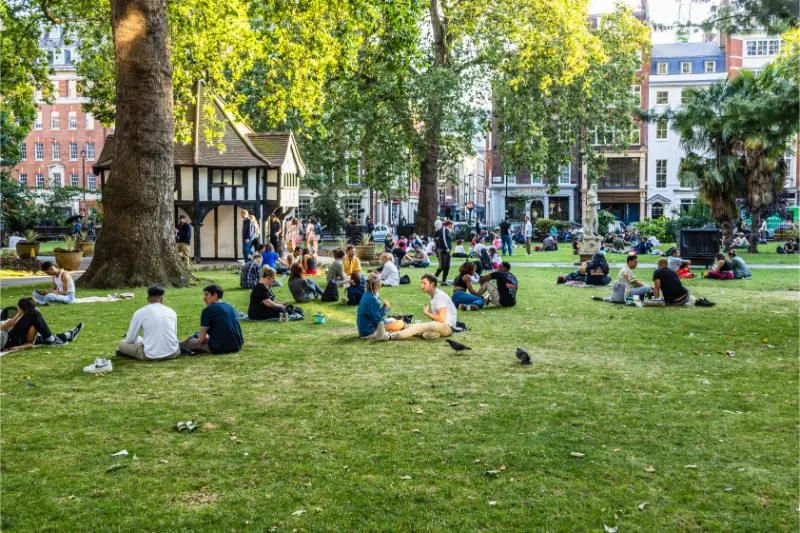
    People Relaxing in A London Park

    London Zoo with young children

    The strongest family strategy is to alternate viewing with movement and rest. Two dense animal areas followed by food or play is usually better than three straight hours of exhibits. Bring snacks, water and clothing for changeable weather. The site includes indoor and outdoor areas, but this is fundamentally an outdoor-heavy attraction.

    Children under 16 must be accompanied by an adult under current entry rules. For a wider family plan, compare the zoo with the Science Museum and our London with kids guide. The zoo is best on a day when you want less formal sightseeing and more freedom to slow down.

    Ticket strategy

    ZSL states that its best-value standard tickets are available online in advance, with prices varying by demand/date and optional donations. That means publishing one “correct” ticket price in a travel guide is not very useful. Check the official calendar for your date and compare the advance price with any legitimate discount you qualify for.

    Current offers can include schemes tied to National Rail tickets or Visitor Oyster Cards, but terms change. Verify the official offers page before building a plan around a discount.

    Opening hours are seasonal. For the current autumn/winter schedule, London Zoo lists 10:00–17:00 from 3 September to 23 October 2026, with last entry at 16:00; from 24 October 2026 to 12 February 2027 it lists 10:00–16:00, with last entry at 15:00. Check the official opening-times page for your date, especially around seasonal events.

    Food and breaks

    Zoo days involve more standing than people expect. Eat before everyone becomes hungry, not after. A mid-morning drink and an early lunch can avoid peak queues and keep children from reaching the point where every decision becomes difficult. If you prefer to eat outside the zoo, remember that leaving and re-entry policies should be confirmed for your ticket type.

    Regent’s Park gives you excellent post-zoo space for a walk or picnic in good weather. Our Regent’s Park and Primrose Hill guide is the natural continuation.
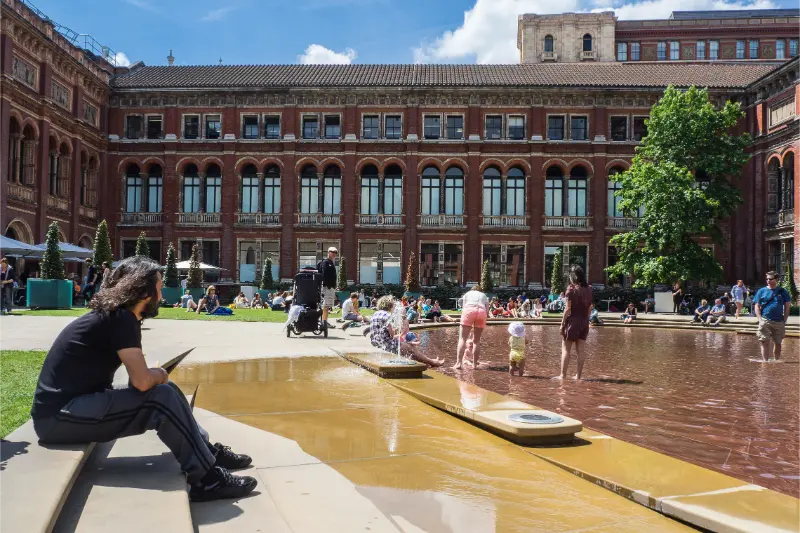
    Natural History Museum Garden London

    Should you add Camden on the same day?

    Yes, if your group still has energy. Camden is close enough to make a logical evening extension, especially for food. But do not promise children a full zoo day, Primrose Hill sunset and several hours in Camden Market. Choose one extra element. The Camden guide can help you keep that extension compact.

    Going without children

    Adults sometimes skip the zoo because it is perceived as a children’s attraction. If you are interested in conservation, animal behaviour or zoological history, a quieter weekday visit can be rewarding. Read the interpretation, attend keeper talks and give yourself time in fewer habitats. ZSL’s conservation work is part of the institution’s identity, and the visit is stronger when you engage with that context instead of treating the animals as a photo list.

    Ethics and what to look for

    Modern zoos generate legitimate debate about captivity, conservation and education. Rather than avoiding the question, use the visit to examine it. Look for information about breeding programmes, field conservation, habitat design and welfare. Ask what role a city zoo claims to play and whether the interpretation supports that claim.

    This is particularly useful with older children. It turns the day from passive entertainment into a discussion about biodiversity, human impact and conservation choices.

    Seasonal planning

    Winter visits are shorter because the zoo closes earlier, but crowds can be lower. Summer gives longer days and more time outdoors, though heat and busy school-holiday periods change the pace. Rain is not automatically a disaster because some exhibits are indoors, but persistent bad weather can reduce enjoyment of the walking between habitats.

    Use our best time to visit London guide to place the zoo in the wider trip, and always recheck seasonal opening times close to departure.

    Common mistakes

    • Trying to see every species.
    • Buying at the gate without checking cheaper advance options.
    • Arriving late in winter when the visiting day is already short.
    • Skipping breaks until children are exhausted.
    • Planning another major timed attraction immediately after.
    • Assuming an animal will be visible on demand.

    Frequently asked questions

    How long do you need at London Zoo?

    Four to six hours suits many visitors. Families who use play areas, talks and long meal breaks may spend most of the day.
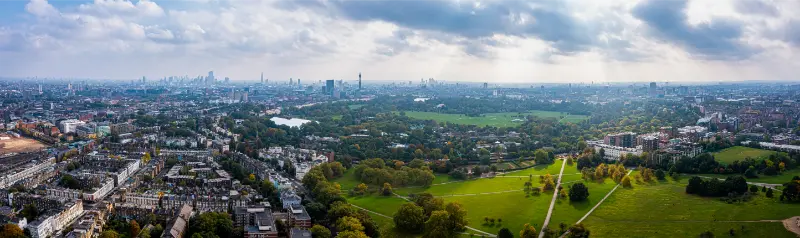
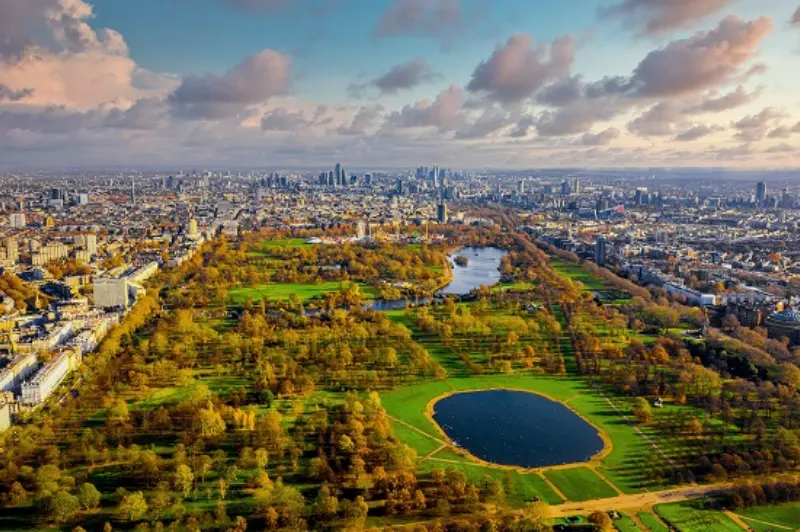
    Hyde Park Aerial View London

    Is London Zoo inside Regent’s Park?

    It sits on the northern side of Regent’s Park, making the park and Primrose Hill natural additions before or after the visit.

    Should I buy tickets in advance?

    Usually yes. ZSL states that online advance tickets are its best-value standard option, and date-based pricing means planning ahead can save money.

    Is it worth visiting in winter?

    It can be, especially if you value lower crowds, but opening hours are shorter and some animals may spend more time indoors. Arrive early.

    A better zoo day

    The best London Zoo visit has slack in it. Pick priorities, arrive with enough time, stop when you need to, and let animal behaviour change the plan. Then use Regent’s Park or Camden as an optional ending rather than another obligation. That approach works for adults and children because it treats the zoo as a place to observe rather than a collection to complete.

    Zoo or Natural History Museum for an animal-focused family day?

    They answer different interests. London Zoo is about living animals, behaviour and conservation in a largely outdoor setting. The Natural History Museum is free, weather-proof and stronger for dinosaurs, evolution, geology and the scale of scientific collections. If the forecast is poor or your family has only two hours, the museum may be the easier choice. If children want a slower day outdoors and have specific living animals they hope to see, the zoo makes more sense.

    On a longer family trip, doing both on separate days works well because the experiences do not duplicate each other. Our Natural History Museum guide helps you compare the practical demands.

    What if the weather turns bad?

    Do not abandon the visit at the first shower. Use indoor houses and covered areas while rain passes, then return outdoors. Persistent cold rain is different: shorten the route, focus on priorities and finish with Regent’s Park only if conditions improve. A family day is successful when everyone leaves interested, not when every map icon has been completed.
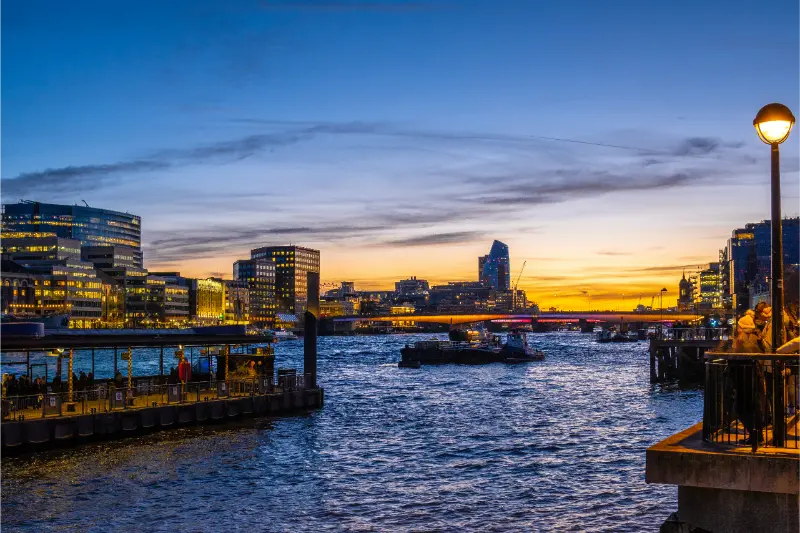
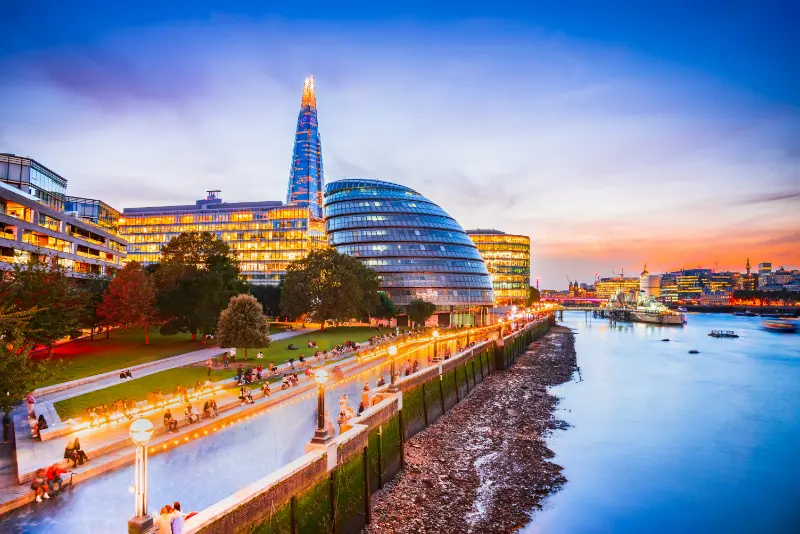
  • Tate Modern London: How to See the Best of It in 2–3 Hours

    Tate Modern London: How to See the Best of It in 2–3 Hours

    Tate Modern is one of London’s defining cultural spaces, but the building can make first-time visitors feel as though they are missing something. The former Bankside Power Station is enormous, the permanent collection is spread across more than one building and several levels, displays change, major exhibitions require separate tickets, and the Turbine Hall can absorb attention before you have seen a single collection room. The solution is not to memorise a perfect room-by-room route. It is to understand how Tate Modern works and decide what kind of visit you want.

    For most travellers, two to three hours is enough for a strong first experience. General collection displays are free, while major temporary exhibitions are ticketed. Tate’s 2026 map shows collection displays across several levels of the Natalie Bell and Blavatnik buildings, connected by bridges, with the Turbine Hall at the heart of the complex. Check the official Tate Modern visitor information and current map before travelling because individual displays change frequently.

    Best forModern and contemporary art, architecture, rainy days
    Permanent collectionFree
    Good first-visit length2–3 hours
    LocationBankside, beside the Thames
    Best pairingSouth Bank, Shakespeare’s Globe, Borough Market, St Paul’s

    Start with the building

    Before choosing artworks, give the building ten minutes. The power station’s scale explains the museum’s personality: vast industrial volume, long vertical routes, unexpected bridges and a central hall designed for work that would overwhelm a conventional gallery. The Turbine Hall is not simply a lobby. It has become one of the world’s best-known spaces for large-scale commissions and public art.

    Stand at one end and look through the full length of the hall, then look upward. This gives you an orientation point that will be useful later. When you become disoriented between levels, return mentally to the Turbine Hall and the river side of the building.

    Do not search for a single chronological route

    Visitors often expect a museum to begin in 1900 and progress neatly decade by decade. Tate Modern has frequently organised collection displays around themes, media and ideas rather than a single timeline. That can be confusing if you expect a textbook sequence, but it becomes interesting once you start comparing works across countries and generations.

    Choose two or three themes that genuinely interest you: abstraction, photography, political art, performance, material experimentation, post-war painting, installation, moving image. Spend time there, then use the rest of the museum as discovery. Displays evolve, so an article that promises “Room 4, then Room 7, then Room 9” becomes outdated quickly.

    A realistic two-hour route

    Begin in the Turbine Hall, then go directly to one major collection level rather than browsing shops and cafés first. Spend about forty-five minutes in your first cluster of galleries. Cross into the other building to understand the architecture and see a contrasting group of works. Take a short break, then spend another forty-five minutes on a second area. Finish with a final circuit through the Turbine Hall or the river side of the museum.

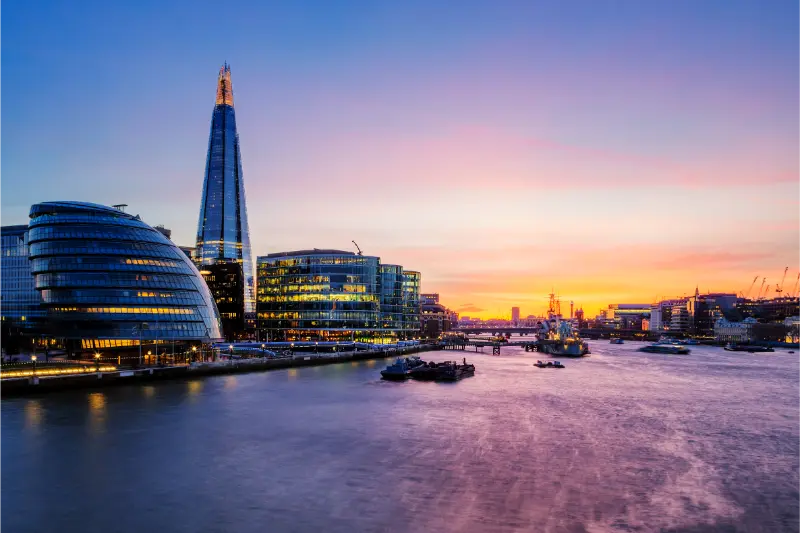
    The Shard and London City Hall from River Thames

    The important part is to leave one third of your time unassigned. Contemporary art often produces stronger reactions—positive or negative—than visitors expect. If a room makes you curious, stay. If it does nothing for you, move on. You do not receive a prize for completing the floor plan.

    How to look at contemporary art when you “don’t get it”

    You do not need to like every work, and you do not need specialist vocabulary. Start with physical questions. What is the object made from? How does its scale affect you? Does it require movement, sound or time? Why might the artist have chosen this material instead of paint or stone? What changes when an everyday object enters a museum? Only then read the label. This order makes the experience less like homework.

    If a work still leaves you cold, that is a legitimate response. Spend energy on the next room. Tate Modern is large enough that forcing yourself to admire every canonical work is the fastest route to museum fatigue.

    Should you pay for a temporary exhibition?

    Ticketed exhibitions can be excellent, but do not assume they are necessary to “complete” Tate Modern. If a particular artist matters to you, book it and organise the free collection around that timed entry. If the exhibition is only vaguely interesting, the permanent collection can easily fill your visit for free. In 2026, Tate continues to run major ticketed exhibitions alongside free collection displays, so always check what is on for your exact date.

    For a blockbuster exhibition, avoid stacking another major museum on the same day. A paid exhibition plus free collection rooms can already be a three- to four-hour art session.

    The best way to connect Tate Modern with London

    Tate Modern sits on one of London’s strongest walking corridors. Walk west along the river for the South Bank, visit Shakespeare’s Globe, or continue to Borough Market. Cross the Millennium Bridge for St Paul’s Cathedral and the City. Continue east for Borough Market and then toward Tower Bridge if you have the energy.

    Natural History Museum London

    This is why I rarely recommend travelling to Tate Modern only for the museum and immediately taking the Tube away. The riverside setting is part of the visit. Even in poor weather, a short walk across the Millennium Bridge gives the building context. If you are comparing London’s two Tate museums rather than trying to visit both in one day, see our Tate Britain guide for a very different collection and atmosphere.

    Tate Modern with children

    Children often respond well to the building’s scale, the Turbine Hall and artworks that use unusual materials. Keep the visit short and let them choose between rooms. A simple challenge—find the largest work, the strangest material, the piece that looks hardest to make—works better than explaining movements in modern art. Combine the museum with a riverside walk rather than another long indoor attraction.

    If you are planning a family itinerary, use our London with kids guide and the Science Museum guide to balance art with more interactive days.

    Photography, bags and practical rhythm

    Rules can vary by exhibition and artwork, so follow gallery signage rather than assuming photography is always permitted. Travel light. Large museums become noticeably less comfortable when you are carrying shopping or luggage. If you have a timed exhibition, arrive early enough to orient yourself before entry instead of crossing the building in a rush.

    Take a break before you feel exhausted. A ten-minute coffee or river view after ninety minutes preserves attention for the final galleries. Waiting until everyone is tired usually means the last half hour becomes purposeless wandering.

    Common first-time mistakes

    • Trying to understand every artwork before moving on.
    • Assuming the permanent collection requires a ticket.
    • Planning an exact room sequence months in advance even though displays change.
    • Spending so long inside that there is no time for Bankside and the Thames.
    • Adding the National Gallery or British Museum immediately afterward simply because both are free.

    Frequently asked questions

    Is Tate Modern free?

    General admission to the collection displays is free. Major temporary exhibitions and some events are ticketed.

    How long should I spend there?

    Two to three hours is ideal for many first-time visitors. Art enthusiasts can spend much longer, especially with a paid exhibition.

    Boat at River Thames Pier London

    Is Tate Modern worth visiting if I do not know modern art?

    Yes, particularly if you treat the museum as exploration rather than a test. The building, Turbine Hall and variety of media make it accessible even without art-history knowledge.

    What should I do after Tate Modern?

    Walk. The most natural options are Shakespeare’s Globe and Borough Market, the wider South Bank, or St Paul’s Cathedral across the Millennium Bridge. Our best London walks guide helps connect these areas.

    A better way to judge the visit

    Do not ask how many galleries you completed. Ask whether you found three or four works you are still thinking about after leaving. Tate Modern is most rewarding when you allow surprise, disagreement and curiosity. Build a loose route, respect your attention span, and let the riverside location complete the experience.
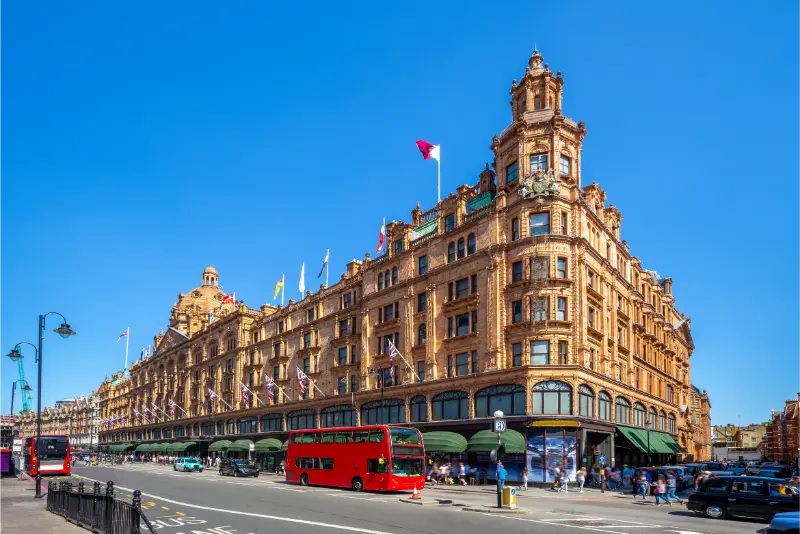
    Tate Modern or Tate Britain?

    These museums are related but not interchangeable. Tate Modern focuses on international modern and contemporary art in an industrial Bankside setting. Tate Britain, in Millbank, concentrates on British art across a much longer historical span. If Turner, Constable, the Pre-Raphaelites or the development of British art matter more to you, Tate Britain may be the better single choice. If you want installation, twentieth-century experimentation, global modernism and a dramatic building, Tate Modern is usually the stronger first visit.

    Trying to do both in one day is possible, but not automatically wise. They are connected by the Thames corridor and public transport, yet the real limitation is attention. Two large art museums can consume six hours before travel, lunch and breaks. On a short trip, choose one and combine it with a neighbourhood. On a longer trip, separate them so each has room to register.

    Where to pause and reset

    If you feel saturated, leave the galleries for ten minutes rather than forcing another floor. Look across the Thames, walk through the Turbine Hall or have a coffee. Contemporary art often needs mental space because the media, scale and ideas change rapidly from room to room. A deliberate pause is not wasted museum time; it is what allows the next section to feel distinct.

  • National Gallery London: A Smarter First Visit Without Trying to See Everything

    National Gallery London: A Smarter First Visit Without Trying to See Everything

    The National Gallery is one of those London museums that can be either magnificent or exhausting. The collection is free to enter, the location on Trafalgar Square could hardly be more central, and more than a thousand paintings may be on display at any one time. The problem is obvious: if you arrive without a plan and try to “do the whole museum”, the rooms quickly become a blur. A better first visit is selective. Give yourself two or three hours, decide which periods or artists matter most to you, and leave while you are still looking carefully rather than merely moving from label to label.

    This guide is built for that kind of visit. It explains how to use the National Gallery efficiently, what to prioritise, where it fits into a central London day and how to avoid duplicating what you may already see at the British Museum, the V&A or Tate Modern. General admission is free; the Gallery recommends booking a free timed ticket for faster entry, while walk-up admission is also possible. Always check the official National Gallery visitor page before travelling because room closures and temporary exhibitions change.

    Best forPainting, art history, first-time London visitors
    General admissionFree; some temporary exhibitions are ticketed
    Good first-visit length2–3 hours
    Main entranceSainsbury Wing, Trafalgar Square
    Best pairingWestminster, Covent Garden, Soho or a West End evening

    Why the National Gallery deserves a dedicated visit

    The National Gallery is not a museum of every type of object. Its focus is Western European painting from the late medieval period to the early twentieth century, which makes it unusually coherent. You can move from religious panels and Renaissance experiments in perspective to Dutch interiors, grand portraits, landscapes, Romanticism and the colour of the nineteenth century without changing museum. That continuity is one reason a two-hour visit can still feel substantial.

    It is also one of London’s best-value major attractions. You do not need to justify an expensive ticket by staying for six hours. You can visit for ninety minutes, return another day, or use a Friday evening to see a smaller selection. That flexibility makes it ideal for travellers building a realistic itinerary rather than trying to maximise the number of objects seen per pound.

    A sensible first route: start with a question, not a room number

    Room numbering and displays can change, especially when paintings travel or galleries are reconfigured. Instead of memorising a fixed sequence, choose a chronological or thematic question. You might ask: how did European painting move from gold-background devotional images toward convincing space and human presence? How did portraiture become more psychologically direct? How did landscape change from background scenery into the main subject? A question gives the rooms a narrative even when individual works move.

    For a first visit, I would divide the museum into four broad stages: early Renaissance and Renaissance painting; seventeenth-century Dutch, Flemish and Spanish work; eighteenth- and early nineteenth-century British and European painting; then nineteenth-century French and Post-Impressionist work. Spend longer in the stage that interests you most and skim the rest. The goal is recognition and comparison, not completion.

    Six paintings worth slowing down for

    Famous works are not automatically the “best”, but a handful make useful anchors because they open a door into larger parts of the collection. Jan van Eyck’s Arnolfini Portrait rewards close looking at reflections, surfaces and tiny details. Leonardo da Vinci’s Virgin of the Rocks shows how composition, gesture and atmosphere can unify a complex religious scene. Diego Velázquez’s Rokeby Venus is useful for thinking about gaze and representation. J.M.W. Turner’s The Fighting Temeraire turns a historical subject into an image of technological and national change. Vincent van Gogh’s Sunflowers demonstrates how familiar reproductions flatten texture and colour. A Monet landscape makes a strong final comparison with the tighter techniques encountered earlier.

    Natural History Museum London

    Do not treat that as a compulsory checklist. Paintings may be temporarily off display, on loan or moved. Use the Gallery’s collection search on the day of your visit and choose alternatives if necessary. The deeper lesson is to stop in front of a few works long enough to notice decisions about light, scale, viewpoint, brushwork and storytelling.

    How long do you really need?

    For most first-time visitors, two to three hours is the sweet spot. Ninety minutes works if you choose ten to fifteen works in advance. Four hours is reasonable for art enthusiasts, but only if you include a proper break. Beyond that, visual fatigue usually becomes the limiting factor. If your day also includes Westminster or Covent Garden, a disciplined museum visit is far better than exhausting yourself before the rest of the day.

    A simple technique is to set a “last room” before you start. Once you reach it, decide whether you still have concentration for more. This sounds trivial, but it prevents the common pattern of spending most of your energy on the first galleries and then rushing past paintings you actually care about.

    When to go for a calmer experience

    The National Gallery is central, free and famous, so there is no secret hour when it is empty. Under the current visitor schedule it is normally open daily from 10:00 to 18:00 and until 21:00 on Fridays; it closes on 24–26 December and 1 January. General admission is free. You can book a free ticket for faster entry and visitor updates, while walk-up entry is also available. Opening time is useful if you want a focused visit before Trafalgar Square becomes busier; Friday evening is especially useful if you prefer museums later in the day. Check the National Gallery’s official visit page before travelling because exceptional hours can still apply.

    If one room is crowded because a tour group has arrived, move on and come back. The building is compact enough that you rarely need to stand in a queue of people simply because a famous painting is temporarily surrounded. This flexibility is one of the advantages of a free permanent collection.

    National Gallery with children

    Families usually do better with a mission than with an art-history lecture. Ask children to find animals, mirrors, storms, unusual clothes or the smallest figure they can spot in a large painting. Choose six works rather than sixty. The museum becomes a place for observation instead of a test of patience. If you are planning several family attractions, compare the museum day with our broader London with kids guide.

    Tourists with Map near Big Ben London

    Because admission to the permanent collection is free, there is no pressure to stay when attention disappears. You can leave, cross Trafalgar Square, take a break and continue your day. That makes the National Gallery easier with children than many expensive timed attractions.

    What to combine with the National Gallery

    The location is almost as valuable as the collection. From Trafalgar Square you can walk to Whitehall and Parliament Square, into St James’s, through Leicester Square to Chinatown and Soho, or east toward Covent Garden. A very efficient day is Westminster in the morning, lunch around Covent Garden, two hours in the Gallery and a West End show in the evening.

    If you want a second, shorter art stop, the National Portrait Gallery is immediately beside Trafalgar Square and creates a much more manageable pairing than crossing London for another huge collection. For a different day focused on British art from Tudor portraiture to Turner and the twentieth century, use our Tate Britain guide. Otherwise, pair the Gallery with one of our central London walking routes. Two heavyweight museums in one day often sound efficient on paper but produce diminishing returns.

    Should you book a guided tour?

    A good guided tour can be worthwhile if you want a narrative and do not already know which parts of the collection interest you. It is especially useful for a short first visit because a guide can connect works across periods instead of giving isolated facts. If you already enjoy choosing paintings independently, the free collection plus the Gallery’s own interpretation may be enough.

    Affiliate link. Dreaming London may earn a commission from qualifying bookings at no extra cost to you.

    Practical details that save time

    Use the Sainsbury Wing entrance, which the Gallery identifies as its main entrance and which provides step-free access. Book the free general-admission slot if you want the smoothest arrival, but do not confuse a free admission reservation with a ticket for a temporary exhibition. Security and bag policies can change, so travel light if possible. Save the museum map to your phone before arrival, but be willing to ignore it when a quieter room catches your attention.

    Houses of Parliament and Big Ben London

    Food inside a museum is convenient, but central London gives you endless alternatives within a short walk. Unless you specifically want to eat in the Gallery, I prefer using museum time for art and taking the break outside in Covent Garden, Soho or St James’s.

    Common mistakes

    • Trying to see every room: the result is usually fatigue, not a deeper visit.
    • Only photographing famous paintings: spend time looking before reaching for the phone.
    • Scheduling another huge museum immediately after: alternate art with walking, food or a neighbourhood.
    • Ignoring Friday evening: later opening can make an excellent itinerary tool.
    • Assuming every famous work is always on display: check the collection page before travelling.

    Frequently asked questions

    Is the National Gallery free?

    General admission to the permanent collection is free. Some temporary exhibitions require a paid ticket. A free timed general-admission reservation is recommended for faster entry, although walk-up entry is also available.

    Is two hours enough?

    Yes. Two focused hours can be better than four unfocused ones. Choose several periods or a short list of paintings and leave time for nearby London rather than treating the Gallery as an endurance event.

    Is it the same as the National Portrait Gallery?

    No. They are separate institutions, although they are very close to each other. The National Gallery focuses on paintings in the Western European tradition; the National Portrait Gallery focuses on portraits connected with British history and culture.

    What is the best nearby attraction?

    For first-time visitors, Westminster or Covent Garden are the easiest combinations because both are walkable and create a varied day. If you are seeing a show, the West End is even more convenient.

    My preferred way to visit

    I would arrive with no more than ten “must-see” paintings, start early or use a Friday evening, spend the first hour moving chronologically, then use the remaining time to follow whatever catches my attention. That balance between preparation and freedom is what makes the National Gallery work. The collection is too rich to finish, and that is a strength rather than a problem. A successful first visit should leave you wanting to return.

  • London West End Theatre Guide: How to Choose a Show, Seats and Tickets Without Overpaying

    London West End Theatre Guide: How to Choose a Show, Seats and Tickets Without Overpaying

    Seeing a West End show can be one of the best evenings in London, but buying theatre tickets is more confusing than it should be. Prices vary dramatically by seat, date and production; famous shows can sell months ahead; last-minute discounts sometimes exist; and two seats in the same price band can offer very different views. The goal is not simply to find the cheapest ticket. It is to understand what you are buying and fit the performance into a day that does not leave you exhausted before curtain-up.

    This guide focuses on the practical side of a London theatre night: choosing a show, reading seat descriptions, buying through reliable channels, planning food and transport, and connecting the evening with Covent Garden, Soho or our three-day London itinerary.

    Best forCouples, families, solo travellers and evening culture
    WhereMainly West End theatres around Covent Garden, Soho, Leicester Square and nearby streets
    Booking strategyBook must-see productions early; stay flexible for last-minute value
    Seat ruleCheck restricted-view notes and theatre-specific seating plans
    TransportMost theatres are walkable from several central Tube stations

    Choose the show before chasing a discount

    A 50% discount on a production you do not care about is not better value than paying more for the show you travelled to see. Start with preference: musical, play, family production, comedy or something experimental. Then decide whether the show is a must-do or simply an evening activity. That distinction determines how early you should book.

    Reliable ticket sources

    For a specific production, the theatre or official production website is a logical first check. For broader comparison and legitimate discount inventory, Official London Theatre is run by the Society of London Theatre. Its Leicester Square ticket booth and online service offer theatre tickets, and profits support the theatre industry. Check Official London Theatre’s ticket booth information rather than assuming every “half-price” kiosk around the West End is equivalent.

    How to think about seat value

    The cheapest seat can be excellent value or genuinely frustrating. Theatre architecture varies: a high balcony may feel distant in one venue but surprisingly good in another; a side seat may lose part of the stage; a column or safety rail can affect sightlines. Read the exact restriction and look at theatre-specific seating information before paying.

    For musicals, central visual composition can matter; for dialogue-heavy plays, acoustics and proximity may matter more. If you are tall, have limited mobility or dislike steep balconies, comfort may be worth more than a small price saving.

    Matinee or evening?

    A matinee can solve several itinerary problems. It leaves the evening free for dinner and walking, may be easier for families and can fit a rainy afternoon. Evening performances create the classic West End atmosphere and pair naturally with Soho or Covent Garden. Check performance schedules carefully because matinee days vary by production.

    Do not overfill the sightseeing day

    Theatre nights are more enjoyable when you are not arriving after twelve hours of walking. On a show day, make the afternoon lighter: a museum, a neighbourhood walk or a long lunch. Westminster plus the Tower of London plus shopping plus a 19:30 musical is technically possible and often miserable.

    Regent Street with Union Flags London

    A good pre-theatre plan

    1. Finish major sightseeing at least 90 minutes before you need to be at the theatre.
    2. Eat near the theatre rather than crossing London for a famous restaurant.
    3. Confirm the exact venue; some productions have similar names or multiple associated theatres.
    4. Arrive with enough time for security, toilets and finding your seat.
    5. Keep the post-show plan simple: a short walk, drink or direct transport back to the hotel.

    Covent Garden, Soho or Leicester Square before the show?

    Covent Garden is strong for an atmospheric walk and early dinner; Soho offers the broadest food and nightlife choice; Leicester Square is convenient but can feel intensely touristy. Your theatre location should decide the neighbourhood. Our Covent Garden and Soho guides help you build the walk rather than bouncing between districts.

    Theatre with children

    Check the production’s age guidance and venue rules before promising a show. Running time matters as much as content, especially for an evening performance. A child who loves the story can still struggle with a late finish after a full sightseeing day. Matinees are often the safer family choice.

    Dress code

    Most West End theatres do not require formal dress for ordinary performances. Wear something comfortable enough to sit in for several hours and appropriate for the weather outside. A special outfit can be part of the fun, but do not let outdated dress-code myths make the evening less practical.

    Intervals, late arrival and phones

    Performance rules vary, but latecomers may have to wait for a suitable admission point, and some productions restrict re-entry. Switch phones off rather than merely dimming the screen. Photography and recording are generally restricted during performances. Follow the venue’s instructions rather than assuming rules from another theatre apply.

    Last-minute tickets

    Last-minute inventory can produce excellent value when you are flexible about the show, date and seat. It is a poor strategy for a must-see production on your only free night. Use official channels and compare the actual seat location, not just the discount percentage. Dynamic pricing also means the same production can look very different across dates.

    Where to stay for theatre-heavy trips

    Soho, Covent Garden, Bloomsbury, Mayfair edges and parts of Westminster can all make West End evenings easy, but hotel prices vary sharply. Staying directly beside a theatre is not necessary if you are within a simple Tube or bus journey. Compare the broader areas in our where to stay in London guide.

    Affiliate link. Dreaming London may earn a commission from qualifying bookings at no extra cost to you.

    Central London Street at Night

    Frequently asked questions

    How early should I book a West End show?

    Book early for a specific popular production, limited run, weekend or holiday date. Stay flexible if price matters more than the exact show.

    Are TKTS tickets legitimate?

    The Official London Theatre ticket booth in Leicester Square is run by the Society of London Theatre and is a recognised source for theatre tickets and deals.

    What should I wear?

    Smart casual is common, but formal wear is not generally required. Comfort and weather matter more.

    Can I take children?

    Often yes, but age limits, content guidance and running times vary by production and venue. Check before booking.

    Why theatre can be more memorable than another attraction

    A show gives the itinerary a different kind of anchor. Instead of collecting another view or historic room, you share a live event with an audience in a city where theatre is part of the cultural identity. Plan the practical details well, leave energy for the performance and the West End can become the evening you remember most clearly from the trip.

    Cheap tickets: understand the difference between discounts, rush and lotteries

    There is no single universal “cheap West End ticket” system. Some productions offer digital lotteries, day seats or rush tickets; others use official ticket booths, dynamic pricing or last-minute releases. Policies belong to the individual production and can change during a run, so use the show’s official website or an authorised seller for the current method.

    A discount is only good value if the seat suits you. A heavily reduced restricted-view ticket can be perfect for a show you mainly want to hear, and frustrating for choreography or visual spectacle. Read the seat description before paying.

    How to judge a seat without obsessing over the perfect row

    West End theatres vary enormously in size and shape. “Stalls,” “dress circle” and “upper circle” do not guarantee the same experience in every building. Look at the theatre’s own seating plan and, where available, verified view information. Pay attention to pillars, overhangs, very steep upper levels and whether a child will be able to see over the person in front.

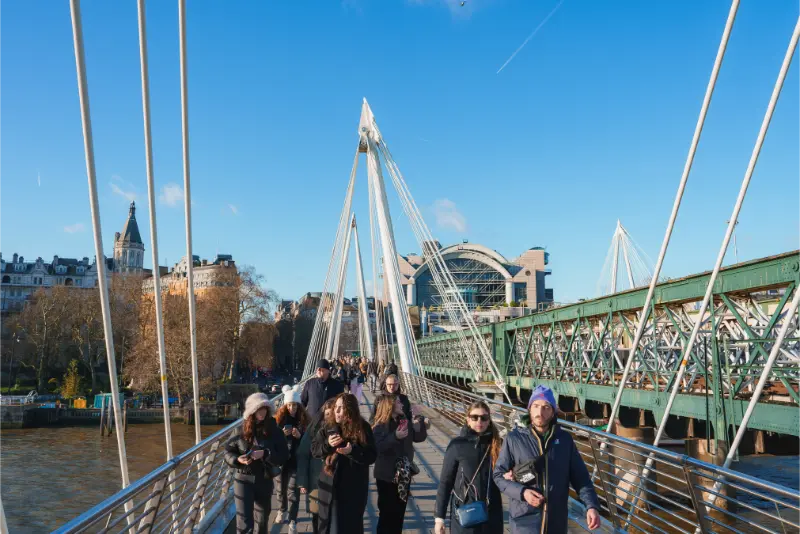
    Golden Jubilee Bridges and Charing Cross Station London

    For many productions, a central seat slightly farther back is better than a much closer seat at an extreme side angle. For intimate plays, proximity can matter more. The show itself should influence the seat choice.

    Accessibility should be arranged with the theatre, not guessed from the seating map

    Historic theatres can have stairs, narrow corridors and layouts that are not obvious online. If step-free access, wheelchair space, hearing support, relaxed performances or companion seating matter, contact the theatre or official box office before purchase. Do not assume the cheapest online seat can be exchanged later for an accessible position.

    Arrival times may also differ for access arrangements, so keep the confirmation and any instructions offline on your phone.

    Dinner before the show: stay close

    The classic mistake is booking a restaurant across central London because it has better reviews. Theatre evening logistics are much easier when dinner is within walking distance. Soho, Covent Garden, Chinatown and Seven Dials provide enough variety that you rarely need a Tube journey between meal and curtain.

    Allow more time than the restaurant’s estimated service. If dinner becomes slow, paying the bill early and skipping dessert is better than arriving stressed after the doors close. Our Chinatown and Leicester Square guide and Soho guide help with the surrounding evening.

    After the show: know the route home before the applause

    Thousands of people can leave nearby theatres at similar times. Save the walking route to your station or hotel before the performance, especially if the show ends late or you are travelling with children. A ten-minute walk to a less crowded station can sometimes be more comfortable than joining the nearest entrance immediately.

    Check service changes on the day. London theatre is a night-time experience, but the transport network does not operate identically every night on every line.

  • Hyde Park and Kensington Gardens: The Best Walking Route Through Central London’s Green Heart

    Hyde Park and Kensington Gardens: The Best Walking Route Through Central London’s Green Heart

    Hyde Park and Kensington Gardens look like one enormous green space on many maps, which leads visitors to treat them as a shortcut between attractions. They deserve better. The two adjoining parks contain royal history, memorials, long walking avenues, the Serpentine, gardens, playgrounds and some of the easiest breathing room in central London. They are also a practical bridge between Westminster, Knightsbridge, South Kensington and Notting Hill.

    This guide focuses on a west-to-east or east-to-west walk that can be shortened at several points. It links directly with our Kensington guide, Notting Hill guide and best London walks.

    Best forWalking, families, monuments, gardens and itinerary breathing room
    CostFree general access
    Useful time2–4 hours depending on stops
    Good connectionKensington/Notting Hill ↔ Knightsbridge/Mayfair
    Main planning factorSeasonal gate times in Kensington Gardens

    Understand the two-park geography

    Kensington Gardens lies to the west; Hyde Park continues east. The boundary is easy to cross without noticing if you are following the water or broad paths. For itinerary purposes, think of the combined landscape as a long green corridor. Enter from the side closest to your previous attraction and keep moving generally toward your next neighbourhood.

    Kensington Gardens highlights

    Kensington Palace, the Albert Memorial, formal gardens, broad tree-lined paths and family areas give the western side a more royal and landscaped character. If the palace is a priority, treat it as a separate ticketed attraction rather than assuming it can be absorbed into a park walk in twenty minutes.

    The Serpentine as an orientation line

    The water gives the combined parks a useful visual anchor. Walking near it helps you avoid constant map checking and creates a natural central route. You do not need to hug the shoreline the entire way; use it to understand where you are, then detour to monuments or quieter paths.

    Hyde Park changes toward the east

    As you approach Hyde Park Corner and Park Lane, the city becomes more present again. Memorials and major roads frame the edge, while the open lawns still create distance from traffic. This eastern side works well before continuing into Mayfair or toward Buckingham Palace and Westminster.

    A 2.5-hour walking route

    1. Start near Kensington Palace or the west side of Kensington Gardens.
    2. Walk through the gardens toward the Albert Memorial area.
    3. Continue toward the Serpentine and choose one lakeside section.
    4. Cross into Hyde Park and follow a broad eastward route.
    5. Finish near Hyde Park Corner, Marble Arch or Park Lane depending on your next stop.

    With children

    The parks are valuable for families because they provide unstructured time between attractions. Do not turn the walk into another checklist. Choose one playground or open area, allow children to move freely and keep the route shorter than you would for adults. This is particularly helpful after a South Kensington museum morning.

    Kensington Palace: separate attraction, separate decision

    Kensington Palace can be a meaningful royal-history visit, but entry is ticketed and the interior requires time. If you want the palace, give it a proper slot and shorten the park walk. If you only want gardens and exterior context, enjoy the park without feeling obliged to buy another ticket.

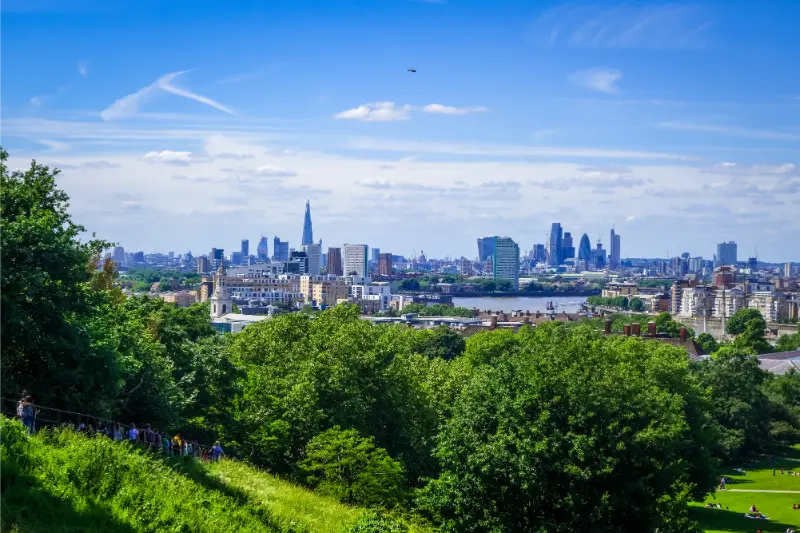
    Canary Wharf from Greenwich Park London

    Seasonal opening and events

    Royal Parks opening times and event arrangements vary. Kensington Gardens generally closes at dusk while Hyde Park has different access patterns, and major events can temporarily affect routes. Check Hyde Park and Kensington Gardens information before relying on a late-evening crossing.

    Winter and Christmas period

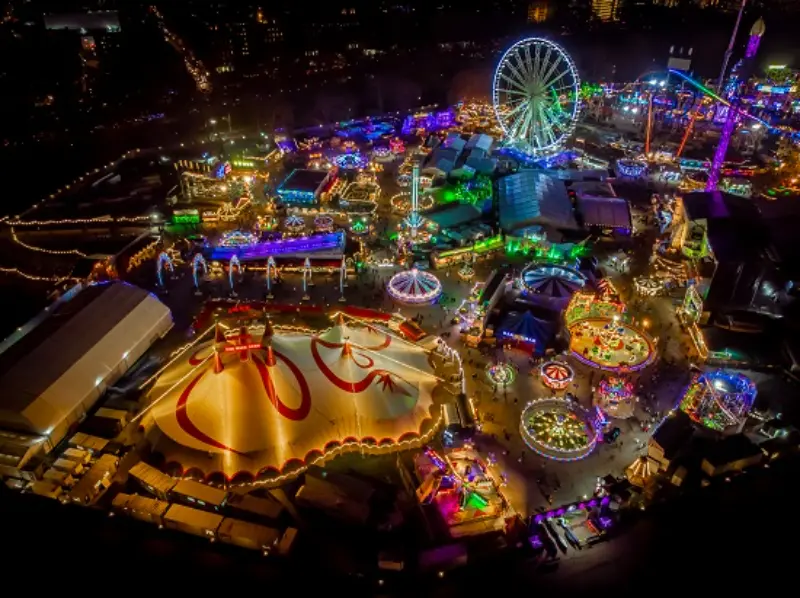
    Hyde Park can host major seasonal events that change the atmosphere, crowd levels and movement around parts of the park. Even if you are not attending an event, surrounding transport and paths may be busier. Build extra time into the route and check closures rather than assuming a normal summer map applies.

    Where to eat

    There are cafés and kiosks in and around the parks, but you do not need to plan the walk around one specific venue. On good-weather days, a simple picnic can be one of the most enjoyable uses of the space. If you want a proper meal, the surrounding neighbourhoods offer far more choice than the park itself.

    Accessibility and route length

    Main paths are generally easier than many central-London streets, but the combined parks are large. Travellers with limited walking tolerance should choose one half rather than trying to cross the full landscape. Exit points toward public transport are frequent enough to make a shorter route practical.

    Frequently asked questions

    Are Hyde Park and Kensington Gardens the same park?

    They are adjoining Royal Parks with different identities and access arrangements, although visitors can walk between them easily.

    How long does it take to walk across?

    A direct crossing can be relatively quick, but a meaningful sightseeing walk with stops is better planned as two to four hours.

    Is the park safe after dark?

    Use normal city awareness and respect gate closures. For a sightseeing itinerary, daylight and early evening are usually more enjoyable because views and park features are easier to appreciate.

    Canary Wharf Aerial Panorama London

    Can you combine the parks with museums?

    Yes. A focused South Kensington museum visit followed by Kensington Gardens is one of the best balanced combinations in the area.

    The hidden value is pacing

    These parks are not only attractions. They are infrastructure for a better London trip. A long green walk can replace a Tube journey, connect several neighbourhoods and give your brain a break from crowds and ticketed sights. Used that way, Hyde Park and Kensington Gardens become part of the rhythm of London rather than another item to complete.

    Think of Hyde Park and Kensington Gardens as one continuous green corridor

    Visitors often treat the two parks as separate attractions because the names change, but on foot they function as a long west-east green route. That makes them useful for connecting Kensington and South Kensington with Mayfair, Marble Arch and the royal quarter without spending the whole journey beside traffic.

    Choose a direction based on the rest of your day. If you are visiting museums in South Kensington, walking east after the museum can lead toward central London. If you start near Westminster or Mayfair, heading west creates a natural transition toward Kensington.

    The Serpentine is a navigation tool

    The Serpentine and Long Water divide and orient the landscape, making it easier to understand where you are than a dense street map does. Use the water as a spine, then choose detours toward memorials, gardens or museums depending on your interests.

    This is particularly useful with children: instead of announcing another “attraction,” let the route be about ducks, open lawns, boats or a snack stop, then rejoin the sightseeing plan afterward.

    Diana Memorial Playground and family pacing

    Families with younger children can use Kensington Gardens as a genuine play break rather than a scenic corridor. The Diana Memorial Playground is a destination in its own right, but access and busy-period arrangements can change, so check current information before promising children a specific entry time.

    After a morning museum visit, an outdoor play period can be much more valuable than a second museum. Our London with kids guide explains why this alternating rhythm works so well.

    Natural History Museum Garden London

    Bad weather changes the route, not the whole day

    In steady rain, do not force the full park crossing. Use shorter segments between indoor anchors such as Kensington Palace, the museums or nearby cafes. When the rain passes, re-enter the park at the closest gate. London’s large parks are useful precisely because you can sample them in sections rather than complete a prescribed circuit.

    For a weather-first plan, see our rainy-day London itinerary.

    Memorials and landmarks: choose a few, do not zig-zag across the park

    The parks contain fountains, memorials, sculptures and historic features, but chasing every named point can turn an easy green walk into a confusing zig-zag. Decide whether your route is about the Serpentine, Kensington Palace, gardens, family play or simply getting from west London toward the centre. Add landmarks that naturally sit along that line.

    This principle matters with limited mobility too. A direct, enjoyable route with frequent benches is more valuable than a theoretical “complete” park circuit that creates unnecessary distance.

    Morning and evening feel very different

    Early mornings are better for quiet paths, joggers and soft light; afternoons bring picnics and heavier visitor traffic; summer evenings can be lively long after museum closing time. If the park is primarily a walking route, choose the time that fits your energy. If photography is the goal, low light usually adds more depth than a bright midday crossing.

    Seasonal daylight changes dramatically in London, so a winter park plan needs a much earlier start than a summer one.

    Picnic or cafe?

    Both parks work well for a simple picnic, but carrying food all morning can be annoying on a museum day. Buy something shortly before entering the park or use a cafe when the weather is uncertain. The best choice is the one that preserves the walk rather than forcing a detour across the park because one specific snack was on a list.

  • Regent’s Park and Primrose Hill: A Green London Walk with One of the Best Free Views

    Regent’s Park and Primrose Hill: A Green London Walk with One of the Best Free Views

    Regent’s Park and Primrose Hill form one of central London’s best green walking combinations because they offer two completely different experiences in a compact area. Regent’s Park is formal and designed: gardens, broad avenues, sports fields, water and carefully framed views. Primrose Hill is simpler and more exposed, with a ridge-top panorama that makes the city feel surprisingly close. Together they can fill anything from 90 minutes to half a day.

    This route connects naturally with Marylebone, Camden and our best London viewpoints guide. The key is to walk in one direction rather than zigzagging between the park, hill and surrounding neighbourhoods.

    Best forWalking, gardens, free views, families and slower mornings
    CostGeneral park access is free
    Suggested time2–4 hours
    Strong combinationMarylebone → Regent’s Park → Primrose Hill → Camden
    Planning issuePark gates and seasonal daylight

    Start south if you want a logical city-to-park transition

    Beginning near Marylebone or Regent’s Park station creates a satisfying transition from streets into landscape. Enter through the southern part of the park and move gradually north. This avoids the temptation to visit Primrose Hill first, then backtrack across the same ground.

    Queen Mary’s Gardens

    For many visitors, Queen Mary’s Gardens are the horticultural highlight. The Royal Parks notes around 8,000 roses in the garden, making summer particularly rewarding. Even outside peak flowering, the structured layout and quieter corners provide a strong contrast with the open lawns elsewhere in the park.

    Do not cross the park only on the fastest path

    The point of Regent’s Park is not efficiency. Use the main avenues for orientation, but allow one detour through gardens, water or a quieter edge. The park’s design reveals itself through sequences of enclosed and open spaces; marching straight from one gate to another misses that rhythm.

    Primrose Hill for the view

    The climb is short but noticeable. At the top, central London lines up in a broad skyline rather than a single framed landmark. The view is free and especially useful for travellers who want a skyline experience without another ticket. On clear evenings it can be beautiful, but sunset attracts crowds and summer-night access rules can change.

    Current access details

    The Royal Parks currently lists Regent’s Park pedestrian gates from 5:00 with closing times that vary by season; Primrose Hill has separate access arrangements. In 2026, weekend summer closures apply on Primrose Hill from 22:00 to 06:00 on Friday, Saturday and Sunday nights from early April into November. Check current Royal Parks information before planning a late visit.

    A strong 3-hour route

    1. Start near the south side and walk through formal gardens.
    2. Pause around the lake or an open lawn rather than rushing north.
    3. Continue toward the northern edge of Regent’s Park.
    4. Climb Primrose Hill for the skyline.
    5. Finish in Primrose Hill village or continue to Camden if you want markets and food.

    With children

    The combination works well for families because there is room to move and no pressure to “complete” an attraction. The danger is distance: adding Camden Market after a long park walk can turn a relaxed morning into an overtired afternoon. Keep the final neighbourhood optional.

    Regent’s Park and London Zoo

    London Zoo occupies part of the wider park area but is a separate ticketed attraction and deserves its own time. Do not treat it as a quick add-on to the walking route. If the zoo is your priority, make it the main event and use the park for a shorter before-or-after walk.

    Canary Wharf from Greenwich Park London

    Where this fits in a London itinerary

    This is an excellent “recovery” half-day after a dense Westminster or museum schedule. It also pairs well with Marylebone’s quieter streets. On a first three-day trip, it may be secondary to major landmarks; on a four- or five-day trip, the green space can improve the overall pace dramatically.

    Best seasons

    Spring and summer show the formal gardens at their most colourful, while autumn adds foliage and often softer light. Winter can be crisp and beautiful, but closing times arrive earlier and exposed areas feel colder. The hill is less enjoyable in strong wind, while the lower park still offers sheltered routes.

    Photography and sunset

    Primrose Hill is popular for skyline photography, but the foreground is part of the scene. Step away from the densest cluster at the summit and look for compositions that include slope, trees and people rather than zooming only into towers. If you stay for sunset, leave enough time to exit comfortably before any seasonal access restriction.

    Frequently asked questions

    Is Primrose Hill free?

    Yes, general access is free.

    How long is the climb?

    The hill is modest, but the gradient is enough to be noticeable. Most visitors can reach the summit quickly from the park side.

    Can you walk from Regent’s Park to Camden?

    Yes, and it is one of the best ways to turn the park into a broader neighbourhood route.

    Is it worth going only for the view?

    Yes if you are nearby, but the best experience combines the view with the park or a surrounding neighbourhood rather than making a special cross-city journey for ten minutes at the summit.

    The Shard and London City Hall at Sunset

    Why this route works

    Regent’s Park and Primrose Hill offer a form of sightseeing that does not depend on tickets, queues or a fixed start time. You can shorten the route, sit for half an hour, change direction with the weather or end in a completely different neighbourhood. That flexibility is exactly what many London itineraries are missing.

    Start with Regent’s Park, finish with the skyline

    The route works best when Primrose Hill is the climax rather than the first stop. Begin inside Regent’s Park, let the formal gardens and broad paths create a slower pace, then move north toward the canal edge and Primrose Hill. The gradual transition from designed park to open viewpoint makes the skyline feel earned without requiring a difficult hike.

    If you reverse the route, the hill is still enjoyable, but the rest of the park can feel anticlimactic. Direction is not mandatory; it simply changes the rhythm.

    Queen Mary’s Gardens for colour and a slower section

    Within Regent’s Park, Queen Mary’s Gardens add a more formal horticultural layer to a day that might otherwise be mostly broad lawns and long paths. Seasonal displays vary, so the garden is most rewarding when you are willing to notice what is actually in bloom rather than arriving with one specific photograph in mind.

    For families or older travellers, this is also a good place to reduce the pace before the climb to Primrose Hill. A bench break here can do more for the rest of the route than another coffee stop outside the park.

    Camden is an optional extension, not an obligation

    After Primrose Hill, you can continue toward Camden and the canal, but only if you still want crowds, food and commercial energy. The park walk is already a complete half-day experience. Adding Camden changes the mood dramatically, which can be either a perfect contrast or too much.

    If the group is tired, finish in Primrose Hill village or return by public transport. A good London day does not need a famous market attached to every park.

    Hyde Park Aerial View London

    Sunset is popular for a reason—but morning can be better

    Primrose Hill attracts crowds around sunset, especially on clear evenings. If you want quiet photographs and more space, morning is often easier. The trade-off is that the light and skyline atmosphere differ. Photographers should check the sun direction for their season rather than assuming sunset is automatically best.

    For more skyline choices, compare our London viewpoints guide.

    The canal edge creates a natural bridge to Little Venice or Camden

    Regent’s Park is not isolated from the rest of north London. The canal skirts the park and can connect the day toward Camden in one direction or toward Little Venice in the other. You do not need to walk the full canal route; even a short section changes the feel of the day from formal parkland to waterside London.

    If you want the full route, use our Little Venice to Camden canal walk. If you are already tired, resist the temptation to add it simply because it is nearby. The park and Primrose Hill are enough.

    A family day here works because not every minute is programmed

    Regent’s Park gives children room to move without every activity becoming a paid attraction. Bring a snack, allow time on lawns and treat the hill as a destination rather than a deadline. London Zoo sits beside the park and can fill most of a day on its own; combining a full zoo visit with every park highlight and Camden usually creates an overloaded schedule.

    Our London Zoo guide helps decide whether the zoo should be the anchor or whether you would rather keep the day almost entirely outdoors.

    What to bring

    A small water bottle, comfortable shoes and one extra layer are more useful than a complicated park kit. The open hill can feel windier than surrounding streets, and summer shade is less predictable on the exposed viewpoint. If you plan to picnic, buy food before the final climb so you are not searching for shops when you are ready to sit down.

    Add Abbey Road and St John’s Wood

    Music or cricket fans can connect the park with our St John’s Wood and Abbey Road guide.

  • Hampton Court Palace: How to Plan a Full Day from London Without Rushing

    Hampton Court Palace: How to Plan a Full Day from London Without Rushing

    Hampton Court Palace is one of the best London-area day trips for travellers who want royal history without spending the whole day inside central London. It combines Tudor rooms, later royal apartments, kitchens, courtyards, formal gardens and a maze in a site large enough to feel like a destination rather than a single building. The main planning mistake is treating it as a quick palace visit and then discovering that the gardens alone can add hours.

    This guide is built around a realistic half- to full-day visit. It also helps you decide whether Hampton Court deserves a place in your itinerary instead of Windsor, Greenwich or another excursion. For a broader comparison, use our London day trips by train guide.

    Best forTudor history, royal palaces, gardens and families
    AllowAt least 4 hours; 5–7 hours for palace and gardens without rushing
    TicketsTicketed; online and on-the-day purchase options exist
    Main planning issueSeasonal opening, route closures and event days
    Easy mistakeSpending too long on the first palace route and rushing the gardens

    Why Hampton Court is different from Buckingham Palace

    Buckingham Palace is the working-monarchy symbol in central London and has seasonal visitor access. Hampton Court offers a much broader historical site where you can move through Tudor and later royal stories, then step into large gardens. If your interest is Henry VIII, court life and architectural layers, Hampton Court is usually the richer historical experience. If ceremony and the modern monarchy matter more, read our Buckingham Palace guide.

    Start with the Tudor story

    For first-time visitors, Henry VIII’s palace provides the strongest narrative anchor. The Great Hall, Tudor kitchens and connected rooms make more sense when you imagine the palace as a working court filled with servants, food, politics and ceremony rather than a sequence of preserved interiors. Give this part enough time to establish the story before moving to later royal apartments.

    Do not ignore the later palace

    Hampton Court is not frozen in the reign of one king. Later monarchs transformed and expanded it, creating architectural contrasts that are part of the fascination. Moving between Tudor and Baroque spaces shows how royal taste and the function of a palace changed. That contrast is one reason Hampton Court rewards a slower visit.

    Gardens, maze and family time

    The gardens are substantial, not decorative leftovers around the palace. Families may want to prioritise the maze and child-focused spaces, while garden enthusiasts can spend a long time in formal areas. In poor weather, shift more of the day indoors; in good weather, protect at least 90 minutes for the grounds.

    A realistic five-hour route

    1. Arrive close to opening and begin with the Tudor palace.
    2. See the Great Hall and kitchens before attention becomes fragmented.
    3. Move through selected later royal rooms rather than every available route at equal speed.
    4. Take a proper lunch or café break.
    5. Spend the final part of the visit in the gardens, maze or family areas according to season.

    Opening times and closures really matter here

    Historic Royal Palaces publishes date-specific opening information because the site has seasonal schedules, conservation work and occasional route closures. In September 2026, for example, some gardens and interior routes have temporary closures, and the Mantegna Gallery is closed until spring 2027. Check official Hampton Court opening and closure information shortly before your visit rather than relying on a static blog timetable.

    2026 ticket structure

    Ticket prices vary between peak and off-peak dates. Historic Royal Palaces currently lists adult admission until 27 November 2026 at £29 off-peak and £32 peak, with separate child and concession rates; a Winter Palace structure applies from 28 November. These are time-sensitive figures, so use them only as a planning reference and verify current official ticket prices before paying.

    Hyde Park Winter Wonderland Aerial View London

    Affiliate link. Dreaming London may earn a commission from qualifying bookings at no extra cost to you.

    Getting there from central London

    Most independent visitors use public transport and build Hampton Court as a self-contained excursion. Check your route on the day because engineering works can affect trains and local connections. The important planning point is to leave enough time after arrival: a long journey followed by a two-hour palace slot does not justify the effort.

    Hampton Court with children

    Children often respond well to the palace because there is more variety than in a formal state-room visit: kitchens, large halls, courtyards, stories of Tudor life, gardens and the maze. The site is still physically tiring. Do not schedule every room plus every garden feature. Let one family activity become the reward after the historical interiors.

    Best season

    Late spring and summer maximise garden time and daylight, but popular days are busier. Autumn can be atmospheric and less intensely crowded, while winter changes the visitor experience and may include seasonal programming. Because the balance between indoor and outdoor time matters so much, choose the season based on what interests you rather than assuming summer is automatically superior.

    Hampton Court versus Windsor

    Both are royal day trips, but they answer different interests. Hampton Court is especially strong for Tudor history, sprawling gardens and a sense of historical layers. Windsor offers a functioning royal castle and a different town-and-castle experience. If your trip can include only one, choose according to subject matter rather than fame.

    Frequently asked questions

    How long do you need?

    Four hours is the minimum I would plan for a first visit; five to seven hours gives the palace and gardens room to breathe.

    Do you need to book in advance?

    Tickets can be available on the day, but advance booking is sensible on popular dates and for a fixed itinerary. Special events can have different requirements.

    Big Ben Westminster Bridge and River Thames at Sunset

    Is Hampton Court inside London?

    It sits in southwest Greater London and is straightforward to reach from central London, but the day feels like an excursion rather than central sightseeing.

    Can you combine it with Kew Gardens?

    You can, but a first-time visit to both in one day is unnecessarily rushed. Choose one major attraction and keep the other for another day.

    Why Hampton Court deserves more than a checklist visit

    The palace becomes memorable when you connect rooms to the people and systems that filled them: cooking, ceremony, politics, religion, entertainment and display. Add the gardens and you have a complete historical landscape rather than a single monument. Give it enough time and Hampton Court can be one of the strongest history days of a London trip.

    Separate Tudor Hampton Court from Baroque Hampton Court in your mind

    One reason visitors feel overwhelmed is that Hampton Court contains different royal periods inside one complex. The Tudor story associated with Henry VIII and the later Baroque work connected with William III and Mary II create very different architectural and historical experiences. Treat them as two chapters rather than one continuous palace.

    If Tudor history is your priority, protect those rooms first. If architecture and state apartments matter more, give the later palace equal time. This prevents the common problem of spending too long in the opening section and rushing through the part you actually came to see.

    The gardens are not an optional afterthought

    On a good-weather day, the gardens change the visit completely. Formal avenues, water, seasonal planting and the wider estate provide the visual breathing room that palace interiors lack. The maze can be fun for families, but it should be treated as one small element rather than the main reason to come.

    King's Cross Station Roof at Night London

    In poor weather, prioritise interiors and accept a shorter garden loop. The ticket may include access to areas you technically could visit, but value is not measured by the percentage of the estate physically covered.

    Lunch strategy matters more here than in central London

    Hampton Court is a self-contained day. Leaving the palace area in search of a supposedly better lunch can break the rhythm and consume more time than expected. Decide whether you want to eat on site, bring a simple snack where permitted, or have a proper meal before or after the main visit.

    Families should avoid postponing food until the group is already tired. A palace with long corridors, gardens and queues becomes much harder once hunger turns every decision into a negotiation.

    Hampton Court versus Windsor Castle

    Both are royal day trips, but they feel very different. Windsor Castle is a working royal castle embedded in a town; Hampton Court feels more like a historic palace complex where Tudor and later royal history dominate. Choose Windsor for the castle-town experience and St George’s Chapel; choose Hampton Court for Henry VIII, palace interiors and larger formal gardens.

    If you have time for only one, personal historical interest should decide—not a generic ranking.

    Give the palace enough time for the stories to connect

    Hampton Court becomes much more memorable when you understand how rooms relate to court life rather than treating each as an isolated photo opportunity. Kitchens, ceremonial spaces, private apartments and gardens all answer different questions about who worked here, who was allowed where and how royal power was staged.

    If you are travelling with a strong interest in Henry VIII or the later Stuarts, read a short background summary before arrival. Twenty minutes of context can make the architecture far more intelligible than an extra hour spent moving quickly through rooms without knowing why they matter.

  • Kew Gardens London: What to See, How Long to Stay and the Best Way to Plan a Day

    Kew Gardens London: What to See, How Long to Stay and the Best Way to Plan a Day

    Kew Gardens is not a small London park with a few glasshouses. It is a 320-acre botanical landscape and UNESCO World Heritage Site with more than 50,000 living plants, major historic glasshouses, scientific collections, seasonal displays and enough walking to fill a full day. That scale explains the most common planning mistake: visitors give Kew two hours because it appears on a list of “things to do near Richmond”, then spend the entire visit moving between highlights.

    Kew works best as the main event. Build the day around plants, weather and seasonal light, then add Richmond only if you still have energy. Our Richmond guide explains how the two areas connect without pretending that Kew Gardens and Richmond Park can both be explored properly in one rushed day.

    Best forGardens, plants, architecture, photography, families and slow travel
    ScaleAbout 320 acres
    Good visit length4–6 hours; longer for enthusiasts
    Getting thereRail, Underground/Overground, bus and seasonal river options depending on route
    Key ruleCheck seasonal closing times before planning a late visit

    Choose three anchors, not ten

    Kew’s map encourages ambition because so many attractions look close together. They are not always close when you are walking. Choose three major anchors — perhaps Palm House, Temperate House and the Treetop Walkway, or glasshouses plus a seasonal garden and art feature — then let the route between them supply the smaller discoveries.

    Glasshouses are more than bad-weather backups

    The historic glasshouses are central to Kew’s identity. They also change the rhythm of the day: hot, humid interiors feel very different from the lawns and woodland outside. On cold or wet days they provide shelter, but in summer they can be tiring. Alternate indoor and outdoor spaces rather than visiting every glasshouse consecutively.

    Season changes the experience

    Kew is worth visiting throughout the year, but it is not the same attraction in every month. Spring can be about blossom and emerging colour; summer expands outdoor walking and long-day possibilities; autumn shifts attention toward foliage and texture; winter makes the glasshouses and structural landscape more important. Seasonal events can also change visitor flows and ticket demand.

    Current opening-time reality

    Kew publishes seasonal opening and closing times rather than one permanent schedule. In September 2026 the Gardens are open daily from 10:00 to 19:00 with last entry at 18:00; October and winter schedules become shorter. Because daylight and last entry matter so much at a large outdoor site, always check Kew’s official opening-times page for your exact date.

    Important for late-2026 visits: Kew currently lists the Waterlily House as closed for renovation until spring 2027, while the Minka House and Ice House are also temporarily closed for works. These are not permanent omissions from Kew, so check the official planned-closures page shortly before your visit. The Princess of Wales Conservatory remains the key place to see Kew’s giant Victoria waterlilies while the Waterlily House is unavailable.

    How to get there without overcomplicating it

    Kew Gardens can be reached from central London without a car, and the official site notes access by rail, bus and river, with several gates. Your best gate depends on the transport route and what you want to see first. Do not blindly follow a generic map pin to the “main entrance” if another gate makes more sense for your arrival.

    Hyde Park Aerial View London

    A realistic first-visit route

    1. Arrive near opening if you want quieter glasshouses and photography.
    2. Visit one major glasshouse before the busiest midday period.
    3. Walk through an outdoor landscape rather than taking the shortest path to the next attraction.
    4. Stop for lunch or a substantial break; Kew is too large for a continuous march.
    5. Choose one afternoon anchor and one optional final stop near your exit gate.

    Kew with children

    Families should plan around walking distance as much as attractions. A child can be enthusiastic about plants and still be exhausted by crossing the site repeatedly. Choose a compact route, include space to run and do not make every adult priority compulsory. On busy days, agree on what would make the visit feel successful before entering.

    Kew in bad weather

    Light rain does not ruin Kew because glasshouses and covered stops can break up outdoor walking. Heavy rain and strong wind can affect the experience much more, particularly if specific elevated or outdoor attractions close for safety. Check visitor notices on the day. If the forecast is truly poor, the Natural History Museum or V&A may offer a better use of your time.

    Tickets and booking

    Kew states that the best-value tickets are available by booking online. Prices and concessions vary, so avoid hard-coding an old price into your budget. Compare the official ticket with any third-party option on cancellation rules and inclusions, not just headline cost.

    Affiliate link. Dreaming London may earn a commission from qualifying bookings at no extra cost to you.

    Can you combine Kew with Richmond?

    Yes, if Kew remains the main attraction. A sensible combination is four or five hours in the Gardens followed by a short Richmond riverside walk and dinner. Trying to add a substantial Richmond Park hike creates a different day and usually involves too much transport and walking. Read our Richmond itinerary before deciding.

    Photography without missing the garden

    Kew is extremely photogenic, but constant stopping can fragment the experience. Choose a few locations where photography is a priority and spend the rest of the time walking normally. Early or later light can be attractive, but seasonal closing times may limit evening photography outside summer.

    Accessibility and pacing

    A large botanical garden requires more physical planning than a compact museum. Check official accessibility information, transport within the site where available, path conditions and gate locations. Travellers with limited walking tolerance should build a smaller loop around the most important features rather than assuming the map scale is trivial.

    Canary Wharf from Greenwich Park London

    Frequently asked questions

    How long do you need at Kew Gardens?

    Four to six hours is a realistic first visit. Plant enthusiasts can easily spend a full day.

    Is Kew Gardens free?

    No, Kew Gardens is a ticketed attraction, although ticket categories, concessions and special offers can vary.

    Can you visit Kew and Hampton Court on the same day?

    It is possible geographically, but poor as a first-visit plan. Both deserve several hours and involve substantial walking.

    Is Kew worth it in winter?

    Yes for glasshouses, structure and seasonal events, but daylight is shorter and some outdoor experiences are less prominent. Check the day’s schedule before travelling.

    Why Kew belongs in a London itinerary

    Kew gives London a different scale. Instead of moving between streets and landmarks, you spend hours inside a living collection where scientific research, landscape design and simple pleasure overlap. Treat it as a major destination rather than a side trip and the day becomes slower, more coherent and far more memorable.

    Plan Kew by season, because the same garden is not the same visit

    Kew changes more dramatically through the year than most London attractions. Spring rewards blossom, new growth and long outdoor walks; summer gives you the fullest garden experience but also the hottest glasshouse transitions; autumn brings colour and texture; winter makes the architecture of trees and glasshouses more important. Check the official “what’s looking good” information rather than expecting the same highlights in every month.

    This seasonal thinking also helps with time. On a cold or wet day, prioritize indoor glasshouses and shorter outdoor links. In warm, dry weather, reverse the balance and use the glasshouses as shorter punctuation within a mostly outdoor visit.

    Glasshouses require a different pace from outdoor gardens

    Temperature and humidity can change sharply when you enter a glasshouse, especially if you are wearing winter layers. Give yourself a moment to adjust and keep water available. Camera lenses and glasses can fog, so do not schedule a must-have photograph for the instant you walk inside.

    Giraffes at London Zoo

    Children often enjoy the physical contrast between environments, but repeated transitions can be tiring. Choose the glasshouses that fit your interests rather than entering every structure because it is there.

    Choose your entrance and exit with the rest of the day in mind

    Kew is large enough that the wrong exit can add a surprisingly long final walk when everyone is already tired. Before the last hour, decide whether you are returning directly to central London, continuing toward Richmond or eating locally. Then shape the final section of the garden toward the most useful gate.

    If you are combining Kew with Richmond, do not try to see every corner of both. A focused Kew visit plus a riverside evening is far more enjoyable than rushing through the gardens merely to say you also reached Richmond Park.

    Who should give Kew most of a day?

    Garden enthusiasts, photographers, families who like outdoor space and repeat London visitors can easily justify a long visit. First-time visitors on a three-day trip should think more carefully: Kew is excellent, but it competes with a full central-London day. The value depends on whether plants, landscape and a slower rhythm are part of what you came to London for.

    That is not a criticism. In fact, the slower rhythm is precisely Kew’s strength. It is one of the few major London attractions where doing less often improves the experience.

    Photography, tripods and the reality of a working botanical garden

    Kew is photogenic, but it is also a scientific institution and a living collection. Paths, glasshouses and planting areas can close or be redirected for horticultural work. Respect barriers even when a flower or composition looks better from the other side. If you carry specialist camera equipment, check Kew’s current photography rules before assuming tripods or commercial-style setups are permitted everywhere.

    For ordinary visitors, the best photographs usually come from slowing down: wide landscape first, then plant detail, then architecture. Trying to collect every famous angle is the fastest way to stop noticing the garden itself.

  • V&A London: How to Visit the Victoria and Albert Museum Without Museum Fatigue

    V&A London: How to Visit the Victoria and Albert Museum Without Museum Fatigue

    The Victoria and Albert Museum is the South Kensington museum most likely to surprise people who think they are “not museum people”. Its collections move across fashion, sculpture, furniture, photography, jewellery, architecture, ceramics, theatre and design. That variety is the reason it is wonderful — and the reason first-time visitors can lose an hour simply trying to decide where to begin.

    The right approach is not to cover the V&A. It is to build a route around two or three kinds of objects you genuinely want to see, then let the museum distract you a little. General admission is free and no booking is currently required for the permanent collections, although temporary exhibitions may be ticketed. Pair this guide with our Kensington guide for a full South Kensington day.

    Best forArt, fashion, design, decorative arts, architecture and photography
    General admissionFree; temporary exhibitions may be charged
    Good first visit2–3 hours
    Current hoursDaily 10:00–17:45; Friday until 22:00, with some galleries closing earlier
    Nearest stationSouth Kensington

    Choose a theme before you arrive

    The V&A contains far more than most visitors expect. A first visit works best if you choose one broad interest — fashion, sculpture, decorative arts, design, photography or historic interiors — and then add a second that contrasts with it. This prevents the museum from becoming a sequence of beautiful but disconnected rooms.

    The building is part of the collection

    Do not rush from object to object without looking at the museum itself. The courtyards, staircases, historic rooms and transitions between galleries are part of the experience. The V&A is particularly rewarding for travellers who enjoy architecture because the building reveals different periods and attitudes to display as you move through it.

    A first-time 2.5-hour route

    1. Begin with one high-priority collection rather than the nearest gallery.
    2. Spend around 45 minutes in that section without trying to read every label.
    3. Cross to a contrasting gallery or medium.
    4. Take a café or courtyard break if the museum is busy.
    5. Finish with one spontaneous gallery chosen because something on the map or doorway caught your attention.

    Why Friday evening can be useful

    The V&A currently stays open until 22:00 on Fridays, although some galleries close earlier. That creates a rare opportunity to move a major museum out of the middle of a sightseeing day. A Friday evening visit can work especially well after Kensington Gardens, Chelsea or a South Kensington lunch. Check the day’s gallery availability before relying on a specific room late in the evening.

    Temporary exhibitions: book only if they are genuinely your priority

    The V&A is known for major temporary exhibitions, but the permanent collection is already enormous and free. Do not assume you need a paid exhibition to make the visit worthwhile. If a temporary show is the reason you are coming, book it first and treat the permanent galleries as a flexible extra. If not, start free and decide how much museum time you really want.

    Current practical information

    V&A South Kensington currently opens daily from 10:00 to 17:45 and until 22:00 on Fridays, with some galleries closing earlier. General admission is free and no booking is required. Temporary closures and special events do occur; the museum has already published specific gallery closures and operational changes for late September 2026. Always check the official V&A visit page for your date.

    A note about the Fashion Gallery

    The V&A’s Fashion Gallery is undergoing redevelopment and is currently expected to reopen in autumn 2028. That is exactly the kind of detail that makes old online guides misleading. Fashion remains visible through other displays and exhibitions, but visitors travelling specifically for the traditional gallery should verify the current programme before planning the day around it.

    Natural History Museum London Visitors

    The V&A with children

    The museum can work very well for children if you convert “art and design” into observation games: find an object made for a purpose you do not recognise, choose the strangest chair, compare clothing from different periods, or sketch one decorative pattern. For younger children, a shorter visit is usually better than expecting them to follow an adult highlights list.

    If your family wants more overtly interactive content, consider splitting South Kensington across two days and visiting the Science Museum separately.

    Where to go afterwards

    Walk north for Kensington Gardens and Hyde Park, west for more of Kensington, or south toward Chelsea. The museum is also close enough to Knightsbridge for shopping, but the transition from a thoughtful design museum directly into crowded retail streets can feel abrupt. A garden walk often makes a better reset.

    Rainy-day value

    Because there is no need to pay for permanent-gallery entry, the V&A is excellent for flexible weather planning. You can visit for 90 minutes, leave when the rain stops and return another day without feeling that you must extract value from an expensive ticket. That flexibility is one reason it belongs in our rainy-day London strategy.

    Accessibility and quieter times

    The museum lists step-free entrances and accessibility support on its official website. It also notes that opening time and the period toward closing are typically quieter, while weekends, school holidays and some Friday late events can be busy. Visitors who need a calmer environment should use that information rather than assuming evenings are always quieter.

    Frequently asked questions

    Is the V&A free?

    Yes, general admission to the permanent collection is free. Temporary exhibitions and some events may require tickets.

    Do I need to book?

    The museum currently states that general entry does not require booking. Paid exhibitions may need advance tickets.

    Kensington Street London

    How long should I spend?

    Two to three hours is a strong first visit. Design enthusiasts can easily spend most of a day.

    Which South Kensington museum should I choose?

    Choose the V&A for art, design and decorative culture; Natural History for animals, Earth and evolution; Science Museum for technology, engineering and interactive learning.

    The V&A rewards selective curiosity

    A successful visit is not measured by floors completed. It is measured by the number of objects that make you look twice. Choose a few interests, use the museum’s free admission to remove pressure, and allow one unplanned detour. That combination captures what the V&A does better than almost any other London museum: it makes the design of ordinary things feel historically important.

    Choose an object story instead of a chronological marathon

    The V&A is most rewarding when you follow a question: how did people dress, furnish homes, communicate status, design everyday objects or borrow ideas across cultures? That approach creates a thread through a collection that would otherwise feel almost impossibly broad. Pick a material—ceramics, metalwork, textiles, photography—or a subject such as fashion or furniture and let that become the visit.

    You do not need to understand art history in advance. Read labels selectively and spend longer with objects that make you curious. The museum’s strength is the ability to move from a tiny domestic object to a monumental cast or architectural fragment within minutes.

    Use the building itself as a reset between galleries

    When visual fatigue sets in, stop looking at cases. Walk through the central spaces, pause in the courtyard when conditions allow, or sit somewhere without trying to “consume” another object. This is particularly important at the V&A because dense decorative displays can make twenty minutes feel like an hour.

    London Eye from Park Across Lake

    A short break often restores attention better than switching immediately to a different museum. If you still want a second South Kensington institution, decide after the break rather than before the day starts.

    Fashion, design and decorative arts for visitors who think they dislike museums

    People who say they are “not museum people” often respond well to the V&A because the collection is connected to things used in real life: clothes, chairs, jewellery, posters, photographs, buildings and household objects. Start with a subject you already care about. A traveller interested in clothing can ignore entire wings without guilt; an architecture enthusiast can do the same.

    This is also a good museum for teenagers with visual or creative interests because the visit can be based on design choices rather than on memorising dates. Give everyone permission to choose one object worth discussing at lunch.

    Pair the V&A with the neighbourhood, not only with other museums

    South Kensington is more than Exhibition Road. After the museum, walk toward Kensington, the Royal Albert Hall exterior, Hyde Park or quiet residential streets rather than automatically entering the Natural History Museum next door. The contrast between collection and neighbourhood gives the day better rhythm.

    If the V&A is your main cultural stop, a long lunch or park walk is not wasted time. It is what keeps the museum from blending into every other indoor attraction on the trip.

    Photography without turning the visit into documentation

    The V&A is one of the easiest museums to over-photograph because almost every room contains visually striking objects. A better method is to photograph only pieces that trigger a question, then note the gallery or object label so you can find the context later. Hundreds of unlabelled phone images become visual clutter almost immediately.

    If you are travelling for design inspiration, a short written note about why an object works—proportion, material, colour, typography, construction—is often more useful than another wide photograph of a display case.

  • Science Museum London: What to See, How Long You Need and a Better Family Plan

    Science Museum London: What to See, How Long You Need and a Better Family Plan

    The Science Museum sits only a few minutes from the Natural History Museum, but the experience is completely different. This is not simply a collection of old machines. It is a layered museum about invention, engineering, medicine, computing, space, transport and the way scientific ideas become part of everyday life. The challenge is the same as at every enormous London museum: the free entry encourages visitors to arrive without priorities, and the building can absorb half a day before you realise how much you have skipped.

    For most first-time visitors, the goal should be a focused three-hour visit rather than complete coverage. Families should also distinguish between free galleries and separately ticketed experiences. Use this article alongside our Kensington guide and Natural History Museum guide to decide which South Kensington museum deserves the larger share of your day.

    Best forTechnology, space, engineering, families and interactive learning
    General admissionFree, with some paid experiences and exhibitions
    Ideal first visitAround 2.5–4 hours
    Nearest stationSouth Kensington
    Main planning ruleChoose themes first; do not simply move floor by floor

    Start with interests, not the floor plan

    A map is useful for navigation but not for deciding what matters to you. Before entering, choose two themes: for example space and transport, medicine and computing, or engineering and interactive family galleries. That simple choice prevents the visit from becoming a slow march through every room. It also gives children a sense of purpose if they can help choose the priorities.

    Space and engineering: strong first-time anchors

    For many visitors, the galleries connected to space exploration and engineering provide the clearest starting point because the objects are large, recognisable and easy to connect with wider history. Instead of reading every label, pick a few objects and ask what changed because they existed. That approach produces a more memorable visit than accumulating dozens of facts.

    Medicine and the human story

    The museum’s medicine collections can be especially rewarding for adults and older children because they show how scientific progress is not a clean sequence of brilliant discoveries. Tools, public-health ideas, beliefs and technologies all reflect their time. Give this area enough attention to notice the social history rather than treating it as a room of unusual instruments.

    Interactive galleries and paid experiences

    Some of the museum’s most family-oriented or immersive experiences require separate tickets or timed entry. Do not assume that “free museum” means every activity is included. Check the official programme for your date and decide whether a paid experience genuinely adds value for your family. Booking several extras can turn a flexible museum morning into another tightly timed attraction day.

    A practical three-hour route

    1. Arrive near opening and orient yourself before committing to a gallery.
    2. Spend about 45–60 minutes in your first priority area.
    3. Move to a contrasting theme rather than an adjacent gallery simply because it is nearby.
    4. Take a proper break before an interactive or family section.
    5. Leave while attention is still high, then walk Exhibition Road or continue into Kensington.

    Science Museum with children

    Children tend to engage best when the visit includes movement, choices and at least one hands-on element. The mistake is expecting them to care equally about every historical display. Let each child choose one object, gallery or activity they want to find. Build the route around those decisions, then add your own priorities. This creates ownership without giving up structure.

    Natural History Museum London

    For a wider family plan, see our London with kids guide. South Kensington can be a brilliant family day, but two major museums plus a park is usually enough; adding a third large museum often reduces enjoyment.

    Booking and current visitor information

    General admission is free, but the Science Museum currently requires visitors to pre-book a free general-admission ticket. The museum is normally open daily from 10:00 to 18:00, with last entry at 17:15, and closes on 24–26 December. Some paid experiences and temporary exhibitions need separate tickets, and occasional gallery or whole-museum closures are published in advance. Check the Science Museum’s official visit page for your exact date rather than relying on an old screenshot or assuming free entry means walk-in entry.

    How to combine it with the Natural History Museum

    If you insist on visiting both in one day, make one a two- to three-hour main visit and the other a 60- to 90-minute highlights stop. Families often benefit from putting the more interactive museum second, when energy for quiet observation is lower. Adults whose priority is architecture and collections may reverse that order.

    Add outdoor time

    Museum fatigue is real. Kensington Gardens and Hyde Park are close enough to provide a genuine change of pace. Even a short walk outdoors can reset attention before dinner or another attraction. Our Hyde Park and Kensington Gardens guide gives a route that can start naturally from South Kensington.

    What not to do

    • Do not promise children every interactive activity before checking age limits and ticket requirements.
    • Do not schedule another timed attraction immediately after your museum slot.
    • Do not try to read every panel; choose objects that make you stop.
    • Do not assume a rainy Saturday will be quiet simply because the museum is large.
    • Do not treat the gift shop as the only exit strategy when attention fades — leave and enjoy the neighbourhood.

    Who will enjoy the Science Museum most?

    Curious families, technology enthusiasts and visitors who like understanding how things work usually get the most from it. Travellers primarily interested in fine art or decorative design will probably prefer the V&A. Natural-history fans should prioritise the museum next door. The advantage of South Kensington is that you can choose a museum that matches your actual interests rather than visiting one because a generic “top ten London” list told you to.

    Frequently asked questions

    Is the Science Museum free?

    General museum admission is free, but some temporary exhibitions, simulators and special experiences have separate charges.

    Harrods Department Store Knightsbridge London

    How long do you need?

    Around three hours works well for a first visit. Families can stay longer if children are enjoying interactive areas, while focused adults can see selected themes in two hours.

    Is it better than the Natural History Museum for children?

    It depends on the child. Dinosaur and animal lovers may prefer Natural History; children who enjoy machines, space and hands-on activities may prefer the Science Museum.

    Can you visit on a rainy day?

    Yes, and many other people will have the same idea. Arrive early and keep your schedule flexible.

    Why this museum deserves a planned visit

    The Science Museum becomes much better when you stop treating it as a warehouse of inventions. Its strongest galleries show relationships: between scientific ideas and industry, medicine and society, engineering and daily life. Choose a small number of those stories and the museum becomes coherent. Try to cover every floor and it becomes another exhausting indoor marathon.

    Build the visit around an age or interest, not around every floor

    The Science Museum can feel completely different depending on who is visiting. A younger child may care most about hands-on experiences and large machines; a teenager may respond better to space, computing, medicine or contemporary technology; an adult visitor might spend most of the time on engineering history and the social consequences of scientific change. Trying to give every gallery equal time usually creates fatigue.

    Before entering, agree on two priority zones and one optional extra. This simple decision is especially useful for families because it gives children ownership of the day without turning the museum into a negotiation at every junction.

    Free galleries versus paid experiences

    General museum admission and many galleries are free, while certain interactive experiences, special exhibitions or events can require separate tickets. Treat those paid elements as additions, not as proof that the free visit is incomplete. If you book an extra experience, leave enough time on either side so that a long queue or slow gallery does not make you rush toward the timed slot.

    Giraffes at London Zoo

    The Science Museum works well for a low-cost London day precisely because you can decide how much to spend after you arrive. If the family is already engaged by the free collections, there is no need to add every paid option.

    Why the museum is better after you have used London for a day or two

    Science and engineering become more tangible when you have already travelled on the Underground, crossed a bridge, seen aircraft over London or noticed the city’s infrastructure. Older transport, communication and industrial objects stop feeling abstract because you can compare them with systems you used that morning.

    This is one reason I like the Science Museum later in a family trip rather than immediately after arrival. Children have more reference points, and adults can connect displays to the way the city actually works.

    How to combine it with South Kensington without exhausting everyone

    If you want a second museum, make it a contrasting one and keep the visit short. The Natural History Museum gives you nature and monumental architecture; the V&A shifts completely toward art, fashion and design. Trying to complete all three in one day is possible only if “complete” means walking through them rapidly.

    A better plan is Science Museum as the main anchor, lunch nearby, then either one hour in another museum or a walk through Kensington Gardens. The change of environment usually improves memory and mood more than another three galleries.

    For rainy days, arrive with a fallback inside the museum

    Bad weather concentrates visitors in free museums. If your preferred gallery is packed, have a second theme in mind. Move to another section, eat earlier than planned, or take a quiet break before returning. The building is too large to spend twenty minutes waiting for one congested display when another interesting area is available a short walk away.