INDEPENDENT LONDON TRAVEL GUIDES

Dreaming London

PLAN • EXPLORE • EXPERIENCE LONDON

Author: Sophie

  • Natural History Museum London: A Smarter 2–4 Hour Route for First-Time Visitors

    Natural History Museum London: A Smarter 2–4 Hour Route for First-Time Visitors

    The Natural History Museum is one of London’s easiest attractions to underestimate. Admission to the permanent galleries is free, the building itself is spectacular and the collection is huge, so many visitors arrive with no plan and assume they can simply “see the museum”. That usually produces two hours of backtracking, crowded corridors and the feeling that the best rooms must still be somewhere else. A better visit starts by choosing what kind of museum day you actually want: dinosaurs and family favourites, Earth and human origins, architecture and iconic specimens, or a broader highlights route.

    This guide is designed for a first visit of roughly two to four hours. It connects naturally with our Kensington guide and London with kids guide, because South Kensington works best when you treat the museums as a cluster rather than three unrelated buildings.

    Best forFamilies, natural history, dinosaurs, architecture and rainy days
    AdmissionPermanent galleries are free; some exhibitions and events are ticketed
    Typical visit2–4 hours for a focused first visit
    Nearest stationSouth Kensington
    Best strategyChoose two or three priority zones before entering

    What to prioritise on a first visit

    Start with one headline gallery you would be disappointed to miss. For many families that means dinosaurs; for other visitors it is the Hintze Hall experience, mammals, minerals, human evolution or Earth science. The museum is too large for a meaningful “everything” route in one morning, and trying to cross every gallery often means spending more time navigating than looking.

    The smartest sequence is to combine one busy priority with one quieter interest. If dinosaurs are essential, see them early and then move into a less crowded collection. If you are primarily interested in architecture, allow time to look at the building rather than treating its staircases and decorative details as corridors between exhibits.

    Hintze Hall is not just the entrance

    The central hall is the museum’s visual anchor and deserves more than a quick photograph. Look up, walk to different levels and notice how the architecture frames the suspended blue whale skeleton. It is also a useful orientation point: when the museum begins to feel confusing, return mentally to the central hall and choose the next zone rather than following whichever crowd happens to pass.

    Dinosaurs without turning the whole visit into a queue

    The dinosaur galleries remain a major draw, especially during weekends and school holidays. If they are your priority, arrive close to opening or book a free general-entry slot and go there before the museum becomes busiest. Families with children who are only mildly interested in dinosaurs may get more value from spreading time across animals, Earth science and interactive displays instead of waiting for one famous section.

    A 2-hour first-visit route

    1. Enter and spend time in Hintze Hall rather than rushing through it.
    2. Choose one major collection such as dinosaurs, mammals or Earth science.
    3. Add one contrasting gallery that reflects your own interests.
    4. Take a short break before deciding whether you genuinely want another zone.
    5. Finish through the central hall and leave time for a walk on Exhibition Road or in Kensington Gardens.

    A 4-hour route for curious visitors

    With four hours you can explore much more, but breaks become important. Museums are tiring in a way that is easy to underestimate: reading labels, standing, navigating crowds and making constant choices all drain attention. A café break or twenty minutes outside can improve the second half of the visit more than forcing another gallery into the schedule.

    One useful pattern is natural history first, lunch or coffee around Exhibition Road, then a second museum for only one hour. The Kensington itinerary explains why combining two focused museum visits can be more satisfying than spending an entire day inside one enormous institution.

    Nataraja Statue British Museum London

    Visiting with children

    The museum is one of London’s strongest family attractions because children can engage at very different levels. Young children may respond to scale and animals; older children can follow scientific themes. The practical challenge is crowd management. Agree on a meeting point for older children, use toilets before the busiest sections, keep snacks and water in mind, and avoid promising that you will “see everything”.

    If your family needs more hands-on science, consider pairing this museum with the nearby Science Museum on a separate half-day rather than trying to do both in full on the same day.

    When to go

    Weekday mornings outside school holidays are usually the easiest choice. Weekends, wet-weather days and school breaks can be much busier. The museum currently opens daily from 10:00 to 17:50, with last entry at 17:30, but special closures occur. The official visitor page notes a closure on 9 October 2026 and the usual Christmas closure on 24–26 December, so always check current Natural History Museum visitor information before travelling.

    Do you need to book?

    The permanent galleries are free. The museum advises that weekends and school holidays can be busy and says a free entry ticket can guarantee entry. That makes advance booking particularly useful when the museum is a fixed part of a short itinerary. Paid exhibitions and events have separate tickets and should be checked independently.

    What to combine nearby

    South Kensington is one of London’s best museum clusters. The V&A is ideal if you want art, fashion and design; the Science Museum is better for technology and interactive family experiences. Kensington Gardens gives you an outdoor reset, while Knightsbridge and Chelsea provide different options for food and an evening walk. Do not automatically combine all three museums just because the entrances are close.

    Rainy-day strategy

    The Natural History Museum is an obvious rainy-day choice, which is precisely why it can become especially crowded when the weather deteriorates. If rain is forecast for the entire city, arrive early. If showers are intermittent, use the museum as one anchor and move outside during dry windows. Our rainy day London itinerary gives more flexible combinations.

    Accessibility and practical comfort

    The museum publishes detailed accessibility information, including entrances, lifts and facilities. Travellers with mobility needs should check the official site before arrival because gallery closures, lift maintenance and event layouts can change. For everyone else, comfortable shoes matter more than they seem: several hours on hard museum floors can make the rest of a Kensington day feel much longer.
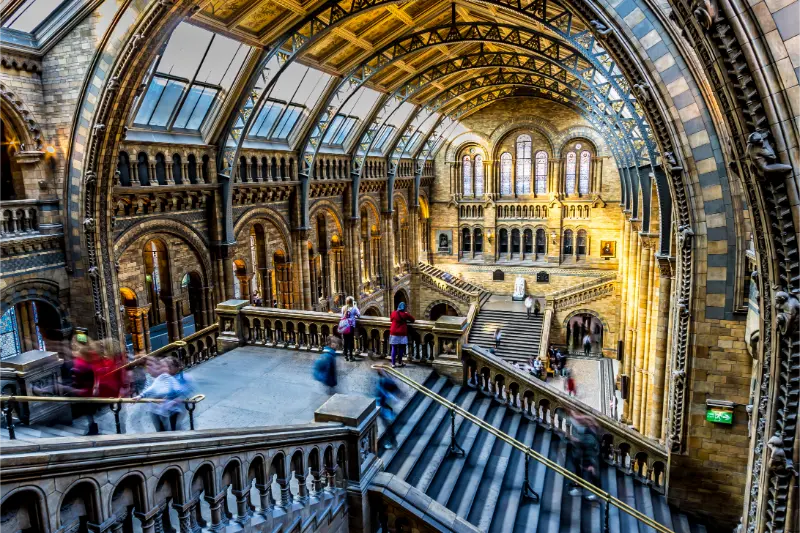
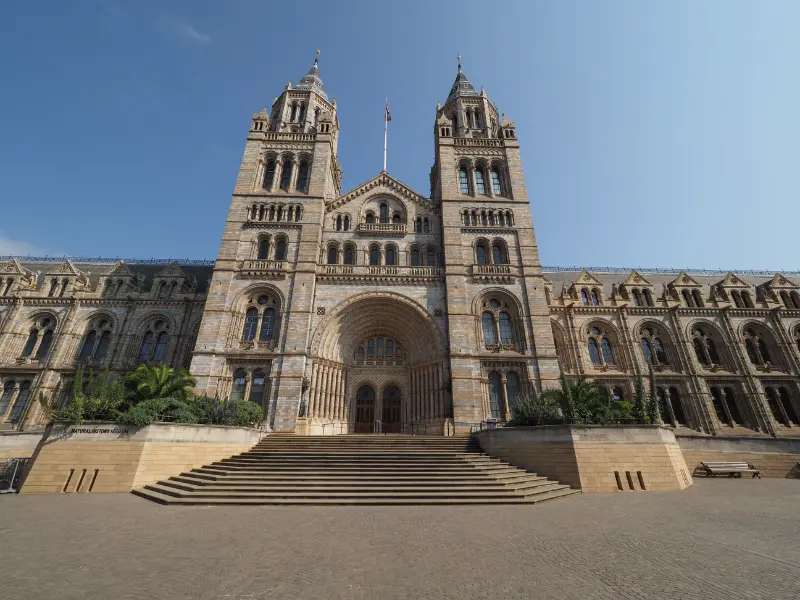
    Natural History Museum London

    Frequently asked questions

    Is the Natural History Museum really free?

    Yes, general admission to the permanent galleries is free. Some temporary exhibitions and events require paid tickets.

    How long should I allow?

    Two to four hours is a good first-visit range. Specialists can easily spend longer, while families with small children may prefer a shorter, high-energy visit.

    Can I do the Natural History Museum and Science Museum on the same day?

    Yes, but treat one as the main visit and the second as a focused highlights stop. Trying to explore both comprehensively is exhausting.

    Is it worth visiting if I do not care about dinosaurs?

    Absolutely. The building, mammal collections, Earth science, minerals and broader natural-history galleries provide many different routes through the museum.

    The better way to think about this museum

    The Natural History Museum is not a checklist attraction. Its value is concentration: one object or gallery can send you into a completely different subject than the one you expected to explore. Give yourself a plan, but leave enough space to abandon it when something genuinely catches your attention. That balance is what turns a free museum visit into one of London’s strongest cultural experiences.

    A smarter route when the museum is crowded

    The Natural History Museum is easiest to enjoy when you stop thinking in terms of “floors completed” and start thinking in themes. If the dinosaur galleries are the priority, go there early and accept that other parts of the building may become optional. If architecture and atmosphere matter more, spend time in Hintze Hall, the grand staircases and quieter side galleries before joining the busiest zones. Families often do better with one high-energy section followed by a calmer gallery rather than stacking several spectacular spaces back to back.
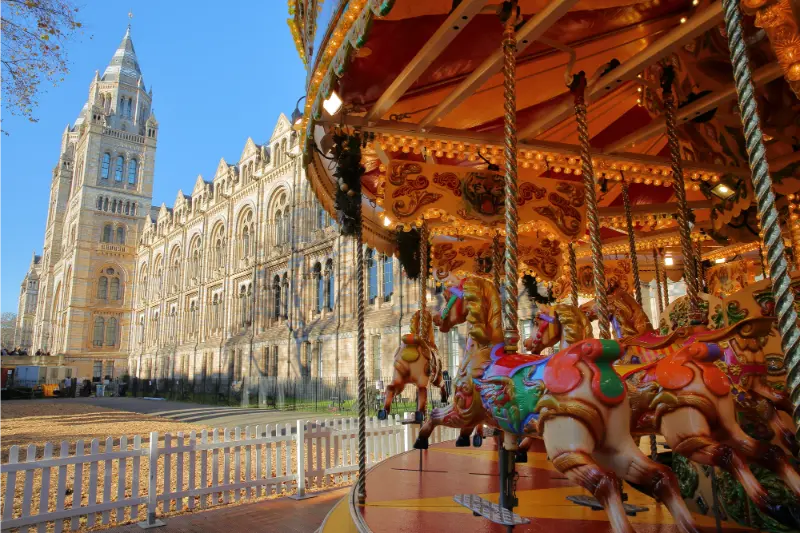
    Natural History Museum and Carousel London

    When one gallery is congested, move on instead of waiting simply because it appears next on your mental checklist. The museum is large enough that a temporary change of order rarely costs you anything. Keep a photo of the current floor map on your phone and use the museum’s own signs rather than trying to navigate by memory from an old blog route.

    Dinosaurs are not the only reason to come

    Visitors sometimes assume the museum is mainly for children who love dinosaurs. In reality, the collections span geology, evolution, biodiversity, minerals, oceans and the history of scientific collecting. Adults who normally avoid family attractions can have an excellent visit by choosing one subject—earthquakes and volcanoes, minerals, birds, human evolution, marine life—and treating the museum as a specialist collection rather than a blockbuster.

    This is also why the Natural History Museum pairs poorly with a second huge museum if you try to “finish” both. A focused two- or three-hour visit followed by lunch and a walk through Kensington Gardens is often stronger than six consecutive hours indoors.

    Family pacing: use the building as part of the experience

    With children, alternate object-heavy galleries with spaces where simply looking at the architecture feels like a change of pace. Plan a proper food and toilet break before everyone is exhausted, not after. If a child has one favourite subject, protect that first. The rest of the museum can be discovery rather than obligation.

    For a full family day, compare this guide with our Science Museum guide and London with kids guide. Two museums can work when you intentionally keep both visits short; they become tiring when each is treated as a half-day mission.

    Temporary exhibitions and gallery closures can change the ideal route

    Large museums rotate displays, close rooms for conservation and host ticketed exhibitions that alter crowd flow. If one object or temporary show is the reason for your visit, check the official museum site on the morning of the visit. Do not rely on a route written months earlier to tell you that every gallery will be open.

    This is one of the few London attractions where flexibility is a genuine advantage. General admission is free, so you can leave while you are still enjoying yourself and return on another day if the museum becomes too busy or your interests change.
  • Richmond London: Riverside Walks, Richmond Park, Kew Gardens and a Full-Day Escape

    Richmond London: Riverside Walks, Richmond Park, Kew Gardens and a Full-Day Escape

    Richmond is one of the best answers to a common London problem: after several days of museums, traffic, queues and dense sightseeing, you want to leave “central London” without spending half the day on a train to another city. Richmond gives you river, large-scale parkland, historic streets, pubs and access to Kew Gardens while remaining inside Greater London.

    The mistake is trying to combine everything simply because it is nearby on a map. Richmond Park alone can absorb hours; Kew Gardens is a major destination in its own right. This guide gives you several day structures so you can choose according to season, weather and energy. It is also a useful alternative to a full excursion outside the capital; compare the options in our best day trips from London by train guide.

    Best forParks, riverside walks, families, gardens, repeat visitors and slower travel
    Main stationRichmond
    Best approachChoose Richmond Park OR Kew Gardens as the main anchor, then add the river
    Time neededA full day for a satisfying visit

    First choice: Richmond Park or Kew Gardens?

    This decision shapes the entire day. Richmond Park is free, enormous and landscape-focused. Kew Gardens is ticketed, curated and botanically dense, with glasshouses, collections and designed landscapes. Trying to give both equal time usually means you experience neither properly.

    If you want wildlife, open horizons and long walks, choose Richmond Park. If plants, glasshouses, horticulture and a structured attraction appeal more, choose Kew. Families can enjoy both, but age and walking tolerance matter.

    Richmond town and the Thames

    Richmond’s riverfront is the easiest introduction. From the station, walk through the centre toward the Thames, then follow the towpath for a stretch before deciding whether to climb toward Richmond Hill or continue along the water. The river feels different here from Westminster: broader in mood, greener at the edges and less dominated by monumental architecture.

    A riverside lunch can become part of the day, but sunny weekends are busy. If a particular pub or restaurant matters, book; otherwise, keep food flexible and enjoy whichever stop fits the walk.

    Richmond Hill and the protected view

    The climb toward Richmond Hill rewards you with one of London’s most celebrated river landscapes. The view across the Thames and surrounding green space explains why the area has attracted artists and residents for centuries. It is a landscape view rather than a skyline view, which makes it a useful contrast with the London Eye or City towers.

    Do not rush up simply for one photograph. The route itself, nearby terraces and the transition toward the park are the experience.

    Richmond Park: treat the deer as wildlife

    Richmond Park covers a vast area of grassland, woods and hills and is home to free-roaming deer. They are not pets, props or an invitation to get close for photographs. Keep a generous distance, never feed them and follow seasonal guidance from The Royal Parks, particularly during birthing and rutting periods.

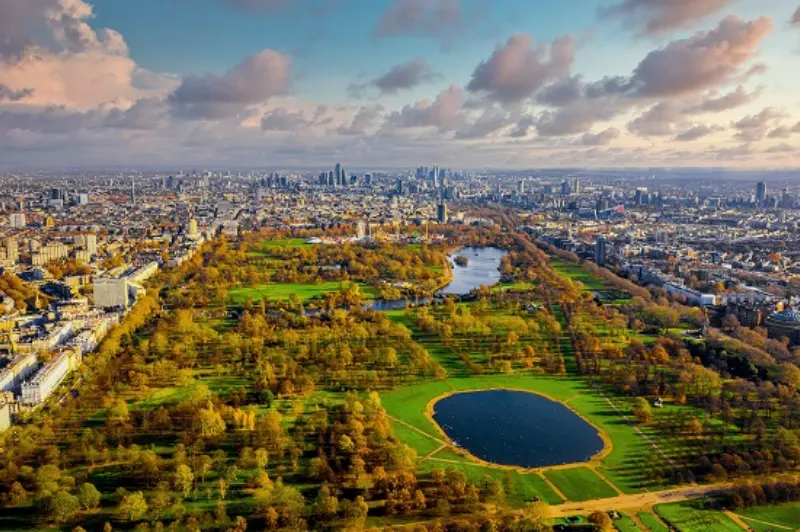
    Hyde Park Aerial View London

    The Royal Parks also posts conservation notices, including protection zones for sensitive wildlife. Check Richmond Park official information before visiting and follow signs on the ground even if an online route tells you otherwise.

    How much of Richmond Park should you try to see?

    Not all of it. Choose a loop that matches your walking ability and transport plan. Isabella Plantation can be a destination in itself, especially in spring, while viewpoints and woodland routes suit other seasons. The park is large enough that walking “to the other side” can turn into a serious time commitment.

    Carry water, wear shoes suitable for potentially muddy ground and remember that weather feels more exposed than in central streets. Mobile reception and navigation are generally manageable, but a downloaded map is useful.

    Kew Gardens: a separate major attraction

    Kew is not a small botanical garden to add for an hour. The Royal Botanic Gardens cover hundreds of acres and include major glasshouses, collections, art and architectural features. Give it at least half a day; a full day is easy for plant lovers.

    Opening times change seasonally. In 2026, Kew publishes specific monthly schedules and occasional planned closures or altered gate arrangements. Check Kew Gardens official opening information shortly before visiting.

    How to reach Kew and Richmond

    Richmond and Kew are well connected by rail and London transport. Kew Gardens station serves the District line and London Overground/Mildmay line services, while Richmond is a larger interchange with National Rail and TfL connections. Exact routes depend on where you are staying, so use TfL journey planning on the day rather than memorising a single “best” route.

    For Kew, different gates suit different arrival methods. The official site provides gate-specific directions. This matters more than it sounds: entering at the wrong side can add a long walk before your visit even begins.

    A Richmond Park day that works

    1. Arrive in Richmond in the morning.
    2. Walk to the river and continue toward Richmond Hill.
    3. Enter Richmond Park and follow a realistic loop rather than crossing the entire park.
    4. Return toward town for a late lunch or early dinner.
    5. Use the riverside again in softer late-afternoon light.

    This version is low-cost, flexible and weather-dependent. It is ideal after several expensive attraction days.

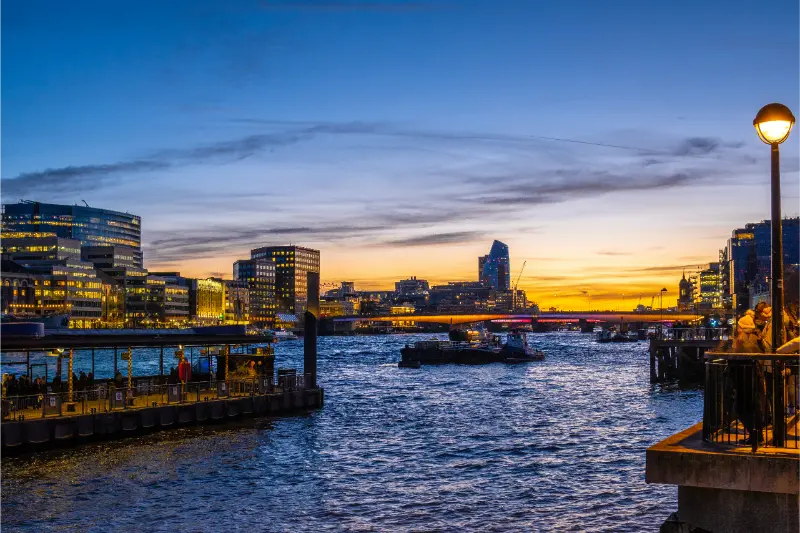
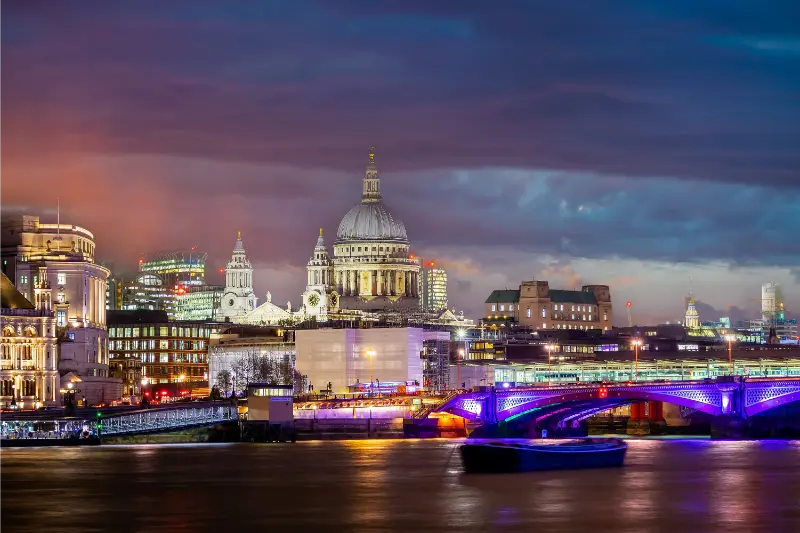
    London Skyline and River Thames at Sunset

    A Kew Gardens day that works

    1. Travel directly to the gate most convenient for your route.
    2. Spend the morning on major glasshouses and high-priority collections.
    3. Eat inside or nearby rather than leaving and re-entering without checking conditions.
    4. Use the afternoon for landscapes, seasonal highlights and quieter areas.
    5. If energy remains, continue to Richmond for a short river walk rather than attempting Richmond Park.

    Tickets for Kew

    Buying from Kew directly is straightforward. Third-party platforms can be useful for travellers managing multiple London bookings in one app. Compare current price and cancellation terms rather than assuming one channel is always cheaper.

    Affiliate link. Dreaming London may receive a commission from qualifying bookings at no extra cost to you.

    Where to stay: Richmond as a London base?

    Richmond can work for repeat visitors who value green space and evenings away from the centre. For a first trip focused on Westminster, museums and the West End, the daily travel may be less convenient than staying centrally. It is better thought of as a lifestyle choice than a budget hack.

    Compare it with more central areas in our where to stay in London guide.

    Affiliate link. Dreaming London may earn a commission from qualifying reservations at no extra cost to you.

    Families in Richmond

    Families often appreciate the freedom of the river and park after central attractions. The important issue is distance: Richmond Park can turn a “walk” into several kilometres before anyone notices. Choose a short loop, carry food and water, and do not build the day around spotting deer. Wildlife sightings are a bonus, not a guaranteed activity.

    Seasonal differences matter in Richmond

    Spring brings fresh growth and strong garden interest; summer gives long evenings by the river; autumn can be spectacular in the park but also overlaps with important wildlife behaviour, so deer guidance matters; winter offers open views and quieter paths but shorter daylight and muddier ground. Build the route around season rather than using the same schedule year-round.

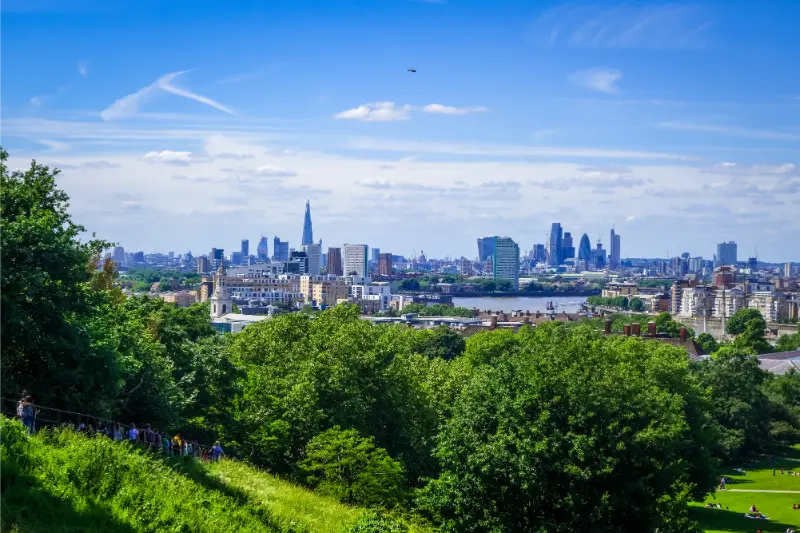
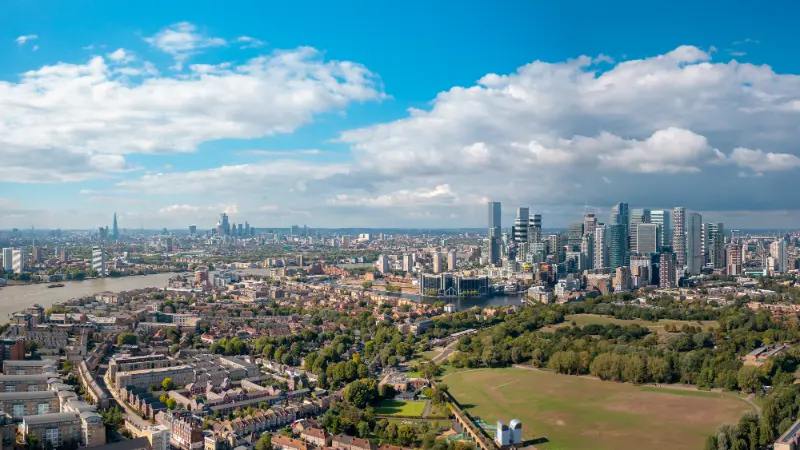
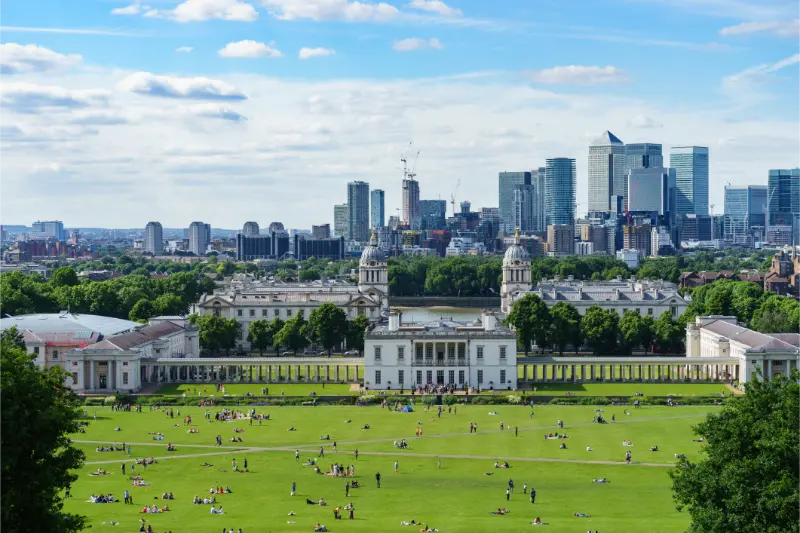
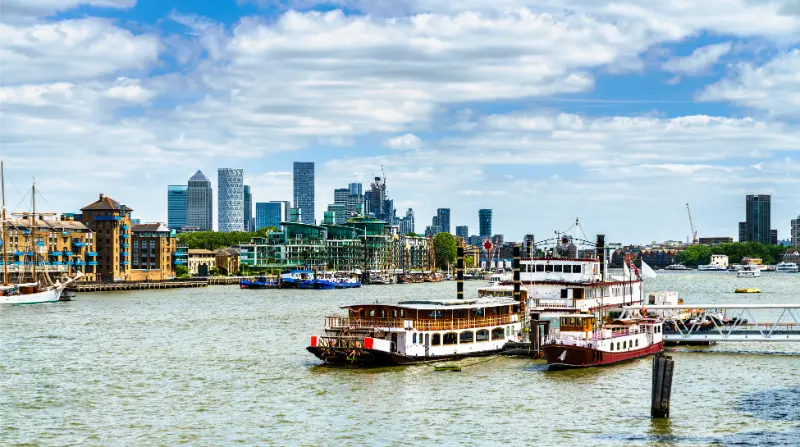
    Canary Wharf from Greenwich Park London

    Kew’s glasshouses make the area more resilient in poor weather, while Richmond Park is best when you are happy to spend substantial time outdoors. A flexible forecast-based choice between the two can improve the day dramatically.

    River walk or park walk?

    The Thames path is flatter, easier to shorten and better if you want pubs, town access and a relaxed pace. Richmond Park is bigger, more exposed and more physically demanding, with a stronger sense of escape. Travellers with limited mobility or young children may prefer a river-focused day plus a short park edge rather than a deep park loop.

    Do not measure success by kilometres. A slow riverside walk, lunch and one viewpoint can be a complete Richmond experience.

    Frequently asked questions

    Is Richmond worth visiting on a first London trip?

    Yes if you have five or more days or strongly prefer green spaces. With only two or three days, central London may deserve more time.

    Can you do Kew Gardens and Richmond Park in one day?

    Technically yes, but it is usually a poor use of both places. Choose one as the main destination and add only a short taste of the other area.

    Is Richmond Park free?

    Yes, general access to the park is free. Vehicle access and gates follow specific operating rules and can be affected by events or management measures.

    How close can you get to the deer?

    You should not approach them. Keep a safe distance and follow Royal Parks guidance, which can become more restrictive during sensitive seasons.

    Why Richmond changes a London trip

    Richmond reminds you that London is not only monuments, museums and dense streets. The city also contains huge landscapes, tidal river scenes, wildlife and botanical collections that can absorb an entire day. Giving one day to that greener London can make the rest of your trip feel better paced — and it often creates memories that are completely different from the famous central checklist.

  • Shoreditch London: Street Art, Markets, Brick Lane and a Walking Route That Still Feels Local

    Shoreditch London: Street Art, Markets, Brick Lane and a Walking Route That Still Feels Local

    Shoreditch is one of the London neighbourhoods most damaged by simplistic descriptions. Call it “hipster London” and you miss its history; call it “the street-art district” and you turn a living area into an outdoor gallery; call Brick Lane a food street and you ignore the communities, migration and industry that shaped it. The interesting visit is the one that holds all of those versions together.

    This route links Old Spitalfields Market, Brick Lane and Shoreditch’s side streets without pretending there is one fixed set of murals to find. Street art changes, businesses close, new cafés appear and construction alters sightlines. That instability is part of the neighbourhood. Pair this article with our London neighbourhoods guide and London markets guide.

    Best forStreet art, markets, food, nightlife, photography and urban culture
    Useful stationsLiverpool Street, Shoreditch High Street, Aldgate East and Old Street
    Best dayMarket-focused weekends for energy; weekdays for easier walking
    Route logicSpitalfields → Brick Lane → side streets → Shoreditch core

    Start at Old Spitalfields Market

    Old Spitalfields Market gives you a sheltered, structured beginning before the looser streets of Brick Lane. The current market combines stalls, shops and food beneath a historic market structure, with themed trading patterns on different days. The area has hosted market activity for centuries, even though the present experience is thoroughly modern.

    Opening times vary by day and individual businesses keep their own schedules. Check current information rather than assuming every stall appears every day. Visit London currently lists daily opening with different hours across the week. If a particular antiques or makers market matters to you, verify it before travelling.

    Walk toward Brick Lane through the streets, not only the main road

    The walk from Spitalfields to Brick Lane is short, but the side streets provide much of the texture: former industrial buildings, small shops, old housing, religious architecture and layers of immigration. Keep your map in your pocket for a few blocks and let the street network lead you.

    When you reach Brick Lane, do not expect one continuous market every day. Market activity is strongest at particular times, while shops, food businesses and the Old Truman Brewery area create activity throughout the week. The official London visitor information for Brick Lane Market is useful for current basics.

    Street art: the wrong way and the better way

    The wrong way is to arrive with a screenshot list of ten murals from a blog written two years ago and become annoyed when several are gone. The better way is to understand that impermanence is fundamental. Walk slowly, look above shopfront height, turn into legal walls and side streets, and accept that the route you see today may be different next month.

    Do not photograph people as if they are part of the scenery, block business entrances or step into roads for the perfect angle. Street art is public-facing, but the streets are still workplaces and homes.

    Brick Lane food is more complex than one “best” dish

    Brick Lane’s food identity reflects migration and change. Bengali and Bangladeshi restaurants are central to its history, while bagel shops, cafés, bakeries, street-food traders and newer restaurants add other layers. Rather than hunting a single internet-famous stop, decide what you want from the meal: heritage, speed, atmosphere or experimentation.
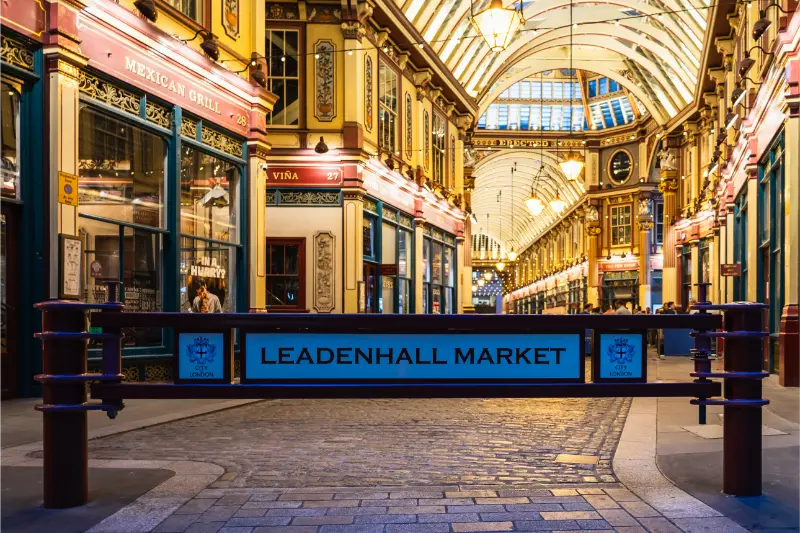
    Leadenhall Market Entrance at Night London

    If you are already planning Borough Market on another day, use Shoreditch for something different. Our Borough Market guide focuses more on specialist food retail and a structured market environment; Brick Lane is about neighbourhood context as much as eating.

    Markets: choose the day around your interests

    Old Spitalfields, Brick Lane-area markets and specialist vintage or makers events do not all peak at the same time. Sunday is the classic high-energy choice around Brick Lane, but that comes with crowds. Thursday can be interesting for antiques at Spitalfields. Other themed events rotate.

    If markets are only a secondary interest, visit on a quieter weekday and enjoy the streets without designing the entire day around stalls. A neighbourhood should not feel like a failed visit just because you missed one market session.

    Shoreditch beyond Brick Lane

    Continue west and north toward Redchurch Street, Boundary Street and the wider Shoreditch core. Independent retail, galleries, cafés, bars and converted industrial buildings create a different texture from Brick Lane. The area is heavily commercialised in places, but interesting details remain when you move one street away from the busiest routes.

    For a longer walk, connect Shoreditch with Hoxton or continue south toward the City. Our City of London walking route creates an excellent contrast: contemporary East London followed by the formal financial core.

    Street art tour or self-guided?

    A good street-art guide adds artist context, techniques, local history and the reasons certain walls matter. That is more valuable than merely pointing at murals. Self-guided exploration works if you enjoy wandering and do not care about identifying every artist. Because the art changes, recent local expertise can genuinely improve the experience.

    Before booking, check group size and whether the tour spends substantial time on history rather than using “street art” as a generic label for a neighbourhood walk.

    Nightlife without making the whole visit about nightlife

    Shoreditch changes after dark. Bars, clubs and restaurants create the energy many travellers expect, but the area can also become loud and crowded on Friday and Saturday nights. If nightlife is not your priority, visit from late morning through early evening and leave before the busiest period.

    Borough Market Glass Pavilion Southwark London

    If you do stay late, plan the trip home before drinking. Know your nearest station and use normal big-city awareness. Our London transport guide covers contactless travel and late-day movement.

    Where to stay in Shoreditch

    Shoreditch can be an excellent base for travellers who value restaurants, bars, East London and quick access to Liverpool Street transport links. It is less suitable for light sleepers who book directly above nightlife streets. The word “Shoreditch” can also be used loosely in hotel listings, so verify the actual address.

    Affiliate link. Dreaming London may receive a commission from qualifying bookings at no extra cost to you.

    Common mistakes

    • Expecting murals from old social posts to be permanent.
    • Visiting only Brick Lane and claiming to have “done Shoreditch”.
    • Ignoring local and migration history in favour of aesthetic labels.
    • Planning a Saturday night visit when you actually dislike crowds and nightlife.
    • Photographing residents or workers without normal courtesy.

    How to read the neighbourhood’s layers

    Look for buildings that reveal earlier uses: warehouses, brewery structures, market halls and places of worship reused by successive communities. Brick Lane’s history is not one story but a sequence of migrations and industries. Even without a formal history tour, noticing architecture prevents the area from becoming only a backdrop for murals.

    Street names and building forms often reward a quick search after you notice something, but avoid spending the entire walk looking at your phone. Photograph the detail, keep walking, and read about it over coffee later.

    A better route for photography

    Start earlier than peak shopping and lunch hours, use Old Spitalfields for structured architecture, then move to Brick Lane and side streets while shutters and walls are still visible. Later, when the area becomes busier, concentrate on atmosphere rather than trying to produce empty-street images. Respect people who are working, eating or living in the frame; urban photography works best when it does not turn residents into scenery.

    How Shoreditch fits with the rest of East London

    Shoreditch can be the beginning rather than the whole day. Continue south into Spitalfields and the City for architectural contrast, north toward Hoxton for a more neighbourhood-focused walk, or east toward Bethnal Green if museums and local high streets interest you. The important thing is not to jump randomly across London after lunch.

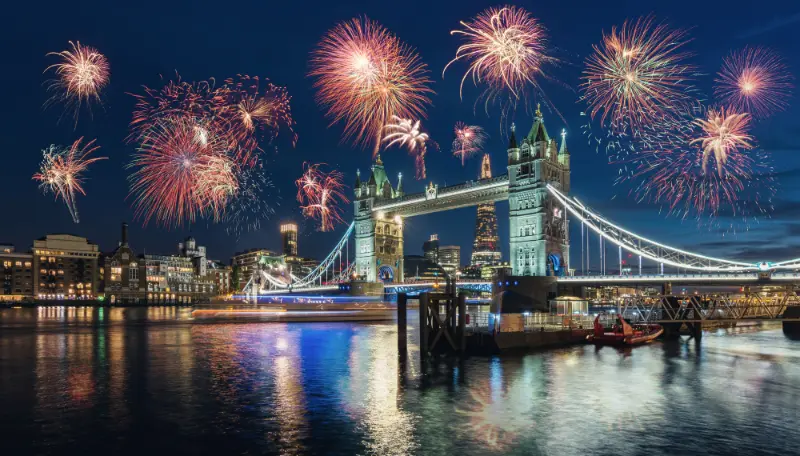
    New Year's Eve Fireworks Tower Bridge London

    For a first visit, I would keep the route compact and finish near Liverpool Street or Old Street. Both give straightforward onward transport without undoing the logic of the walk. If you still have energy, add one café or pub stop locally rather than another cross-city attraction.

    Frequently asked questions

    Is Shoreditch safe?

    It is a busy central-east London area visited by large numbers of people. Use standard urban awareness, especially late at night and in crowded nightlife zones.

    Is Sunday the best day?

    Sunday is strongest for market atmosphere around Brick Lane but also one of the busiest. A weekday can be better for street art and neighbourhood walking.

    How long do you need?

    Three to four hours works well for Spitalfields, Brick Lane and Shoreditch. Add more time for shopping, a tour or nightlife.

    Is Shoreditch good for families?

    Daytime can work well with older children or teenagers interested in art and markets. Late-night Shoreditch is a different experience.

    What makes Shoreditch worth the detour

    Shoreditch is most interesting when you allow it to be inconsistent. Historic market streets sit beside highly polished developments; community histories coexist with nightlife branding; street art can disappear overnight. The goal is not to find an “authentic” version untouched by change. It is to notice how London constantly rewrites itself in a neighbourhood where that process is unusually visible.
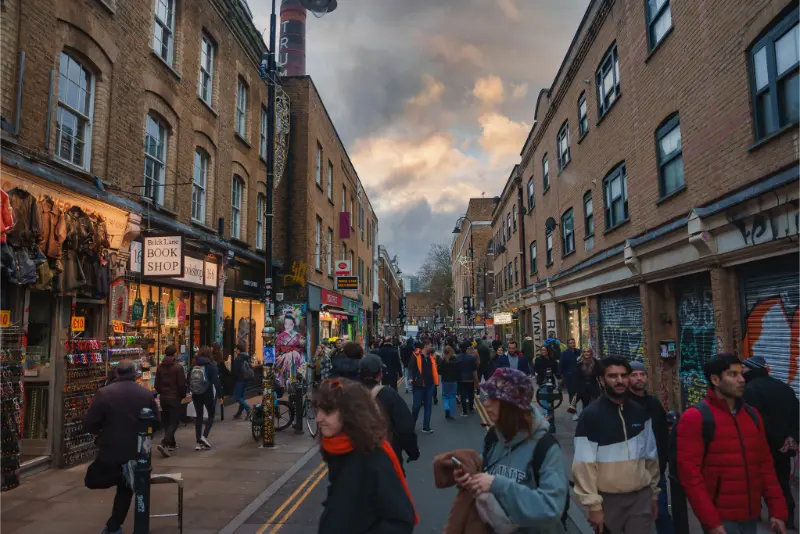
    Brick Lane on market day

    For the difference between the Sunday street market, indoor vintage halls and food spaces, see our Brick Lane Market guide.

    Separate Shoreditch from Spitalfields

    For Old Spitalfields Market, Georgian East End history and Liverpool Street, use our Spitalfields and Liverpool Street guide.

  • Kensington London: Museums, Gardens, Royal History and a Smarter Full-Day Route

    Kensington London: Museums, Gardens, Royal History and a Smarter Full-Day Route

    Kensington is one of the easiest London areas to over-plan. A map shows the Natural History Museum, V&A, Science Museum, Royal Albert Hall, Kensington Gardens and Kensington Palace within a compact zone, so visitors assume they can “do Kensington” in one day. Physically, yes. Mentally, not if you try to treat every museum as a full visit.

    The better strategy is to choose one major museum, add one shorter cultural stop, then use the gardens to reset your attention. That creates a day with variety rather than six hours of galleries followed by a sprint through a park. Kensington is particularly strong for families and rainy-weather flexibility, and it connects naturally with our London museums guide and London with kids guide.

    Best forMuseums, families, parks, architecture and royal history
    Main stationSouth Kensington for the museums; High Street Kensington or Queensway for other approaches
    Best day structureOne major museum + gardens + one optional secondary attraction
    Budget advantageCore collections at major national museums are free

    Start at South Kensington, but do not try to conquer every museum

    The Natural History Museum, V&A and Science Museum form one of London’s great cultural clusters. Their proximity is a gift only if you use it intelligently. Pick the museum that best matches your group and give it a focused two or three hours. Then leave while you are still interested.

    The Natural History Museum is especially strong for families and anyone interested in the natural world; its main galleries are free, and the museum recommends advance free tickets at busy times to help guarantee entry. Check current information at the Natural History Museum visitor page.

    The V&A rewards selective visiting

    The Victoria and Albert Museum covers art, design and performance across an enormous range of periods and media. Trying to “see the V&A” in one session is a recipe for fatigue. Choose two or three collections that genuinely interest you, then allow the building itself to surprise you between them.

    General admission is free and no entry ticket is normally required, although temporary exhibitions can be ticketed. Friday evening opening can be useful for travellers who prefer to spend daylight in the park. Check the V&A South Kensington visit page for current gallery closures and hours.

    Exhibition Road is part of the experience

    Exhibition Road links the museums with the Royal Albert Hall and the edge of Kensington Gardens. It is not simply a corridor. Notice how academic institutions, museum façades, cafés and performance venues create a cultural district that feels different from Westminster or the City.

    If you are visiting with children, this is a good point for a food break before entering the park. A snack now prevents the predictable late-afternoon collapse after one more museum room.

    Royal Albert Hall and the Albert Memorial

    The Royal Albert Hall is one of London’s most recognisable performance venues, and the Albert Memorial across the road creates a deliberately grand Victorian composition. Even without a concert ticket, walking this section helps make sense of South Kensington’s nineteenth-century cultural ambition.

    Natural History Museum London

    Check the Hall’s programme if live music matters to your trip, but do not force an interior tour into an already full museum day. The exterior and memorial fit naturally into the transition toward Kensington Gardens.

    Kensington Gardens is the reset button

    Once you enter Kensington Gardens, slow down. The park is not dead space between museums and palace. It contains the Albert Memorial, Round Pond, Italian Gardens, Peter Pan statue, flower walks and wide lawns, with Kensington Palace at its western edge. The Royal Parks describes a 6-kilometre suggested highlights route, but you do not need to complete it to benefit from the landscape.

    Current opening times vary seasonally because the park closes at dusk. Check Kensington Gardens official information if your visit falls late in the day.

    Families: use the park strategically

    The Diana, Princess of Wales Memorial Playground is a major family feature near Kensington Palace, while the wider gardens offer space that children rarely get during central sightseeing. Availability, maintenance closures and group arrangements can change, so check current notices before promising a specific playground visit.

    The most important family tip is sequence: museum first, park second. Asking children to return to three more hours of galleries after running outside usually creates conflict. If a second museum is essential, make it short and specific.

    Kensington Palace: add it only if royal history is a priority

    Kensington Palace is a separate ticketed attraction and deserves more than a rushed final hour. It connects with centuries of royal residence and works well for visitors already interested in the monarchy. If Buckingham Palace is also on your plan, consider whether two palace interiors improve your trip or simply duplicate your royal-history quota.

    Our Buckingham Palace guide helps you compare the experience. Kensington Palace has the advantage of being embedded in a park and a residential neighbourhood, making the surroundings easier to enjoy before or after entry.

    How to avoid museum fatigue

    • Choose one museum as the day’s intellectual anchor.
    • Set a small list of must-see galleries before entering.
    • Eat before you are exhausted, not after.
    • Use the gardens for at least 45 minutes between indoor stops.
    • Do not feel guilty about skipping a museum because admission is free; free entry is valuable precisely because you can return another day.

    Where Kensington fits in a London itinerary

    Kensington works especially well on day two or three, after the historic core. It gives you museums and green space without forcing long transfers between attractions. If your hotel is in the west, it can also be an excellent arrival or departure-day district because you can scale the visit up or down depending on energy.

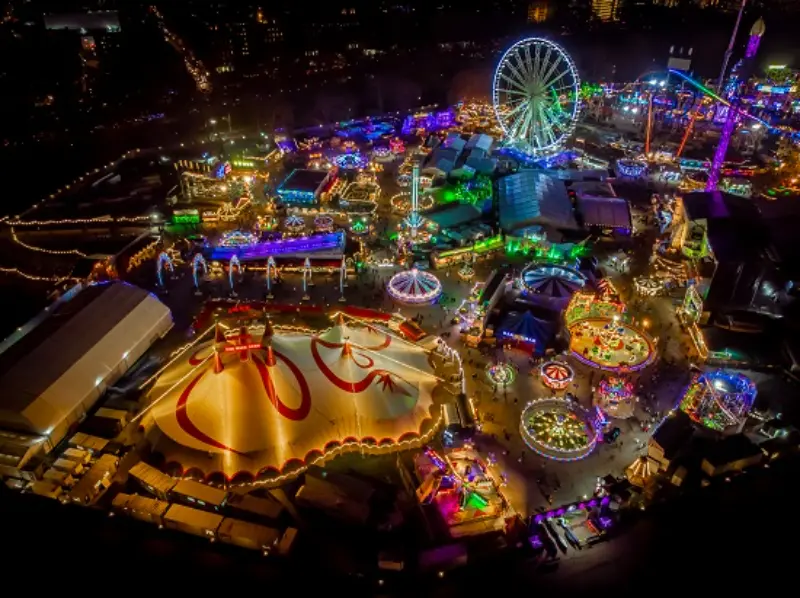
    Hyde Park Winter Wonderland Aerial View London

    For rainy days, keep the museum component flexible and move the gardens into the driest window. Our rainy-day London guide shows how to make those swaps without redesigning the entire trip.

    Where to stay in or near Kensington

    Kensington suits travellers who prefer elegant residential streets, museum access and western central London over the late-night energy of Soho or Shoreditch. Prices can be high, and “Kensington” listings cover a broad area, so always check the actual walking distance to the station you expect to use.

    Compare the district with other London bases in our where to stay in London guide.

    Affiliate link. Dreaming London may earn a commission from qualifying reservations at no extra cost to you.

    Which museum should you choose?

    Choose the Natural History Museum if dinosaurs, geology, biodiversity or family learning are the strongest interests. Choose the V&A if design, fashion, decorative arts, architecture or performance appeal more. Choose the Science Museum for technology, engineering and hands-on family interest. The decision is less about which museum is “best” and more about which one your group will still care about after two hours.

    If two adults have completely different interests, split for ninety minutes and meet on Exhibition Road. London does not require every travelling companion to spend every minute together. If you prefer design shops, residential streets and the river to a second museum, continue south toward Chelsea instead.

    A good late-afternoon Kensington finish

    After the museums, walk through Kensington Gardens toward the Italian Gardens or Round Pond rather than immediately taking the Tube. The change in light and scale is restorative. If the park is closing early in winter, reverse the day: use daylight for the gardens first and the V&A’s later Friday hours when relevant. This small seasonal adjustment can make the same neighbourhood feel far less rushed.

    Natural History Museum and Carousel London

    Food and breaks in South Kensington

    Museum cafés are convenient, but they are not your only option. Exhibition Road and surrounding streets provide cafés and restaurants, while Kensington Gardens is suitable for a simple picnic when weather cooperates. The important point is to schedule the break before everyone is tired and hungry.

    If you are visiting a free museum with children, leaving for lunch does not mean the day failed. A shorter, enthusiastic museum session followed by food and the park is usually more valuable than forcing another hour because there is no admission price to justify.

    Frequently asked questions

    Are the Kensington museums free?

    The main permanent collections at the Natural History Museum and V&A are free; some temporary exhibitions and events charge separately. Other institutions have their own arrangements.

    Can you visit the Natural History Museum and V&A in one day?

    Yes, but do not try to see both comprehensively. Choose one as your main museum and treat the second as a focused one-hour or 90-minute visit.

    Is Kensington good with kids?

    Very. The combination of museums and gardens makes it one of the easiest central London districts for alternating learning with movement.

    How long do you need?

    A full day is easy to fill. Half a day works if you choose one museum and a short garden walk.

    The best version of Kensington

    The strongest Kensington day is not the one with the most museum entrances. It is the one that uses proximity to create contrast: fossils or design in the morning, Victorian architecture outside, trees and water in the afternoon, perhaps a palace or concert if that genuinely fits your interests. Kensington becomes memorable when you stop treating free admission as an obligation to see everything.

    Two major cultural additions to a Kensington day are the Royal Albert Hall and Design Museum.

  • City of London: A One-Day Walking Route Through Roman, Medieval and Modern London

    City of London: A One-Day Walking Route Through Roman, Medieval and Modern London

    The City of London is not the same thing as “central London”. It is the historic Square Mile: a small administrative area where Roman foundations, medieval street patterns, Wren churches, Victorian commercial buildings and glass towers occupy the same few blocks. Many visitors pass through it only to see St Paul’s Cathedral or the Tower of London. That misses the most interesting part, which is the contrast between layers.

    The City works best on foot because the distances are short and the streets are irregular. A Tube ride between every landmark removes the connective tissue: churchyards, alleys, fragments of wall, small gardens and sudden skyline views. This route is designed as a full day but can be shortened easily. It also extends our broader London neighbourhoods guide and best walks in London.

    StartSt Paul’s Cathedral
    FinishTower Hill or the Thames
    Walking timeRoughly 2 hours without stops; most of a day with interiors and lunch
    Best daysWeekdays for City energy; weekends for quieter streets

    Start at St Paul’s and understand the scale

    St Paul’s makes a natural starting point because its dome has shaped the City skyline for centuries. If you plan to go inside, do it early before the walking route becomes fragmented by later ticket times. Our St Paul’s Cathedral guide covers the Dome Galleries, Crypt and practical visit strategy.

    Afterwards, resist heading straight to the river. Walk north-west into the smaller streets around the cathedral precinct. The City becomes more interesting the moment you leave the main visitor axis.

    Postman’s Park: a small stop with a strong story

    Postman’s Park is one of the City’s most emotionally distinctive green spaces, known for the Watts Memorial to Heroic Self-Sacrifice, a collection of plaques commemorating ordinary people who died while trying to save others. It is not a “secret” in the internet-hype sense; it is simply easy to miss because it is small and surrounded by larger attractions.

    Spend ten or fifteen minutes here. Read a few plaques rather than racing through all of them. This is a good example of why walking the City works: the experience is too modest to justify a dedicated cross-London trip, but memorable when it appears naturally between major sights.

    Continue to the Barbican for a completely different London

    The Barbican estate divides opinion, which is exactly why it belongs on this route. Its post-war concrete architecture feels almost confrontational after St Paul’s and churchyards. Walk the elevated spaces and courtyards slowly enough to understand the design rather than photographing one brutalist angle and leaving.

    The Barbican Centre is a major arts venue, and the wider complex includes residential towers, water features and cultural spaces. Opening arrangements for the Conservatory and special areas can vary, so check the Barbican official website if a specific interior is important to you.

    Look for Roman London rather than expecting one giant ruin

    Roman Londinium survives in fragments. That is part of the fascination. Sections of wall, archaeological displays and street alignments appear between modern buildings rather than forming one self-contained archaeological park. The best-known wall remains around the Museum of London/Barbican area and near Tower Hill are useful anchors.

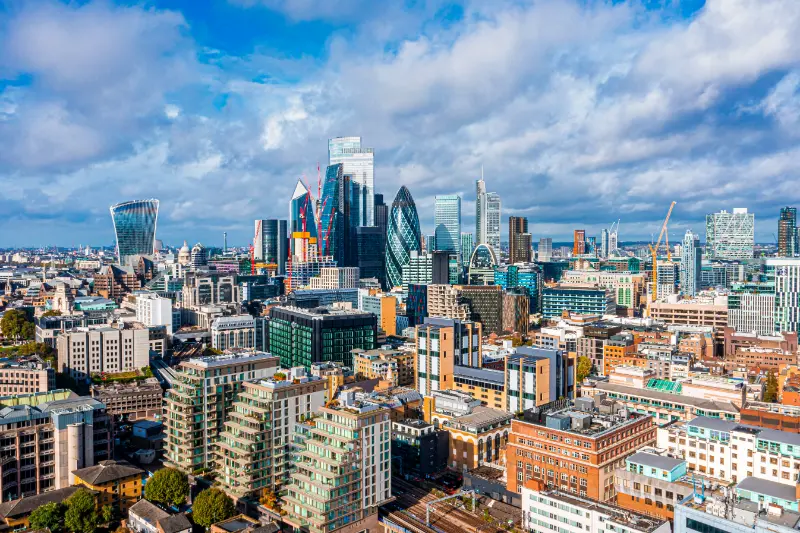
    City of London Financial District Skyline

    Do not force every Roman trace into one day. The City rewards noticing what is already near your route. A fragment encountered beside an office block often says more about London’s continuity than a long detour to tick another item off a list.

    Guildhall and the civic City

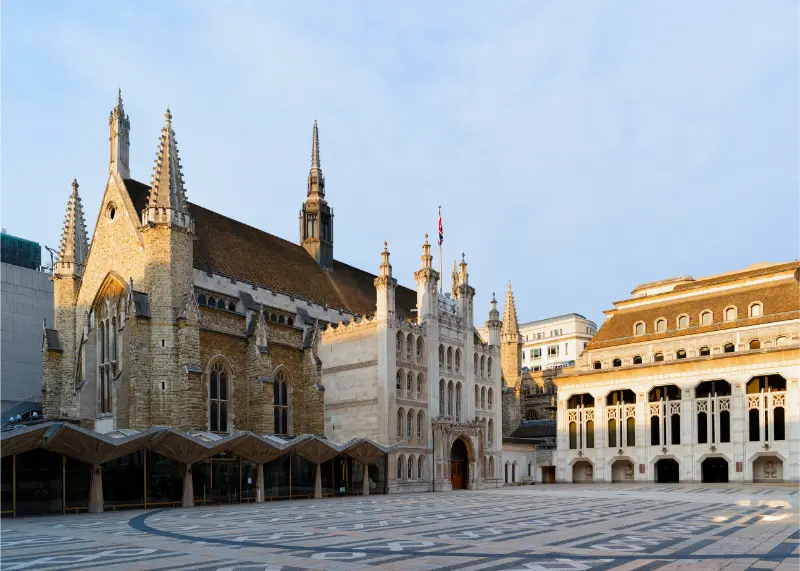
    From the Barbican, move south toward Guildhall. This is a reminder that the City of London has its own ancient civic institutions, traditions and government. The medieval Great Hall and surrounding complex sit unexpectedly among modern offices. The Guildhall Art Gallery and the remains of London’s Roman amphitheatre can add substantial time if open and if art or archaeology is a priority.

    Check current admission and opening arrangements before relying on them; City institutions can have event-related closures. Even from outside, the square is worth seeing because it reveals a London that feels more institutional and less royal than Westminster.

    Bank junction: stop and read the architecture

    Bank is one of the most visually dense junctions in London. The Bank of England, Royal Exchange and Mansion House face each other across streets that are usually busy with workers, buses and cyclists. Rather than treating this as a transport interchange, stand back and understand the composition.

    This is also where the weekday/weekend contrast becomes obvious. On a weekday, the area has the intensity of a financial district. On Sunday, some streets can feel unexpectedly quiet. Neither is better; they show different versions of the Square Mile.

    Leadenhall Market: architecture first, shopping second

    Leadenhall Market is worth visiting even if you buy nothing. Its covered Victorian structure, colour and narrow surrounding lanes make it one of the City’s most photogenic passages. It also works as a weather-proof pause and a natural lunch zone.

    Do not expect every shop or food outlet to follow the same schedule, particularly on weekends. If food is the main reason for visiting a market, Borough Market is the stronger destination. If architecture and City atmosphere matter more, Leadenhall fits this route beautifully. Compare them in our London markets guide.

    St Dunstan in the East: ruins turned into a garden

    Continue south-east to St Dunstan in the East. The church was damaged by the Great Fire of 1666, rebuilt by Christopher Wren, then severely damaged again during the Blitz. The surviving tower and walls were later incorporated into a public garden. The result is one of the City’s most atmospheric small spaces.

    The City of London describes it as a garden within the ruins and notes that visitors may take normal personal photographs. Treat it as a public garden, not a private photo studio. Keep paths clear and let other people use benches and quiet corners. Current information is available from the City of London garden page.

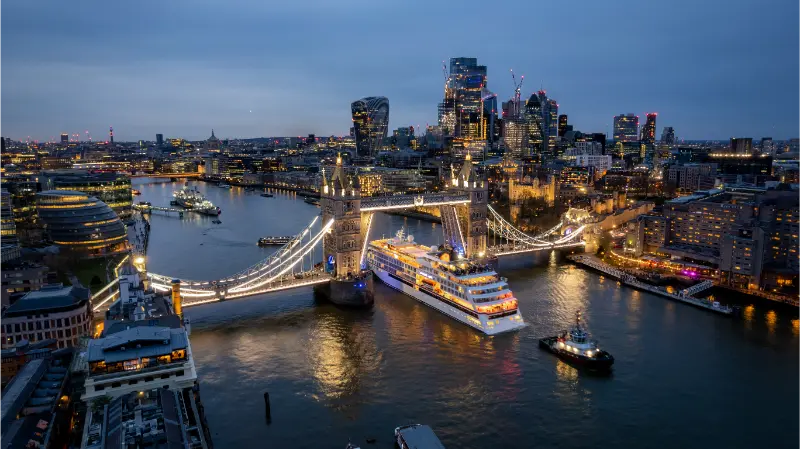
    Thames River Cruise near Tower Bridge London

    Finish at the river and choose your next London

    From St Dunstan, you are close to the Tower of London, Tower Bridge and the Thames. If energy remains, continue toward the fortress and use our Tower of London guide or Tower Bridge guide. If you have already visited them, walk west along the river and cross toward the South Bank.

    The river is the right ending because it reconnects the City with the rest of London. You have spent the day in lanes and enclosed spaces; the Thames suddenly opens the horizon.

    Where to eat without turning the route into restaurant logistics

    The City has abundant weekday lunch options because of its office population. Weekend choice can be more uneven. Instead of choosing a restaurant on the opposite side of the district, eat where the route naturally puts you: near the Barbican, around Bank/Leadenhall or after reaching the river. This preserves the walk’s logic.

    If Borough Market is part of your trip, save your largest food-market appetite for that and use the City for a lighter lunch. Our Borough Market guide explains why timing matters there.

    Should you stay in the City of London?

    The City can be a practical base for travellers who value transport connections, modern hotels and easy access to eastern central London. The atmosphere changes outside office hours, which some people love and others find too quiet. Before booking, compare it with the West End, South Bank and more residential districts in our where to stay in London guide.

    Affiliate link. Dreaming London may receive a commission from qualifying bookings at no extra cost to you.

    How weekday and weekend visits differ

    A weekday shows the City as an active financial and professional district: office workers fill pavements, lunch counters are busy and the contrast between ancient churches and modern business is strongest. A weekend gives you cleaner architectural sightlines and quieter lanes, but some cafés and smaller businesses reduce their hours. Choose based on the atmosphere you want rather than assuming one day is universally better.

    Photography is often easier on a Sunday morning, while people-watching and the working-city experience are better midweek. Major visitor attractions follow their own schedules, so check them separately.

    Use churches and gardens as micro-stops

    The Square Mile contains many small churches and gardens that are not worth crossing London for individually but are excellent when encountered naturally. If a door is open and visiting is welcomed, step inside for five minutes. If a church is holding a service or private event, continue without treating access as an entitlement. These small pauses are what keep a long urban walk from feeling monotonous.

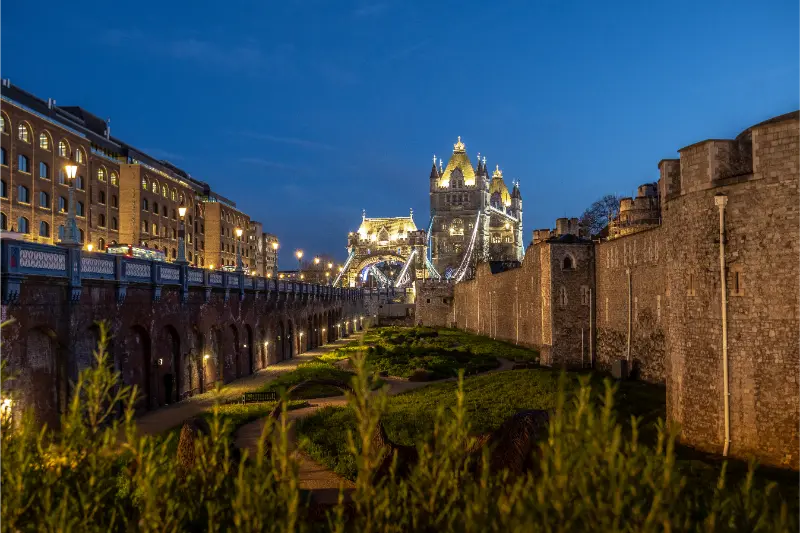
    Tower Bridge and Tower of London at Night

    Frequently asked questions

    Is the City of London a neighbourhood?

    It is more than a neighbourhood: it is a distinct local authority and the historic core of London, often called the Square Mile.

    Is it empty at weekends?

    No, but it can be much quieter than on weekdays and some businesses operate reduced hours. Major attractions remain important weekend draws.

    How much of the route is free?

    Most of the streets, gardens, markets and exterior sights are free. Major interiors such as St Paul’s Cathedral charge for sightseeing.

    Is it suitable for a first trip?

    Yes, especially after you have covered Westminster. The City shows a different London: commercial, ancient, rebuilt and architecturally layered.

    Why this route is better than a list

    The City does not reveal itself through ten “top sights” viewed independently. Its strength is adjacency. A Wren church beside a glass tower, a Roman fragment behind a car park, a Victorian market near a financial junction, a garden inside bombed ruins: the connections are the attraction. Walk slowly enough to notice them and the Square Mile becomes one of the richest parts of London rather than merely the district between St Paul’s and the Tower.

    Add a free skyline stop

    If a timed slot fits your route, the Sky Garden is a natural high-level addition to a City walking day.

    Extend the history walk into Smithfield

    Continue west with our Clerkenwell and Smithfield guide, including the new London Museum opening in November 2026.

    The Barbican Centre adds post-war Brutalist architecture to a City itinerary dominated by Roman, medieval and Victorian layers.

  • Borough Market London: What to Eat, When to Go and How to Avoid the Worst Crowds

    Borough Market London: What to Eat, When to Go and How to Avoid the Worst Crowds

    Borough Market is often described as a street-food stop, which undersells it. It is a working food market with a long history, specialist produce traders, restaurants, bakeries and takeaway counters compressed into a complex of railway arches and covered spaces beside London Bridge. That variety is exactly why first-time visitors can make poor decisions: they arrive hungry at the busiest moment, follow the longest queue, eat standing in a bottleneck and leave thinking the market is only a tourist feeding station.

    A better visit begins with timing and a short walk before you buy anything. This guide is about using Borough Market as part of London rather than as a checklist lunch. For the wider food picture, read our what to eat in London guide and London markets comparison.

    Best forFood lovers, market culture, quick tastings and London Bridge itineraries
    Nearest stationLondon Bridge
    Best strategyArrive before the main lunch rush, walk one full loop, then decide what to eat
    Do not missProduce and specialist traders, not only hot-food queues

    Why Borough Market matters

    The market’s history stretches back many centuries. Its current story includes periods as a wholesale fruit and vegetable market and a late-twentieth-century reinvention around high-quality retail food. The official Borough Market history traces documented activity through medieval London and the market’s relocation to its present area in the eighteenth century. That continuity helps explain why the site feels layered rather than purpose-built for visitors.

    Read a little of the official Borough Market history before your trip and the architecture around you becomes more interesting: railway infrastructure, old market fabric and modern food culture occupy the same space.

    When to go if you dislike crowds

    Lunch is naturally the busiest period, particularly Friday and Saturday. Arriving near opening gives you room to see counters, talk to traders and decide what you actually want. Late afternoon can also be calmer, but some popular items may sell out and not every trader keeps identical hours.

    Under Borough Market’s current regular 2026 schedule, Monday is closed; Tuesday to Friday are generally 10:00–17:00, Saturday 09:00–17:00 and Sunday 10:00–16:00. Bank holidays and the festive period can change that pattern, so verify the official Borough Market visit page before making it the fixed lunch anchor of your day.

    Walk the market once before joining a queue

    This single rule improves the experience more than any list of “must-eat” dishes. Walk through the main areas, look at produce, note what is being cooked and pay attention to serving speed. A long queue can mean excellent food, but it can also mean social-media fame, slow assembly or a very photogenic product. Your appetite deserves a better method than queue length.

    Decide whether you want a meal or a tasting session. For a meal, choose one substantial dish and somewhere sensible to eat it. For tastings, split two or three smaller items with a travel companion and leave room for cheese, baked goods or dessert.

    What should you eat?

    There is no single Borough Market dish. That is the point. You can find British cheese, bread, charcuterie, seafood, meat, pastries, fresh produce and food from many international traditions. If this is your only London food stop, include at least one British product rather than eating something you could easily find at home.

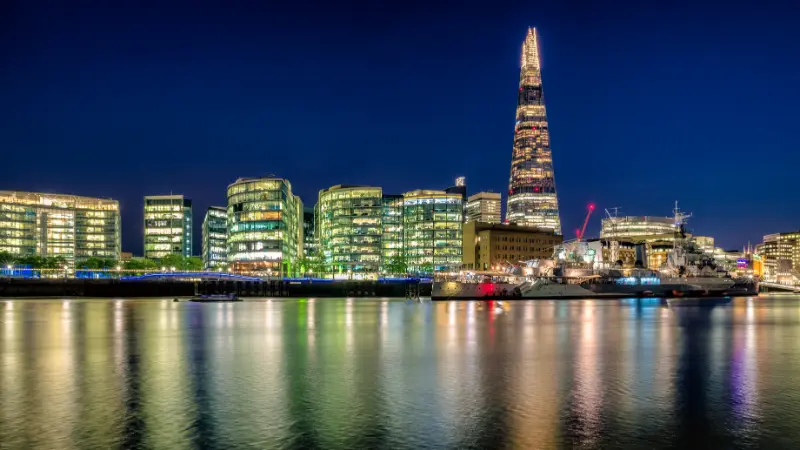
    The Shard HMS Belfast and River Thames at Night London

    Cheese is particularly useful because it connects the market with British regional food. Baked goods travel well if you are continuing along the river. Hot dishes are best judged by what smells good, what is being cooked freshly and whether you have somewhere comfortable to eat.

    Where do you eat without blocking everyone?

    The worst market habit is stopping immediately after collecting food and creating a human dam beside a popular stall. Move away from the serving area. Borough Market has nearby public spaces, the river is close, and the streets around Southwark Cathedral offer a change of pace. Follow current signage about where food may be consumed and keep access routes clear.

    If you want a proper seated meal, use one of the surrounding restaurants rather than expecting a street-food counter to behave like a dining room. This is especially sensible in winter or with young children.

    The overlooked side: shopping rather than snacking

    Visitors staying in an apartment or planning a picnic should look beyond ready-to-eat food. Market traders sell ingredients that can turn a simple hotel or rental meal into something memorable. Even if you cannot cook, a small combination of bread, cheese, fruit and something sweet can become a Thames-side picnic.

    Remember that fresh food does not always travel well on a full sightseeing day. Buy perishable items near the end of your visit or when you can return to accommodation soon.

    Borough Market + South Bank is one of London’s easiest combinations

    The market sits naturally toward the eastern end of a classic South Bank walk. You can start at Westminster, pass the London Eye and cultural venues, continue by Tate Modern and Shakespeare’s Globe, then reach Borough Market for lunch. After eating, cross London Bridge or continue toward Tower Bridge.

    Our South Bank London guide gives the full sequence, while Tower Bridge guide helps if you want to continue inside the bridge rather than simply photograph it.

    Is a food tour worth it?

    A guided food tour can be worthwhile if you want context, preselected tastings and the confidence to try foods you might otherwise overlook. It is less useful if you simply want an inexpensive lunch. Check how much food is included, group size, dietary accommodation and whether the route extends beyond the market into Southwark.

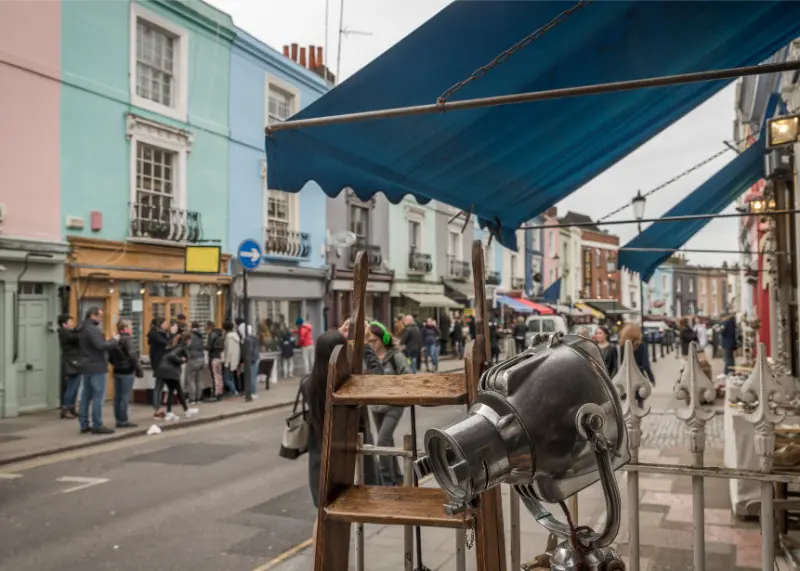
    Portobello Road Market London

    Affiliate link. Dreaming London may earn a commission from qualifying bookings at no extra cost to you.

    Borough Market with children

    Families should visit before peak lunch whenever possible. Let children choose one item each rather than dragging them through repeated adult tastings. The market is stimulating and crowded; a simple task — find a bread, a cheese and a dessert to share — gives the visit structure. Afterwards, the riverfront provides space and movement.

    Dietary requirements

    Choice is broad, but never assume an item is suitable because its appearance suggests vegetarian, vegan, halal, gluten-free or allergen-free preparation. Ask the trader directly about ingredients and cross-contamination. Busy market kitchens can handle many products in small spaces, and dietary safety deserves a real conversation rather than guesswork.

    Common mistakes

    • Arriving at the exact middle of the Saturday lunch rush and expecting a relaxed browse.
    • Eating at the first viral stall you recognise without seeing the rest of the market.
    • Ignoring produce and specialist shops because hot food photographs better.
    • Buying too much food at once and carrying it for hours.
    • Scheduling a formal restaurant booking immediately after a market tasting session.

    How to create a tasting plan without overspending

    Set a rough food budget before entering and decide whether you are buying a meal, ingredients or small tastings. Market spending grows quickly because individual purchases feel inexpensive in isolation. Sharing works well: one savoury item, one specialist product and one sweet stop can provide more range than two large lunches.

    Bring a refillable bottle and avoid buying drinks repeatedly unless they are part of what you specifically want to taste. If you are continuing on foot, consider packaging and mess. The best market choice is not always the biggest one; it is the food you can actually enjoy without balancing several containers beside a crowded passage.

    Look beyond social-media popularity

    Some of Borough Market’s value is in traders that are not visually dramatic: cheese counters, produce, bread, spices and ingredients. Ask questions when staff have time. A short conversation about origin, season or preparation can be more memorable than queueing for the most photographed sandwich. This is also where the market feels most connected to food culture rather than pure tourism.

    What to do after lunch

    Borough Market is easier to enjoy when lunch is not the end of the plan. Walk to Southwark Cathedral, continue along the river toward Shakespeare’s Globe and Tate Modern, or head east toward HMS Belfast and Tower Bridge. Ten minutes of walking also solves the common problem of feeling too full to enjoy another attraction immediately.

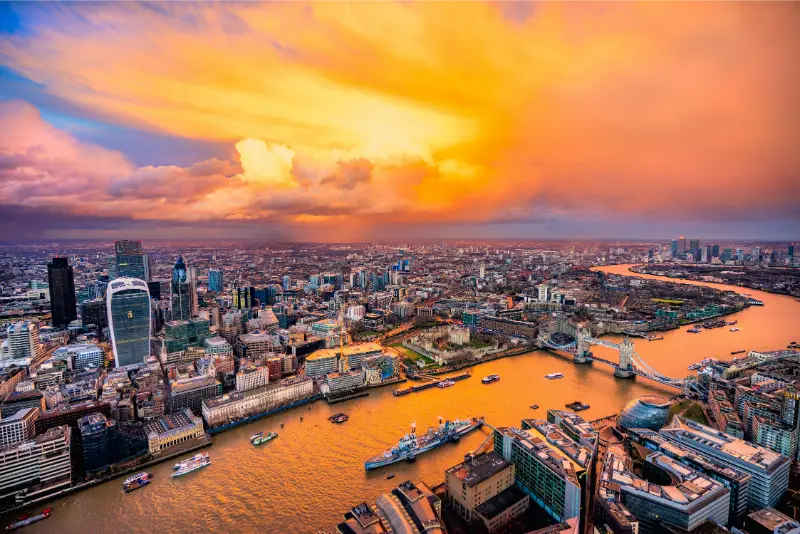
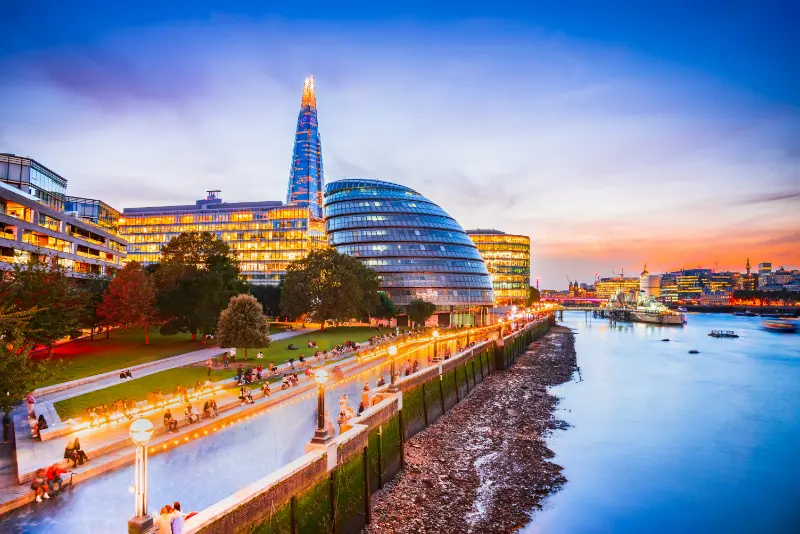
    The Shard and London City Hall at Sunset

    If you bought food to take away, check whether it needs refrigeration before committing to several more hours outside. A market souvenir should not become something you carry around central London until it is no longer safe or enjoyable to eat.

    Frequently asked questions

    Is Borough Market free to enter?

    Yes, access to the market is free. You pay only for what you buy.

    Is Borough Market open every day?

    Not under the current regular schedule. Opening days and hours can change, particularly around holidays, so check the official site before travelling.

    How much time do you need?

    Forty-five minutes is enough for a look and one bite; 90 minutes to two hours is more realistic if food is a major interest.

    Is it only for tourists?

    No. Tourism is highly visible, but the market also functions around serious food retail, producers, restaurants and the local community.

    The best way to leave Borough Market

    Do not immediately dive back underground. Walk. Cross London Bridge for City views, follow the river east toward Tower Bridge, or retrace a short section west toward Tate Modern. Food is the reason most people arrive, but geography is what makes Borough Market such a strong London stop. It sits exactly where market history, rail infrastructure, Southwark streets and the Thames meet.

    Compare Borough with other food markets

    Use our best London food markets guide to compare Borough with Camden, Greenwich, Maltby Street, Broadway Market, Brixton and Seven Dials.

    Walk beyond Borough Market into Bermondsey

    For Maltby Street, Bermondsey Street and contemporary art, continue with our Bermondsey guide.

  • London Eye: Is It Worth It? Tickets, Queues, Best Time and Smarter Alternatives

    London Eye: Is It Worth It? Tickets, Queues, Best Time and Smarter Alternatives

    The London Eye is one of the easiest London attractions to judge badly from a photograph. From ground level it looks like a simple observation wheel; on an itinerary it can look expensive for a roughly 30-minute rotation. What you are really paying for is location. The Eye rises directly opposite the Palace of Westminster, placing you above a bend of the Thames with central London spread around you rather than viewed from the edge of the historic centre.

    Whether it is worth the money depends on weather, queues and what other viewpoints you already plan to visit. This is not an attraction everyone must do. It is, however, one that can be excellent when timed intelligently. Use this guide to decide before buying, then compare it with our best views in London article.

    RotationAbout 30 minutes
    Best forFirst visits, families, couples and central skyline orientation
    Closest stationsWaterloo and Westminster
    Main riskPaying peak prices for poor visibility or spending too much of a short trip in queues

    What the London Eye view is actually like

    The Eye does not provide the highest view in London, and that is part of its appeal. From 135 metres, landmarks remain legible rather than becoming tiny abstract shapes. Parliament and Big Ben feel close, the Thames provides an immediate orientation line, and St Paul’s, the Shard and other skyline markers help you understand how districts connect.

    The capsules move slowly enough that the experience is more observational than thrilling. People who dislike roller coasters usually have no problem with the motion itself, although anyone with a strong fear of heights will naturally experience it differently. The enclosed pods also make the Eye useful in cold or breezy weather.

    Standard or Fast Track?

    Standard entry is the sensible default when your schedule is flexible. Fast Track becomes more rational on weekends, school holidays or a tightly planned first visit where an hour lost in a queue would disrupt the rest of the day. The official London Eye site notes that advance online pricing is cheaper than walk-up pricing and that costs vary with demand, so there is little advantage in waiting until you are standing outside unless your plans are deliberately spontaneous.

    Your ticket time normally indicates when to join the relevant queue rather than guaranteeing immediate boarding. That small distinction matters. Leave buffer time before theatre reservations, trains or another timed attraction.

    The best time: morning, sunset or after dark?

    Early morning is the practical choice. Queues are often shorter, air can be clearer and you can use the rotation to orient yourself before walking Westminster or the South Bank. Sunset is the emotional choice, especially on a clear day, but everyone else has the same idea. You are also gambling on weather and precise seasonal timing.

    After dark, the city becomes a field of lights and the river reflections are beautiful, but individual landmarks can be harder to identify. If this is your first day in London, daylight gives more geographical value. If you already know the city, evening can feel more atmospheric.

    Weather matters more than most ticket comparisons

    Cloud does not automatically ruin the London Eye. Low, featureless cloud and heavy rain are the real problems because they reduce contrast and distance. A dramatic mixed sky can actually improve photographs. The hardest situation is a non-refundable or inflexible ticket booked far in advance for a day of very poor visibility.

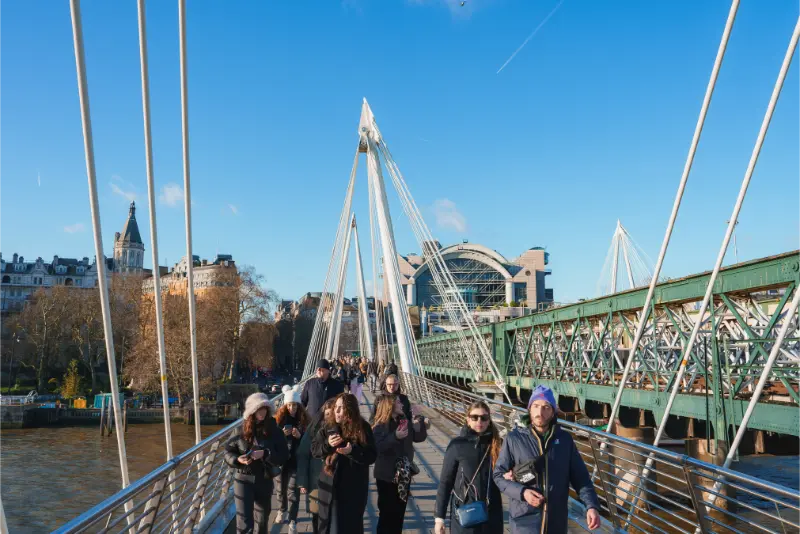
    Golden Jubilee Bridges and Charing Cross Station London

    Before booking the most expensive ticket category, read the rescheduling conditions. In London, flexibility can be more valuable than a minor price saving. Our best time to visit London guide explains seasonal daylight and weather patterns in more detail.

    Where to stand inside the capsule

    There is no single “correct” side because the capsule moves and views open in several directions. Near the start, identify Parliament and the river first. As you rise, move around rather than guarding one patch of glass. Reflections can be more troublesome than distance, so photographers should avoid pressing lenses directly into bright internal reflections and can use darker clothing to reduce glare.

    Do not spend the full rotation filming through your phone. The movement is slow enough that you will have repeated opportunities for the same view.

    How to build the London Eye into a sensible day

    The Eye belongs naturally with Westminster and the South Bank. A strong first-time sequence is Westminster Abbey or Parliament Square in the morning, cross Westminster Bridge, ride the Eye, then continue east along the river toward the Southbank Centre, Tate Modern and Borough Market. Our South Bank London walk already maps that route.

    Another option is to ride near the end of a Westminster day. After seeing the city at street level, the elevated view becomes a summary of places you have already walked through rather than a collection of unknown rooftops.

    London Eye with children

    For families, the fixed duration is a strength. Children get a dramatic view without a long guided tour or hundreds of stairs. The main challenge is the queue, not the ride. Bring a snack for beforehand, use toilets before joining the line and avoid stacking another queue-heavy attraction immediately afterwards.

    If your children care more about boats than viewpoints, a Thames ride may produce better value. See our London by boat guide before buying a bundle automatically.

    Canary Wharf from Greenwich Park London

    When I would skip it

    I would skip the London Eye on a very short London trip if you already have another paid skyline experience, or if the weather is clearly destroying visibility and your ticket is flexible enough to change. I would also skip it for travellers whose main interest is historic interiors rather than city views. Free viewpoints and parks can be more rewarding if budget matters.

    Our free things to do in London article includes alternatives that preserve money for museums, theatre or meals.

    Tickets: compare conditions, not just headline price

    Official tickets, attraction bundles and third-party sellers can all be legitimate options. Compare the exact date/time rules, cancellation or rescheduling terms, whether Fast Track is truly included and whether a bundle saves money for attractions you actually intended to visit. A cheap bundle containing two unwanted attractions is not a saving.

    Affiliate link. A booking may earn Dreaming London a commission at no additional cost to you.

    Current practical information

    The London Eye uses seasonal opening hours. The official site publishes day-specific times and notes that online prices can vary according to demand. Always check official London Eye opening hours rather than relying on a fixed schedule copied into an old article.

    How the London Eye compares with other viewpoints

    The Eye’s advantage is not raw height but position and movement. Sky Garden and other City viewpoints look back toward Westminster from the east; Primrose Hill and Greenwich Park provide free landscape views; the Shard offers a much higher perspective. The Eye sits directly on the central Thames bend opposite Parliament, which makes familiar landmarks easy to recognise.

    Choose one or two viewpoints with different purposes rather than collecting all of them. A free park viewpoint plus the London Eye gives more variety than several paid glass towers. If budget is tight, save the Eye for a clear-weather day and use free alternatives when visibility is poor.

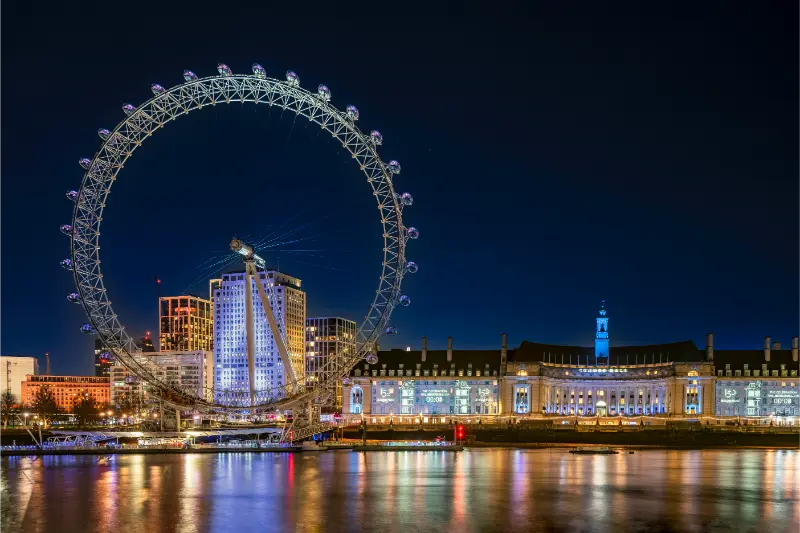
    London Eye at Dusk with Thames Reflection

    What to do if your day is running late

    If you have a timed ticket, do not sacrifice the entire surrounding itinerary to arrive excessively early. Check the operator’s arrival instructions, leave a sensible buffer, and use the riverfront nearby if you have spare time. Jubilee Gardens, Westminster Bridge and the South Bank are immediately available without another booking. This is one reason the Eye works well as an anchor: waiting time can still feel like sightseeing rather than dead time.

    How to avoid paying for the wrong experience

    Before checkout, read the product name carefully. London Eye pages can include standard entry, Fast Track, flexible Fast Track, river cruises and multi-attraction bundles. The cheapest headline is not always the ticket displayed after you choose a peak date. Compare the final price and the actual activities you intend to use.

    Also check whether everyone in your group benefits from Fast Track. Families with young children may value reduced waiting more than a couple travelling on a quiet weekday. Ticket strategy should follow your day, not the marketing hierarchy.

    Frequently asked questions

    How long is the London Eye ride?

    The rotation is about 30 minutes. Total visit time is longer because of security, check-in and queuing.

    Do the capsules stop?

    The wheel moves slowly and continuously under normal operation. Staff have procedures to assist boarding where necessary.

    Is sunset worth paying more for?

    It can be beautiful, but only if weather cooperates. Do not choose a premium slot solely for sunset if your trip is already expensive and tightly scheduled.

    Can I see Windsor Castle?

    The official attraction notes that very clear conditions can provide long-distance views toward Windsor, but do not treat that as guaranteed. Central London landmarks are the reliable part of the experience.

    The best reason to ride

    The London Eye earns its place when it helps you understand London, not simply when it produces a selfie. Ride it with a rough mental map of what you are looking at, choose a time that fits the surrounding neighbourhood, and keep expectations tied to weather. Done that way, thirty minutes above the Thames can connect a surprising amount of the city you have been exploring at street level.

  • Tower Bridge London: Inside the Glass Walkways, Engine Rooms and Best River Views

    Tower Bridge London: Inside the Glass Walkways, Engine Rooms and Best River Views

    Tower Bridge is probably London’s most frequently misidentified landmark. Visitors sometimes call it London Bridge, photograph it from the river and assume the experience ends there. It does not. Tower Bridge is both a working movable bridge and a visitor attraction, with high-level walkways, glass floors and Victorian Engine Rooms that explain the engineering behind one of the city’s defining silhouettes.

    The key question is whether you only want the classic exterior view or whether you are interested in how the bridge works. If engineering, architecture or unusual viewpoints appeal to you, going inside is worthwhile. If your schedule is already dominated by the nearby Tower of London, an exterior crossing may be enough. This guide helps you choose without overselling either option.

    Best forEngineering, architecture, families, photography and Thames views
    Interior visitAllow roughly 60–90 minutes
    Nearest stationsTower Hill, London Bridge and Tower Gateway
    Best pairingTower of London + Tower Bridge + a Thames or South Bank walk

    First, understand what your ticket actually covers

    The Tower Bridge visitor experience begins in the towers and continues across the high-level walkways. The famous glass floors let you look directly down at traffic and river movement below. The route then continues toward the Engine Rooms, where the machinery that historically powered the bridge lifts is displayed. These are separate physical spaces, so do not assume you have finished when you leave the upper walkways.

    The visitor attraction includes the North and South Towers, high-level walkways, glass floors and Engine Rooms. The current standard opening is 09:30–18:00 daily, with last entry to the Towers at 17:00; annual closures and special late openings can apply. Check Tower Bridge official visitor information for your date.

    The glass floor is more interesting than the selfie

    The glass floor is marketed as a thrill, but its real value is perspective. Looking down while buses, taxis, cyclists and boats move through the bridge turns a familiar postcard into a functioning piece of infrastructure. If you are uncomfortable standing on glass, you can still use the walkways without making that the centre of your visit.

    For children, it is an easy hook into engineering. Ask them to watch how road and river traffic interact and then connect that observation with the Engine Rooms later. That makes the visit more coherent than treating each room as a separate attraction.

    Do not skip the Victorian Engine Rooms

    The Engine Rooms are where Tower Bridge becomes more than a viewpoint. The bridge opened in the late nineteenth century, when the growing East End and busy Pool of London created a difficult engineering problem: London needed a new river crossing without blocking tall-masted shipping. The machinery and interpretation here show how that problem was solved.

    Even visitors who are not naturally interested in mechanics usually find the scale and physicality memorable. Allow enough time to look rather than rushing toward your next timed ticket at the Tower of London.

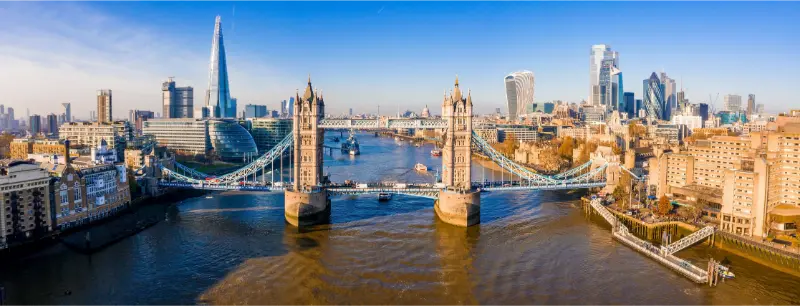
    Tower Bridge London

    Can you watch Tower Bridge lift?

    Yes, bridge lifts still take place for vessels that require passage. The official website publishes scheduled lift times. Watching from the riverside is free and can be one of the most satisfying “small” experiences in London because the landmark suddenly behaves like the machine it was designed to be.

    Do not build an inflexible day around a single lift, because timings can change. If a lift coincides with your route, arrive a little early and choose a viewpoint from the north or south bank. The bridge deck itself is closed to road traffic during a lift, so the surrounding area can become busy.

    Best free viewpoints of Tower Bridge

    The north bank beside the Tower of London gives the classic composition with the bridge stretching east. The south bank near Potters Fields Park offers broad views and works especially well around sunset. Walking east or west along the Thames changes the alignment quickly, so you do not need professional equipment to find a less predictable photograph.

    For a longer river walk, use our South Bank guide. It connects Westminster, cultural landmarks, Borough Market and Tower Bridge in a route that makes geographical sense rather than hopping between isolated photo spots.

    Tower Bridge and the Tower of London: which comes first?

    If you plan to enter both, I would usually place the Tower of London first, ideally early. The fortress is the more time-sensitive and mentally demanding attraction, and the Crown Jewels can become increasingly busy. After two or three hours there, Tower Bridge works well as a change of pace: views, engineering and movement instead of another dense historical complex.

    Our Tower of London visitor guide explains a practical order inside the fortress. If you are only seeing Tower Bridge from outside, reverse the logic: photograph the bridge early, then enter the Tower when your ticket requires.

    Is Tower Bridge good with children?

    Yes, particularly for children who like machines, heights or transport. The visit has a clear physical sequence and breaks up reading with views and interactive moments. Younger children may care more about the glass floor and bridge mechanics than Victorian construction history, which is completely fine. Let the structure itself do some of the teaching.

    Tower Bridge and River Thames Aerial Panorama London

    Combine it with a river boat rather than another large museum if you want a family-friendly day with varied energy. Our London by boat guide explains how river services can be part of normal sightseeing.

    When is the best time to go inside?

    Morning is usually easiest if you want fewer people around the glass floor. Late afternoon can produce better light over the river, especially outside the bridge, but attraction closing times matter more in winter. The interior is weather-resistant, making Tower Bridge a useful choice on an unsettled day, though outdoor viewpoints are still a large part of the experience.

    If photography matters, separate “going inside” from “best exterior light”. You can cross the bridge during the day and return to the south bank after dinner without buying another ticket.

    Tickets and tours

    Official self-guided entry is enough for most visitors. Guided tours add value if engineering or the bridge’s working history is the main attraction. Some third-party products combine Tower Bridge with the Tower of London, so check duration and inclusions carefully: similarly named tours can differ dramatically.

    Affiliate link: Dreaming London may receive a commission if you make a booking, without increasing your price.

    Common mistakes

    • Calling Tower Bridge “London Bridge” and then navigating to the wrong place.
    • Visiting the upper walkways but forgetting that the Engine Rooms are part of the experience.
    • Scheduling the Tower of London and Tower Bridge too tightly together.
    • Expecting every bridge lift to happen exactly as published without checking again.
    • Only photographing the bridge from one bank.

    How to photograph Tower Bridge without repeating the same image

    Use the bridge as a moving subject rather than a fixed postcard. From the north bank, include the riverside walls and Tower of London context. From Potters Fields on the south side, step back enough to show the full span. From London Bridge, the more distant angle places Tower Bridge inside the wider Thames corridor. After dark, reflections and traffic add a completely different character.

    Canary Wharf from Greenwich Park London

    If a bridge lift is scheduled, choose your bank before it starts. Moving across the bridge at the last minute can become awkward because road and pedestrian flows change around the lift. Arrive early, then watch the mechanical sequence rather than concentrating only on the raised bascules.

    A useful half-day route

    For a compact but satisfying visit, start at Tower Hill, walk around the Tower of London exterior, enter Tower Bridge, finish through the Engine Rooms, then continue west along the south bank to Borough Market. This route avoids backtracking and combines history, engineering and food. If you have already visited Borough Market, continue west toward Tate Modern or cross London Bridge into the City instead.

    Frequently asked questions

    Can you walk across Tower Bridge for free?

    Yes. The public road-level pavements are free. The ticket is for the interior visitor attraction, including the high-level walkways and Engine Rooms.

    How long does the paid visit take?

    About an hour is possible, but 60–90 minutes is more comfortable if you read exhibits and spend time in the Engine Rooms.

    Is the glass floor compulsory?

    No. You can enjoy the high-level walkways without standing on the glass panels.

    Is Tower Bridge worth entering after the Tower of London?

    It can be, especially if you want views and engineering. If history overload has set in, simply crossing the bridge and walking the river may be the better choice.

    The reason to visit inside

    Tower Bridge is at its best when it stops being a logo and becomes a working object. The glass floors show the city moving beneath you; the Engine Rooms reveal the machinery behind the spectacle; scheduled lifts remind you that the bridge still serves river traffic. Even if you ultimately decide not to buy a ticket, understanding those layers will make the exterior more meaningful when you encounter it from the Thames.

  • St Paul’s Cathedral London: Dome, Crypt and the Best Way to Plan Your Visit

    St Paul’s Cathedral London: Dome, Crypt and the Best Way to Plan Your Visit

    St Paul’s Cathedral is easy to recognise and surprisingly easy to misunderstand. Many travellers photograph the dome from Millennium Bridge, walk around the churchyard and move on, assuming the best experience is the skyline view. The interior tells a different story. This is a working cathedral, a national ceremonial space, a memorial landscape, a crypt and, for visitors willing to climb, one of central London’s most memorable viewpoints.

    The best visit depends on deciding in advance whether your priority is architecture, history or the Dome Galleries. Trying to treat all three as equal can make the visit feel rushed. This article shows how to plan it properly and how to connect it with the surrounding Square Mile. For the bigger picture, read our best things to do in London and best London views guides.

    Best forArchitecture, skyline views, British history and City of London walks
    AllowAbout 90 minutes; 2 hours if climbing the dome slowly
    Nearest TubeSt Paul’s
    Key choiceWhether you want to climb to the upper Dome Galleries

    Start by looking at the cathedral from outside

    Before entering, walk a short arc around St Paul’s Churchyard. Christopher Wren’s design makes more sense when you see how the west front, dome and surrounding streets interact. Then step toward Millennium Bridge for the famous long view. This is not just a photo opportunity: it shows why St Paul’s remains such a dominant marker in a skyline that has changed dramatically around it.

    If you are walking from the Thames, the cathedral appears almost theatrically at the end of the bridge alignment. That approach pairs naturally with our South Bank walk: cross Millennium Bridge from Tate Modern, visit St Paul’s, then continue deeper into the City rather than returning by the same route.

    What the sightseeing ticket includes

    St Paul’s is open for worship and for ticketed sightseeing at designated times. The current standard sightseeing schedule is Monday to Saturday from 08:30 to 16:30, with last sightseeing entry usually at 16:00; Dome Galleries open later in the morning. In 2026 selected Sunday Dome Gallery visits also operate during the season. Services and events can alter access, so check the official St Paul’s calendar on the day of your visit.

    Do not confuse paying to sightsee with attending a service. Worship is part of the cathedral’s religious function; it is not a way to roam the building as a tourist. If you attend, behave as you would in any active place of worship.

    The Dome Galleries: know the climb before you commit

    The dome is the experience that changes St Paul’s from a beautiful interior into a physical adventure. The route climbs through different levels and ultimately reaches exterior viewpoints. The number of steps is substantial and the passages become narrower higher up. If you dislike heights, enclosed stairs or strenuous climbs, the Cathedral Floor and Crypt still make a worthwhile visit.

    Do not rush the climb because someone behind you is faster. Use designated stopping points, carry minimal baggage and follow staff instructions. The reward is not just height: you see the geometry of Wren’s design at close range and then emerge into a panorama that feels different from glass-tower viewpoints. St Paul’s puts you inside the historic fabric of the City rather than above it in a modern observation deck.

    What to notice on the Cathedral Floor

    The first instinct is to look up at the dome, but spend time at ground level. Notice how the nave directs the eye east, how monuments occupy the side spaces, and how light changes across stone and mosaic. The cathedral has hosted major national services and commemorations, but it also functions every day as a church. That dual identity gives the interior a different tone from London’s museums and palaces.

    Guildhall and Guildhall Art Gallery City of London

    If you prefer focused visits, choose three elements: the dome from below, one or two monuments that connect with subjects you already know, and the choir/high altar area where accessible. You will remember more than if you try to read every inscription.

    The Crypt is not an afterthought

    The Crypt contains memorials and tombs associated with major figures including Admiral Nelson and the Duke of Wellington, along with Christopher Wren himself. It also changes the architectural mood completely. Moving from the bright dome to the lower stone spaces makes the cathedral’s history feel layered rather than decorative.

    Give the Crypt its own time rather than leaving it until five minutes before closing. If you are travelling with someone who does not want to climb the dome, this is where a shared visit can still feel substantial before one person continues upward.

    Best time of day

    Earlier sightseeing slots usually make planning easier because you have more margin if entry checks take time or the dome climb is slower than expected. Afternoon can be atmospheric, especially when light moves through the building, but do not choose a late slot if the upper galleries are your priority. Last entry and gallery access can differ from general cathedral closing.

    As of 2026, the cathedral generally offers sightseeing Monday to Saturday, with special Sunday Dome Gallery arrangements on selected dates. That is unusual enough that it is worth checking rather than relying on an old blog post. The official calendar is the authority.

    How to combine St Paul’s with the City of London

    St Paul’s is an ideal anchor for a half-day in the Square Mile. After the cathedral, walk toward Postman’s Park and the Barbican, or head east via Bank, Leadenhall Market and the lanes around the historic core. If Tower of London is your priority, continue east on foot rather than taking the Tube for such a short, interesting urban stretch.

    Our Tower of London guide explains how much time the fortress actually requires, while our City of London walking guide connects churches, gardens, Roman traces and modern architecture without zigzagging.

    Boats On River Thames from Tower Bridge London

    St Paul’s or Westminster Abbey?

    This is a useful question if your budget or schedule allows only one major church interior. Westminster Abbey is stronger for coronations, royal tombs and literary history. St Paul’s is stronger for Wren’s architecture, the dome climb, City views and the experience of moving vertically through the building. Neither is objectively “better”; the right choice depends on what you want to remember.

    On a four- or five-day London trip, visiting both makes sense if you separate them across different days. Doing them back-to-back can create church fatigue and wastes the geography: Westminster belongs with Parliament and St James’s; St Paul’s belongs with the City and Thames.

    Tickets and guided options

    Buying directly from the cathedral is straightforward. Guided or bundled options can be useful when St Paul’s is part of a broader London sightseeing plan. Always check whether a tour actually includes cathedral admission and whether the dome galleries are accessible during your chosen time.

    This is an affiliate link. Dreaming London may earn a commission if you book, at no additional cost to you.

    Photography, clothing and practical details

    Rules around photography can vary by area and event, so follow current signage rather than assuming. Dress does not need to be formal, but remember this is an active cathedral. Comfortable footwear matters more than style if you are climbing the dome. Large luggage is a poor fit for security checks and historic stairways; use luggage storage elsewhere when possible.

    Visitors with reduced mobility should read the official access information before purchasing, particularly because the highest galleries are reached via historic stairs. A meaningful visit is still possible without the climb.

    A photography route that does not waste the visit

    If photographs matter, take the exterior views before entering: the cathedral steps and churchyard give details, while Millennium Bridge provides the classic long perspective. Inside, do not let photography dominate the experience. Lighting can be complex and rules can change by area, service or event, so follow current signs. The dome climb is better approached as an architectural experience first and a camera opportunity second.

    The Shard and London City Hall from River Thames

    After leaving, walk south across Millennium Bridge and look back. That reverse view explains the cathedral’s relationship with the Thames more clearly than the view from the steps. It also creates a natural continuation toward Tate Modern and the South Bank instead of a dead-end attraction visit.

    Accessibility and energy planning

    The Cathedral Floor and Crypt can provide a substantial visit even for travellers who cannot or do not want to use the historic stairs to the upper galleries. If you are travelling as a mixed-mobility group, agree beforehand whether some people will climb while others remain below. This avoids pressure and keeps the visit enjoyable for everyone.

    Do not combine a dome climb with an overambitious walking day if stairs are difficult for you. London rewards energy management. A shorter City loop after St Paul’s can be more memorable than pushing through five extra sights while exhausted.

    Frequently asked questions

    Can you enter St Paul’s for free?

    Services are free to attend as worship. Sightseeing the cathedral as a visitor requires a ticket under normal arrangements.

    Is the dome climb worth it?

    For travellers comfortable with many steps and heights, yes: it combines architecture and a rare historic viewpoint. It is not essential to appreciate the cathedral.

    How much time should I allow?

    About 90 minutes is a sensible baseline. Allow closer to two hours if you climb slowly, listen to more of the guide or spend time in the Crypt.

    What should I do afterwards?

    Walk. Millennium Bridge, the Barbican, Postman’s Park, Bank, Leadenhall Market and the Tower area all fit naturally into the same day.

    Why St Paul’s works best as part of a walking day

    The cathedral is not isolated from London; it explains the district around it. Seen from the Thames, from narrow City lanes and from modern rooftops, the dome becomes a reference point you keep rediscovering. That is why the strongest visit begins before the ticket barrier and continues after you leave. Make St Paul’s the anchor, then use the streets around it to understand how old and new London have been built on top of each other.

  • Westminster Abbey London: How to Visit Without Rushing Through 1,000 Years of History

    Westminster Abbey London: How to Visit Without Rushing Through 1,000 Years of History

    Westminster Abbey is one of those London landmarks that can look deceptively simple on an itinerary: arrive, see the coronation church, take a few photographs, move on. In reality, it is one of the densest historical spaces in the city. Kings and queens, scientists, writers, soldiers and statesmen are commemorated within a building whose story stretches across more than a millennium. The challenge is not finding things to see; it is deciding what deserves your attention before the names, tombs and chapels start to blur together.

    This guide is designed for travellers who want to understand the Abbey rather than simply say they have been inside. If you are planning the wider area, start with our Westminster walking guide; if London is new to you, our first-time London guide explains how to build days around compact areas instead of criss-crossing the city.

    Best forBritish history, architecture, royal history, literature and first-time visits
    Realistic visitAbout 90 minutes to 2 hours for most visitors; longer if you like to read deeply
    Closest stationsWestminster and St James’s Park
    Planning principleBook the Abbey as the anchor of your Westminster day, not as a quick stop between other tickets

    Why Westminster Abbey is different from a normal museum

    The Abbey is not a museum that happens to occupy an old church. It is a working church whose religious life continues alongside tourism, national ceremonies and commemoration. That distinction matters. Sightseeing hours can change for services and special events, photography rules deserve respect, and some spaces feel very different when you approach them as places of worship rather than as exhibits.

    The Abbey’s official visitor information recommends advance booking and explains that Sunday is principally for services. Before leaving your hotel, check the current timetable on the official Westminster Abbey website. This is especially important if your trip coincides with a major state, church or ceremonial event.

    The smartest order inside

    There is no single perfect route, but there is a better mental strategy: divide the Abbey into themes. Start by noticing the architecture and the broad shape of the nave rather than immediately reading every memorial. Then give focused attention to the Coronation Chair and the royal story, the medieval chapels around the sanctuary, Poets’ Corner, and the scientists and public figures commemorated elsewhere. This prevents the visit turning into a long sequence of plaques.

    If you care most about monarchy, spend more time around the royal tombs and Lady Chapel. If literature is the draw, protect time for Poets’ Corner. If science interests you, look for figures such as Isaac Newton and Charles Darwin. Families can choose a small number of stories before arrival and turn the visit into a search rather than asking children to absorb every monument. Our London with kids guide has more advice on pacing major attractions with younger travellers.

    Do not miss the Chapter House and Cloisters

    Visitors sometimes focus so intensely on the central church that they rush the quieter spaces. The Chapter House and Cloisters change the rhythm of the visit. The Chapter House connects to the institutional history of medieval England, while the Cloisters create a calmer transition between the most crowded parts of the Abbey. They also help you understand that this was a functioning religious community, not just a ceremonial shell.

    Big Ben and Houses of Parliament London

    The Pyx Chamber is another space worth noticing when accessible. You do not need to memorise dates or architectural labels to appreciate it. The value is in seeing how many layers of English political, religious and financial history occupy a surprisingly small footprint.

    Are the Queen’s Diamond Jubilee Galleries worth adding?

    The Galleries occupy the Abbey’s medieval triforium above the main floor and display objects connected with the building’s long history. They require a separate timed element in addition to Abbey admission, and they are not the right choice for everyone. If you have only an hour and a half, the main Abbey should remain the priority. If you enjoy original objects, manuscripts and the story of the building itself, the Galleries can turn a good visit into a much richer one.

    They also offer a different perspective on the Abbey’s interior. Treat them as an extension, not as something you must squeeze in because it appears on a list. Check current opening arrangements before booking because access can vary.

    When should you visit?

    The first available sightseeing period is usually the easiest option for travellers who dislike crowds. Arriving early also leaves the afternoon free for Whitehall, St James’s Park and Buckingham Palace. Later admission can work well if you use the morning for outdoor Westminster, but do not book the Abbey so late that a transport delay or long lunch creates stress.

    Wednesday has historically offered extended visiting on some dates, but do not build an itinerary around that assumption without checking the current calendar. The same applies to Saturdays, bank holidays and periods around major ceremonies. London rewards flexible planning: know your anchor, then keep the outdoor elements adjustable.

    How to combine the Abbey with the rest of Westminster

    A logical route begins around Parliament Square and the Thames, moves into Westminster Abbey, then continues north along Whitehall or west through St James’s Park. This sequence avoids unnecessary Tube journeys. If you want to visit Buckingham Palace, use our Buckingham Palace guide to decide whether you are mainly interested in the exterior, Changing the Guard or a seasonal interior visit.

    Buckingham Palace Victoria Memorial and Gardens London

    For a first trip, resist combining Westminster Abbey, the Tower of London and a major museum on the same day. They are all high-information attractions. Two deep interiors plus a long cross-city transfer is usually less satisfying than one major interior followed by streets, parks and views.

    What to pair with the Abbey if the weather changes

    Westminster is unusually resilient in bad weather. Churchill War Rooms provides another indoor historical anchor nearby, while the National Gallery is farther north near Trafalgar Square. If rain becomes heavy, shorten the park section and save it for another day. Our rainy-day London itinerary explains how to redesign a day without feeling that the weather has ruined it.

    In light rain, however, keep walking. Westminster’s architecture, wet pavements and river views can be atmospheric, and the distances between Parliament Square, Whitehall and St James’s Park are manageable with a waterproof layer.

    Tickets: official or guided?

    The official Abbey ticket is the simplest choice for independent visitors, and the multimedia guide is useful if you want context without joining a group. A guided experience can make sense when the history is your main reason for visiting or when you want the Abbey connected to the wider Westminster story. Compare cancellation terms, meeting points and whether actual Abbey admission is included rather than assuming every “Westminster tour” enters the building.

    This is an affiliate link. If you book through it, Dreaming London may receive a commission at no extra cost to you.

    Details that make the visit better

    • Use comfortable shoes: the Abbey is only one part of a day that is best explored on foot.
    • Keep your phone away for stretches of the visit. Looking up at vaulting, monuments and spatial relationships is more rewarding than collecting dozens of near-identical images.
    • Do not arrive with a large bag if you can avoid it; security procedures are easier with minimal luggage.
    • If mobility or step-free access matters, read the Abbey’s accessibility information before booking, especially for elevated or historic areas.
    • Allow time outside in Dean’s Yard and around Parliament Square rather than immediately entering the Tube after you leave.

    Westminster Abbey with children

    The Abbey can work well with school-age children if adults reduce the amount of explanation. Pick three stories: a coronation, a famous writer and one surprising historical figure. Let children locate them and then move on. A two-hour adult-style audio marathon is rarely the best family strategy. Afterwards, St James’s Park provides the release that makes the whole morning feel balanced.

    Tower Bridge and River Thames Panorama London

    Standard visitor hours in 2026

    The Abbey’s current standard sightseeing schedule is generally 09:30–15:30 Monday to Friday and 09:30–15:00 on Saturday, with Sunday reserved for services rather than ordinary tourist admission. As a working church it can close or alter access for special services, so always check the date-specific calendar before travelling.

    Frequently asked questions

    Is Westminster Abbey free?

    Ordinary sightseeing requires a ticket, while attendance at religious services is different. Current arrangements and any special concessions should be checked on the official site.

    Can you visit on Sunday?

    Sunday is primarily a day of worship rather than normal tourist sightseeing. Visitors may attend services, but should not treat worship as a substitute sightseeing session.

    How long do you need?

    Most first-time visitors should allow roughly 90 minutes to two hours. History enthusiasts can easily spend longer, especially if adding the Galleries.

    Is it worth visiting if you have already seen the exterior?

    Yes if British history, monarchy, architecture or literature matters to you. The exterior alone does not communicate the density of stories inside.

    A better way to think about the Abbey

    Westminster Abbey is most rewarding when it is the intellectual centre of a day rather than another landmark squeezed between photographs. Give it enough time to become a place rather than a list of famous names, then let Westminster unfold around it on foot. From Parliament to Whitehall, St James’s Park and Buckingham Palace, the surrounding streets make far more sense once you have spent time inside the building that has witnessed so much of the country’s ceremonial history.