
INDEPENDENT LONDON TRAVEL GUIDES

Dreaming London

PLAN • EXPLORE • EXPERIENCE LONDON

Author: Sophie

  • Where to Stay in Shoreditch and Liverpool Street: Nightlife, Elizabeth Line and City Access

    Where to Stay in Shoreditch and Liverpool Street: Nightlife, Elizabeth Line and City Access

    Shoreditch is one of the best places to stay in London if you want restaurants, bars, independent shops and late-night energy within walking distance. It is also a more practical base than many visitors realise: Liverpool Street sits on the western edge of the area, giving you fast rail links, the Elizabeth line and easy access to the City. The trade-off is that Shoreditch changes character street by street. A hotel beside a busy late-night venue can feel completely different from one a few minutes away on a quieter residential road.

    This guide focuses on the decision that matters most when booking: which part of Shoreditch should you stay in? I would not choose only by hotel rating. Look at the exact street, the nearest station, the type of evening atmosphere around the property and whether you want to be closer to nightlife, Spitalfields, Liverpool Street or Old Street.

    Shoreditch at a glance: who should stay here?

    Real hotels to put on your shortlist in Shoreditch / Liverpool Street: citizenM London Shoreditch (design-led option for nightlife and a lively East London base); Montcalm Royal London House, Autograph Collection (higher-end choice near the City and Shoreditch); Point A Hotel London Shoreditch (compact value-focused option); and Point A London Liverpool Street (practical budget-conscious base near Liverpool Street). Hotel prices and room types change by date, so compare the exact room, cancellation terms and recent reviews before booking.

    Traveller typeHow Shoreditch worksBest micro-area
    First-time visitors who like lively neighbourhoodsVery good, especially if you are happy to use the Tube and walk rather than stay beside Westminster landmarks.Spitalfields or the Liverpool Street edge.
    Nightlife and food travellersExcellent. Bars, clubs, casual restaurants and late openings are a major reason to stay here.Shoreditch High Street, Hoxton or the Old Street side.
    CouplesVery good for design hotels, restaurants and evening atmosphere.Spitalfields, Boundary Street or quieter streets east of Brick Lane.
    FamiliesPossible, but choose carefully. The busiest nightlife streets are not the obvious choice with young children.Spitalfields/Liverpool Street edge or quieter streets toward Bethnal Green.
    Business travellersExcellent for the City and Tech City, with strong transport connections.Liverpool Street, Old Street or the western Shoreditch edge.
    Light sleepersMixed. Street noise can be the deciding factor.Choose a side street and request a room away from bars, loading bays and the street.

    The four micro-areas I would compare before booking

    1. Shoreditch High Street and Boxpark: best for being in the middle of the action

    This is the version of Shoreditch many visitors imagine before arriving: murals, bars, casual food, fashion, people moving between venues and a strong weekend atmosphere. Staying near Shoreditch High Street station puts you close to Brick Lane, Redchurch Street and the heart of the neighbourhood. It is a strong choice if you expect to go out in the evening and want to walk back to your hotel.

    The compromise is noise. Friday and Saturday nights can be busy, and rooms facing a main road or a cluster of bars may not be ideal if you go to bed early. When comparing hotels, zoom in on the map and read recent reviews specifically for comments about street noise, nightclub bass, late arrivals and soundproofing. A property can be excellent overall but still be wrong for a light sleeper.

    2. Spitalfields and Liverpool Street: best all-round base

    For many travellers, this is the most balanced place to sleep. You are close enough to walk into Shoreditch and Brick Lane, but you also gain the transport advantages of Liverpool Street. Spitalfields has a more polished feel around the market and historic streets, while the station side becomes busier and more business-oriented during the week.

    I particularly like this side for visitors arriving with luggage or planning several cross-London journeys. The Elizabeth line makes west-east travel much easier, and Liverpool Street also has National Rail services. If you are flying through Stansted, compare your arrival plan with our Stansted Airport to central London guide before deciding whether the convenience is worth paying a little more for accommodation.

    City of London Financial District Aerial View

    3. Old Street and the western edge: best for transport and work trips

    Old Street is less picturesque than the lanes around Spitalfields, but it can be extremely practical. Hotels here work well for Tech City, the City fringe and travellers who value a straightforward Tube connection. You can walk east into Shoreditch for dinner, while avoiding the noisiest core around some late-night venues.

    Check the exact walking route from the station, especially if you expect to return late. A hotel advertised as ‘Shoreditch’ can be closer to Old Street, Liverpool Street, Hoxton or even Bethnal Green. That is not necessarily a problem, but the label alone is too broad to tell you how the stay will feel.

    4. Hoxton: best for a more local feel

    Hoxton sits immediately north of Shoreditch and blends into it without a clear tourist boundary. Around Hoxton Square and the surrounding streets you still have bars and restaurants, but some pockets feel more residential. It can be a good compromise for repeat visitors who want east London energy without staying on the busiest part of Shoreditch High Street.

    For a fuller picture of what is around you, read our Shoreditch neighbourhood guide and the separate Spitalfields and Liverpool Street guide. Those two guides help you distinguish the sightseeing appeal from the practical accommodation decision.
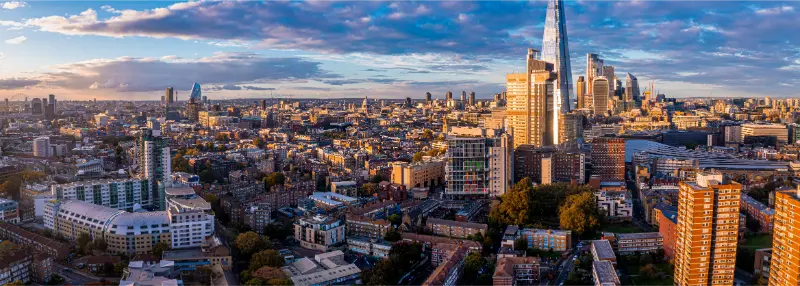
    City of London Financial District at Sunset

    Transport: why Liverpool Street changes the calculation

    Shoreditch is not beside Buckingham Palace or the Houses of Parliament, so you will use public transport for many classic sights. The important point is that the area has several useful transport nodes rather than one single station. Liverpool Street is the strongest all-round hub; Old Street is useful on the Northern line; Shoreditch High Street is on the London Overground; and nearby Aldgate and Aldgate East can also be relevant depending on your hotel.

    The Elizabeth line from Liverpool Street is particularly useful for Heathrow and for fast journeys across central London. For exact routes, engineering works and accessibility information, use the official TfL Journey Planner rather than relying on a static route written months earlier. Our London public transport guide also explains contactless payment, Oyster and the practical differences between Tube, rail and bus travel.

    What it is really like at night

    Shoreditch is one of the London areas where I would actively investigate nightlife before reserving a room. The atmosphere is a benefit if you want it and a disadvantage if you do not. Streets can remain busy well after dinner, queues can form outside venues, taxis and ride-hailing cars create extra traffic, and weekend footfall is high.

    This does not mean that every hotel is noisy. Buildings with good glazing, internal courtyards or rooms facing away from the street can work very well. The key is to read the newest guest comments and search within reviews for words such as ‘noise’, ‘music’, ‘street’, ‘club’ and ‘weekend’. If nightlife is one of the reasons you are coming, pair this article with our London nightlife guide so you can decide whether being able to walk home is a priority.
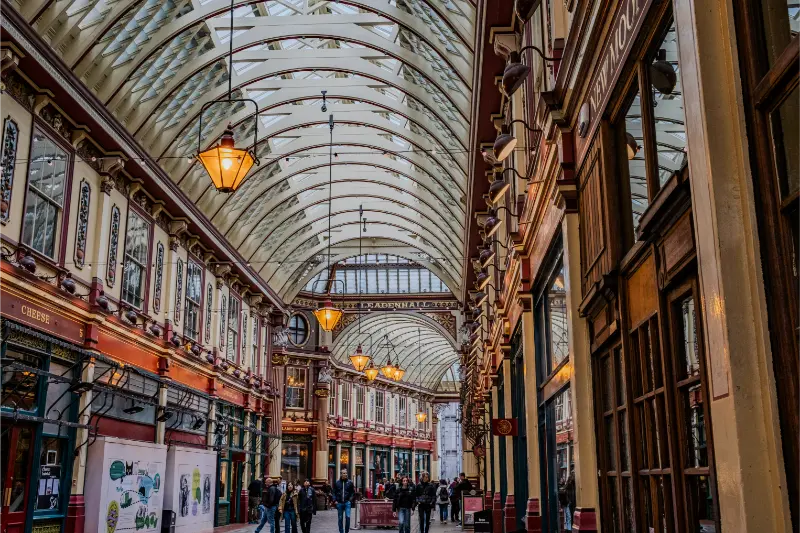
    Leadenhall Market City of London

    Where to stay for food, markets and Brick Lane

    If food is high on your list, the Spitalfields–Brick Lane–Shoreditch triangle is difficult to beat for concentration and variety. You can move from market stalls to bakeries, curry houses, cafés and contemporary restaurants without using transport. Staying closer to Spitalfields gives you easy access to the market and Liverpool Street; staying farther east brings you closer to Brick Lane and the more informal side of the neighbourhood.

    I would not choose a hotel solely because it claims to be ‘near Brick Lane’. The road is long and its atmosphere changes from one end to the other. Measure the walking distance to the particular places you care about, and check what is directly outside the hotel entrance.

    Shoreditch for families: when it works and when I would choose elsewhere

    Families who enjoy city neighbourhoods can absolutely stay in Shoreditch, especially with older children or teenagers interested in street art, markets and informal food. The Liverpool Street/Spitalfields side is usually the easiest version because transport is simple and there are calmer streets nearby.

    With very young children, however, I would compare Shoreditch with the options in our where to stay in London with kids guide. South Kensington, parts of South Bank and some central residential areas can offer a more predictable evening environment. The decision is less about safety in a simplistic sense and more about noise, pavement crowds, stroller convenience and what you want immediately outside the hotel.
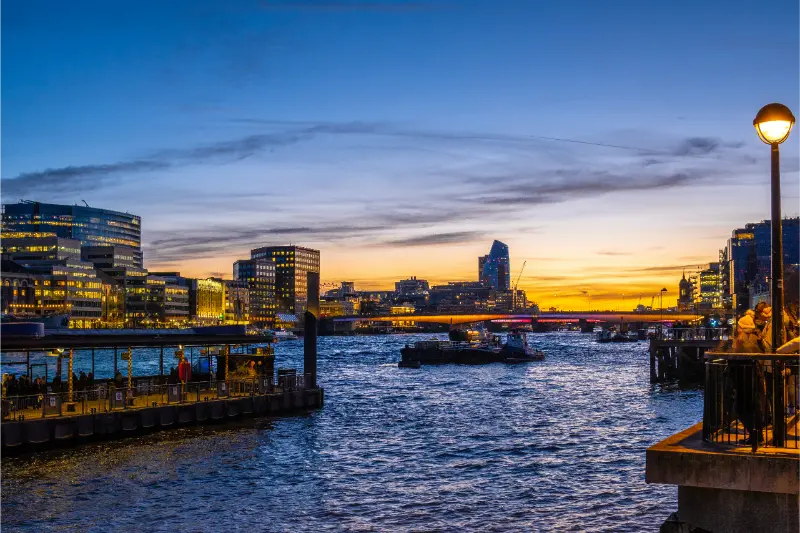
    London Skyline and River Thames at Sunset

    Airport convenience

    For Heathrow, Liverpool Street is on the Elizabeth line, so Shoreditch can be surprisingly convenient even though it is east of the traditional sightseeing core. For Stansted, Liverpool Street is an important arrival point for rail services, making the western side of Shoreditch especially practical. Gatwick and Luton journeys generally involve different rail hubs or connections, so compare the whole door-to-door route rather than just the airport distance on a map.

    If you have an early flight, do not assume the fastest daytime route will operate identically before dawn. Check the exact date and departure time on official journey planners, then allow for the walk from hotel to station with luggage.

    How I would choose a Shoreditch hotel

    1. Choose your priority first. Nightlife, easy airport access, restaurants, business meetings and quiet sleep point toward different micro-areas.
    2. Check the exact street. In Shoreditch, 200 metres can make a noticeable difference to evening noise.
    3. Measure the walk to the station you will actually use. ‘Near Shoreditch’ is less useful than an 8-minute walk to Liverpool Street or a 3-minute walk to Shoreditch High Street.
    4. Read recent room-specific reviews. Look for comments about glazing, air conditioning and rooms facing courtyards or main streets.
    5. Compare the total price. London rates can change sharply by weekday, event and season; a slightly higher nightly rate may be worth it if you save time and transfers.

    Typical mistakes to avoid

    • Booking directly above or beside late-night venues without checking recent noise comments.
    • Assuming every ‘Shoreditch’ hotel is within an easy walk of Liverpool Street.
    • Choosing a cheaper property far east of your preferred area and then spending extra time commuting every day.
    • Looking only at Tube stations and forgetting that the Overground and National Rail may be more useful for your itinerary.
    • Paying for a fashionable address when your actual plan is mostly Westminster, South Kensington and west London.

    Is Shoreditch expensive?

    It is no longer a reliably cheap alternative to central London. Demand for design hotels, restaurants and nightlife means rates can be high, particularly around popular weekends. That said, the area has a broader mix of hotel styles than some luxury districts, and pricing can be competitive on quieter dates.

    Use the area decision first, then compare live rates. You can compare London accommodation on Booking.com and filter by map, review score and cancellation conditions. I would keep the map open while comparing: a saving is only useful if the location still matches the reason you chose Shoreditch.

    Bottom line: which part should you book?

    Choose Spitalfields/Liverpool Street for the best balance of transport and east London atmosphere; Shoreditch High Street for nightlife and maximum energy; Old Street for practical connections and work trips; and Hoxton for a slightly more local-feeling base. If quiet sleep matters more than nightlife, prioritise the exact street and room orientation over the neighbourhood name.

    For additional official neighbourhood information and current accommodation ideas, see Visit London’s Shoreditch accommodation guide. Then compare the location with your day-by-day itinerary before booking.

    Check real prices for your datesCompare location, room type, cancellation terms and recent guest reviews before you book.
    See hotels in Shoreditch / Liverpool Street on Booking.com →
    Compare more hotel options on Expedia Useful for checking alternative rates, flexible stays and flight + hotel combinations.

    Affiliate widget. DreamingLondon may earn a commission from qualifying bookings at no extra cost to you.
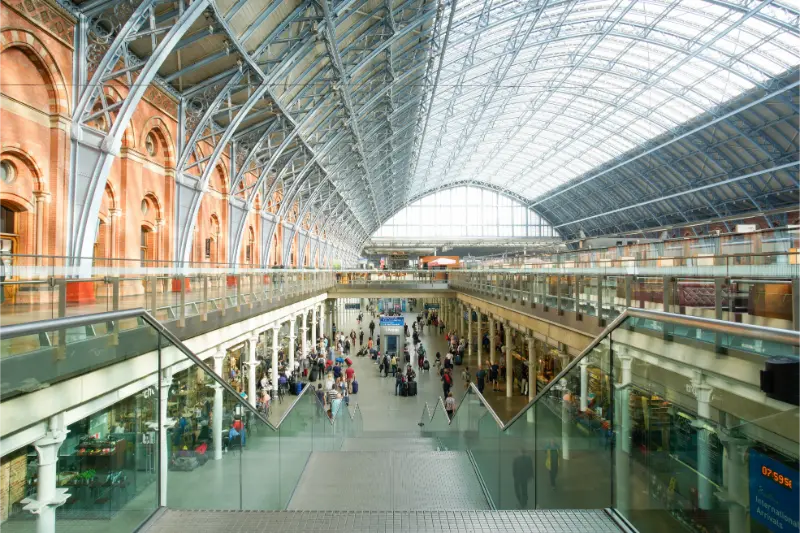
  • Where to Stay in King’s Cross and St Pancras: Eurostar, Trains and Best Micro-Areas

    Where to Stay in King’s Cross and St Pancras: Eurostar, Trains and Best Micro-Areas

    King’s Cross and St Pancras are no longer places you simply pass through. The restored stations, Granary Square, Coal Drops Yard, Regent’s Canal and a growing food scene have turned the area into one of London’s most practical central bases. For travellers arriving by Eurostar or mainline train, the convenience is obvious. The less obvious advantage is that six Underground lines converge at King’s Cross St Pancras, making many cross-city journeys straightforward.

    For what to do locally, see our King’s Cross and St Pancras neighbourhood guide. This article concentrates on the hotel decision: which side of the stations is best, how close you really need to be to Eurostar, and when Bloomsbury or Angel may be a better alternative.

    King’s Cross and St Pancras at a glance

    Real hotels to put on your shortlist in King's Cross / St Pancras: St Pancras London, Autograph Collection (luxury landmark stay inside the historic station complex); Pullman London St Pancras (higher-end practical option for rail and Eurostar connections); The Megaro Hotel – Kings Cross St Pancras (boutique-style choice directly by the stations); and Point A Hotel London Kings Cross – St Pancras (compact value-focused option for short stays). Hotel prices and room types change by date, so compare the exact room, cancellation terms and recent reviews before booking.

    Micro-areaBest forMain advantageTrade-off
    St Pancras / Euston RoadEurostar, one-night stays, rail-heavy tripsWalk to international and mainline trainsTraffic and station crowds
    King’s Cross Square / Pentonville Road edgeFirst visits, transport efficiencySix Tube lines and broad hotel choiceBusy main roads
    Granary Square / Coal Drops YardCouples, food, modern LondonCanal-side atmosphere and evening diningOften higher rates
    Bloomsbury edgeMuseums, quieter central staysGarden squares and British Museum accessSlightly farther from platforms
    Angel edgeLonger stays, restaurants, local feelUpper Street and residential streetsLess convenient for early trains

    Why this is one of London’s best transport bases

    King’s Cross St Pancras station sits on the Northern, Piccadilly, Victoria, Circle, Hammersmith & City and Metropolitan lines. That breadth matters more than a single fast connection because it reduces changes across a varied itinerary. The Piccadilly line also creates a direct route toward Heathrow, while St Pancras handles Eurostar and national rail services.

    The practical result is flexibility. A morning in South Kensington, an afternoon in Covent Garden and an evening in Camden do not require you to cross the same part of London repeatedly. For a first trip with scattered priorities, that can be more valuable than staying beside one famous landmark. Use the official TfL Journey Planner to test the exact routes from your hotel postcode.

    St Pancras side: best for Eurostar and very short stays

    If you arrive from Paris, Brussels or Amsterdam and have only a night or two in London, staying beside St Pancras can be worth the premium. You avoid moving luggage across the city and can check in quickly after the international journey. The same logic applies to an early Eurostar departure: a five-minute walk at 6am is worth more than a slightly cheaper room elsewhere.

    Do not assume you must sleep directly inside or opposite the station. The best value may be a few streets away. Euston Road is busy and traffic noise can be significant, so rear-facing rooms matter. If you have three or more nights and no early train, expand your search north toward Granary Square or south into Bloomsbury.

    Granary Square and Coal Drops Yard: the enjoyable version of King’s Cross

    North of the tracks, the redeveloped canal district changes the feel completely. Granary Square has open space, restaurants and a route along Regent’s Canal, while Coal Drops Yard provides shops and dining in restored industrial buildings. It works particularly well for couples and longer stays because you have somewhere pleasant to return to in the evening rather than just a station concourse.

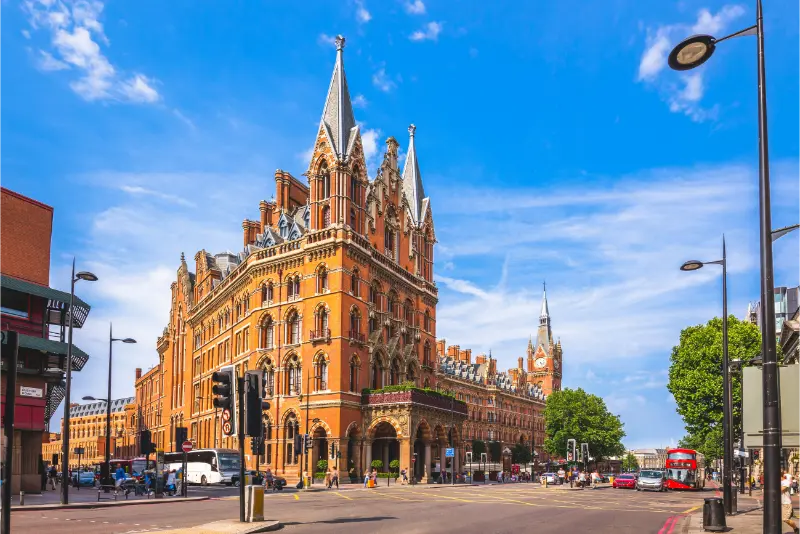
    St Pancras Renaissance Hotel London

    The trade-off is price and the extra walk to platforms. Ten minutes is trivial on a normal day but becomes meaningful when you have an early international train. If Eurostar is a one-off arrival rather than the centre of the trip, the atmosphere may be worth it.

    Bloomsbury edge: quieter and still highly connected

    South of Euston Road, Bloomsbury gives you garden squares, the British Library area and easier access toward the British Museum. It is a strong choice for travellers who want King’s Cross transport without living beside the station. Our Bloomsbury neighbourhood guide shows how this part of central London connects museums, squares and bookish streets.

    Hotels here range from hostels and university accommodation to traditional and upscale properties. The area can be surprisingly good value relative to Covent Garden, particularly when you are willing to walk ten to fifteen minutes to King’s Cross.

    How close do you need to be to the station?

    For a 6am or 7am departure, close really does matter. For a normal sightseeing trip, it matters less. A property twelve minutes away can give you a quieter street, larger room and better restaurants while preserving almost all of the transport benefit. The key is whether the walk involves a simple pavement route or a complicated crossing with luggage.

    Map the entrance you need at St Pancras or King’s Cross, especially if travelling with Eurostar-sized luggage. The two stations are adjacent but large. Allow time for security and passport formalities for international departures; do not treat platform proximity as permission to arrive at the last minute.

    King's Cross Station at Night London

    Eurostar travellers: build the hotel around the train

    If London is part of a multi-city European trip, King’s Cross/St Pancras can eliminate an entire hotel transfer. That is particularly useful with children or several suitcases. You can arrive, store luggage if the room is not ready, explore London and return without learning another transport chain.

    For the departure day, confirm the hotel’s luggage policy and front-desk hours. A property with a twenty-four-hour desk and reliable lift may be more useful than a boutique option with a prettier room but awkward stairs. Travel days reward boring efficiency.

    Heathrow and other airports

    The Piccadilly line connects King’s Cross St Pancras directly with Heathrow, which can be convenient when luggage is manageable. Depending on timing and terminal, Elizabeth line routes with a connection may be faster. Read our Heathrow transfer guide for the trade-offs rather than assuming one route is always best.

    Luton can also pair reasonably with St Pancras because Thameslink rail services use the station, while Stansted is more naturally associated with Liverpool Street and Gatwick with Victoria or Thameslink routes. Airport convenience should be evaluated from the actual terminal and time of day.

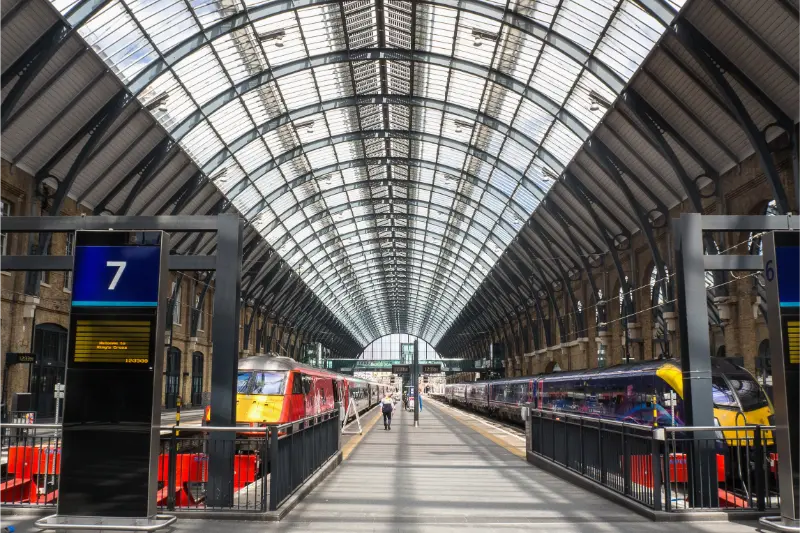
    King's Cross Station Platforms London

    Families and Harry Potter expectations

    Families often choose the area because of Platform 9¾ and rail convenience. The Harry Potter photo point is fun, but it should not be the reason to spend several nights here. More important family advantages are easy transport, Granary Square’s open space, the canal and quick links to museums and attractions elsewhere.

    A family room near the station can be compact. Check bed layout and floor space carefully. If your children need a quieter environment, the Bloomsbury or Granary Square sides can feel calmer than Euston Road.

    Nightlife and evenings

    King’s Cross is not Soho, but it has become much better for evenings. Coal Drops Yard and Granary Square provide restaurants and bars, while nearby venues and the canal district create enough activity for a relaxed night. If your priority is clubs and live music, Camden or Shoreditch remains stronger. If your priority is dinner followed by an easy walk to bed, King’s Cross works well.

    Booking checklist

    1. If using Eurostar, map the walk to St Pancras International rather than to a generic King’s Cross pin.
    2. Check traffic-noise comments for Euston Road and request a rear-facing room when possible.
    3. Decide whether station proximity or Granary Square atmosphere matters more.
    4. For families, compare actual room square metres and bed arrangement.
    5. Check lift access and luggage storage for arrival/departure days.
    6. Test the airport route and your two most distant sightseeing days before paying a premium.

    Booking and official information

    The official visitor site maintains a King’s Cross accommodation page with current local options. For date-specific inventory and rates, compare London accommodation on Booking.com and use map view to separate Euston Road, Granary Square, Bloomsbury and Angel-side properties.

    Affiliate link. Dreaming London may earn a commission from qualifying bookings at no extra cost to you.

    London Landmark Skyline Banner

    Common mistakes

    • Paying for a station-front room when there is no early train in the itinerary.
    • Assuming King’s Cross and St Pancras are tiny stations with one simple entrance.
    • Choosing Euston Road without checking traffic-noise reviews.
    • Ignoring the much more pleasant Granary Square side for a longer stay.
    • Booking a compact family room because the location looks convenient.
    • Treating Platform 9¾ as the main reason to choose the neighbourhood.

    Frequently asked questions

    Is King’s Cross a good place to stay for first-time visitors?

    Yes. It is one of the best-connected central districts and works especially well for travellers with rail journeys. It is less postcard-like than Westminster but often more efficient for a varied itinerary.

    King’s Cross or Paddington?

    King’s Cross wins for Eurostar, northern rail routes and six Tube lines. Paddington wins for Heathrow and western rail routes. Choose the hub that removes the most complicated transfer from your own trip.

    Is it noisy near St Pancras?

    Main roads and station approaches can be busy, but noise depends heavily on room orientation and glazing. Properties north toward Granary Square and south into Bloomsbury can offer a calmer atmosphere.

    Can I walk to the British Museum?

    Yes from much of the area, particularly the Bloomsbury side. The walk is useful enough that museum-focused travellers should consider a hotel south of Euston Road rather than directly at the station.

    Bottom line

    King’s Cross and St Pancras are strongest when transport is part of the reason for the trip. Stay beside St Pancras for Eurostar and short stays, move north to Granary Square for modern evening atmosphere, or south into Bloomsbury for quieter streets and museums. Do not pay purely for station proximity unless you will actually use it; the best version of this district often sits ten minutes from the platforms.

    Check real prices for your datesCompare location, room type, cancellation terms and recent guest reviews before you book.
    See hotels in King's Cross / St Pancras on Booking.com →
    Compare more hotel options on Expedia Useful for checking alternative rates, flexible stays and flight + hotel combinations.

    Affiliate widget. DreamingLondon may earn a commission from qualifying bookings at no extra cost to you.

  • Where to Stay in Paddington and Bayswater: Heathrow, Value and Hyde Park

    Where to Stay in Paddington and Bayswater: Heathrow, Value and Hyde Park

    Paddington is one of London’s most practical hotel districts because the station solves several problems at once: Heathrow access, mainline rail, multiple Underground lines and the Elizabeth line. The surrounding area also has a very large accommodation supply, from inexpensive townhouse rooms to full-service hotels and apartments. Yet ‘near Paddington’ can mean anything from a noisy station-side room to a quiet garden square or a canal-side apartment in Paddington Basin.

    For the neighbourhood beyond hotels, read our Paddington and Little Venice guide. If you are choosing between several London bases, compare it first with the main London accommodation guide. Paddington is rarely the city’s most romantic address, but for the right itinerary it can be one of the smartest.

    Paddington and Bayswater at a glance

    Real hotels to put on your shortlist in Paddington / Bayswater: Point A Hotel London Paddington (compact value-focused option near Paddington); The Westbourne Hyde Park (aparthotel-style option useful for longer or family stays); Hilton London Paddington (higher-end station-side choice for maximum transport convenience); and Blakemore Hyde Park (mid-range alternative between Bayswater and Hyde Park). Hotel prices and room types change by date, so compare the exact room, cancellation terms and recent reviews before booking.

    Micro-areaBest forWhy it worksTrade-off
    Paddington Station / Praed StreetHeathrow, rail trips, short staysFast airport access and huge hotel choiceBusy, functional atmosphere
    Sussex Gardens / Norfolk SquareBudget and mid-range staysMany smaller hotels close to the stationQuality varies building by building
    Paddington BasinBusiness, apartments, modern staysNewer buildings, canal, Elizabeth line accessLess classic London feel
    Lancaster Gate / Hyde Park edgeCouples, park access, quieter roomsHyde Park and elegant streetsLonger walk to some Paddington platforms
    Bayswater / QueenswayValue, food variety, longer staysCentral line access, restaurants, Kensington GardensHotel stock can be inconsistent

    Why Paddington is especially useful for Heathrow

    The Elizabeth line connects Heathrow with Paddington and central London, while Heathrow Express also uses Paddington. TfL states that Elizabeth line journeys between Paddington and Heathrow can take around 28 minutes, but the real hotel journey includes terminal walking, platform access and the final walk to your property. That is why a hotel five minutes from the right station entrance can feel dramatically easier than one fifteen minutes away with luggage.

    Read our Heathrow to central London guide before paying automatically for the fastest branded service. Depending on your terminal, timing, party size and ticket flexibility, the Elizabeth line may be the better overall choice. Paddington’s airport advantage is strongest when Heathrow is actually your airport.

    Station-side Paddington: maximum efficiency

    A station-side hotel is excellent for a one- or two-night stay, an early Heathrow departure or an itinerary with rail trips west of London. You can drop luggage quickly, travel across the city on several lines and avoid a long final transfer after a flight. This is the district’s functional sweet spot.

    The compromise is street character. Praed Street and the station approaches are busy, with traffic, fast food, taxis and constant footfall. A room directly on the main road may be noisier than one on a nearby square. If you are staying five nights rather than one, walk an extra few minutes before deciding that the closest door is the best door.

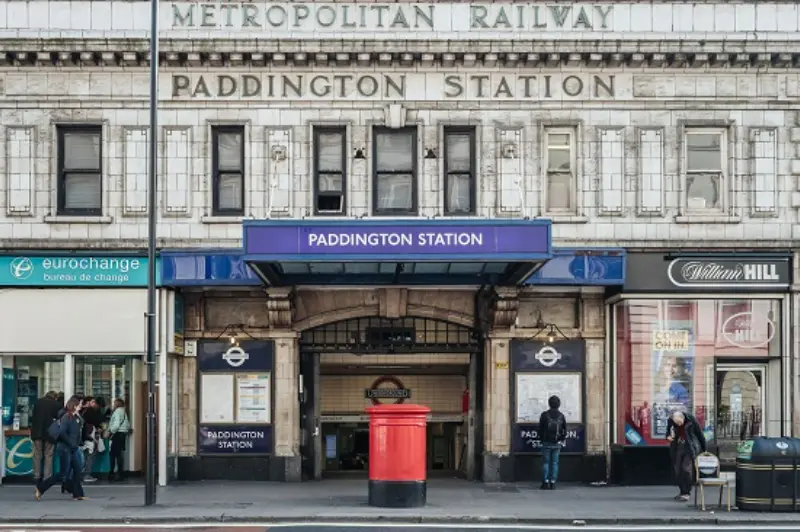
    Paddington Station Trains London

    Sussex Gardens and the garden squares: inspect the room, not the façade

    The streets south and east of the station contain many converted townhouse hotels. They can offer competitive prices in a central location, but room quality varies sharply, sometimes within the same property. Basement rooms, narrow staircases, tiny bathrooms and limited lift access are common issues in older buildings.

    This is where recent review reading matters most. Search specifically for your room type and floor. A charming white-stucco exterior tells you nothing about mattress width, ventilation or whether the lift stops between floors. If two properties cost the same, choose the one with clearer room dimensions and more consistent comments about maintenance.

    Paddington Basin: modern, convenient and different

    The canal and office developments north of the station provide a more contemporary version of Paddington. Hotels and apartments here may have larger lifts, modern climate control and a quieter overnight feel than the busiest southern streets. Little Venice is within walking distance, and the Elizabeth line remains close.

    The trade-off is atmosphere. Some streets feel corporate after working hours, and you are farther from Hyde Park than the Lancaster Gate side. For business travellers or families prioritising a modern room, that can be a good exchange.

    Hyde Park Aerial View London

    Bayswater and Queensway: expand the search for value

    Bayswater is a useful extension when Paddington station-side prices rise. Queensway and Bayswater stations add Central, Circle and District line options, while Kensington Gardens sits immediately south. The neighbourhood has a broad food mix and many accommodation types, including apartments and smaller hotels.

    Do not assume every Bayswater property is the same distance from Paddington. If Heathrow is the reason for choosing the district, map the walk carefully. A bargain that requires a long luggage walk or Tube change can erase the original advantage.

    Transport: more than an airport station

    Paddington is served by the Elizabeth line, Bakerloo line and Circle/District/Hammersmith & City services depending on the part of the station complex. Mainline trains also leave for western England and Wales. That network is excellent, but the station is large. Learn which entrance and line you will use rather than treating it as one simple platform.

    For current routes, planned works and accessibility, use the official TfL Journey Planner. The station has multiple levels and connections; a route that looks direct on a schematic map can involve a significant internal walk.

    What is actually walkable from Paddington?

    • Hyde Park and Kensington Gardens: easy from the southern side and excellent for morning walks.
    • Little Venice: close from the canal side; combine it with our Little Venice to Camden canal walk.
    • Notting Hill: reachable on foot from Bayswater or by a short transport trip from the station.
    • Marylebone: manageable on foot depending on your exact hotel, but buses can be more efficient.
    • West End: not a doorstep area; use the Tube or bus when you want to save energy.

    Families and longer stays

    Paddington works well for families who value airport simplicity and park access. The main caution is hotel-room quality in the older townhouse stock. A modern apartment or larger chain room may cost more but can offer a fridge, better lift access and more predictable sleeping arrangements. For a family of three or four, compare total room space rather than the cheapest advertised double rate.

    Hyde Park Aerial View London

    Longer stays benefit from the supermarkets, casual food and transport choice around the district. If your itinerary includes several day trips by rail, being near the station can save early-morning stress. If every day is focused on the West End, however, Covent Garden or Bloomsbury may feel more immediately central.

    Couples and solo travellers

    Couples who prioritise romantic evenings may prefer the Lancaster Gate or Little Venice side over Praed Street. Solo travellers often appreciate the busy station environment and easy transport, but should still check the immediate street late at night and choose a property with reliable reception and recent security reviews.

    Booking checklist

    1. Decide whether Heathrow convenience, Hyde Park access or price is the primary reason for staying here.
    2. Map the exact entrance you will use at Paddington, especially with luggage.
    3. Read recent reviews for basement rooms, lift access, room size and air conditioning.
    4. Compare Bayswater only if the airport route remains simple from the specific hotel.
    5. For families, verify the actual beds and whether an open sofa bed blocks most of the room.
    6. Check luggage storage if your flight and hotel check-in times are far apart.

    Booking and official information

    Visit London’s current Paddington accommodation page helps show how broad the local hotel inventory is. For live rates, compare London accommodation on Booking.com and zoom into the station, Lancaster Gate, Bayswater and Paddington Basin separately.

    Affiliate link. Dreaming London may earn a commission from qualifying bookings at no extra cost to you.

    Tourists with Map near Big Ben London

    Common mistakes

    • Choosing Paddington for Heathrow convenience when flying from a different airport.
    • Assuming the closest room to the station is automatically the quietest or best value.
    • Booking a townhouse hotel without checking basement, stairs and lift comments.
    • Treating Bayswater and station-side Paddington as the same luggage journey.
    • Expecting a strong late-night neighbourhood scene around every part of the station.
    • Ignoring how much time a large station can add between platform and hotel door.

    Frequently asked questions

    Is Paddington a good area for first-time visitors?

    Yes for travellers who value transport, Heathrow access and Hyde Park, although it is less atmospheric than Covent Garden or Soho. Its hotel supply can also make it a useful value option when central West End rates rise.

    Paddington or King’s Cross?

    Choose Paddington for Heathrow and western rail routes. Choose King’s Cross/St Pancras for Eurostar, northern rail routes and a stronger modern dining district around Granary Square. Both are excellent transport hubs.

    Is Bayswater better value than Paddington?

    It often can be, but value depends on the exact property and dates. If Heathrow simplicity is your priority, calculate the luggage route before moving too far from Paddington station.

    Can I walk to central London from Paddington?

    You can walk to Hyde Park, Marylebone and parts of Notting Hill comfortably. For Covent Garden, Westminster or the City, public transport usually saves enough time and energy to be worthwhile.

    Bottom line

    Paddington is a transport-first base that becomes much more pleasant when you choose the right side of the station. Stay close to the platforms for a short Heathrow-focused trip, move toward Lancaster Gate for parks and quieter streets, choose Paddington Basin for modern rooms, or expand into Bayswater for value. The key is to protect the airport and transport convenience that made you choose the area in the first place.

    Check real prices for your datesCompare location, room type, cancellation terms and recent guest reviews before you book.
    See hotels in Paddington / Bayswater on Booking.com →
    Compare more hotel options on Expedia Useful for checking alternative rates, flexible stays and flight + hotel combinations.

    Affiliate widget. DreamingLondon may earn a commission from qualifying bookings at no extra cost to you.
  • Where to Stay in South Kensington: Museums, Families and Heathrow Convenience

    Where to Stay in South Kensington: Museums, Families and Heathrow Convenience

    South Kensington is one of London’s easiest neighbourhoods to recommend to travellers who want museums, parks and elegant streets without living inside the West End’s busiest nightlife. The Natural History Museum, Science Museum and Victoria and Albert Museum sit together, Hyde Park and Kensington Gardens are close, and the Piccadilly line gives a useful route toward Heathrow. The catch is price: the best-positioned streets are desirable, family rooms sell quickly and ‘Kensington’ can describe a surprisingly wide area.

    This guide focuses on where to sleep within the district. For sightseeing, use our Kensington neighbourhood guide; families should also compare the wider options in where to stay in London with kids.

    South Kensington at a glance

    Real hotels to put on your shortlist in South Kensington: The Ampersand Hotel (boutique choice close to South Kensington station and museums); The Milestone Hotel Kensington (luxury option near Kensington Gardens); The Bailey's Hotel London Kensington (classic higher-end stay close to Gloucester Road); and ibis Styles London Gloucester Road (more budget-conscious base with strong transport links). Hotel prices and room types change by date, so compare the exact room, cancellation terms and recent reviews before booking.

    Micro-areaBest forMain advantageTrade-off
    South Kensington stationMuseums, families, first visitsImmediate Piccadilly/District/Circle access and museum quarterHigh demand and busy pavements
    Gloucester RoadFamilies, Heathrow convenience, longer staysSupermarkets, restaurants and strong Tube accessLess village-like atmosphere
    Queen’s Gate / museum edgeCulture, couples, elegant staysWalk to museums and Kensington GardensPremium pricing and quieter late evenings
    Earl’s Court edgeValue-conscious west-London staysMore hotel inventory and direct Piccadilly lineFarther from the museum doors
    High Street Kensington edgeShopping, parks, apartmentsKensington Gardens and useful shopsNot on the Piccadilly line

    Why South Kensington works so well

    The area compresses several expensive-to-replicate advantages into one base. Families can reach three major museums without transport, adults can walk into Hyde Park, and evenings have enough restaurants to be convenient without the density of Soho. If your trip includes several west-London days, you reduce cross-city travel while keeping the West End only a short Tube ride away.

    The neighbourhood is particularly strong for visitors who prefer a calmer hotel return. After 9pm, many residential streets are noticeably quieter than Covent Garden or Shoreditch. That does not mean there is nothing to do; it means nightlife is not the organising principle of the district. Travellers who want bars and live music until late may prefer Soho, Camden or Shoreditch.

    South Kensington station: best for museum-first trips

    Staying near South Kensington station is ideal when the Natural History Museum, Science Museum and V&A are central to the itinerary. You can leave the hotel early, reach entrances before peak queues and return easily for a break. Our Natural History Museum guide and Science Museum guide help you avoid trying to see too much in one day.

    The station area is busy, particularly during school holidays and weekends. Restaurants around the main junction fill quickly, and family-friendly room inventory can be tight. If the rate is high, expand your search toward Gloucester Road rather than moving across London immediately. The extra walk is small but the accommodation choice is often broader.

    Gloucester Road: a very practical family base

    Gloucester Road is one of the strongest micro-areas for families because practical services are concentrated: supermarkets, casual restaurants, pharmacies and multiple hotel types. The station is served by the Piccadilly, District and Circle lines, which makes it useful for both Heathrow and central sightseeing.

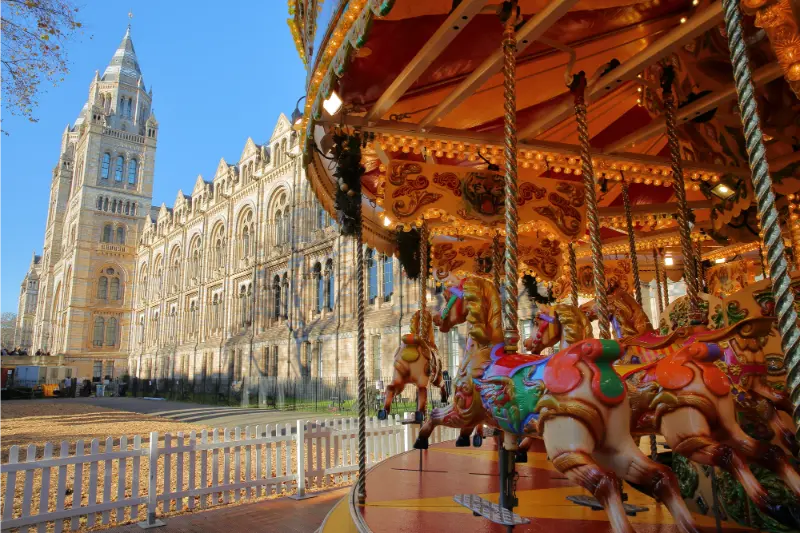
    Natural History Museum and Carousel London

    The streets are less postcard-like than some lanes around South Kensington, but that can be an advantage. On a five-night trip, a supermarket and an easy breakfast can matter more than decorative charm. Apartment-style stays are also useful here for families who need a fridge, laundry or more separation between sleeping spaces.

    Queen’s Gate and the museum edge

    This is the refined version of the neighbourhood: grand architecture, cultural institutions and a short walk to Kensington Gardens. It suits couples, museum lovers and travellers who place atmosphere above nightlife. The main decision is whether the room size justifies the premium. Historic buildings can contain compact or irregular rooms, and not every lift reaches every level.

    If you plan evening theatre most nights, remember that you will travel back from the West End. The journey is straightforward, but staying here is about choosing a calmer base rather than stepping directly from theatre to hotel.

    Earl’s Court edge: useful when the budget is under pressure

    Earl’s Court sits just west and is often included in broad Kensington accommodation searches. It can offer more modest rates, plenty of restaurants and direct Piccadilly line access. For visitors arriving from Heathrow, that can be an excellent combination. The trade-off is walking distance to the museums and parks; it is still convenient, but no longer a doorstep experience.

    Natural History Museum and Victoria and Albert Museum London

    This is a good example of why postcode prestige should not control the booking. A larger, quieter room near Earl’s Court station can produce a better trip than a tiny room beside a museum if you value sleep and space.

    Transport and Heathrow

    South Kensington and Gloucester Road have Piccadilly line service, making Heathrow relatively simple compared with many parts of central London. However, luggage, lift availability and terminal choice matter. Depending on your exact hotel, the Elizabeth line to Paddington plus a taxi or another connection can also be sensible. Our Heathrow to London transfer guide compares the main options.

    For daily travel, the District and Circle lines add useful east-west connections. Use the official TfL Journey Planner for current accessibility and engineering work. The station that is closest on a map is not always the easiest if you need step-free travel.

    What you can walk to

    • Museum quarter: the biggest reason to stay here; three major museums cluster within a compact area.
    • Hyde Park and Kensington Gardens: excellent for morning walks, children and breaks from indoor attractions.
    • Royal Albert Hall: walkable from much of the district and useful for concert nights.
    • Kensington Palace: reachable through the park; see our Kensington Palace guide.
    • Harrods and Knightsbridge: walkable from the eastern side for shopping or dining.

    Families: room layout matters more than stars

    South Kensington’s family appeal can make people book too quickly. Check the exact sleeping arrangement. A ‘family room’ may be a standard double with a sofa bed, leaving little floor space once opened. If you travel with a stroller, ask whether the route from street to room is step-free and whether breakfast seating becomes congested at school-holiday times.

    The reward for getting the room right is substantial. Museum mornings can start without a Tube journey, park time is easy to insert between activities, and an exhausted child can return to the hotel quickly. Those small savings in energy accumulate over several days.

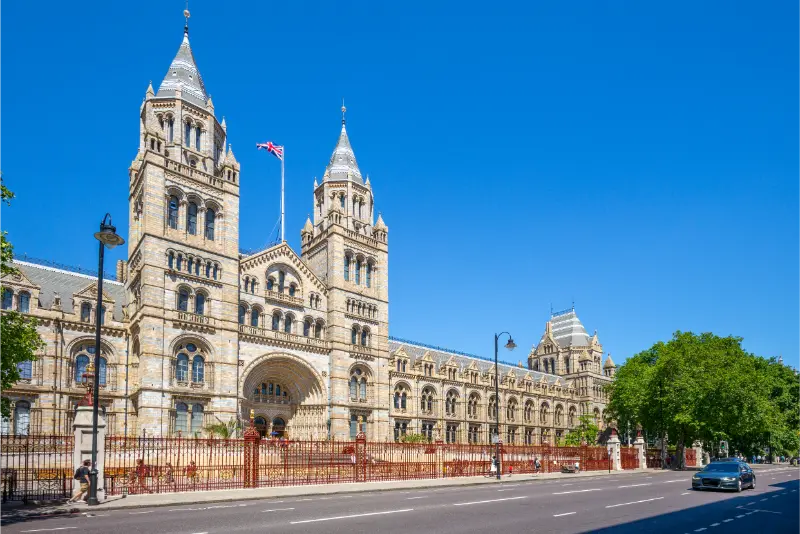
    Natural History Museum Facade London

    Couples and solo travellers

    Couples who value restaurants, architecture and museums often find South Kensington more relaxing than the West End. Solo travellers may appreciate the straightforward transport and busy daytime streets while still having calm evenings. If your social plans are concentrated in East London, though, the location will add repeated cross-city journeys.

    Hotel types and building quirks

    Accommodation ranges from grand luxury hotels to townhouse properties and serviced apartments. In converted terraces, room shapes vary dramatically. A low-priced basement room can have limited daylight; upper rooms may involve stairs after the lift; older windows may affect temperature and noise. Read reviews for the specific room category rather than assuming every room in the property is equivalent.

    For longer stays, laundry and kitchenette facilities can be worth paying for, especially with children. For a two-night museum trip, location can be more valuable than apartment features. Match the room to the length and purpose of the stay.

    Booking strategy

    1. Map the hotel against South Kensington, Gloucester Road and the specific museum entrances you plan to use.
    2. Compare room square metres and bed layout, especially for families.
    3. Check whether breakfast, a fridge or kitchenette changes the total food budget.
    4. Read recent reviews for lift access, basement rooms, temperature control and street noise.
    5. Test the Heathrow route with luggage before committing to a non-refundable rate.
    6. If prices spike, expand west toward Earl’s Court before abandoning the district.

    Booking and official information

    The official visitor site lists current options on its Kensington and South Kensington accommodation page. For live rates and availability, compare London accommodation on Booking.com and use the map to distinguish South Kensington, Gloucester Road, Earl’s Court and High Street Kensington.

    Red Double Decker Bus in Central London

    Affiliate link. Dreaming London may earn a commission from qualifying bookings at no extra cost to you.

    Common mistakes

    • Booking any property labelled ‘Kensington’ without checking which station is actually nearest.
    • Paying museum-quarter prices when the itinerary is mostly in East London.
    • Assuming a family room is spacious without reading the bed configuration.
    • Ignoring basement-room or lift comments in townhouse hotels.
    • Choosing only by Heathrow convenience and forgetting nightly West End travel.
    • Underestimating how valuable a supermarket or kitchenette becomes on a longer family stay.

    Frequently asked questions

    Is South Kensington good for a first trip?

    Yes, particularly for families, museum lovers and visitors who prefer a calmer base. It is central enough for sightseeing but not in the middle of West End nightlife.

    South Kensington or Covent Garden?

    Choose South Kensington for museums, parks, family convenience and quieter evenings. Choose Covent Garden for theatre, restaurants and maximum central walking. Both have strong transport, so the itinerary should decide.

    Is Gloucester Road as good as South Kensington?

    For many travellers, yes. It is only a short distance away, has excellent transport and practical services, and can offer a wider hotel choice. South Kensington wins when being beside the museums is the priority.

    Is the area convenient for Heathrow?

    Yes, thanks to Piccadilly line stations at South Kensington and Gloucester Road. Depending on luggage and hotel position, other rail options can also be competitive, so check the full door-to-door route.

    Bottom line

    South Kensington is a strong London base when culture, parks and an easier evening rhythm matter more than nightlife. Stay by South Kensington station for museum convenience, Gloucester Road for practical family travel, Queen’s Gate for elegance, or the Earl’s Court edge for better-value inventory. The district rewards travellers who choose the exact station and room layout carefully rather than simply booking anything with ‘Kensington’ in the name.

    Check real prices for your datesCompare location, room type, cancellation terms and recent guest reviews before you book.
    See hotels in South Kensington on Booking.com →
    Compare more hotel options on Expedia Useful for checking alternative rates, flexible stays and flight + hotel combinations.

    Affiliate widget. DreamingLondon may earn a commission from qualifying bookings at no extra cost to you.

  • Where to Stay on the South Bank and in Waterloo: River Views, Families and Transport

    Where to Stay on the South Bank and in Waterloo: River Views, Families and Transport

    South Bank and Waterloo give you a very visual version of London. The river, bridges, the London Eye, Southbank Centre, National Theatre and skyline are part of the walk back to the hotel rather than a separate excursion. At the same time, this is a long riverside district, not one compact square. A property near Westminster Bridge, Waterloo Station or Bankside can all be marketed as South Bank even though they create different daily routes.

    For the sightseeing route, use our South Bank walking guide. For accommodation, the key is to decide whether you value river atmosphere, Waterloo transport or access toward Bankside and London Bridge. The broader where to stay in London guide helps compare this area with Westminster, Covent Garden and South Kensington.

    South Bank and Waterloo at a glance

    Real hotels to put on your shortlist in South Bank / Waterloo: Park Plaza County Hall London (family-friendly base near the London Eye and Waterloo); London Marriott Hotel County Hall (higher-end choice for landmark views and a special stay); Novotel London Waterloo (practical mid-range option for families and sightseeing); and Ruby Lucy Hotel London (more design-led option close to Waterloo and the South Bank). Hotel prices and room types change by date, so compare the exact room, cancellation terms and recent reviews before booking.

    Micro-areaBest forStrengthTrade-off
    Westminster Bridge / London EyeFirst-time sightseeing, familiesLandmarks at the door and easy Westminster walkHeavy daytime crowds
    Waterloo Station / Lower MarshTransport, value, theatreMajor rail hub plus useful local food streetsStation surroundings feel busy
    Southbank Centre / National TheatreCulture, river evenings, couplesGreat walkability and viewsEvent crowds and premium river rooms
    Bankside / Tate Modern edgeFood, Borough Market, City accessExcellent eastward river walksFarther from Buckingham Palace and West End

    Why choose the south side of the river?

    The strongest reason is the combination of walking and views. Central London landmarks often look better from across the Thames. Staying here means an ordinary evening walk can include Parliament, St Paul’s or the City skyline. You can cross bridges into Westminster, Covent Garden and the City while keeping the river as your navigation line. For visitors who dislike repeatedly entering the Tube for short journeys, that is a real advantage.

    The weakness is that ‘South Bank’ is used loosely. A hotel near Waterloo can be extremely practical but not have a river view. A hotel with a dramatic view may be several minutes from the station or surrounded by attraction crowds. Decide what you are buying: transport, location or the view. Paying for all three at once is where rates rise fastest.

    Westminster Bridge and the London Eye: maximum sightseeing convenience

    This end works especially well for families and first-time visitors. Cross Westminster Bridge and you are beside Parliament and Westminster Abbey; stay south and you have the London Eye, aquarium and riverside promenade close by. Early mornings are a major benefit because the river feels calmer before day visitors arrive.

    The same concentration creates crowds from late morning through the afternoon. If you want local neighbourhood atmosphere outside the hotel, this is not the strongest choice. It is a visitor district first. Check whether your room faces the river, a busy road or an internal courtyard; ‘London Eye area’ says little about noise.

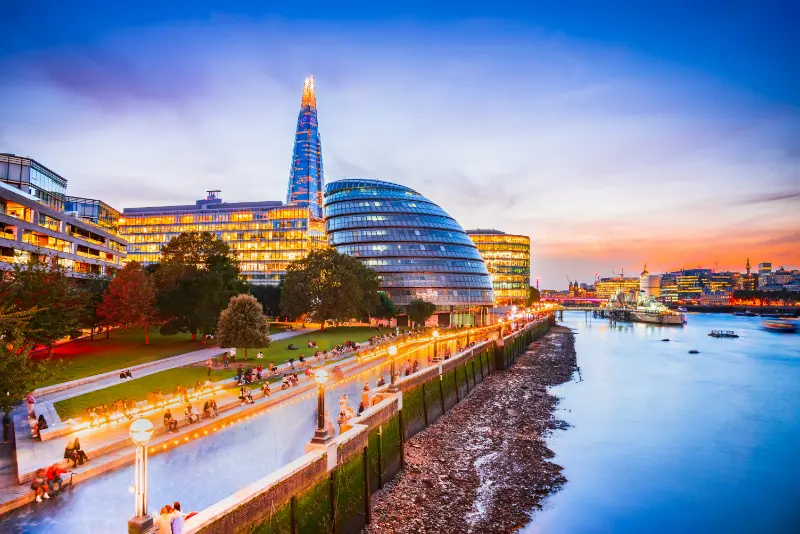
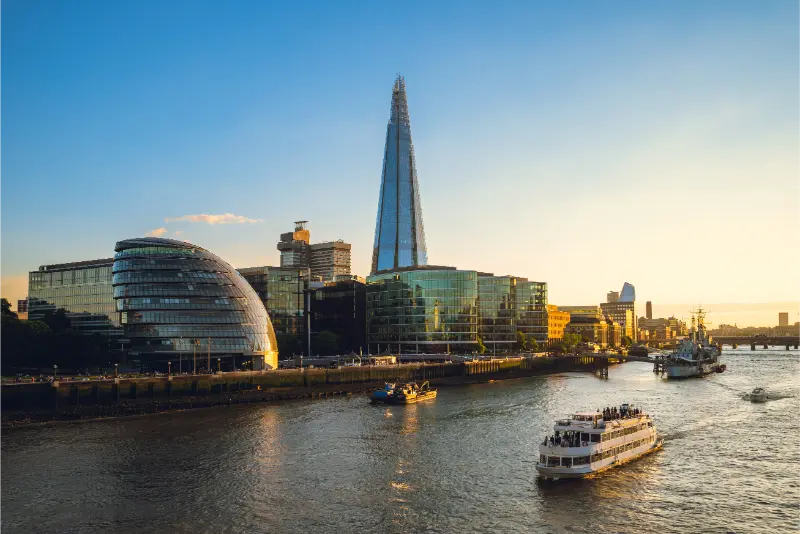
    The Shard and London City Hall from River Thames

    Waterloo: the practical base hidden behind the postcard

    Waterloo Station is one of the most useful transport hubs for a London stay. Mainline trains serve destinations south-west of the city, and Underground connections make it easy to reach the West End, London Bridge and north London. It is also useful for day trips on routes that depart from Waterloo. Yet the area is often cheaper than staying directly across the river in Westminster.

    Look beyond the station frontage. Lower Marsh and streets toward The Cut have cafes, pubs, theatres and a more lived-in feel. The Old Vic and Young Vic are part of the neighbourhood rather than tourist attractions you need to cross London to reach. A hotel five to ten minutes from Waterloo can therefore offer better evening atmosphere than one inside the most crowded riverside zone.

    Bankside: choose it if your London leans east

    Bankside and the Tate Modern end are better for travellers who want Borough Market, Shakespeare’s Globe, St Paul’s views and quick access to the City. You can walk east toward London Bridge and Tower Bridge or north across the Millennium Bridge. Our Borough Market guide is useful if food is part of the reason for choosing this end of the river.

    It is less efficient for repeated trips to Buckingham Palace, South Kensington or Notting Hill. That does not make it inconvenient; it means the hotel should match the itinerary. If three of your four days are focused on the City, markets and East London, Bankside may be the better version of South Bank.

    Transport: choose the station, not the marketing label

    Waterloo provides the broadest network in the area, but Southwark, Lambeth North, Blackfriars and London Bridge can be more relevant depending on the property. If a hotel is marketed as South Bank, check which station you would actually use after dinner or with luggage. A twelve-minute riverside walk is delightful in daylight and rain-free weather; it feels different at 6am with suitcases.

    The Shard HMS Belfast and River Thames at Night London

    Test the hotel postcode in the official TfL Journey Planner and compare routes to Heathrow, your first major attraction and your latest evening activity. Accessibility varies by station and interchange, so travellers using wheelchairs, pushchairs or heavy luggage should filter routes rather than assume every central station is equally easy.

    Walking routes that make this area valuable

    • Westminster: cross Westminster Bridge for Parliament, Westminster Abbey and Whitehall.
    • Covent Garden: Waterloo Bridge gives a direct and scenic approach to the West End.
    • Borough Market: follow the river east; the walk itself is part of the experience.
    • St Paul’s Cathedral: cross the Millennium Bridge from Tate Modern.
    • Tower Bridge: continue east through Bankside and London Bridge when energy and weather cooperate.

    These routes are a reason to stay here, but do not build every day as a river marathon. The South Bank is longer than it looks, and attractions add standing time. Use transport when the walk no longer adds enjoyment.

    Families: one of central London’s easiest options

    The London Eye end is particularly convenient with children because several family attractions cluster together, and the riverside is easier to navigate than some narrow West End streets. Waterloo also gives you quick food options and transport when a child’s energy collapses unexpectedly. Our where to stay in London with kids guide compares South Bank with South Kensington, Bloomsbury and Greenwich.

    The main accommodation issue is room configuration. River-view rooms can be expensive, and a family may get more value from a larger room a few blocks inland. Check sofa beds, cots, breakfast times and whether the lift reaches every floor. A skyline view is memorable, but space and sleep often matter more after three days.

    Golden Jubilee Bridges and Charing Cross Station London

    Couples and evening atmosphere

    For couples, South Bank works because the river remains enjoyable after attractions close. A drink near the National Theatre, a walk across Waterloo Bridge or a late stroll toward Gabriel’s Wharf can make the neighbourhood feel less transactional than a station-focused district. If you choose a river-view room, verify whether the view is guaranteed by the room type rather than illustrated only in general hotel photos.

    Airport connections

    Gatwick can be convenient from parts of the south-central corridor via Thameslink or Southern connections depending on the station you use, while Heathrow often involves the Elizabeth line or Piccadilly line plus a central transfer. The best route changes substantially between a Waterloo hotel and a Bankside hotel. Use our airport transfer comparison and then test the exact property address.

    If your flight lands late, consider whether you want to navigate a major interchange and a final ten-minute walk. A taxi for the last segment can be sensible, but it should be a planned convenience rather than a surprise caused by choosing a vaguely labelled location.

    How to evaluate a river-view room

    • Check whether the room type explicitly guarantees a river or landmark view.
    • Look at the building orientation; some ‘river-facing’ rooms have angled or partial views.
    • Compare the price difference with what else that budget could buy, such as a larger room or breakfast.
    • Read reviews for window cleanliness, construction and external lighting if the view is the reason for booking.
    • Remember that you can enjoy world-class river views for free from the promenade even without a view room.

    Booking and official information

    The official visitor site’s South Bank and Waterloo accommodation page gives a current sense of the hotel mix and local attractions. For live rates, compare London accommodation on Booking.com and use map view to distinguish Waterloo, Westminster Bridge and Bankside rather than treating them as one area.

    Affiliate link. Dreaming London may earn a commission from qualifying bookings at no extra cost to you.

    London Skyline with The Shard

    Common mistakes

    • Assuming every South Bank hotel is beside the London Eye.
    • Paying heavily for a view that is not guaranteed in the booked room category.
    • Ignoring Waterloo’s practical value because the station itself feels busy.
    • Choosing Bankside for a trip focused mainly on west London.
    • Underestimating the length of riverside walks after a full day.
    • Forgetting to check the final luggage walk from the station to the hotel.

    Frequently asked questions

    Is South Bank a good area for first-time visitors?

    Yes. It combines iconic views, walkability, family attractions and strong transport. Choose the micro-area carefully: Westminster Bridge suits classic landmarks, Waterloo suits transport, and Bankside suits food, culture and the City.

    Is it better to stay north or south of the Thames?

    There is no general winner. South Bank gives you river walks and views; Westminster and Covent Garden put more West End streets directly outside the door. Because bridges connect them, a well-positioned hotel on either side can work extremely well.

    Is Waterloo safe and pleasant at night?

    Waterloo is a major central transport area used late into the evening. As anywhere in London, use normal awareness and check the immediate street. The atmosphere around Lower Marsh and The Cut differs from the station concourse and from the riverside.

    South Bank or South Kensington with kids?

    Choose South Bank for London Eye, river walks and classic sightseeing; choose South Kensington for museums, parks and a calmer residential feel. The better choice depends on the ages of the children and the rest of the itinerary.

    Bottom line

    South Bank is not one hotel zone but a chain of useful bases. Choose Westminster Bridge for landmarks, Waterloo for transport, Southbank Centre for culture and evening river walks, or Bankside for markets and the City. If you match the exact stretch of river to your itinerary, you gain one of London’s best combinations of views and practical walking.

    Check real prices for your datesCompare location, room type, cancellation terms and recent guest reviews before you book.
    See hotels in South Bank / Waterloo on Booking.com →
    Compare more hotel options on Expedia Useful for checking alternative rates, flexible stays and flight + hotel combinations.

    Affiliate widget. DreamingLondon may earn a commission from qualifying bookings at no extra cost to you.
  • Where to Stay in Soho: Nightlife, Noise, Hotels and the Best Micro-Areas

    Where to Stay in Soho: Nightlife, Noise, Hotels and the Best Micro-Areas

    Soho is where staying in central London feels least like staying beside a monument and most like living inside the evening. Restaurants, bars, theatres, music venues, Chinatown, Carnaby Street and the West End sit within a compact grid. That can be thrilling if you want to leave dinner at 11pm and walk back to the hotel. It can also be exhausting if your idea of a good base is a quiet street, a large room and an early night.

    Before choosing Soho, compare it with nearby Covent Garden, Bloomsbury and Mayfair in our London accommodation guide. For sightseeing and street-by-street context, use the Soho neighbourhood guide. This article is about the accommodation decision: which edge to choose, what noise really means here and when the high room rate earns its keep.

    Soho at a glance

    Real hotels to put on your shortlist in Soho: The Resident Soho (central boutique option that keeps most of the West End walkable); Hazlitt's (characterful historic choice for couples and repeat visitors); and The Z Hotel Soho (compact value-oriented option when location matters more than room size). Hotel prices and room types change by date, so compare the exact room, cancellation terms and recent reviews before booking.

    Part of the areaBest forWhy choose itWatch out for
    Carnaby / Kingly StreetShopping, restaurants, stylish short breaksAtmosphere all day and eveningPremium prices and weekend noise
    Dean Street / Old Compton StreetNightlife, LGBTQ+ London, late diningYou are in the middle of Soho after darkBars, people and deliveries can be loud
    Soho Square / Tottenham Court Road edgeTheatre plus transportQuicker access to Elizabeth and Central lines nearbyBusy commuter and entertainment traffic
    Piccadilly / Regent Street edgeLuxury shopping, theatres, first visitsEasy walk to Mayfair, Trafalgar Square and Covent GardenHigh rates and tourist crowds
    Fitzrovia edgeQuieter sleep with Soho close byMore residential feel and useful food sceneLess immediate nightlife outside the door

    Why Soho can be worth paying for

    The main reason is evening freedom. London is easy to cross by public transport, but every late-night journey adds friction. If your trip is built around restaurants, theatre, jazz, bars and West End entertainment, a Soho hotel lets you make the final part of the day on foot. You can return to the room between afternoon sightseeing and dinner, change clothes, and head out again without budgeting forty minutes for a cross-city round trip.

    That convenience matters less if you plan to be back in the hotel by 9pm, spend most days in museums around South Kensington, or travel with young children who need parks and predictable quiet. In those cases, you may be paying a Soho premium for benefits you barely use. The area is not a badge of sophistication; it is a practical choice for a specific rhythm of travel.

    Carnaby and Kingly Street: fashionable and lively

    The Carnaby side suits travellers who want independent shops, design-led restaurants and easy access to Regent Street. It feels polished but still energetic. You can walk to Oxford Circus, Piccadilly Circus and most of Soho without thinking about transport, and Mayfair is just across Regent Street.

    The risk is assuming that a stylish pedestrian street equals a quiet night. Restaurants empty late, staff clear terraces, deliveries arrive early and weekend foot traffic can continue after midnight. If you are a light sleeper, request a rear or upper-floor room and read weekend reviews rather than relying on midweek comments.

    Old Compton Street and Dean Street: stay here for nightlife, not despite it

    This is the most obvious choice if Soho’s nightlife is the point of the trip. You are close to LGBTQ+ venues, restaurants, historic pubs, live music and Chinatown. For travellers who would otherwise take taxis home after several late nights, the location can save both time and money. Our London nightlife guide gives a wider comparison with Shoreditch, Camden and other evening districts.

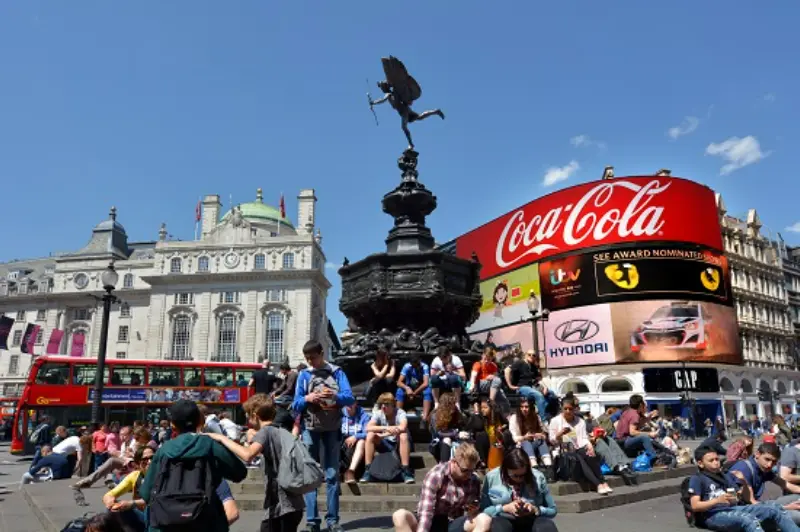
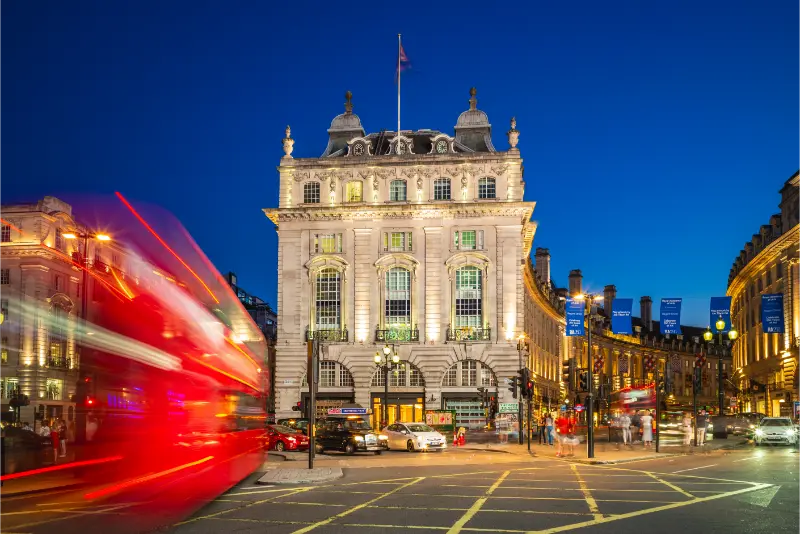
    Street near Piccadilly Circus London

    The trade-off should be treated as part of the booking, not a surprise. Ground-floor bars, narrow streets and late crowds create noise. Some buildings are older, rooms can be compact and lifts may be small. If sleep quality is more important than being thirty seconds from a bar, move one or two blocks toward Soho Square or Fitzrovia.

    Soho Square and Tottenham Court Road edge

    The northern edge is strategically strong because Tottenham Court Road adds Elizabeth line access to the Central and Northern lines. That can simplify Heathrow journeys and east-west travel while keeping Soho, the British Museum and Covent Garden within walking distance. The immediate streets feel less like the cinematic heart of Soho, but the transport gain can be substantial on a four- or five-night stay.

    This is also a good compromise for travellers who expect several daytime trips outside the West End. A beautiful room deep inside Soho is less useful if every morning starts with a walk to a station you could have stayed beside. Test your real routes in the official TfL Journey Planner before paying a location premium.

    How noisy is Soho really?

    Noise is highly local. A room on a nightlife street can hear conversations, taxis, bottle collection and music. A room facing an internal courtyard may be remarkably calm even in the same hotel. The useful question to ask the property is not ‘Is the hotel quiet?’ but ‘Which room categories face the street, and can I request a rear-facing room?’

    Also check whether the hotel has sealed windows and air conditioning. In warm weather, a quiet room becomes less useful if you need to open a window onto a late-night street. If reviews repeatedly mention bass rather than voices or traffic, assume it may travel through the building.

    Central London Street at Night

    Theatre, Chinatown and late dinners

    Soho is excellent for a theatre-focused trip because Shaftesbury Avenue, Leicester Square and several smaller venues are close. It also makes spontaneous meals easier. Instead of booking every dinner weeks in advance, you can finish a show and still have multiple options within walking distance. For ticket strategy, see our West End theatre guide.

    Chinatown sits on Soho’s southern edge, so the location is particularly useful for travellers who value late food. The benefit is not simply culinary choice; it is resilience. If a reservation falls through or jet lag changes your appetite, you are in one of the parts of London where alternatives are concentrated.

    Families: possible, but choose the room before the postcode

    Soho can work with older children and teenagers who enjoy theatre, music, shopping and central walks. With toddlers, it is harder. Pavements are busy, large green spaces are not at the door, and many boutique hotels prioritise design over family-room practicality. If the children are the organising principle of the trip, compare Soho with South Kensington, Bloomsbury and Victoria in our family hotel area guide.

    If you do choose Soho as a family, focus on a larger property near the edges rather than the loudest nightlife street. Confirm whether a sofa bed remains open all day, whether the lift fits a stroller and whether breakfast starts early enough for your sightseeing plans.

    Gerrard Street Chinatown London

    Airport connections

    Heathrow is relatively convenient from the northern side of Soho because Tottenham Court Road is on the Elizabeth line. Piccadilly Circus and Leicester Square also provide Piccadilly line access through nearby stations, depending on the exact hotel and how much luggage you have. For Gatwick, Stansted or Luton, the best route often involves a mainline station plus a short Underground or taxi connection.

    Do not judge an airport route by the number of stops alone. Large interchanges can involve long corridors and escalators. A route with one simple change may be easier than a theoretically direct service that leaves you with a difficult final walk through crowded streets.

    What to look for in a Soho hotel

    • Room orientation: rear-facing or internal-courtyard rooms can transform the experience.
    • Air conditioning: important if closed windows are part of your noise strategy.
    • Lift access: older buildings may have small lifts or stairs to the final level.
    • Room size: central boutique rooms can be beautiful but extremely compact.
    • Reception hours: useful if you expect a late theatre or nightlife return.
    • Luggage storage: valuable on short breaks when check-in and train times do not align.

    Booking strategy

    Compare the total trip value rather than the nightly rate. A Soho room that costs more but eliminates four late taxis and several long evening transfers may make sense. Conversely, if your itinerary ends early every night, staying in Bloomsbury or Paddington can offer more space for the same budget.

    Use the official visitor site’s Soho accommodation page to understand the local hotel mix. For live rates and room inventory, compare London accommodation on Booking.com and zoom to the exact street rather than browsing the broad ‘West End’ label.

    Affiliate link. Dreaming London may earn a commission from qualifying bookings at no extra cost to you.

    London Skyline by River Thames

    A realistic three-night Soho stay

    On arrival, keep the first evening local: walk Carnaby Street, Chinatown and Seven Dials rather than racing across London. Use the next morning for Westminster or the City while the area around the hotel is quieter, then return for theatre or dinner. On the final day, pair the British Museum or Fitzrovia with a late lunch before collecting luggage. The point is to use Soho as an evening anchor while still exploring beyond it.

    Common mistakes

    • Booking the cheapest room category without checking whether it faces a nightlife street.
    • Choosing Soho for a family trip solely because it looks central on the map.
    • Assuming all West End theatres are equally close.
    • Ignoring Tottenham Court Road as an airport and transport asset.
    • Expecting large rooms in older boutique properties.
    • Paying the Soho premium when your itinerary ends early every evening.

    Frequently asked questions

    Is Soho safe to stay in?

    Soho is heavily used by visitors, residents, workers and nightlife crowds. As elsewhere in central London, keep normal awareness around phones, bags and late-night travel. The more relevant accommodation question is whether the immediate street matches your preferred level of activity and noise.

    Soho or Covent Garden for a first trip?

    Covent Garden generally suits travellers who want theatre, polished pedestrian streets and a slightly calmer sightseeing base. Soho is better for nightlife, restaurants and late evenings. Because the districts touch, a well-priced hotel on the border can provide both.

    Is Soho good for solo travellers?

    It can be excellent for solo travellers who like having food, entertainment and busy streets close to the hotel. A central location reduces late-night transport decisions. Choose a property with consistently good recent reviews for room security, reception and street noise.

    Can I walk from Soho to major sights?

    Yes to many central attractions: Covent Garden, the National Gallery, British Museum, Regent Street, Trafalgar Square and parts of Westminster are walkable. The Tower of London, Greenwich and South Kensington are better treated as transport journeys for most visitors.

    Bottom line

    Stay in Soho when evenings are a major part of the London trip. Choose Carnaby for shopping and dining, the central streets for nightlife, Tottenham Court Road edge for stronger transport, or Fitzrovia edge for a quieter compromise. The best Soho booking is not the one closest to the loudest attraction; it is the one that gives you the late-night freedom you want without sacrificing the sleep you need.

    Check real prices for your datesCompare location, room type, cancellation terms and recent guest reviews before you book.
    See hotels in Soho on Booking.com →
    Compare more hotel options on Expedia Useful for checking alternative rates, flexible stays and flight + hotel combinations.

    Affiliate widget. DreamingLondon may earn a commission from qualifying bookings at no extra cost to you.

  • Where to Stay in Covent Garden: Best Streets for Theatre, Dining and First Visits

    Where to Stay in Covent Garden: Best Streets for Theatre, Dining and First Visits

    Covent Garden is one of the easiest places in London to enjoy without a plan. Step outside and you are surrounded by theatres, restaurants, pedestrian streets, the Piazza, the Royal Opera House and short walks toward Trafalgar Square, Soho and the Thames. That convenience is exactly why hotels here are expensive and why a careless room choice can mean late-night noise, tiny floor space and a premium price for a postcode you do not fully use.

    This guide focuses on accommodation decisions rather than sightseeing. For the neighbourhood itself, read our Covent Garden walking guide. If you are still comparing districts, start with the best areas to stay in London guide and come back here once the West End is on your shortlist.

    Covent Garden at a glance

    Real hotels to put on your shortlist in Covent Garden: The Resident Covent Garden (well-located boutique option for theatres and first visits); NoMad London (luxury design-led choice in the heart of Covent Garden); and Henrietta Experimental (small boutique stay for atmosphere and dining). Hotel prices and room types change by date, so compare the exact room, cancellation terms and recent reviews before booking.

    Micro-areaBest forWhat feels differentMain compromise
    Piazza / Long AcreFirst visits, shopping, short city breaksMaximum centrality and constant activityCrowds and noise
    Seven DialsIndependent shops, food, theatreSmaller streets and a more intimate feelBusy evenings
    Strand / AldwychTheatre, river, business tripsLarger hotels and easy east-west walkingTraffic on main roads
    Charing Cross edgeWestminster plus West EndExcellent walking connections and rail accessTourist traffic and higher rates
    Holborn edgeValue-conscious central staysStill walkable to Covent Garden with more room choiceLess atmosphere directly outside the door

    Who should stay in Covent Garden?

    Covent Garden is strongest for travellers who want to do a lot on foot. It suits a first London visit, a theatre weekend, couples who like evening dining without a return Tube journey, and short stays where every hour matters. If your plan includes the National Gallery, Soho, Chinatown, Westminster, the British Museum and several West End shows, the location can remove a surprising amount of transport from the trip.

    It is less convincing for travellers who need a large room at a low price, drivers, light sleepers who insist on opening windows onto busy streets, or visitors whose itinerary is concentrated in East London or outer neighbourhoods. Families can still do very well here, but room size, breakfast logistics and late-night noise deserve more attention than they might in Bloomsbury or South Kensington.

    The Piazza and Long Acre: pay for being in the middle of everything

    Staying close to the Piazza means you can walk out early, see the market buildings before the day crowds thicken and return easily between activities. It is excellent when your trip is built around theatre and dining. The disadvantage is obvious: this is not a sleepy residential pocket. Street performers, restaurants, deliveries, taxis and people leaving shows can create noise well into the evening.

    The practical question is not whether the hotel is ‘in Covent Garden’ but where the bedroom faces. A rear room or upper-floor room may be significantly calmer than a front-facing room on a restaurant street. Read recent reviews for noise language such as ‘street-facing’, ‘courtyard’, ‘club nearby’ and ‘windows do not open’. Those details are more useful than generic comments about location.

    Seven Dials: my favourite compromise for atmosphere

    Seven Dials sits between Covent Garden, Soho and Bloomsbury and often feels more human in scale than the busiest part of the Piazza. The small streets are packed with cafes, shops and restaurants, and you can reach Leicester Square, Tottenham Court Road and the theatre district quickly. For visitors who want to wander after dinner rather than head straight back to a large station, it is an appealing base.

    Covent Garden Christmas Decorations London

    It is still central nightlife territory, so do not interpret ‘smaller streets’ as silence. If your stay includes Friday or Saturday night, check what operates at ground level beneath or beside the property. A beautiful boutique room over a bar can be a poor match for an early-start sightseeing schedule.

    Strand and Aldwych: useful for theatre and the river

    The Strand and Aldwych edge works well for travellers who want a substantial hotel, convenient taxi access or a slightly more formal streetscape. From here you can walk south to the Thames, east toward the City and west into Trafalgar Square. Somerset House and several major theatres are close, and Temple or Holborn may be more useful than Covent Garden station depending on the exact address.

    Main-road rooms can experience traffic noise, so ask about orientation. On the positive side, larger buildings in this corridor may have more reliable lifts, bigger common areas and a wider range of room categories than tiny converted properties on side streets. That can matter for families or anyone travelling with several suitcases.

    Do not obsess over Covent Garden station

    Covent Garden station is convenient but it is not the only useful station for the neighbourhood. Leicester Square, Charing Cross, Holborn, Tottenham Court Road and Temple can all be sensible depending on the hotel. This matters because station choice affects airport routes and day-to-day transfers. A hotel ten minutes from the Piazza but close to two useful lines can be more practical than one beside the market with only one preferred route.

    Use the official TfL Journey Planner with the hotel postcode before booking. Test three real journeys: your arrival airport, one attraction outside the West End, and your latest planned evening. The goal is not to find the shortest theoretical journey but to understand how many changes, stairs and long station corridors are involved.

    Covent Garden Christmas Market London

    Walking advantages that actually save time

    • Soho and Chinatown: often easier on foot than by Tube; useful for restaurants and nightlife.
    • Trafalgar Square and the National Gallery: a straightforward walk for most visitors.
    • British Museum: walkable via Seven Dials and Bloomsbury; combine it with a neighbourhood day.
    • South Bank: cross via Waterloo Bridge for river walks, the Southbank Centre and views.
    • Westminster: reasonable on foot through Trafalgar Square and Whitehall when weather is good.

    The biggest mistake is trying to convert every walkable route into a walking obligation. After a matinee, museum and dinner, the bus may be the better choice. Centrality gives you options; it does not require you to prove how far you can walk.

    Theatre trips: this is where Covent Garden earns its price

    If you are coming specifically for West End shows, Covent Garden is hard to beat. You can dine before the performance without calculating a cross-city transfer, and after the curtain you can walk back while Tube stations are crowded. Our West End theatre guide explains ticket and seating strategy; combine it with a hotel map so your evening is built around a cluster rather than scattered reservations.

    Check the theatre location before choosing the hotel. ‘West End’ covers a wide area. A show near Victoria, Shaftesbury Avenue and the Strand do not create identical walks. If you have tickets for several performances, a Seven Dials or Leicester Square edge often gives the broadest balance.

    Families in Covent Garden

    Families benefit from short walks to attractions, restaurants and transport, but the accommodation itself needs scrutiny. Triple and quad rooms are not standard in every central London hotel. A room advertised for three may use a sofa bed that leaves very little floor space. Confirm bed configuration and whether the lift reaches your floor before booking.

    For younger children, proximity to open space is the main weakness. Covent Garden has squares and pedestrian streets but not a large park at the door. If daily park time matters, South Kensington, Bloomsbury or Victoria/Pimlico may be easier. Our London with kids accommodation guide compares those alternatives.

    Golden Jubilee Bridges and Charing Cross Station London

    Late-night noise: how to judge a street

    Do not rely on a district-wide reputation. One Covent Garden street can be quiet after theatres close while the next has bars, deliveries or taxi queues. Open a map, identify pubs and late restaurants on the same block, and read reviews from guests who stayed on weekends. If the hotel has a bar or restaurant on the ground floor, ask whether guest rooms directly above it are part of the room category you are booking.

    If you want the neighbourhood but not the noise, look toward the Holborn or Bloomsbury edges, or choose a property on a side street and request a rear-facing room. You give up a few minutes of postcard centrality and often gain better sleep.

    Airport arrival and departure

    No London airport has a single direct ‘Covent Garden’ answer. Heathrow can work via the Piccadilly line or Elizabeth line plus a short connection or walk, depending on your luggage and exact hotel. Gatwick often makes Charing Cross-adjacent or Thameslink connections more interesting than the neighbourhood name suggests. Stansted and Luton usually involve a mainline or express service followed by a central connection.

    If you arrive after a long flight, test the route with your actual arrival time and luggage. A route with one fewer change can be worth a few extra minutes. Our London airports to city centre guide is a better starting point than choosing a hotel simply because a booking site labels it ‘central’.

    How to choose between two hotels

    1. Compare the exact room size and bed configuration, not only star category.
    2. Check whether the room faces a pedestrian nightlife street, a main road or an internal courtyard.
    3. Measure walking time to two stations, not just Covent Garden station.
    4. Read the most recent reviews for lifts, air conditioning, hot-water pressure and noise.
    5. If theatre is your priority, map your actual venues before paying more for the wrong side of the district.
    6. Check luggage storage and cancellation policy; both can be worth more than a decorative room upgrade.

    Booking and official information

    For current neighbourhood listings, the official visitor site has a dedicated Covent Garden and Strand accommodation page. For live availability and date-specific rates, compare London accommodation on Booking.com using map view rather than sorting only by price.

    London Landmarks Illustration with Double Decker Bus

    Affiliate link. Dreaming London may earn a commission from qualifying bookings at no extra cost to you.

    Common mistakes

    • Paying extra to be beside the Piazza when most evenings are elsewhere.
    • Assuming pedestrian streets are automatically quiet at night.
    • Choosing by star rating without checking actual room size.
    • Ignoring nearby stations such as Leicester Square, Holborn or Charing Cross.
    • Booking a family room without confirming the real bed layout.
    • Planning every day on foot just because the hotel is central.

    Frequently asked questions

    Is Covent Garden a good place to stay for a first visit?

    Yes, especially for a short trip focused on classic central London, theatre, dining and walking. It reduces transport needs and keeps evenings simple. The main costs are higher room rates, compact rooms and possible street noise.

    Is Covent Garden too touristy to stay in?

    It is busy and visitor-oriented, particularly around the Piazza, but the district changes street by street. Seven Dials and the Holborn edge can feel less intense while keeping the same central convenience.

    Covent Garden or Soho?

    Choose Covent Garden for theatre, polished pedestrian streets and a slightly easier first-time sightseeing base. Choose Soho for nightlife, restaurants and a stronger late-evening atmosphere. The two areas are close enough that exact hotel street and price may matter more than the label.

    Can I reach the South Bank easily?

    Yes. Waterloo Bridge is one of the most useful walking links from this area, and the route gives excellent river views. Our South Bank guide helps turn that crossing into a full sightseeing route.

    Bottom line

    Covent Garden works best when you intend to use its centrality morning and night. Stay near the Piazza for maximum convenience, Seven Dials for atmosphere, Strand/Aldwych for larger hotels and east-west access, or the Holborn edge for a better chance of value. The right room here is not simply the closest to the market; it is the one that balances walking convenience with sleep, space and the routes you will actually use.

    Check real prices for your datesCompare location, room type, cancellation terms and recent guest reviews before you book.
    See hotels in Covent Garden on Booking.com →
    Compare more hotel options on Expedia Useful for checking alternative rates, flexible stays and flight + hotel combinations.

    Affiliate widget. DreamingLondon may earn a commission from qualifying bookings at no extra cost to you.

  • Where to Stay in Westminster and Victoria: Best Streets, Transport and Trade-Offs

    Where to Stay in Westminster and Victoria: Best Streets, Transport and Trade-Offs

    Westminster and Victoria are often grouped together on hotel maps, but they deliver different versions of central London. Westminster is about monumental London: Parliament, Westminster Abbey, St James’s Park and the river. Victoria is more practical: a major rail and coach hub, a large choice of hotels, useful airport connections and quieter residential streets as you move toward Pimlico. Choosing between them is less about prestige and more about how you expect to start and finish each day.

    If this is your first trip, begin with our London accommodation overview and then use this guide to decide which micro-area fits your routine. The difference between a room beside Victoria Station and one near Parliament Square can be twenty minutes of walking, a different evening atmosphere and a different airport strategy.

    Westminster and Victoria at a glance

    Real hotels to put on your shortlist in Westminster / Victoria: The Clermont London, Victoria (very convenient for Victoria Station and short city breaks); Riu Plaza London Victoria (modern option that works well for sightseeing and transport); and Rubens at the Palace (more traditional higher-end stay beside Buckingham Palace). Hotel prices and room types change by date, so compare the exact room, cancellation terms and recent reviews before booking.

    Micro-areaBest forMain advantageTrade-off
    Victoria Station / Buckingham Palace RoadShort stays, rail connections, Gatwick arrivalsExceptional transport and many hotelsBusy pavements and a transport-hub feel
    PimlicoFamilies, longer stays, quieter eveningsResidential streets, useful buses and Victoria line accessLess immediate nightlife
    Westminster / St James’sFirst visits, landmarks, ceremonial LondonWalk to major sights before tour groups arriveHigher room rates and fewer budget options
    Trafalgar Square / Whitehall edgeWest End plus Westminster sightseeingEasy walks to Covent Garden, Soho and the riverCrowds, traffic and limited quiet

    Why stay here rather than somewhere cheaper farther out?

    The value of this part of London is time. If your itinerary is heavy on Buckingham Palace, Westminster Abbey, Churchill War Rooms, St James’s Park, the London Eye and West End theatre, you can complete many journeys on foot. That changes the rhythm of a short trip. You are not returning to a distant hotel every time someone needs a rest, a jacket or an early night. For two or three nights, that convenience can justify paying more per room.

    The area is not universally better, however. Travellers focused on markets, East London nightlife or a more local neighbourhood atmosphere may find it formal or businesslike. A hotel here also does not eliminate transport: the Tower of London, Greenwich, Camden and Shoreditch still require the Tube, bus or a longer walk. Think of Westminster and Victoria as a base that compresses classic first-time sightseeing, not as the geographic centre of everything in London.

    Victoria Station area: best when transport matters most

    Victoria is one of the easiest London bases to understand on arrival. Mainline trains, Underground services and the coach station all sit within the wider district, and Buckingham Palace is within walking distance. If you arrive from Gatwick, the area is particularly convenient because rail services terminate at Victoria. Read our detailed guide to the Gatwick to central London transfer options before assuming the branded express is automatically the best fare or timetable for you.

    The street immediately outside the station can feel hectic, especially during commuter periods. For a more pleasant stay, look a few blocks away rather than insisting on a door directly opposite the concourse. Streets toward Westminster Cathedral, St James’s Park station and Pimlico often feel calmer while remaining practical. Check the exact route from station exit to hotel: large London stations have several exits, and a hotel described as ‘Victoria’ may still involve a ten- or fifteen-minute walk with luggage.

    Pimlico: the quieter version of Victoria

    Pimlico works well when you want central access without living above a constant stream of commuters. The neighbourhood is residential, with white stucco terraces, garden squares, supermarkets, cafes and local pubs. It is a particularly sensible choice for families who want to return to a calmer street at night or for travellers staying four or five nights who do not need every evening to happen outside the hotel door.

    Pimlico Underground Station London

    The Victoria line from Pimlico is useful, but buses can be equally valuable because they connect the area with Westminster, Trafalgar Square and parts of the West End while letting you see the city above ground. If mobility is important, check step-free requirements in the official TfL Journey Planner rather than assuming the closest station is automatically the easiest one. A slightly longer walk to a more suitable station can be preferable with a pushchair or heavy luggage.

    Westminster and St James’s: stay for the landmark experience

    A room near Westminster, Whitehall or St James’s gives you a rare advantage: the ceremonial core of London is outside before the busiest sightseeing hours begin. An early walk through St James’s Park toward Buckingham Palace feels very different from arriving after tour groups build. The same is true around Parliament Square. Our Westminster walking guide is useful for understanding how the landmarks connect on foot, while the Westminster Abbey guide helps you plan one of the area’s most time-sensitive visits.

    The compromise is cost. This is prime central London, and small differences in street position can carry large price differences. Some hotels sell a ‘Westminster’ location while sitting closer to Victoria or Lambeth Bridge; that is not necessarily bad, but verify the map rather than paying for a label. If you want theatre every night, Covent Garden or Soho may feel more immediate. If you want quiet after dinner, St James’s and the government quarter can become surprisingly subdued once office workers leave.

    What you can realistically walk to

    Walking distance is one of the main reasons to choose this district, but London maps can encourage unrealistic days. From a well-positioned hotel you can link Buckingham Palace, St James’s Park, Westminster Abbey, Big Ben, Whitehall and Trafalgar Square without transport. Crossing Westminster Bridge brings the London Eye and South Bank into the same sightseeing circuit. That is a strong first day because it reduces transfers while you are still learning the city.

    Big Ben and Houses of Parliament at Night London

    Do not interpret ‘walkable’ as ‘everything is next door’. Walking from Victoria to Covent Garden is reasonable for many adults, but it is different after a full day, in heavy rain or with a tired child. Use buses and the Tube strategically. Our London public transport guide explains contactless payment and the practical difference between Tube and bus travel.

    Which station should be closest to your hotel?

    • Victoria: best if your trip includes Gatwick, southern rail journeys, coaches or frequent Victoria line use.
    • St James’s Park: useful for quieter streets between Victoria and Westminster and for District/Circle line trips.
    • Westminster: excellent for Jubilee line access and immediate proximity to Parliament and the river.
    • Pimlico: a good compromise for residential atmosphere and Victoria line access.
    • Charing Cross / Embankment: better if you want to split your time between Westminster and the West End.

    Families, couples and solo travellers

    Families often do well around Victoria or Pimlico because practical needs are easy to solve: supermarkets, casual restaurants, transport and parks are close. The ability to walk through St James’s Park rather than make another Tube journey can rescue a tired afternoon. For a broader comparison, see our family accommodation guide for London.

    Couples may prefer St James’s, the edge of Mayfair or the streets between Victoria and Westminster if they value evening walks and a polished atmosphere. Solo travellers can appreciate the constant activity around Victoria, especially when returning from day trips, although a room directly above nightlife or traffic is not necessary. Read recent room-specific reviews for noise, lift reliability and air conditioning rather than relying only on the hotel’s overall score.

    What kind of hotel works best here?

    Large chain hotels dominate the transport-hub streets, while converted townhouses and smaller properties appear in Pimlico and Belgravia-side streets. Serviced apartments can make sense for longer family stays, but check whether reception is staffed and whether luggage can be stored before check-in or after check-out. In older buildings, a charming façade can hide narrow lifts, basement rooms or stairs between lift landings and bedrooms. Those details matter more than lobby design when you arrive with suitcases.

    Room orientation is important. A rear-facing room on a central road can be much quieter than a front room with the same postcode. If sleep is a priority, ask specifically about internal courtyard or rear rooms, glazing and whether the property has late-night bars. London hotels frequently have compact standard rooms, so compare square metres and bed configuration when travelling with more than one suitcase or a child’s travel cot.

    Big Ben and Houses of Parliament at Sunset London

    Airport strategy

    Gatwick is the most obvious airport match for Victoria because direct rail services arrive here. Heathrow is straightforward too, but not necessarily via Victoria: depending on your exact hotel, the Piccadilly line, Elizabeth line plus a short connection, or a prebooked car may be more logical. Stansted and Luton arrivals often favour other London hubs. Do not choose Victoria merely because it has ‘airport’ associations; match the hotel to the airport you are actually using and the rest of the itinerary.

    For an early flight, calculate the first complete journey from hotel door to terminal, not just the train time. Include station walking, ticket or contactless access, waiting, terminal transfer and a margin for disruption. This is where staying five minutes closer to a useful station can be worth more than a slightly nicer room.

    Booking strategy: how to compare two similar hotels

    1. Open both hotel locations on a map and identify the nearest useful station entrance, not just the station name.
    2. Check the route to the two or three sights you care about most; a hotel that saves one change every day usually wins.
    3. Read recent reviews specifically for street noise, room size, lift access, heating or air conditioning and breakfast queues.
    4. Check cancellation terms. London rates can move sharply around events, school holidays and major weekends.
    5. Compare the total price including breakfast, taxes and any room-type differences rather than the headline nightly rate.
    6. If arriving early, confirm luggage storage so the first sightseeing day is not built around a suitcase.

    For live inventory and date-specific rates, compare London accommodation on Booking.com. Use the map view and zoom in: the most useful result is not always the property with the lowest headline price, but the one whose exact location reduces daily friction.

    Affiliate link. Dreaming London may earn a commission from qualifying bookings at no extra cost to you.

    London Buildings Aerial View

    Common mistakes

    • Paying a premium for a Westminster label without checking the actual hotel pin.
    • Choosing a room directly opposite Victoria Station when a calmer street five minutes away costs the same.
    • Assuming every central journey should be walked, even after a long museum or theatre day.
    • Ignoring room size and lift access in older townhouse hotels.
    • Booking non-refundable rates before checking airport arrival and departure times.
    • Expecting the government quarter to have the same late-night energy as Soho.

    Useful official planning pages

    For current accommodation listings and neighbourhood information, the official visitor site has a dedicated Westminster and St James’s accommodation page. For transport, always recheck planned engineering work and accessibility in the TfL planner before travel, particularly on weekends.

    Frequently asked questions

    Is Victoria a good area for a first trip to London?

    Yes, especially for a short visit that includes Buckingham Palace, Westminster and West End sightseeing. It combines transport convenience with a large hotel supply. Choose the precise street carefully because the station frontage is much busier than nearby Pimlico or St James’s Park streets.

    Is Westminster better than Victoria?

    Neither is universally better. Westminster puts major landmarks closer and often costs more; Victoria provides stronger rail and coach connections and usually more hotel choice. Your airport, evening plans and tolerance for walking should decide.

    Can I stay here and walk to Covent Garden?

    Yes from many addresses, but the walk can be longer than it looks after a full sightseeing day. Charing Cross and Trafalgar Square form a natural bridge between Westminster and the West End, while buses and the Tube are useful when weather or energy changes.

    Is Pimlico too far from the sights?

    No for most visitors. It is still central and gives easy access to Victoria and Westminster. The trade-off is that fewer headline attractions sit directly outside the door, which is exactly why the streets can feel calmer.

    Bottom line

    Stay near Victoria when rail connections and a practical short-trip base matter most. Choose Pimlico for quieter evenings and a residential feel. Pay the premium for Westminster or St James’s when waking up beside London’s ceremonial core is central to the experience. In every case, judge the exact street, station entrance and room configuration rather than the neighbourhood name alone.

    Check real prices for your datesCompare location, room type, cancellation terms and recent guest reviews before you book.
    See hotels in Westminster / Victoria on Booking.com →
    Compare more hotel options on Expedia Useful for checking alternative rates, flexible stays and flight + hotel combinations.

    Affiliate widget. DreamingLondon may earn a commission from qualifying bookings at no extra cost to you.

  • Luton Airport to Central London: Train, Luton DART, Coach and Taxi Explained

    Luton Airport to Central London: Train, Luton DART, Coach and Taxi Explained

    Luton Airport has one transfer detail that causes disproportionate confusion: the railway station is not inside the terminal. Trains use Luton Airport Parkway, while the automated Luton DART connects the station and airport terminal in a few minutes. If you buy the wrong destination on a rail website, you can end up with a train ticket that stops at Parkway but does not include the DART.

    This guide explains the two-stage journey and when a coach or private transfer makes more sense. For a quick comparison with Heathrow, Gatwick and Stansted, see our London airport transfer overview.

    The key distinction: Luton Airport versus Luton Airport Parkway

    London Luton Airport advises passengers buying a through rail ticket to select “Luton Airport” (station code LUA), which includes the DART connection. A ticket only to Luton Airport Parkway (LTN) ends at the railway station, and you may need a separate DART ticket. The airport explains the distinction on its Luton DART page.

    Luton DART takes only a few minutes

    The fully automated DART covers the 2.3-kilometre link between Luton Airport Parkway and the terminal in under four minutes and operates 24 hours a day. Frequencies vary by time of day. This is a major improvement over the old shuttle bus, but you still need to include the transfer in your door-to-door estimate.

    Train routes into London

    Rail services from Luton Airport Parkway run toward central London on the Midland Main Line. Thameslink is particularly useful because it continues through St Pancras International, Farringdon, City Thameslink, Blackfriars and London Bridge. Some faster services focus on St Pancras. The best choice depends on your hotel area and the timetable when your flight lands.

    Why Farringdon can be more useful than St Pancras

    St Pancras is excellent for King’s Cross accommodation, but Farringdon connects with the Elizabeth line. That can make Heathrow-style east-west connections possible without using the Tube. For a hotel around Paddington, Bond Street, Liverpool Street or Canary Wharf, compare the Farringdon interchange before defaulting to St Pancras.

    Buy a through ticket when it simplifies the journey

    A through ticket to or from Luton Airport can bundle the rail and DART legs. This reduces the chance of standing at Parkway after a long flight trying to work out whether your rail fare included the airport transfer. Families should compare child fares and group products rather than assuming adult contactless-style logic applies.

    Heathrow Airport Aerial View London

    Coach services go directly to the terminal

    Coaches remove the DART interchange and can be useful for certain central London stops. The disadvantage is road traffic: a timetable that looks competitive late at night can be much slower in the morning peak. Coaches are particularly worth checking when the hotel is close to the arrival stop or when rail engineering work affects your travel day.

    Taxi and private transfer

    A private transfer is most compelling when a family or group is splitting the cost, when a traveller has limited mobility, or when the flight arrives at a time that makes rail connections awkward. Luton is far enough from central London that road fares can be high, so compare the full group cost before booking.

    Affiliate link. Dreaming London may earn a commission from qualifying bookings at no extra cost to you.

    Which central station should you aim for?

    AreaRoute to check first
    King’s Cross / St PancrasTrain to St Pancras International.
    Farringdon / ClerkenwellThameslink to Farringdon.
    Blackfriars / eastern South BankThameslink to Blackfriars.
    London Bridge / BoroughThameslink to London Bridge where scheduled.
    Paddington / Bond Street / Liverpool Street / Canary WharfConsider Thameslink to Farringdon then Elizabeth line.
    Hotel near a coach stopCompare direct coach against rail + onward transfer.

    Early flights and the 24-hour DART

    The DART itself operates around the clock, but that does not mean every central-London rail service does. For a very early flight, work backward from check-in time and inspect the actual train or coach timetable. If the first reasonable public-transport option leaves too little margin, an airport hotel or pre-booked road transfer can be the better decision.

    Travelling with children and pushchairs

    The DART removes a bus-loading step, but you still have luggage, a rail platform and a London station at the other end. With a pushchair, directness can matter more than the theoretical fastest train. See our London with toddlers guide for transport pacing and our family hotel area guide if you are still choosing accommodation.

    Common mistakes

    • Buying a ticket only to Luton Airport Parkway when you meant to include the terminal transfer.
    • Calling Luton Airport Parkway ‘the airport station’ and forgetting the DART leg in a tight schedule.
    • Assuming the 24-hour DART means trains to London run 24 hours.
    • Going automatically to St Pancras when Farringdon or London Bridge is closer to the hotel.
    • Choosing a coach based only on fare without considering road traffic.
    • Failing to check engineering works before an early departure day.

    Frequently asked questions

    Is Luton Airport train station inside the terminal?

    No. Trains use Luton Airport Parkway; the automated Luton DART connects Parkway with the terminal.

    Red Double Decker Bus in Central London

    How long does the Luton DART take?

    The airport currently states that the DART journey takes under four minutes.

    Does the DART run 24 hours?

    Yes, but connecting train services have their own timetables.

    What destination should I choose when buying a through train ticket?

    The airport recommends selecting “Luton Airport” (LUA) if you want a fare that includes the DART connection.

    Luton works especially well for north-central London

    Hotels around King’s Cross, St Pancras, Bloomsbury and parts of Clerkenwell can make Luton surprisingly convenient because the rail line approaches London from the north and Thameslink continues through the centre. A low airfare to Luton is therefore not automatically offset by a difficult transfer. Conversely, a hotel in far west London can make the same airport less attractive. When choosing flights, compare airport-to-hotel geography rather than ranking airports by their straight-line distance from central London.

    Through tickets reduce mental load

    The DART is simple when the ticket includes it. That is why selecting Luton Airport rather than only Luton Airport Parkway is worth understanding before travel. A through ticket can put the rail and terminal connection under one journey plan, which is helpful after a late flight or with children. If you do buy only to Parkway, there is no crisis—the DART can be paid separately—but knowing this in advance avoids the feeling that you bought the wrong journey at the worst possible moment.

    Red Double Decker Buses in Central London

    Do not underestimate the London-side station

    Airport transfer guides often focus on the airport end, but the London station can be the harder part with luggage. St Pancras is large but well connected; Farringdon is compact by major-interchange standards and links to the Elizabeth line; Blackfriars offers river views and can be ideal for some South Bank hotels. Before choosing the fastest train, open the walking route from the arrival station to your accommodation. A ten-minute train saving is meaningless if it creates a twenty-five-minute stair-heavy Tube transfer afterward.

    Luton: why the station-name detail matters on the return

    On the journey back to the airport, a ticket to Luton Airport Parkway can look correct because that is where the train stops. But if the DART is not included, you still need to pay for the terminal connection. Selecting Luton Airport as the rail destination when buying an eligible through ticket is the simplest way to reduce ambiguity. Always read the fare conditions rather than relying on the station name alone.

    Farringdon as an airport-transfer hub

    Farringdon has become one of London’s most useful airport interchanges because Thameslink and the Elizabeth line share the station. A Luton traveller can reach Farringdon on Thameslink and continue east or west without using the Underground. This is especially useful for luggage-heavy journeys to Paddington, Bond Street, Liverpool Street or Canary Wharf.

    Engineering work matters more at Luton than many visitors expect

    Because the airport transfer depends on both a National Rail service and the DART, weekend engineering work can alter an otherwise simple journey. Before an early flight, check the live National Rail journey planner and the airport’s own transport page rather than assuming the weekday pattern will apply. If replacement buses are scheduled, leave a larger buffer. This is particularly important for Sunday departures and public-holiday weekends, when a journey that is normally straightforward can involve an additional change.

    Treat the DART as part of the airport, not an optional add-on

    The easiest mental model is that the DART is the final airport leg, just as an inter-terminal train might be elsewhere. Include it in the timetable from the beginning, buy a through fare when that suits your journey and do not schedule a connection at Parkway as though the terminal were on the same platform. On the return trip, check the departure board at the terminal before boarding the DART so you know whether you need to move quickly or have time to wait comfortably at the station.

    Bottom line

    Luton is straightforward once you understand the DART. Buy the right destination, choose the central London rail stop that matches your hotel, and do not confuse 24-hour DART operation with 24-hour trains. A coach or private transfer becomes more attractive when the rail timetable or final hotel connection is awkward.

  • Stansted Airport to Central London: Stansted Express, Contactless, Coach and Taxi

    Stansted Airport to Central London: Stansted Express, Contactless, Coach and Taxi

    Stansted works very well for low-cost flights but it sits well north-east of central London, so the transfer deserves more planning than Heathrow. The Stansted Express is the obvious rail choice, yet Liverpool Street is not the only useful station: Tottenham Hale can be better for travellers continuing on the Victoria line, and contactless pay-as-you-go is now available even though Oyster cards are not valid to Stansted Airport.

    Our London airports guide compares Stansted with the other airports. This article focuses on making the airport-to-hotel journey efficient, especially for early departures and late arrivals.

    Stansted Express: the core facts

    Stansted Express currently lists about 48 minutes from Liverpool Street to Stansted Airport and around 36 minutes from Tottenham Hale. During the day, trains normally run every 15 minutes, seven days a week. The service is not 24 hours. Check the current timetable on the official Stansted Express site before any early flight.

    Liverpool Street is best for the City and east-central London

    Liverpool Street puts you beside the City, Spitalfields and an Elizabeth line interchange. It is excellent for accommodation around Liverpool Street, Shoreditch, the eastern City and some Canary Wharf journeys. If your hotel is in the West End, however, arrival at Liverpool Street is only the first part of the transfer.

    Tottenham Hale can save a cross-London detour

    Tottenham Hale connects directly with the Victoria line. For hotels near King’s Cross/St Pancras, Euston, Oxford Circus, Green Park or Victoria, changing there can be more logical than staying on the train to Liverpool Street and travelling back west. Compare lift access and luggage convenience as well as journey time.

    Contactless now works — Oyster does not

    A major change is that pay-as-you-go contactless is now accepted on Stansted Express services. You can use a contactless bank card, Apple Pay or Google Pay, tapping in and out with the same device. The operator explicitly states that Oyster cards are not valid at Stansted Airport. See the official contactless guidance before travel.

    Contactless is convenient, but the operator notes that it is not always the cheapest option. Child fares, Railcard discounts and advance tickets can favour a conventional ticket. Families should compare instead of automatically tapping everyone through.

    Heathrow Airport London

    Coach options

    Airport coaches connect Stansted with several London points and can suit travellers whose accommodation is closer to a coach stop than to Liverpool Street. The trade-off is traffic. A cheap coach arriving at rush hour can take far longer than its timetable suggests, while a late-night coach may be extremely useful when the rail service is not running.

    Taxi or private transfer

    Because Stansted is a significant distance from central London, a taxi is expensive for one traveller but more defensible for a group splitting the cost, especially with children or substantial luggage. Door-to-door transfer is also useful for a hotel that would otherwise require two changes after the train.

    Affiliate link. Dreaming London may earn a commission from qualifying bookings at no extra cost to you.
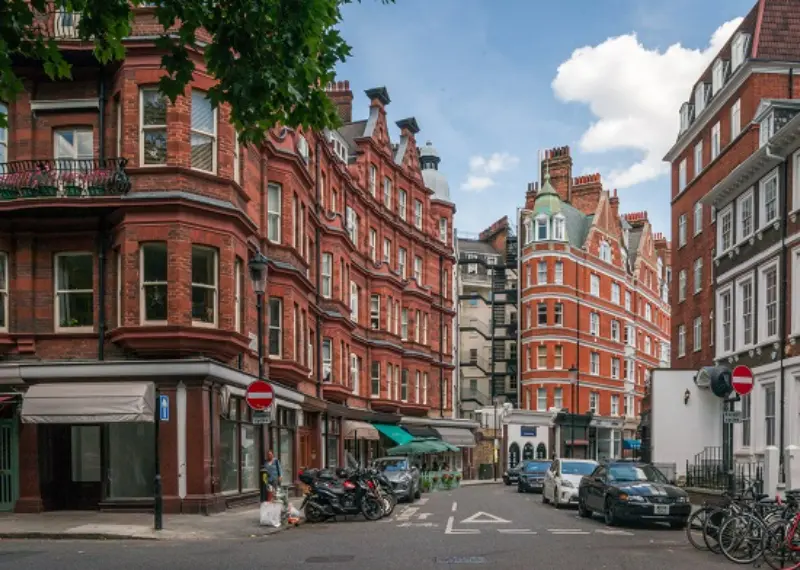
    Which route suits which area?

    DestinationRoute to examine
    Liverpool Street / Spitalfields / CityStansted Express to Liverpool Street.
    King’s Cross / EustonStansted Express to Tottenham Hale, Victoria line onward.
    Oxford Circus / Green Park / VictoriaTottenham Hale + Victoria line is often efficient.
    Canary WharfLiverpool Street then Elizabeth line, or compare coach/transfer if luggage is heavy.
    PaddingtonTottenham Hale or Liverpool Street plus cross-London connection; compare the exact route.
    Very late arrivalCheck train last service; coach or pre-booked transfer may be safer.

    Early-morning departures need a separate plan

    Do not plan a 06:00 departure by looking at the daytime 15-minute frequency. Stansted Express has early first trains, but the exact departure varies by day of week. Add the airport’s recommended check-in time, travel to Liverpool Street or Tottenham Hale, and a buffer for disruption. Sometimes an airport hotel is less stressful than a 02:30 alarm in central London.

    Where to stay before an early Stansted flight

    If the flight is exceptionally early, compare a final night near Liverpool Street, Tottenham Hale or the airport against staying in your preferred sightseeing area. Our where to stay in London guide explains the trade-offs. Do not move hotels solely to save ten minutes unless the flight timing genuinely justifies it.

    Common mistakes

    • Assuming Oyster works to Stansted Airport.
    • Staying on the train to Liverpool Street when Tottenham Hale gives a much easier Victoria line connection.
    • Planning an early flight using daytime train frequency.
    • Buying separate contactless journeys for children without checking child ticket fares.
    • Choosing the cheapest coach without considering rush-hour road time.
    • Leaving no margin for the long walk from some central Underground platforms to street level with luggage.

    Frequently asked questions

    How long does Stansted Express take?

    The operator currently quotes about 48 minutes from Liverpool Street and about 36 minutes from Tottenham Hale.

    London Underground Station

    Can I use contactless to Stansted Airport?

    Yes. Pay-as-you-go contactless is now accepted. Oyster is not valid at Stansted Airport.

    Does Stansted Express run all night?

    No. Check the first and last train for your exact day.

    Is Tottenham Hale better than Liverpool Street?

    It can be for destinations on the Victoria line. Liverpool Street is better for the City, Spitalfields and Elizabeth line connections.

    Why Stansted feels farther than it looks on a London map

    Stansted sits well beyond the dense Transport for London network, so the airport transfer is a real intercity-style journey rather than an extension of the Tube. That is why choosing the right London arrival station matters. Liverpool Street is excellent if you are staying in the City or east London, but it can leave a West End traveller with another thirty minutes of urban transport. Tottenham Hale is less famous yet often more efficient because the Victoria line reaches major central districts directly.

    Advance tickets versus flexible arrival

    For an outbound flight, an advance fare can work because you control when you leave the hotel. For an inbound flight, fixed-train restrictions can be less comfortable because immigration and baggage reclaim are unpredictable. Read the ticket conditions before chasing the lowest price. Contactless pay-as-you-go adds flexibility, but families should compare child fares and Railcard options, which can make traditional tickets better value. The cheapest fare is only useful if it fits the way your journey can realistically unfold.

    Red Double Decker Buses in Central London

    Coach stops can change the hotel calculation

    Airport coaches often serve places that are not on the Stansted Express railway route. If your accommodation is near a coach stop, the slower road journey can still produce an easier door-to-door transfer by avoiding Tube changes with luggage. This is especially relevant late at night. Check the exact stop, walking distance and timetable rather than treating every coach as if it simply terminates at Victoria.

    Stansted after a late flight delay

    A flight scheduled to land before the last train can arrive after it. Before departure, save the coach timetable and a reputable transfer option as backups. If the train has stopped, you do not want to research the entire London night-bus network while tired in arrivals. A backup does not need to be booked in advance, but it should be known.

    Contactless card discipline

    When using contactless, each traveller needs an eligible card or device and should use the same one to touch in and out. Do not tap in with a physical card and tap out with the same card stored in a phone wallet; the system can treat them as different payment tokens. Keep children’s ticketing separate if you are using child fares.

    When a coach is the smarter Stansted choice

    Rail is usually the cleanest option for central London, but coaches deserve a serious comparison when your hotel sits close to one of their stops or when your flight lands after the last convenient rail connection. A coach can remove a Tube change, which matters with suitcases, a pushchair or sleepy children. Check the operator timetable for your travel date because road traffic makes journey times more variable than the train. For an early departure, work backwards from the airport check-in target and add a traffic buffer rather than using the best-case advertised duration.

    Book around the flight, not the cheapest headline fare

    Advance train prices can be attractive, but an inbound flight can be early, late or held at immigration and baggage reclaim. Read the ticket flexibility before buying. A fare that saves a few pounds but locks you to an unrealistic train can create more stress than it saves. On the way to the airport, the opposite logic applies: choose a service that leaves a meaningful buffer before check-in and security, especially on weekends when engineering work can alter the normal timetable.

    Bottom line

    For most visitors, Stansted Express is the cleanest transfer. Use Liverpool Street for the City and east-central London; consider Tottenham Hale for the Victoria line; use contactless if it suits your fare situation but remember Oyster is not valid. For very early or late flights, verify the real timetable before assuming the train will be there.