Autumn is one of London’s most underrated seasons. September often keeps much of summer’s usable daylight, October brings colourful parks and a dense cultural calendar, while November shifts toward darker evenings, Bonfire Night and the first major Christmas lights. The season can therefore feel completely different depending on when you visit. For many travellers, the sweet spot is the period after the summer crowds ease and before the festive rush fully begins.
Quick practical answer
- September is usually the easiest autumn month for long sightseeing days; November is better for evening atmosphere and indoor culture.
- Expect mild conditions around 11°C to 15°C in much of spring and autumn, but prepare for wind, rain and noticeably cooler evenings.
- Build park time around daylight and keep museums, markets and theatre as weather-proof options.
- October half-term and Halloween can increase family demand at popular attractions.
- Bonfire Night events often take place on the nearest weekend to 5 November and major displays can require advance tickets.
September, October and November are three different trips
September often feels like late summer rather than classic autumn. Days are still reasonably long, outdoor dining remains attractive and major parks are green. Visitor numbers usually soften after the first part of the month, which can create a useful window for travellers who want warm-ish weather without the school-holiday intensity of July and August.
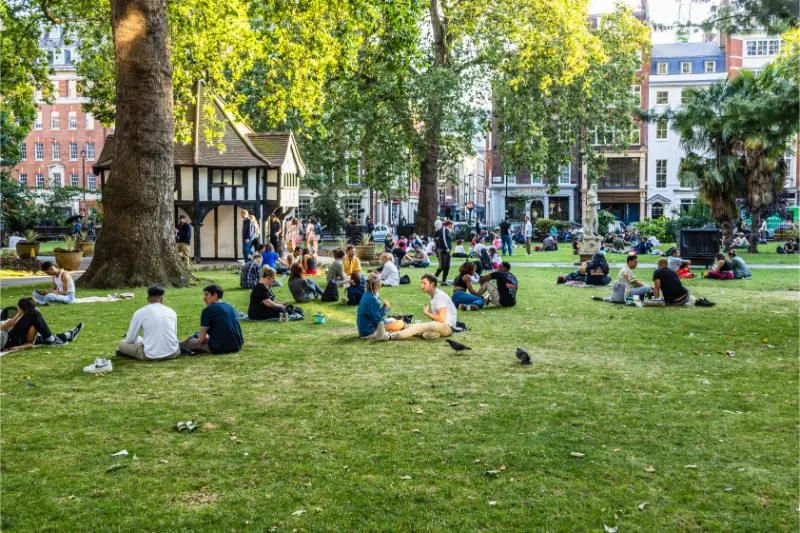
October is the visual centre of the season. Trees in Richmond Park, Greenwich Park, Hampstead Heath, Regent’s Park and the Royal Parks begin to turn, while museums and theatres become more appealing as evenings cool. The October school half-term brings a burst of family demand, especially at free museums and seasonal attractions.
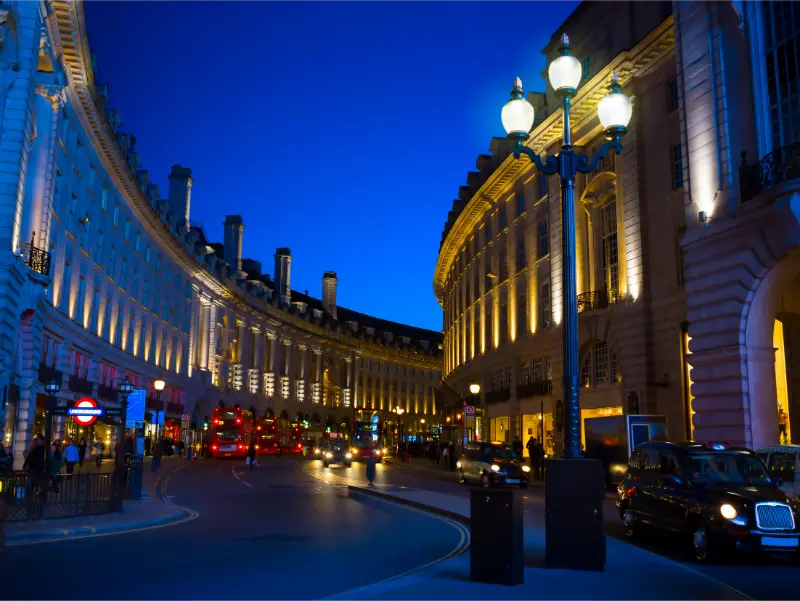
November is darker and more atmospheric. Bonfire Night arrives around 5 November, Christmas lights begin appearing across central shopping streets, pubs feel more inviting and outdoor sightseeing needs more attention to daylight. It is a strong month for a city-break built around museums, theatre and food with shorter outdoor sections.
Where to see autumn colour
Richmond Park gives the broadest sense of seasonal landscape, with woodland, open grassland and long views. Greenwich Park is easier to combine with major sightseeing because you can pair it with the National Maritime Museum, the Queen’s House, the Cutty Sark area and a Thames boat. Hampstead Heath works well for visitors who want a less formal, more local-feeling day.
In central London, St James’s Park, Hyde Park, Kensington Gardens and Regent’s Park require less travel. They are not substitutes for a countryside escape, but they fit naturally between major sights. If you want a full slower day, our Richmond guide and Greenwich guide are particularly useful.
Halloween in London
Halloween is fixed on 31 October, but London celebrations spread across several weeks. Historic sites lean into ghost stories and darker history, family attractions run seasonal programming, theatres and immersive experiences add themed events, and some parks or gardens offer evening trails. In 2026, Visit London lists Halloween activity around 31 October and highlights attractions ranging from the Tower of London and Hampton Court to the London Dungeon and family museum events.
The best Halloween plan depends on your tolerance for staged scares. Families may prefer museums, gardens or Harry Potter-related seasonal programming, while adults can combine a historic ghost walk with a pub or theatre. Our dedicated Halloween in London guide separates family-friendly ideas from genuinely spooky evening options.
Bonfire Night changes early November
Bonfire Night, or Guy Fawkes Night, is associated with 5 November, but London’s biggest public displays are often scheduled on the closest practical evening or weekend. Major events can combine fireworks with funfairs, food, live entertainment and sometimes bonfires or drone displays. Because capacity is controlled at many large venues, this is not an event to leave until the afternoon.
The tradition relates to the failed Gunpowder Plot of 1605. For visitors, the practical issue is transport and ticketing rather than history alone. Alexandra Palace and other large venues draw substantial crowds, while local events can affect buses and roads. Use our Bonfire Night guide and recheck the current year’s official event pages before travelling.
Autumn weather strategy
A successful autumn itinerary avoids long exposed walks after dark unless the walk itself is the point. Put parks and riverside areas earlier in the day and move museums, markets, theatre or food experiences later. If rain develops, South Kensington is especially forgiving because three major museums sit close together, while Covent Garden and the West End allow you to combine indoor attractions with short outdoor transfers.
Footwear should handle wet pavements and leaves. You do not need hiking equipment for central London, but shoes with poor grip can become irritating on park paths. A waterproof outer layer is more useful than carrying several bulky sweaters, because indoor attractions and public transport can be warm.
Food, theatre and indoor culture
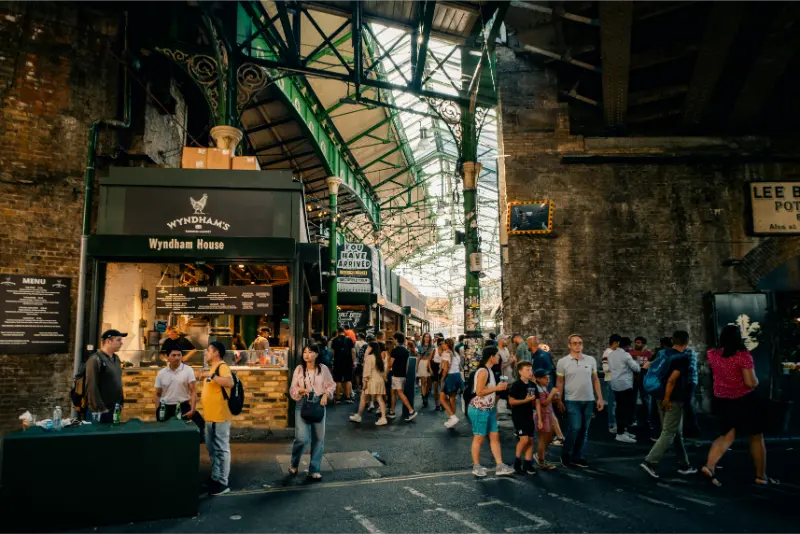
Autumn is excellent for London’s indoor strengths. Theatre schedules are busy, museums rotate exhibitions and food markets become more comfortable than during the hottest summer days. Borough Market remains crowded at peak lunch, but cooler weather makes a longer food-focused walk easier. Our West End theatre guide explains how to choose seats and avoid overpaying.
Traditional pubs also make more sense in autumn. Rather than treating them as an attraction to tick off, use one as a practical break between sights. A Sunday roast can anchor a slower neighbourhood day, while afternoon tea works well when the weather makes a long park route less appealing.
Crowds and value
September after the first school weeks and parts of November can offer better accommodation value than peak summer or the Christmas period. October is more variable because weekends and half-term can be busy. Flight and hotel prices depend heavily on your origin and event calendar, so compare specific dates rather than assuming the entire season is inexpensive.
If you are flexible, consider areas just outside the most expensive central core. Paddington, Bayswater, King’s Cross, Hammersmith or Greenwich can offer strong transport while changing the hotel price equation. See our where to stay guide and compare live options on Booking.com.
Official information worth checking
Visit London’s autumn guide is useful for seasonal events, while TfL should be checked for weekend engineering works and event-day changes. Halloween and Bonfire Night programming is refreshed annually, so treat exact venue line-ups and prices as time-sensitive even when the celebration date itself is predictable.
A balanced autumn weekend
A strong Friday-to-Sunday autumn trip might use Friday evening for Soho or Covent Garden, Saturday morning for Westminster and a park while daylight is strongest, Saturday night for theatre, and Sunday for Greenwich or Richmond. In November, reverse the emphasis slightly: prioritise major outdoor views before lunch and give more of late afternoon to museums, pubs and indoor food experiences.
If Bonfire Night or Halloween overlaps your dates, treat that event as the evening anchor rather than trying to add it after a full 12-hour sightseeing day.
Autumn for photographers
Low-angle light and changing foliage can make autumn particularly rewarding. Greenwich Park gives a classic city view framed by trees; Richmond Park offers broader landscape scenes; the South Bank provides reflections and skyline light after rain. Overcast weather is not automatically bad for photographs—wet paving and subdued contrast can suit historic streets and markets.
Because sunset arrives progressively earlier, verify daylight times for your exact dates. A viewpoint booked for a time that worked in September may be fully dark by November.
Packing for a season of transitions
September may need summer clothing at midday and a jacket after sunset. By November, gloves and a warmer layer can be useful. The most efficient packing system is modular: breathable base clothing, one warm middle layer and a waterproof outer layer. This avoids carrying a heavy winter coat on a mild October day.
A small umbrella is useful but not sufficient on windy days. Shoes that tolerate puddles and damp park paths have more practical value than fashion footwear if your itinerary includes long outdoor walks.
Who should choose autumn over spring?
Autumn suits travellers who enjoy theatre, pubs, food markets and evening atmosphere as much as gardens. Spring offers increasing daylight and fresh growth; autumn offers richer indoor culture and the dramatic transition toward the festive season. October can be excellent for mixed itineraries, while November is particularly good for visitors who like darker, more atmospheric city breaks.
If your priority is family attractions, check half-term dates. If your priority is value and adult sightseeing, the weeks outside school breaks and major events are usually easier to navigate.
Booking ahead without overcommitting
Autumn rewards a middle ground between improvisation and rigid scheduling. Book the attractions that genuinely sell out—special exhibitions, popular theatre, limited-entry seasonal events—and leave ordinary museums, parks and neighbourhood walks flexible. This protects you from rain without creating a day that collapses if transport is delayed.
For restaurants, a reservation matters most on Friday and Saturday evenings or around major events. At other times, choosing an area with several strong alternatives is often more useful than fixing every meal weeks ahead. That flexibility is one of autumn’s practical advantages.