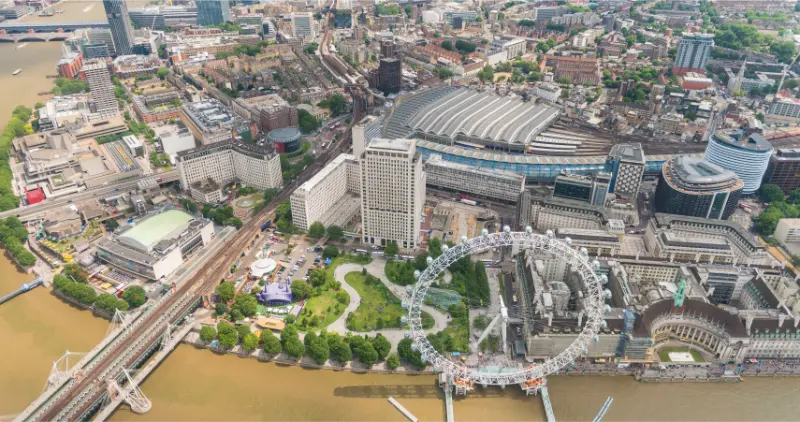
The South Bank is one of the best ways to understand London without entering a single attraction. The Thames provides direction, the skyline keeps changing, and major landmarks arrive in a natural sequence: Westminster, the London Eye, Southbank Centre, the National Theatre, Tate Modern, Shakespeare’s Globe, Borough Market and — if you continue — Tower Bridge. The danger is overplanning. This walk is strongest when you choose one interior stop and let the river connect everything else.
| Best for | First visits, Thames views, walking, photography, families |
|---|---|
| Minimum time | 2 hours direct; half or full day with stops |
| Start | Westminster/Waterloo |
| Finish | London Bridge or Tower Bridge |
| Best tip | Do not book several timed attractions back-to-back along the route |
Start at Westminster Bridge and cross to the south side
Beginning at Westminster gives you the classic contrast between Parliament and the modern riverside. Cross Westminster Bridge to the South Bank and look back. This viewpoint immediately establishes the river as your map.
From here the London Eye is close, but decide before the day whether you want to ride it. Buying a ticket impulsively can add a long queue and shift the rest of your schedule. If you only want the skyline, our best London views guide compares free and paid alternatives.
Southbank Centre: use the building, not just the riverfront
The Southbank Centre is the UK’s largest arts centre and includes Royal Festival Hall, Queen Elizabeth Hall, Hayward Gallery and other spaces. The public foyers, exhibitions and free events can make it a useful indoor break during a long river walk. The programme changes constantly, so check what is happening on your dates.
This is particularly valuable in uncertain weather. You can move between river views and indoor cultural space without abandoning the route. It is one reason the South Bank works so well on a first visit: bad weather does not automatically destroy the day.
National Theatre and brutalist London
Continue east and the architecture becomes a major part of the experience. The National Theatre and Southbank Centre represent postwar cultural London and divide opinion visually. Even if you dislike brutalism, the riverside terraces, concrete forms and public spaces are worth noticing because they tell a different story from royal Westminster.
Travel guides often treat architecture as background. On this walk, make it part of the route. London is compelling because medieval, Victorian, postwar and contemporary structures appear in the same sightline.
Gabriel’s Wharf, Oxo Tower and the everyday river
Between the major cultural buildings and Tate Modern are smaller riverfront spaces, cafés, benches and side streets. This middle section is where you should stop chasing landmarks and watch the Thames. Tides, working boats, bridges and changing views make the river feel active rather than decorative.
If you are travelling with children, this is a good point for an unplanned break. If you are travelling alone, it is one of the best places to slow down and photograph details instead of only skylines.
Tate Modern and Millennium Bridge
Tate Modern occupies the former Bankside Power Station and is one of the route’s biggest anchors. General collection access is free, while some exhibitions are ticketed. If modern and contemporary art matters to you, give it real time; if not, enter briefly for the architecture and continue.
Millennium Bridge connects Bankside with St Paul’s Cathedral across the river. Crossing halfway and looking in both directions is one of the easiest free viewpoints in central London. You can continue to St Paul’s and rejoin the South Bank later, but avoid creating unnecessary zigzags if your final destination is Borough Market or Tower Bridge.
Shakespeare’s Globe and historic Bankside
East of Tate Modern, the riverfront enters an area strongly associated with historic theatres and entertainment. Shakespeare’s Globe is a modern reconstruction near the sites connected with Elizabethan theatre. Even without a performance ticket, the location helps explain why Bankside developed differently from the City across the river.
Nearby streets also contain remnants and references to medieval and early modern Southwark. This is a good place to leave the exact river edge briefly, then return before reaching Borough Market.
Borough Market: treat it as a meal stop, not the finish line
Borough Market is one of London’s best-known food markets and can be extremely busy. If you are hungry, walk through once before choosing. If you are not hungry, do not force a market meal simply because it appears on every itinerary. Southwark has many restaurants outside the main market lanes.
Market opening patterns and trader schedules can vary, so check current information if it is a priority. Our London markets guide compares the experience with Camden, Spitalfields and other options.
Continue to Tower Bridge if you still have legs
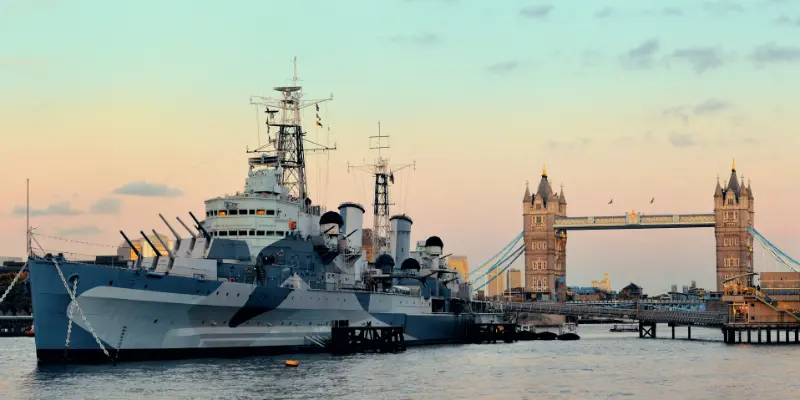
From London Bridge/Borough, continuing east toward Tower Bridge adds one of the most dramatic finishes in London. You pass HMS Belfast and views toward the Tower of London before reaching the bridge itself. Crossing Tower Bridge puts you beside the Tower and connects naturally with a river boat or the City.
If you have already walked for several hours, stopping at London Bridge is completely reasonable. The best itinerary is not the one that proves you can keep walking. It is the one where you still enjoy the final thirty minutes.
A half-day and full-day version
For a half day, walk Westminster Bridge → Southbank Centre → Tate Modern → Borough Market, with one interior stop. For a full day, add a London Eye ride or major gallery visit, lunch, then continue to Tower Bridge and the Tower of London area. Do not attempt the Tower itself late in the day unless you have enough time to visit properly.
This walk pairs naturally with our Tower of London guide, Thames boat guide and best London walks. Together they form one of the strongest first-time clusters on the site.
- Half day: Westminster → Southbank Centre → Tate Modern → Borough Market.
- Full day: add one major interior + Tower Bridge.
- Evening: reverse parts of the route for illuminated skyline views.
Choose the direction according to food, light and your booked attraction
Westminster-to-Tower Bridge is the easiest first-time direction because the skyline unfolds naturally and you can finish around Borough Market or the Tower area. The reverse route is better if you want Parliament and the London Eye near dusk. If Borough Market is the lunch anchor, remember that its regular 2026 schedule has Monday closed; on that day, build the food stop elsewhere rather than arriving to an empty market frontage.
Do not walk the whole river without entering anything unless the walk itself is the goal. Tate Modern, Shakespeare’s Globe, Southwark Cathedral and the Southbank Centre create different reasons to pause. Choose one substantial interior or performance, then let bridges and riverside sections connect it. That keeps the route from becoming a long sequence of photographs taken while tired.
Two details that make the South Bank easier
First, expect pinch points around the London Eye, weekend food areas and major events. The river path is public and busy, but temporary diversions can appear. Second, use bridges as part of the experience: crossing Millennium Bridge for St Paul’s or Tower Bridge for the Tower area changes the skyline and gives you a natural endpoint instead of forcing you to retrace the same bank.
If you want a guided river walk or an activity that combines the Thames with a cruise, compare South Bank and Thames experiences on GetYourGuide. For theatre history, our Shakespeare’s Globe guide explains when a tour or performance makes more sense.
Frequently asked questions
How long is the South Bank walk?
The exact time depends on where you stop. Westminster to Borough Market can be walked comfortably in a couple of hours without long visits; continuing to Tower Bridge and entering attractions can turn it into a full day.
Is the South Bank free?
Walking the riverfront is free. Many cultural spaces have free public areas or collections, while rides, exhibitions and attractions may be ticketed.
Is the South Bank good at night?
Yes, especially for skyline views and atmosphere. Stick to well-used routes, keep normal city awareness and check your transport home.
Which direction is best?
Westminster to Tower Bridge gives a natural progression for first-time visitors, but the reverse direction is excellent in late afternoon if you want to finish with Parliament and the London Eye illuminated.
Official information and final planning note
For details that can change — opening times, temporary closures, booking rules, access arrangements and special events — check the official pages before travelling: Southbank Centre visitor information.
The South Bank is a route, not a checklist. Choose one or two reasons to stop, let the river connect them and use bridges to change perspective rather than walking until every skyline view starts to feel the same.
Shakespeare’s Globe as a South Bank anchor
If theatre history interests you, the Shakespeare’s Globe guide explains the difference between taking a tour and attending a performance. The Globe fits naturally between Tate Modern, Millennium Bridge and Borough Market, so there is no need to make a separate cross-city journey.
Finish high above London Bridge
For a paid skyline finale near Borough Market, see our View from The Shard guide.
County Hall attractions
If you want a paid indoor stop on this walk, compare SEA LIFE London Aquarium with the theatrical London Dungeon before booking multiple attractions back-to-back.
If you want an immersive historic attraction on the river, our HMS Belfast guide explains tickets, timing and the physical route through the ship.