
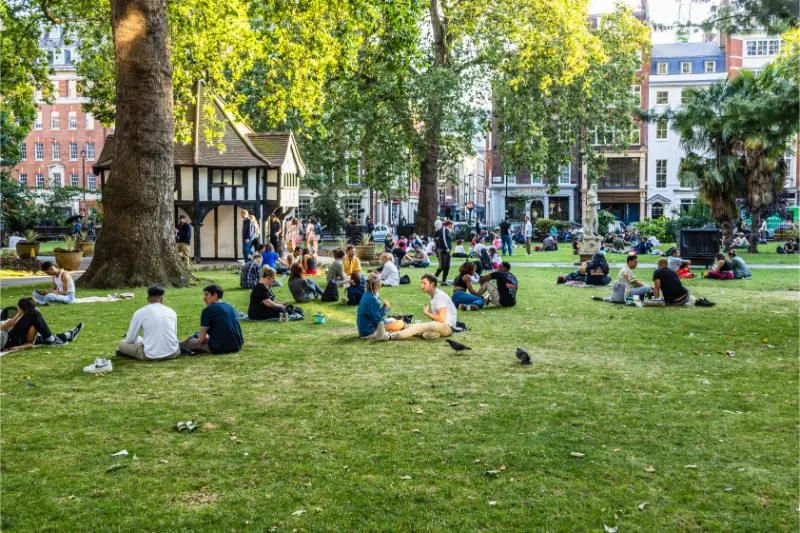
Kew Gardens is not a small London park with a few glasshouses. It is a 320-acre botanical landscape and UNESCO World Heritage Site with more than 50,000 living plants, major historic glasshouses, scientific collections, seasonal displays and enough walking to fill a full day. That scale explains the most common planning mistake: visitors give Kew two hours because it appears on a list of “things to do near Richmond”, then spend the entire visit moving between highlights.
Kew works best as the main event. Build the day around plants, weather and seasonal light, then add Richmond only if you still have energy. Our Richmond guide explains how the two areas connect without pretending that Kew Gardens and Richmond Park can both be explored properly in one rushed day.
| Best for | Gardens, plants, architecture, photography, families and slow travel |
|---|---|
| Scale | About 320 acres |
| Good visit length | 4–6 hours; longer for enthusiasts |
| Getting there | Rail, Underground/Overground, bus and seasonal river options depending on route |
| Key rule | Check seasonal closing times before planning a late visit |
Choose three anchors, not ten
Kew’s map encourages ambition because so many attractions look close together. They are not always close when you are walking. Choose three major anchors — perhaps Palm House, Temperate House and the Treetop Walkway, or glasshouses plus a seasonal garden and art feature — then let the route between them supply the smaller discoveries.
Glasshouses are more than bad-weather backups
The historic glasshouses are central to Kew’s identity. They also change the rhythm of the day: hot, humid interiors feel very different from the lawns and woodland outside. On cold or wet days they provide shelter, but in summer they can be tiring. Alternate indoor and outdoor spaces rather than visiting every glasshouse consecutively.
Season changes the experience
Kew is worth visiting throughout the year, but it is not the same attraction in every month. Spring can be about blossom and emerging colour; summer expands outdoor walking and long-day possibilities; autumn shifts attention toward foliage and texture; winter makes the glasshouses and structural landscape more important. Seasonal events can also change visitor flows and ticket demand.
Current opening-time reality
Kew publishes seasonal opening and closing times rather than one permanent schedule. In September 2026 the Gardens are open daily from 10:00 to 19:00 with last entry at 18:00; October and winter schedules become shorter. Because daylight and last entry matter so much at a large outdoor site, always check Kew’s official opening-times page for your exact date.
Important for late-2026 visits: Kew currently lists the Waterlily House as closed for renovation until spring 2027, while the Minka House and Ice House are also temporarily closed for works. These are not permanent omissions from Kew, so check the official planned-closures page shortly before your visit. The Princess of Wales Conservatory remains the key place to see Kew’s giant Victoria waterlilies while the Waterlily House is unavailable.
How to get there without overcomplicating it
Kew Gardens can be reached from central London without a car, and the official site notes access by rail, bus and river, with several gates. Your best gate depends on the transport route and what you want to see first. Do not blindly follow a generic map pin to the “main entrance” if another gate makes more sense for your arrival.
A realistic first-visit route
- Arrive near opening if you want quieter glasshouses and photography.
- Visit one major glasshouse before the busiest midday period.
- Walk through an outdoor landscape rather than taking the shortest path to the next attraction.
- Stop for lunch or a substantial break; Kew is too large for a continuous march.
- Choose one afternoon anchor and one optional final stop near your exit gate.
Kew with children
Families should plan around walking distance as much as attractions. A child can be enthusiastic about plants and still be exhausted by crossing the site repeatedly. Choose a compact route, include space to run and do not make every adult priority compulsory. On busy days, agree on what would make the visit feel successful before entering.
Kew in bad weather
Light rain does not ruin Kew because glasshouses and covered stops can break up outdoor walking. Heavy rain and strong wind can affect the experience much more, particularly if specific elevated or outdoor attractions close for safety. Check visitor notices on the day. If the forecast is truly poor, the Natural History Museum or V&A may offer a better use of your time.
Tickets and booking
Kew states that the best-value tickets are available by booking online. Prices and concessions vary, so avoid hard-coding an old price into your budget. Compare the official ticket with any third-party option on cancellation rules and inclusions, not just headline cost.
Affiliate link. Dreaming London may earn a commission from qualifying bookings at no extra cost to you.
Can you combine Kew with Richmond?
Yes, if Kew remains the main attraction. A sensible combination is four or five hours in the Gardens followed by a short Richmond riverside walk and dinner. Trying to add a substantial Richmond Park hike creates a different day and usually involves too much transport and walking. Read our Richmond itinerary before deciding.
Photography without missing the garden
Kew is extremely photogenic, but constant stopping can fragment the experience. Choose a few locations where photography is a priority and spend the rest of the time walking normally. Early or later light can be attractive, but seasonal closing times may limit evening photography outside summer.
Accessibility and pacing
A large botanical garden requires more physical planning than a compact museum. Check official accessibility information, transport within the site where available, path conditions and gate locations. Travellers with limited walking tolerance should build a smaller loop around the most important features rather than assuming the map scale is trivial.

Frequently asked questions
How long do you need at Kew Gardens?
Four to six hours is a realistic first visit. Plant enthusiasts can easily spend a full day.
Is Kew Gardens free?
No, Kew Gardens is a ticketed attraction, although ticket categories, concessions and special offers can vary.
Can you visit Kew and Hampton Court on the same day?
It is possible geographically, but poor as a first-visit plan. Both deserve several hours and involve substantial walking.
Is Kew worth it in winter?
Yes for glasshouses, structure and seasonal events, but daylight is shorter and some outdoor experiences are less prominent. Check the day’s schedule before travelling.
Why Kew belongs in a London itinerary
Kew gives London a different scale. Instead of moving between streets and landmarks, you spend hours inside a living collection where scientific research, landscape design and simple pleasure overlap. Treat it as a major destination rather than a side trip and the day becomes slower, more coherent and far more memorable.
Plan Kew by season, because the same garden is not the same visit
Kew changes more dramatically through the year than most London attractions. Spring rewards blossom, new growth and long outdoor walks; summer gives you the fullest garden experience but also the hottest glasshouse transitions; autumn brings colour and texture; winter makes the architecture of trees and glasshouses more important. Check the official “what’s looking good” information rather than expecting the same highlights in every month.
This seasonal thinking also helps with time. On a cold or wet day, prioritize indoor glasshouses and shorter outdoor links. In warm, dry weather, reverse the balance and use the glasshouses as shorter punctuation within a mostly outdoor visit.
Glasshouses require a different pace from outdoor gardens
Temperature and humidity can change sharply when you enter a glasshouse, especially if you are wearing winter layers. Give yourself a moment to adjust and keep water available. Camera lenses and glasses can fog, so do not schedule a must-have photograph for the instant you walk inside.

Children often enjoy the physical contrast between environments, but repeated transitions can be tiring. Choose the glasshouses that fit your interests rather than entering every structure because it is there.
Choose your entrance and exit with the rest of the day in mind
Kew is large enough that the wrong exit can add a surprisingly long final walk when everyone is already tired. Before the last hour, decide whether you are returning directly to central London, continuing toward Richmond or eating locally. Then shape the final section of the garden toward the most useful gate.
If you are combining Kew with Richmond, do not try to see every corner of both. A focused Kew visit plus a riverside evening is far more enjoyable than rushing through the gardens merely to say you also reached Richmond Park.
Who should give Kew most of a day?
Garden enthusiasts, photographers, families who like outdoor space and repeat London visitors can easily justify a long visit. First-time visitors on a three-day trip should think more carefully: Kew is excellent, but it competes with a full central-London day. The value depends on whether plants, landscape and a slower rhythm are part of what you came to London for.
That is not a criticism. In fact, the slower rhythm is precisely Kew’s strength. It is one of the few major London attractions where doing less often improves the experience.
Photography, tripods and the reality of a working botanical garden
Kew is photogenic, but it is also a scientific institution and a living collection. Paths, glasshouses and planting areas can close or be redirected for horticultural work. Respect barriers even when a flower or composition looks better from the other side. If you carry specialist camera equipment, check Kew’s current photography rules before assuming tripods or commercial-style setups are permitted everywhere.
For ordinary visitors, the best photographs usually come from slowing down: wide landscape first, then plant detail, then architecture. Trying to collect every famous angle is the fastest way to stop noticing the garden itself.