
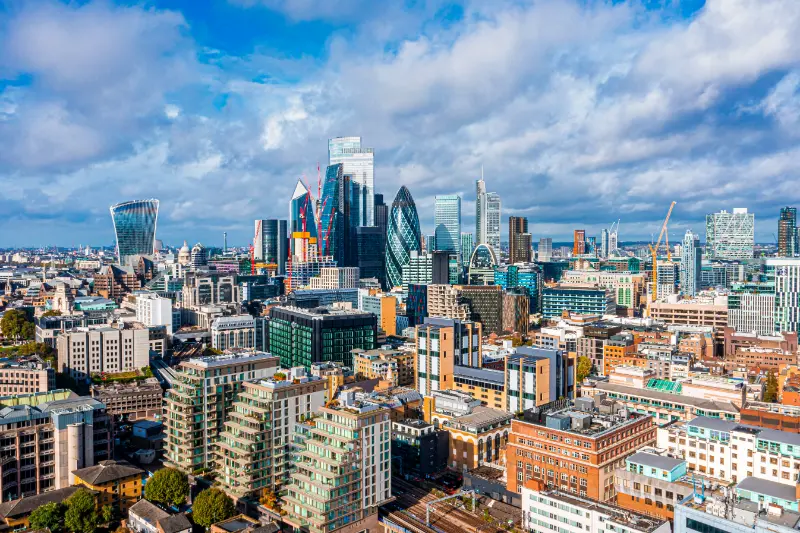
The City of London is not the same thing as “central London”. It is the historic Square Mile: a small administrative area where Roman foundations, medieval street patterns, Wren churches, Victorian commercial buildings and glass towers occupy the same few blocks. Many visitors pass through it only to see St Paul’s Cathedral or the Tower of London. That misses the most interesting part, which is the contrast between layers.
The City works best on foot because the distances are short and the streets are irregular. A Tube ride between every landmark removes the connective tissue: churchyards, alleys, fragments of wall, small gardens and sudden skyline views. This route is designed as a full day but can be shortened easily. It also extends our broader London neighbourhoods guide and best walks in London.
| Start | St Paul’s Cathedral |
|---|---|
| Finish | Tower Hill or the Thames |
| Walking time | Roughly 2 hours without stops; most of a day with interiors and lunch |
| Best days | Weekdays for City energy; weekends for quieter streets |
Start at St Paul’s and understand the scale
St Paul’s makes a natural starting point because its dome has shaped the City skyline for centuries. If you plan to go inside, do it early before the walking route becomes fragmented by later ticket times. Our St Paul’s Cathedral guide covers the Dome Galleries, Crypt and practical visit strategy.
Afterwards, resist heading straight to the river. Walk north-west into the smaller streets around the cathedral precinct. The City becomes more interesting the moment you leave the main visitor axis.
Postman’s Park: a small stop with a strong story
Postman’s Park is one of the City’s most emotionally distinctive green spaces, known for the Watts Memorial to Heroic Self-Sacrifice, a collection of plaques commemorating ordinary people who died while trying to save others. It is not a “secret” in the internet-hype sense; it is simply easy to miss because it is small and surrounded by larger attractions.
Spend ten or fifteen minutes here. Read a few plaques rather than racing through all of them. This is a good example of why walking the City works: the experience is too modest to justify a dedicated cross-London trip, but memorable when it appears naturally between major sights.
Continue to the Barbican for a completely different London
The Barbican estate divides opinion, which is exactly why it belongs on this route. Its post-war concrete architecture feels almost confrontational after St Paul’s and churchyards. Walk the elevated spaces and courtyards slowly enough to understand the design rather than photographing one brutalist angle and leaving.
The Barbican Centre is a major arts venue, and the wider complex includes residential towers, water features and cultural spaces. Opening arrangements for the Conservatory and special areas can vary, so check the Barbican official website if a specific interior is important to you.
Look for Roman London rather than expecting one giant ruin
Roman Londinium survives in fragments. That is part of the fascination. Sections of wall, archaeological displays and street alignments appear between modern buildings rather than forming one self-contained archaeological park. The best-known wall remains around the Museum of London/Barbican area and near Tower Hill are useful anchors.
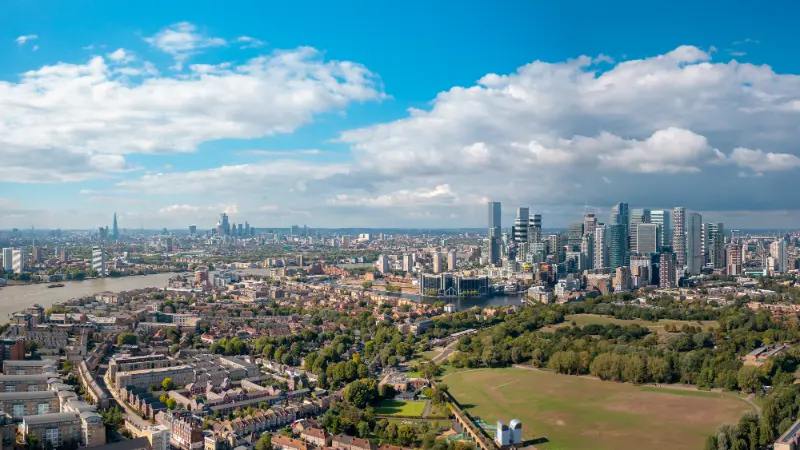
Do not force every Roman trace into one day. The City rewards noticing what is already near your route. A fragment encountered beside an office block often says more about London’s continuity than a long detour to tick another item off a list.
Guildhall and the civic City
From the Barbican, move south toward Guildhall. This is a reminder that the City of London has its own ancient civic institutions, traditions and government. The medieval Great Hall and surrounding complex sit unexpectedly among modern offices. The Guildhall Art Gallery and the remains of London’s Roman amphitheatre can add substantial time if open and if art or archaeology is a priority.
Check current admission and opening arrangements before relying on them; City institutions can have event-related closures. Even from outside, the square is worth seeing because it reveals a London that feels more institutional and less royal than Westminster.
Bank junction: stop and read the architecture
Bank is one of the most visually dense junctions in London. The Bank of England, Royal Exchange and Mansion House face each other across streets that are usually busy with workers, buses and cyclists. Rather than treating this as a transport interchange, stand back and understand the composition.
This is also where the weekday/weekend contrast becomes obvious. On a weekday, the area has the intensity of a financial district. On Sunday, some streets can feel unexpectedly quiet. Neither is better; they show different versions of the Square Mile.
Leadenhall Market: architecture first, shopping second
Leadenhall Market is worth visiting even if you buy nothing. Its covered Victorian structure, colour and narrow surrounding lanes make it one of the City’s most photogenic passages. It also works as a weather-proof pause and a natural lunch zone.
Do not expect every shop or food outlet to follow the same schedule, particularly on weekends. If food is the main reason for visiting a market, Borough Market is the stronger destination. If architecture and City atmosphere matter more, Leadenhall fits this route beautifully. Compare them in our London markets guide.
St Dunstan in the East: ruins turned into a garden
Continue south-east to St Dunstan in the East. The church was damaged by the Great Fire of 1666, rebuilt by Christopher Wren, then severely damaged again during the Blitz. The surviving tower and walls were later incorporated into a public garden. The result is one of the City’s most atmospheric small spaces.
The City of London describes it as a garden within the ruins and notes that visitors may take normal personal photographs. Treat it as a public garden, not a private photo studio. Keep paths clear and let other people use benches and quiet corners. Current information is available from the City of London garden page.
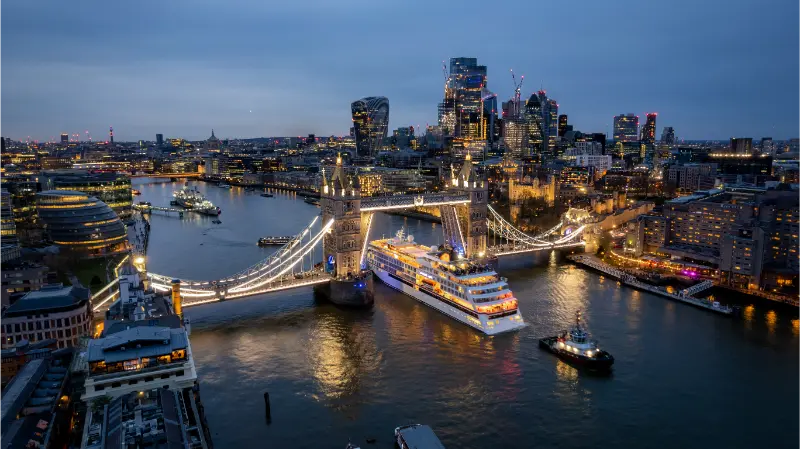
Finish at the river and choose your next London
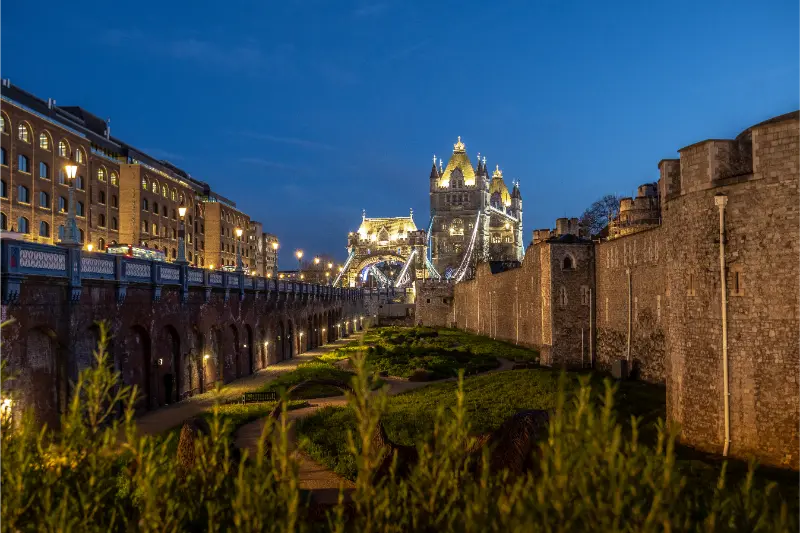
From St Dunstan, you are close to the Tower of London, Tower Bridge and the Thames. If energy remains, continue toward the fortress and use our Tower of London guide or Tower Bridge guide. If you have already visited them, walk west along the river and cross toward the South Bank.
The river is the right ending because it reconnects the City with the rest of London. You have spent the day in lanes and enclosed spaces; the Thames suddenly opens the horizon.
Where to eat without turning the route into restaurant logistics
The City has abundant weekday lunch options because of its office population. Weekend choice can be more uneven. Instead of choosing a restaurant on the opposite side of the district, eat where the route naturally puts you: near the Barbican, around Bank/Leadenhall or after reaching the river. This preserves the walk’s logic.
If Borough Market is part of your trip, save your largest food-market appetite for that and use the City for a lighter lunch. Our Borough Market guide explains why timing matters there.
Should you stay in the City of London?
The City can be a practical base for travellers who value transport connections, modern hotels and easy access to eastern central London. The atmosphere changes outside office hours, which some people love and others find too quiet. Before booking, compare it with the West End, South Bank and more residential districts in our where to stay in London guide.
Affiliate link. Dreaming London may receive a commission from qualifying bookings at no extra cost to you.
How weekday and weekend visits differ
A weekday shows the City as an active financial and professional district: office workers fill pavements, lunch counters are busy and the contrast between ancient churches and modern business is strongest. A weekend gives you cleaner architectural sightlines and quieter lanes, but some cafés and smaller businesses reduce their hours. Choose based on the atmosphere you want rather than assuming one day is universally better.
Photography is often easier on a Sunday morning, while people-watching and the working-city experience are better midweek. Major visitor attractions follow their own schedules, so check them separately.
Use churches and gardens as micro-stops
The Square Mile contains many small churches and gardens that are not worth crossing London for individually but are excellent when encountered naturally. If a door is open and visiting is welcomed, step inside for five minutes. If a church is holding a service or private event, continue without treating access as an entitlement. These small pauses are what keep a long urban walk from feeling monotonous.
Frequently asked questions
Is the City of London a neighbourhood?
It is more than a neighbourhood: it is a distinct local authority and the historic core of London, often called the Square Mile.
Is it empty at weekends?
No, but it can be much quieter than on weekdays and some businesses operate reduced hours. Major attractions remain important weekend draws.
How much of the route is free?
Most of the streets, gardens, markets and exterior sights are free. Major interiors such as St Paul’s Cathedral charge for sightseeing.
Is it suitable for a first trip?
Yes, especially after you have covered Westminster. The City shows a different London: commercial, ancient, rebuilt and architecturally layered.
Why this route is better than a list
The City does not reveal itself through ten “top sights” viewed independently. Its strength is adjacency. A Wren church beside a glass tower, a Roman fragment behind a car park, a Victorian market near a financial junction, a garden inside bombed ruins: the connections are the attraction. Walk slowly enough to notice them and the Square Mile becomes one of the richest parts of London rather than merely the district between St Paul’s and the Tower.
Add a free skyline stop
If a timed slot fits your route, the Sky Garden is a natural high-level addition to a City walking day.
Extend the history walk into Smithfield
Continue west with our Clerkenwell and Smithfield guide, including the new London Museum opening in November 2026.
The Barbican Centre adds post-war Brutalist architecture to a City itinerary dominated by Roman, medieval and Victorian layers.