
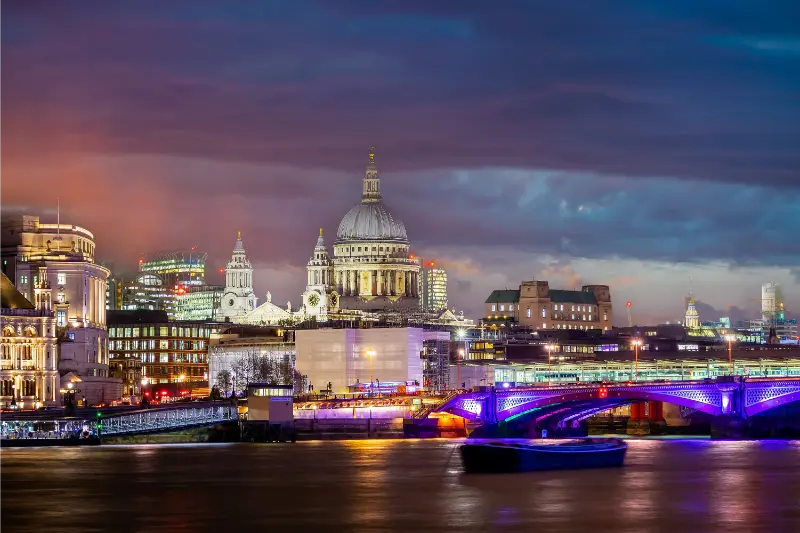
St Paul’s Cathedral is easy to recognise and surprisingly easy to misunderstand. Many travellers photograph the dome from Millennium Bridge, walk around the churchyard and move on, assuming the best experience is the skyline view. The interior tells a different story. This is a working cathedral, a national ceremonial space, a memorial landscape, a crypt and, for visitors willing to climb, one of central London’s most memorable viewpoints.
The best visit depends on deciding in advance whether your priority is architecture, history or the Dome Galleries. Trying to treat all three as equal can make the visit feel rushed. This article shows how to plan it properly and how to connect it with the surrounding Square Mile. For the bigger picture, read our best things to do in London and best London views guides.
| Best for | Architecture, skyline views, British history and City of London walks |
|---|---|
| Allow | About 90 minutes; 2 hours if climbing the dome slowly |
| Nearest Tube | St Paul’s |
| Key choice | Whether you want to climb to the upper Dome Galleries |
Start by looking at the cathedral from outside
Before entering, walk a short arc around St Paul’s Churchyard. Christopher Wren’s design makes more sense when you see how the west front, dome and surrounding streets interact. Then step toward Millennium Bridge for the famous long view. This is not just a photo opportunity: it shows why St Paul’s remains such a dominant marker in a skyline that has changed dramatically around it.
If you are walking from the Thames, the cathedral appears almost theatrically at the end of the bridge alignment. That approach pairs naturally with our South Bank walk: cross Millennium Bridge from Tate Modern, visit St Paul’s, then continue deeper into the City rather than returning by the same route.
What the sightseeing ticket includes
St Paul’s is open for worship and for ticketed sightseeing at designated times. The current standard sightseeing schedule is Monday to Saturday from 08:30 to 16:30, with last sightseeing entry usually at 16:00; Dome Galleries open later in the morning. In 2026 selected Sunday Dome Gallery visits also operate during the season. Services and events can alter access, so check the official St Paul’s calendar on the day of your visit.
Do not confuse paying to sightsee with attending a service. Worship is part of the cathedral’s religious function; it is not a way to roam the building as a tourist. If you attend, behave as you would in any active place of worship.
The Dome Galleries: know the climb before you commit
The dome is the experience that changes St Paul’s from a beautiful interior into a physical adventure. The route climbs through different levels and ultimately reaches exterior viewpoints. The number of steps is substantial and the passages become narrower higher up. If you dislike heights, enclosed stairs or strenuous climbs, the Cathedral Floor and Crypt still make a worthwhile visit.
Do not rush the climb because someone behind you is faster. Use designated stopping points, carry minimal baggage and follow staff instructions. The reward is not just height: you see the geometry of Wren’s design at close range and then emerge into a panorama that feels different from glass-tower viewpoints. St Paul’s puts you inside the historic fabric of the City rather than above it in a modern observation deck.
What to notice on the Cathedral Floor
The first instinct is to look up at the dome, but spend time at ground level. Notice how the nave directs the eye east, how monuments occupy the side spaces, and how light changes across stone and mosaic. The cathedral has hosted major national services and commemorations, but it also functions every day as a church. That dual identity gives the interior a different tone from London’s museums and palaces.
If you prefer focused visits, choose three elements: the dome from below, one or two monuments that connect with subjects you already know, and the choir/high altar area where accessible. You will remember more than if you try to read every inscription.
The Crypt is not an afterthought
The Crypt contains memorials and tombs associated with major figures including Admiral Nelson and the Duke of Wellington, along with Christopher Wren himself. It also changes the architectural mood completely. Moving from the bright dome to the lower stone spaces makes the cathedral’s history feel layered rather than decorative.
Give the Crypt its own time rather than leaving it until five minutes before closing. If you are travelling with someone who does not want to climb the dome, this is where a shared visit can still feel substantial before one person continues upward.
Best time of day
Earlier sightseeing slots usually make planning easier because you have more margin if entry checks take time or the dome climb is slower than expected. Afternoon can be atmospheric, especially when light moves through the building, but do not choose a late slot if the upper galleries are your priority. Last entry and gallery access can differ from general cathedral closing.
As of 2026, the cathedral generally offers sightseeing Monday to Saturday, with special Sunday Dome Gallery arrangements on selected dates. That is unusual enough that it is worth checking rather than relying on an old blog post. The official calendar is the authority.
How to combine St Paul’s with the City of London
St Paul’s is an ideal anchor for a half-day in the Square Mile. After the cathedral, walk toward Postman’s Park and the Barbican, or head east via Bank, Leadenhall Market and the lanes around the historic core. If Tower of London is your priority, continue east on foot rather than taking the Tube for such a short, interesting urban stretch.
Our Tower of London guide explains how much time the fortress actually requires, while our City of London walking guide connects churches, gardens, Roman traces and modern architecture without zigzagging.
St Paul’s or Westminster Abbey?
This is a useful question if your budget or schedule allows only one major church interior. Westminster Abbey is stronger for coronations, royal tombs and literary history. St Paul’s is stronger for Wren’s architecture, the dome climb, City views and the experience of moving vertically through the building. Neither is objectively “better”; the right choice depends on what you want to remember.
On a four- or five-day London trip, visiting both makes sense if you separate them across different days. Doing them back-to-back can create church fatigue and wastes the geography: Westminster belongs with Parliament and St James’s; St Paul’s belongs with the City and Thames.
Tickets and guided options
Buying directly from the cathedral is straightforward. Guided or bundled options can be useful when St Paul’s is part of a broader London sightseeing plan. Always check whether a tour actually includes cathedral admission and whether the dome galleries are accessible during your chosen time.
This is an affiliate link. Dreaming London may earn a commission if you book, at no additional cost to you.
Photography, clothing and practical details
Rules around photography can vary by area and event, so follow current signage rather than assuming. Dress does not need to be formal, but remember this is an active cathedral. Comfortable footwear matters more than style if you are climbing the dome. Large luggage is a poor fit for security checks and historic stairways; use luggage storage elsewhere when possible.
Visitors with reduced mobility should read the official access information before purchasing, particularly because the highest galleries are reached via historic stairs. A meaningful visit is still possible without the climb.
A photography route that does not waste the visit
If photographs matter, take the exterior views before entering: the cathedral steps and churchyard give details, while Millennium Bridge provides the classic long perspective. Inside, do not let photography dominate the experience. Lighting can be complex and rules can change by area, service or event, so follow current signs. The dome climb is better approached as an architectural experience first and a camera opportunity second.
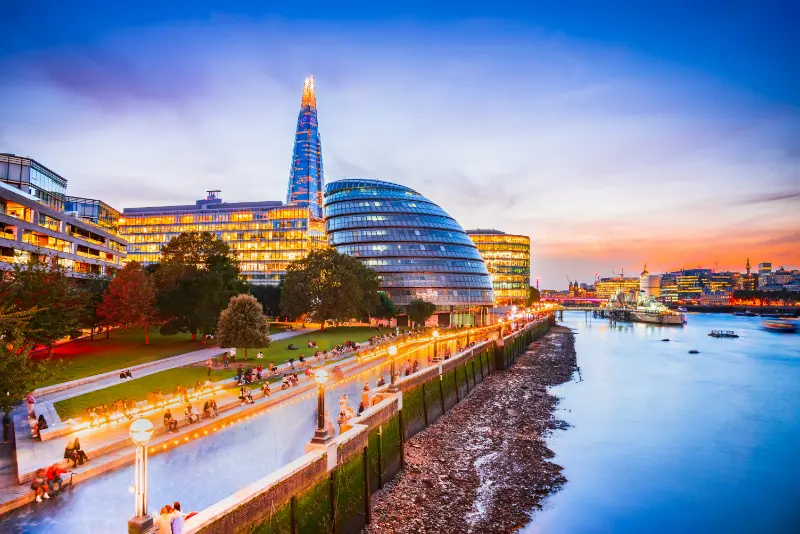
After leaving, walk south across Millennium Bridge and look back. That reverse view explains the cathedral’s relationship with the Thames more clearly than the view from the steps. It also creates a natural continuation toward Tate Modern and the South Bank instead of a dead-end attraction visit.
Accessibility and energy planning
The Cathedral Floor and Crypt can provide a substantial visit even for travellers who cannot or do not want to use the historic stairs to the upper galleries. If you are travelling as a mixed-mobility group, agree beforehand whether some people will climb while others remain below. This avoids pressure and keeps the visit enjoyable for everyone.
Do not combine a dome climb with an overambitious walking day if stairs are difficult for you. London rewards energy management. A shorter City loop after St Paul’s can be more memorable than pushing through five extra sights while exhausted.
Frequently asked questions
Can you enter St Paul’s for free?
Services are free to attend as worship. Sightseeing the cathedral as a visitor requires a ticket under normal arrangements.
Is the dome climb worth it?
For travellers comfortable with many steps and heights, yes: it combines architecture and a rare historic viewpoint. It is not essential to appreciate the cathedral.
How much time should I allow?
About 90 minutes is a sensible baseline. Allow closer to two hours if you climb slowly, listen to more of the guide or spend time in the Crypt.
What should I do afterwards?
Walk. Millennium Bridge, the Barbican, Postman’s Park, Bank, Leadenhall Market and the Tower area all fit naturally into the same day.
Why St Paul’s works best as part of a walking day
The cathedral is not isolated from London; it explains the district around it. Seen from the Thames, from narrow City lanes and from modern rooftops, the dome becomes a reference point you keep rediscovering. That is why the strongest visit begins before the ticket barrier and continues after you leave. Make St Paul’s the anchor, then use the streets around it to understand how old and new London have been built on top of each other.