
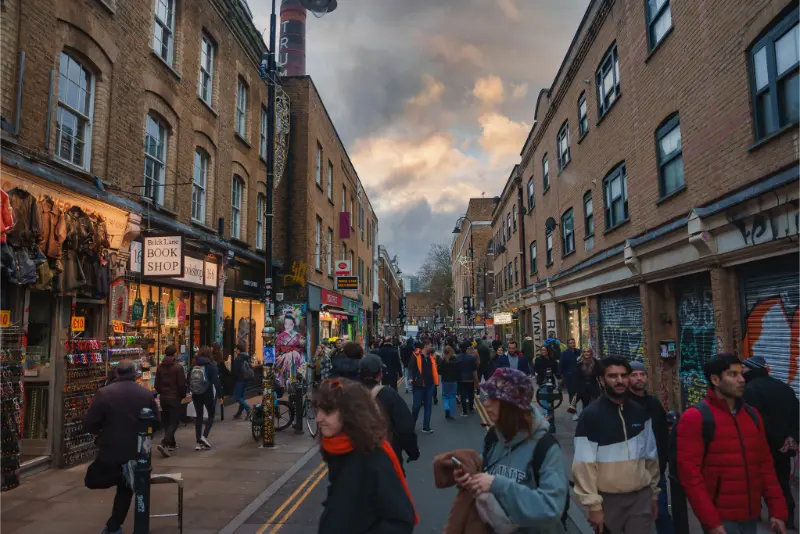
Shoreditch is one of the London neighbourhoods most damaged by simplistic descriptions. Call it “hipster London” and you miss its history; call it “the street-art district” and you turn a living area into an outdoor gallery; call Brick Lane a food street and you ignore the communities, migration and industry that shaped it. The interesting visit is the one that holds all of those versions together.
This route links Old Spitalfields Market, Brick Lane and Shoreditch’s side streets without pretending there is one fixed set of murals to find. Street art changes, businesses close, new cafés appear and construction alters sightlines. That instability is part of the neighbourhood. Pair this article with our London neighbourhoods guide and London markets guide.
| Best for | Street art, markets, food, nightlife, photography and urban culture |
|---|---|
| Useful stations | Liverpool Street, Shoreditch High Street, Aldgate East and Old Street |
| Best day | Market-focused weekends for energy; weekdays for easier walking |
| Route logic | Spitalfields → Brick Lane → side streets → Shoreditch core |
Start at Old Spitalfields Market
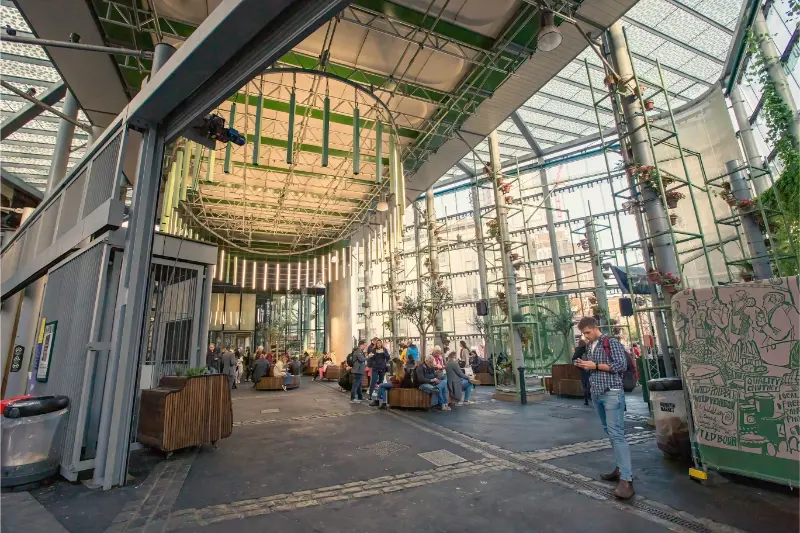
Old Spitalfields Market gives you a sheltered, structured beginning before the looser streets of Brick Lane. The current market combines stalls, shops and food beneath a historic market structure, with themed trading patterns on different days. The area has hosted market activity for centuries, even though the present experience is thoroughly modern.
Opening times vary by day and individual businesses keep their own schedules. Check current information rather than assuming every stall appears every day. Visit London currently lists daily opening with different hours across the week. If a particular antiques or makers market matters to you, verify it before travelling.
Walk toward Brick Lane through the streets, not only the main road
The walk from Spitalfields to Brick Lane is short, but the side streets provide much of the texture: former industrial buildings, small shops, old housing, religious architecture and layers of immigration. Keep your map in your pocket for a few blocks and let the street network lead you.
When you reach Brick Lane, do not expect one continuous market every day. Market activity is strongest at particular times, while shops, food businesses and the Old Truman Brewery area create activity throughout the week. The official London visitor information for Brick Lane Market is useful for current basics.
Street art: the wrong way and the better way
The wrong way is to arrive with a screenshot list of ten murals from a blog written two years ago and become annoyed when several are gone. The better way is to understand that impermanence is fundamental. Walk slowly, look above shopfront height, turn into legal walls and side streets, and accept that the route you see today may be different next month.
Do not photograph people as if they are part of the scenery, block business entrances or step into roads for the perfect angle. Street art is public-facing, but the streets are still workplaces and homes.
Brick Lane food is more complex than one “best” dish
Brick Lane’s food identity reflects migration and change. Bengali and Bangladeshi restaurants are central to its history, while bagel shops, cafés, bakeries, street-food traders and newer restaurants add other layers. Rather than hunting a single internet-famous stop, decide what you want from the meal: heritage, speed, atmosphere or experimentation.
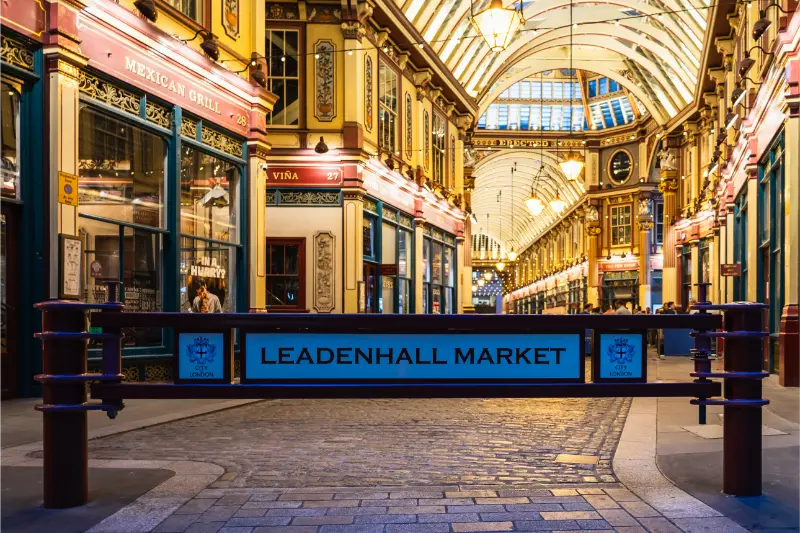
If you are already planning Borough Market on another day, use Shoreditch for something different. Our Borough Market guide focuses more on specialist food retail and a structured market environment; Brick Lane is about neighbourhood context as much as eating.
Markets: choose the day around your interests
Old Spitalfields, Brick Lane-area markets and specialist vintage or makers events do not all peak at the same time. Sunday is the classic high-energy choice around Brick Lane, but that comes with crowds. Thursday can be interesting for antiques at Spitalfields. Other themed events rotate.
If markets are only a secondary interest, visit on a quieter weekday and enjoy the streets without designing the entire day around stalls. A neighbourhood should not feel like a failed visit just because you missed one market session.
Shoreditch beyond Brick Lane
Continue west and north toward Redchurch Street, Boundary Street and the wider Shoreditch core. Independent retail, galleries, cafés, bars and converted industrial buildings create a different texture from Brick Lane. The area is heavily commercialised in places, but interesting details remain when you move one street away from the busiest routes.
For a longer walk, connect Shoreditch with Hoxton or continue south toward the City. Our City of London walking route creates an excellent contrast: contemporary East London followed by the formal financial core.
Street art tour or self-guided?
A good street-art guide adds artist context, techniques, local history and the reasons certain walls matter. That is more valuable than merely pointing at murals. Self-guided exploration works if you enjoy wandering and do not care about identifying every artist. Because the art changes, recent local expertise can genuinely improve the experience.
Before booking, check group size and whether the tour spends substantial time on history rather than using “street art” as a generic label for a neighbourhood walk.
Nightlife without making the whole visit about nightlife
Shoreditch changes after dark. Bars, clubs and restaurants create the energy many travellers expect, but the area can also become loud and crowded on Friday and Saturday nights. If nightlife is not your priority, visit from late morning through early evening and leave before the busiest period.
If you do stay late, plan the trip home before drinking. Know your nearest station and use normal big-city awareness. Our London transport guide covers contactless travel and late-day movement.
Where to stay in Shoreditch
Shoreditch can be an excellent base for travellers who value restaurants, bars, East London and quick access to Liverpool Street transport links. It is less suitable for light sleepers who book directly above nightlife streets. The word “Shoreditch” can also be used loosely in hotel listings, so verify the actual address.
Affiliate link. Dreaming London may receive a commission from qualifying bookings at no extra cost to you.
Common mistakes
- Expecting murals from old social posts to be permanent.
- Visiting only Brick Lane and claiming to have “done Shoreditch”.
- Ignoring local and migration history in favour of aesthetic labels.
- Planning a Saturday night visit when you actually dislike crowds and nightlife.
- Photographing residents or workers without normal courtesy.
How to read the neighbourhood’s layers
Look for buildings that reveal earlier uses: warehouses, brewery structures, market halls and places of worship reused by successive communities. Brick Lane’s history is not one story but a sequence of migrations and industries. Even without a formal history tour, noticing architecture prevents the area from becoming only a backdrop for murals.
Street names and building forms often reward a quick search after you notice something, but avoid spending the entire walk looking at your phone. Photograph the detail, keep walking, and read about it over coffee later.
A better route for photography
Start earlier than peak shopping and lunch hours, use Old Spitalfields for structured architecture, then move to Brick Lane and side streets while shutters and walls are still visible. Later, when the area becomes busier, concentrate on atmosphere rather than trying to produce empty-street images. Respect people who are working, eating or living in the frame; urban photography works best when it does not turn residents into scenery.
How Shoreditch fits with the rest of East London
Shoreditch can be the beginning rather than the whole day. Continue south into Spitalfields and the City for architectural contrast, north toward Hoxton for a more neighbourhood-focused walk, or east toward Bethnal Green if museums and local high streets interest you. The important thing is not to jump randomly across London after lunch.
For a first visit, I would keep the route compact and finish near Liverpool Street or Old Street. Both give straightforward onward transport without undoing the logic of the walk. If you still have energy, add one café or pub stop locally rather than another cross-city attraction.
Frequently asked questions
Is Shoreditch safe?
It is a busy central-east London area visited by large numbers of people. Use standard urban awareness, especially late at night and in crowded nightlife zones.
Is Sunday the best day?
Sunday is strongest for market atmosphere around Brick Lane but also one of the busiest. A weekday can be better for street art and neighbourhood walking.
How long do you need?
Three to four hours works well for Spitalfields, Brick Lane and Shoreditch. Add more time for shopping, a tour or nightlife.
Is Shoreditch good for families?
Daytime can work well with older children or teenagers interested in art and markets. Late-night Shoreditch is a different experience.
What makes Shoreditch worth the detour
Shoreditch is most interesting when you allow it to be inconsistent. Historic market streets sit beside highly polished developments; community histories coexist with nightlife branding; street art can disappear overnight. The goal is not to find an “authentic” version untouched by change. It is to notice how London constantly rewrites itself in a neighbourhood where that process is unusually visible.
Brick Lane on market day
For the difference between the Sunday street market, indoor vintage halls and food spaces, see our Brick Lane Market guide.
Separate Shoreditch from Spitalfields
For Old Spitalfields Market, Georgian East End history and Liverpool Street, use our Spitalfields and Liverpool Street guide.