
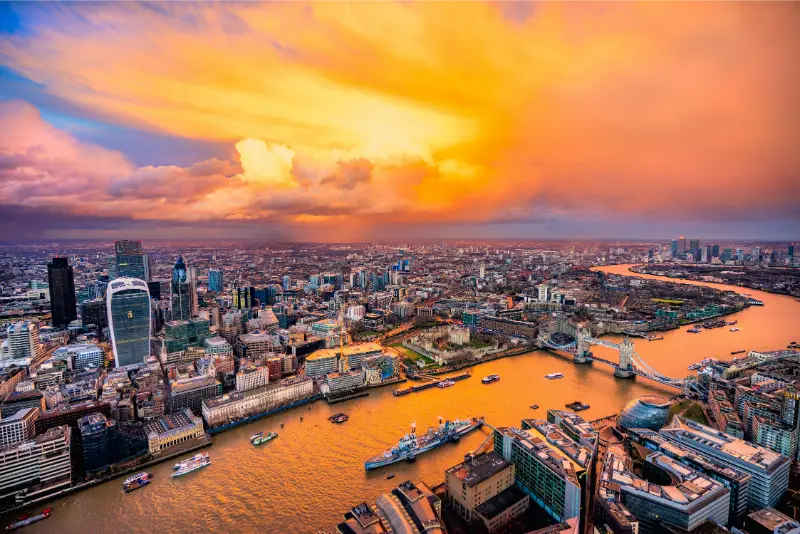
Tower Bridge is probably London’s most frequently misidentified landmark. Visitors sometimes call it London Bridge, photograph it from the river and assume the experience ends there. It does not. Tower Bridge is both a working movable bridge and a visitor attraction, with high-level walkways, glass floors and Victorian Engine Rooms that explain the engineering behind one of the city’s defining silhouettes.
The key question is whether you only want the classic exterior view or whether you are interested in how the bridge works. If engineering, architecture or unusual viewpoints appeal to you, going inside is worthwhile. If your schedule is already dominated by the nearby Tower of London, an exterior crossing may be enough. This guide helps you choose without overselling either option.
| Best for | Engineering, architecture, families, photography and Thames views |
|---|---|
| Interior visit | Allow roughly 60–90 minutes |
| Nearest stations | Tower Hill, London Bridge and Tower Gateway |
| Best pairing | Tower of London + Tower Bridge + a Thames or South Bank walk |
First, understand what your ticket actually covers
The Tower Bridge visitor experience begins in the towers and continues across the high-level walkways. The famous glass floors let you look directly down at traffic and river movement below. The route then continues toward the Engine Rooms, where the machinery that historically powered the bridge lifts is displayed. These are separate physical spaces, so do not assume you have finished when you leave the upper walkways.
The visitor attraction includes the North and South Towers, high-level walkways, glass floors and Engine Rooms. The current standard opening is 09:30–18:00 daily, with last entry to the Towers at 17:00; annual closures and special late openings can apply. Check Tower Bridge official visitor information for your date.
The glass floor is more interesting than the selfie
The glass floor is marketed as a thrill, but its real value is perspective. Looking down while buses, taxis, cyclists and boats move through the bridge turns a familiar postcard into a functioning piece of infrastructure. If you are uncomfortable standing on glass, you can still use the walkways without making that the centre of your visit.
For children, it is an easy hook into engineering. Ask them to watch how road and river traffic interact and then connect that observation with the Engine Rooms later. That makes the visit more coherent than treating each room as a separate attraction.
Do not skip the Victorian Engine Rooms
The Engine Rooms are where Tower Bridge becomes more than a viewpoint. The bridge opened in the late nineteenth century, when the growing East End and busy Pool of London created a difficult engineering problem: London needed a new river crossing without blocking tall-masted shipping. The machinery and interpretation here show how that problem was solved.
Even visitors who are not naturally interested in mechanics usually find the scale and physicality memorable. Allow enough time to look rather than rushing toward your next timed ticket at the Tower of London.
Can you watch Tower Bridge lift?
Yes, bridge lifts still take place for vessels that require passage. The official website publishes scheduled lift times. Watching from the riverside is free and can be one of the most satisfying “small” experiences in London because the landmark suddenly behaves like the machine it was designed to be.
Do not build an inflexible day around a single lift, because timings can change. If a lift coincides with your route, arrive a little early and choose a viewpoint from the north or south bank. The bridge deck itself is closed to road traffic during a lift, so the surrounding area can become busy.
Best free viewpoints of Tower Bridge
The north bank beside the Tower of London gives the classic composition with the bridge stretching east. The south bank near Potters Fields Park offers broad views and works especially well around sunset. Walking east or west along the Thames changes the alignment quickly, so you do not need professional equipment to find a less predictable photograph.
For a longer river walk, use our South Bank guide. It connects Westminster, cultural landmarks, Borough Market and Tower Bridge in a route that makes geographical sense rather than hopping between isolated photo spots.
Tower Bridge and the Tower of London: which comes first?
If you plan to enter both, I would usually place the Tower of London first, ideally early. The fortress is the more time-sensitive and mentally demanding attraction, and the Crown Jewels can become increasingly busy. After two or three hours there, Tower Bridge works well as a change of pace: views, engineering and movement instead of another dense historical complex.
Our Tower of London visitor guide explains a practical order inside the fortress. If you are only seeing Tower Bridge from outside, reverse the logic: photograph the bridge early, then enter the Tower when your ticket requires.
Is Tower Bridge good with children?
Yes, particularly for children who like machines, heights or transport. The visit has a clear physical sequence and breaks up reading with views and interactive moments. Younger children may care more about the glass floor and bridge mechanics than Victorian construction history, which is completely fine. Let the structure itself do some of the teaching.

Combine it with a river boat rather than another large museum if you want a family-friendly day with varied energy. Our London by boat guide explains how river services can be part of normal sightseeing.
When is the best time to go inside?
Morning is usually easiest if you want fewer people around the glass floor. Late afternoon can produce better light over the river, especially outside the bridge, but attraction closing times matter more in winter. The interior is weather-resistant, making Tower Bridge a useful choice on an unsettled day, though outdoor viewpoints are still a large part of the experience.
If photography matters, separate “going inside” from “best exterior light”. You can cross the bridge during the day and return to the south bank after dinner without buying another ticket.
Tickets and tours
Official self-guided entry is enough for most visitors. Guided tours add value if engineering or the bridge’s working history is the main attraction. Some third-party products combine Tower Bridge with the Tower of London, so check duration and inclusions carefully: similarly named tours can differ dramatically.
Affiliate link: Dreaming London may receive a commission if you make a booking, without increasing your price.
Common mistakes
- Calling Tower Bridge “London Bridge” and then navigating to the wrong place.
- Visiting the upper walkways but forgetting that the Engine Rooms are part of the experience.
- Scheduling the Tower of London and Tower Bridge too tightly together.
- Expecting every bridge lift to happen exactly as published without checking again.
- Only photographing the bridge from one bank.
How to photograph Tower Bridge without repeating the same image
Use the bridge as a moving subject rather than a fixed postcard. From the north bank, include the riverside walls and Tower of London context. From Potters Fields on the south side, step back enough to show the full span. From London Bridge, the more distant angle places Tower Bridge inside the wider Thames corridor. After dark, reflections and traffic add a completely different character.

If a bridge lift is scheduled, choose your bank before it starts. Moving across the bridge at the last minute can become awkward because road and pedestrian flows change around the lift. Arrive early, then watch the mechanical sequence rather than concentrating only on the raised bascules.
A useful half-day route
For a compact but satisfying visit, start at Tower Hill, walk around the Tower of London exterior, enter Tower Bridge, finish through the Engine Rooms, then continue west along the south bank to Borough Market. This route avoids backtracking and combines history, engineering and food. If you have already visited Borough Market, continue west toward Tate Modern or cross London Bridge into the City instead.
Frequently asked questions
Can you walk across Tower Bridge for free?
Yes. The public road-level pavements are free. The ticket is for the interior visitor attraction, including the high-level walkways and Engine Rooms.
How long does the paid visit take?
About an hour is possible, but 60–90 minutes is more comfortable if you read exhibits and spend time in the Engine Rooms.
Is the glass floor compulsory?
No. You can enjoy the high-level walkways without standing on the glass panels.
Is Tower Bridge worth entering after the Tower of London?
It can be, especially if you want views and engineering. If history overload has set in, simply crossing the bridge and walking the river may be the better choice.
The reason to visit inside
Tower Bridge is at its best when it stops being a logo and becomes a working object. The glass floors show the city moving beneath you; the Engine Rooms reveal the machinery behind the spectacle; scheduled lifts remind you that the bridge still serves river traffic. Even if you ultimately decide not to buy a ticket, understanding those layers will make the exterior more meaningful when you encounter it from the Thames.