
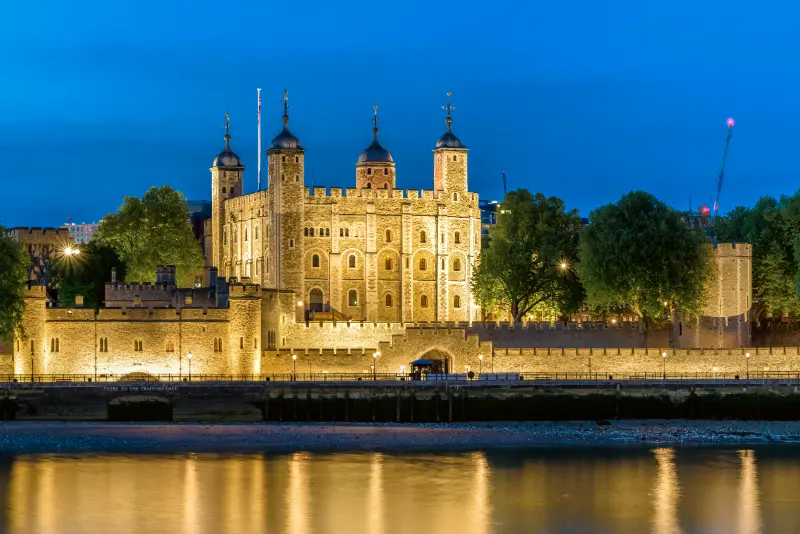
The Tower of London is one of the few London attractions where arriving without a strategy can cost you more than money: it can cost half a day in queues and indecision. The site is a fortress, palace, prison, armoury, treasury and place of execution layered across nearly a thousand years. A strong visit needs priorities. For most first-time visitors, that means seeing the Crown Jewels early, joining a Yeoman Warder tour, entering the White Tower and leaving enough time to walk the walls without rushing.
| Best for | Medieval and royal history, Crown Jewels, families, first visits |
|---|---|
| Minimum time | 3 hours; 4 hours is more comfortable |
| Nearest stations | Tower Hill, Tower Gateway, London Bridge across the river |
| Best tip | Arrive near opening and do the Crown Jewels before the queue grows |
Why the Tower is more than one building
The Tower of London is a complex of towers, walls, courtyards and exhibitions rather than a single castle interior. The central White Tower dates to the Norman period, but the site expanded over centuries and served different royal and state functions. That is why a visit can feel fragmented if you follow signs randomly.
Before entering, decide your top three priorities. For a typical first visit: Crown Jewels, Yeoman Warder tour, White Tower. Everything else becomes flexible. This prevents the common problem of spending too long in a secondary exhibition and then discovering that you have forty minutes left for the parts you came to see.
Crown Jewels first: the simplest queue strategy
The Crown Jewels are included with standard Tower admission and are one of the busiest parts of the site. Historic Royal Palaces advises advance booking for busy periods, and the exhibition itself can develop long lines even after you have entered the fortress.
If seeing the jewels matters to you, head there early before wandering elsewhere. This is not about racing through the Tower; it is about doing the least flexible element first. Afterward the rest of the site becomes easier because most other spaces absorb visitors more naturally.
Take a Yeoman Warder tour for narrative
Yeoman Warder tours are included with admission subject to availability and are one of the best ways to turn a collection of towers into a coherent story. The tours combine major historical episodes with the lived tradition of the fortress. They are popular and can be crowded, but even visitors who normally avoid guided tours often find the context useful here.
Check the current schedule when you enter and build around it. If you dislike large groups, listen for part of the tour and then explore independently. The objective is not to complete every activity; it is to understand why the site mattered.
White Tower and armour: give it real time
The White Tower is the visual and historical core of the fortress. Its interior includes the Chapel of St John and major armour displays. Stairs, circulation and crowds mean the visit can take longer than expected, especially with children or anyone who needs a slower pace.
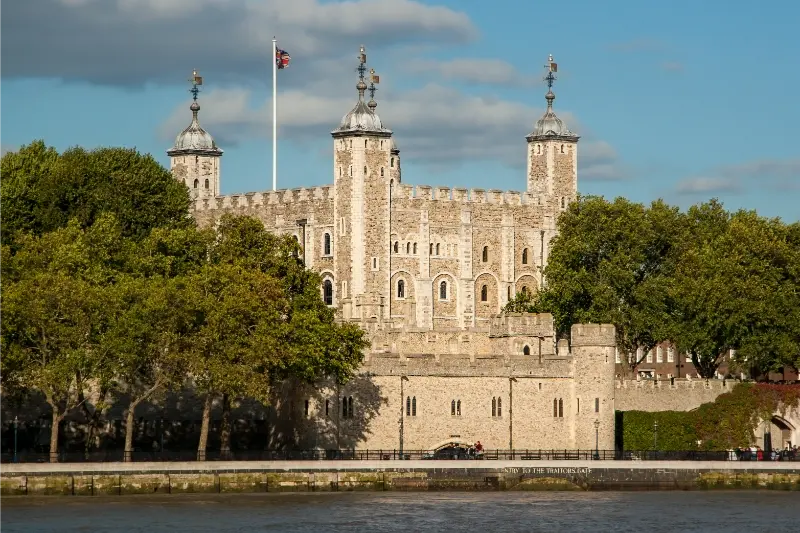
Do not leave the White Tower until the final half hour. It deserves to be one of your anchors. If mobility access is important, review the official accessibility information in advance because the historic fabric creates limitations in some parts of the site.
Ravens, walls and smaller towers
The ravens are part of Tower tradition and one of the most recognisable living features of the site. The popular legend linking their presence with the survival of the kingdom should be understood as legend rather than hard historical fact. The Tower’s interest lies in how myth, ceremony and state history overlap.
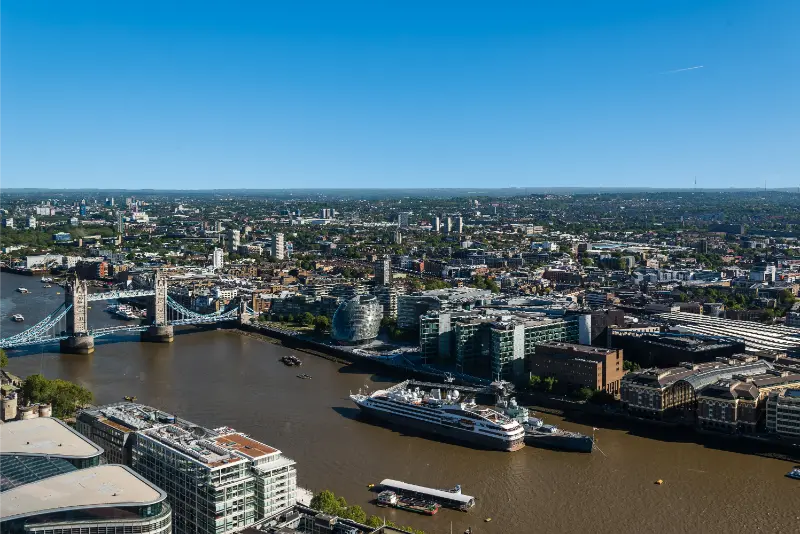
Walking the battlements and smaller towers helps visitors understand the defensive geography. Look outward as well as inward: Tower Bridge, the Thames and the modern City skyline create one of London’s clearest contrasts between medieval fabric and contemporary city.
Executions and imprisonment: keep the history precise
The Tower is often marketed through stories of torture and execution, but the reality is more specific. Many famous prisoners were held here, and several high-profile executions took place within the Tower, while far more public executions occurred nearby on Tower Hill. Good interpretation distinguishes documented events from later legend.
This matters for families too. The Tower can be dramatic without becoming sensational. Focus on real people, political power and how the fortress changed function over time rather than presenting every dark story as entertainment.
What to skip if you only have two hours
Two hours is short. Prioritise the Crown Jewels, one section of the fortress that interests you most, and the exterior courtyards. If a Yeoman Warder tour fits perfectly, take it; if not, do not sacrifice everything else waiting for one. Leave the gift shop until the end.
If you have three to four hours, the visit becomes far better. London is full of attractions that can be sampled quickly; the Tower is not one of them. On a first trip, it is usually smarter to do the Tower properly and postpone a minor attraction than to rush both.
Pair the Tower with the river, not another huge interior
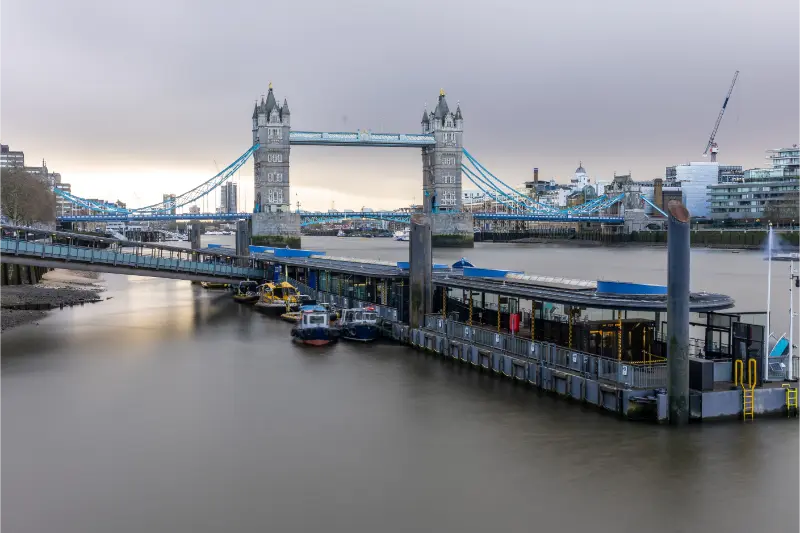
After the Tower, walk to Tower Bridge, cross toward the south bank, or take a river service. Borough Market and the South Bank are natural continuations if you still have energy. Another major paid attraction immediately afterward can feel heavy after several hours of dense history.
Our London by boat guide and South Bank guide show how to turn the Tower into the anchor of a wider Thames day. If this is your first visit, it also fits naturally into our essential London attractions guide.
A route inside the Tower that reduces backtracking
If you enter near opening and the Crown Jewels are a priority, consider seeing them early before spending time on the outer walls and exhibitions. A Yeoman Warder tour adds stories and orientation, but it is not the only way to understand the site; independent visitors can combine the White Tower, battlements and smaller towers at their own pace. The official guidance suggests allowing roughly two to three hours, and that is a realistic minimum for a first visit that does more than photograph the ravens.
The Tower’s own visitor information notes that afternoons after midday can be quieter overall. That creates two sensible strategies: arrive early to put the Crown Jewels first, or choose a later entry if lower general crowd levels matter more and you have enough time before last admission. Do not book the final slot of the day if you want a Yeoman Warder tour, multiple towers and a slow visit.
What to know before security
Large suitcases and rolling luggage are not permitted, and the Tower does not provide left-luggage storage. That matters on hotel-change or departure days. Historic surfaces, spiral stairs and narrow passages also make access uneven; travellers with mobility needs should read the official accessibility information rather than assuming every section follows a modern museum route.
For ticketed tours and combination products, compare Tower of London options on GetYourGuide. The standard admission already includes the Crown Jewels and, subject to availability, the Yeoman Warder tour, so check what a third-party product genuinely adds before paying extra.
Crown Jewels, Yeoman Warders and the order of your visit
The Crown Jewels are the part most likely to create a visible queue, but they are not the whole reason to come. If the line is short when you arrive, taking advantage of that can simplify the rest of the visit. If it is already long, a Yeoman Warder tour or the White Tower can give the crowd time to shift. The included Yeoman Warder tours are valuable for orientation and storytelling, but they follow a group pace; history enthusiasts may want to revisit key spaces independently afterward.
Also look down as well as up. Cobbles, slopes and historic staircases affect comfort, especially after several days of walking in London. Good shoes and a realistic route are not trivial details here. If someone in your group has limited mobility, decide in advance which sections matter most rather than discovering at each tower that the next staircase is impractical.
Frequently asked questions
How long should you allow for the Tower of London?
Three hours is a sensible minimum for a first visit. Four hours gives you more room for the Crown Jewels, a Yeoman Warder tour, the White Tower and walls without rushing.
Are the Crown Jewels included?
Yes, entry to the Crown Jewels exhibition is included in standard Tower admission.
Do you need to book in advance?
You can sometimes buy on the day, but official guidance recommends advance booking during busy periods. Popular dates can sell out or develop long queues.
Is the Tower good with children?
Yes, especially for children interested in castles, armour and dramatic history, but the site involves substantial walking, stairs and dense interpretation. Choose a few stories rather than trying to cover everything.
Official information and final planning note
For details that can change — opening times, temporary closures, booking rules, access arrangements and special events — check the official pages before travelling: Historic Royal Palaces – Tower of London, Tower of London tickets and prices.
The Tower deserves enough time to let its layers accumulate: fortress, palace, prison, armoury, mint and ceremonial space. A focused route and realistic timing reveal far more than racing from the Crown Jewels to the exit.