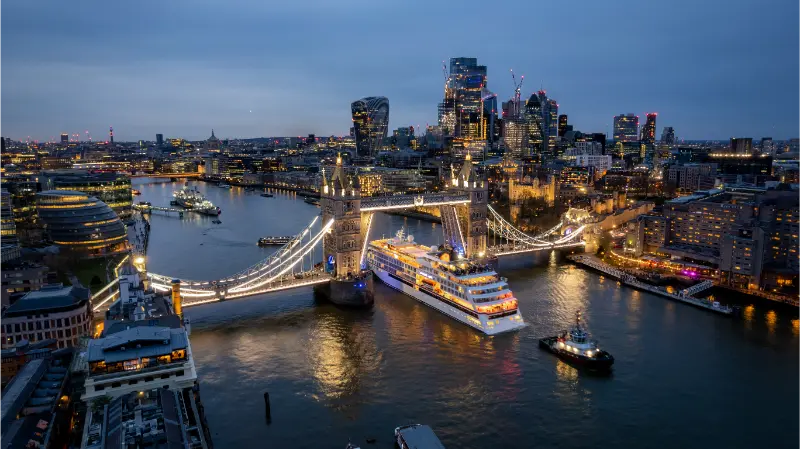
Seeing London from the Thames changes the city’s geography. Landmarks that feel disconnected on the Tube line up along the river, bridges become reference points and the transition from Westminster to the City and Docklands is easy to understand. River travel is not always the cheapest or fastest option, but it can turn transport time into sightseeing.
River buses versus sightseeing cruises
Scheduled river buses are transport services with multiple piers, while sightseeing cruises are designed around commentary, slower pacing or fixed tourist itineraries. Neither is automatically better. Choose a river bus when the boat is part of getting from A to B; choose a sightseeing cruise when narration or a dedicated cruise experience is the goal.
The most useful visitor route: central London to Greenwich
A journey from Westminster or the central piers toward Greenwich is one of the strongest first-time uses of the river. You pass or see major landmarks along the way and arrive in a district that can fill half a day. Return by DLR or rail to experience a completely different transport mode.
TfL’s visitor information notes that regular river services operate across multiple piers along the Thames. Routes, stopping patterns and fares can change, so use the current official river map rather than memorising an old timetable.
- Destination: Greenwich for Cutty Sark area, market, maritime museums and park.
- Return: DLR gives views of Docklands and connects back into the Underground network.
- Official maps: TfL visitor maps.
A short river ride can be enough
You do not need a long cruise to benefit from the river. A shorter hop between central piers can break up a walking day and give you a new perspective on the South Bank, bridges and Westminster. It is particularly useful when feet are tired but you still want to keep sightseeing.
Weather and seating
Open rear or upper deck areas are excellent in dry weather but can be windy even when central streets feel mild. Bring an extra layer. If photography matters, board early enough to choose a window or outdoor position, but do not block aisles and doors.
Payment and ticketing
Ticketing rules differ between operators and products. Contactless payment may be accepted on some scheduled services, but daily caps and fare structures are not necessarily identical to Tube and bus travel. Check the operator and TfL information for the exact service you plan to use.
This is one reason not to write a trip budget using one old fare found on a blog. Verify on the day or shortly before travel.
A complete river day itinerary
Start in Westminster, walk the South Bank to London Bridge, pause at Borough Market or Bankside, then board a river service east to Greenwich. Explore the maritime centre and Greenwich Park, then return by DLR. This creates a day with walking, food, a boat, a viewpoint and two distinct parts of London without constant Tube transfers.
- Morning: Westminster → South Bank walk.
- Midday: Bankside/Borough area.
- Afternoon: boat to Greenwich.
- Evening: DLR back toward Canary Wharf or central London.
When the river is not the best choice
If you have a timed attraction across town, use the fastest reliable transport rather than forcing a boat ride. River services can be affected by weather, pier closures or operational changes. Treat the boat as a deliberate experience, not a universal substitute for the Underground.
- For general transport: London transport explained.
- For Greenwich details: use our neighbourhood and walking guides to build the rest of the day.
- For children: river travel can be a useful sightseeing break between walking-heavy sections.
What the River Bus actually is in 2026
London’s scheduled River Bus network is operated by Uber Boat by Thames Clippers. TfL currently describes services calling at 24 piers between Putney in the west and Barking Riverside in the east. This is useful because it means the river is not only a central sightseeing loop: it can connect neighbourhoods across a much larger stretch of London.
For visitors, the practical core is still the Central and East sections around Westminster, Embankment, Bankside, London Bridge, Tower, Canary Wharf and Greenwich. Boats are covered, most have a small outside deck, and TfL states that River Bus boats are wheelchair accessible with ramps used for boarding. Always check the specific pier and service if accessibility is essential.
Current official information: TfL River Bus.
Contactless and Oyster: useful, but the river has its own fare logic
TfL confirms that contactless and Oyster pay as you go can be used on Uber Boat by Thames Clippers. You touch in when boarding and touch out at the end, including at interchanges. The important detail is that River Bus uses its own zonal fare structure, so do not assume the same daily cap rules as ordinary Tube and bus travel.
If budget is the priority, compare the boat fare with the equivalent Tube or DLR journey. If the boat replaces a sightseeing cruise and transport journey at the same time, the value calculation changes completely. This is why the river can be a smart splurge even when it is not the cheapest way to move.
Westminster to Greenwich: what you actually see from the water
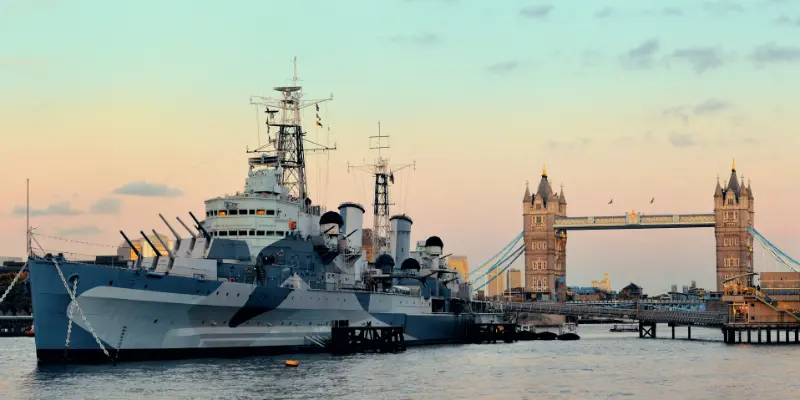
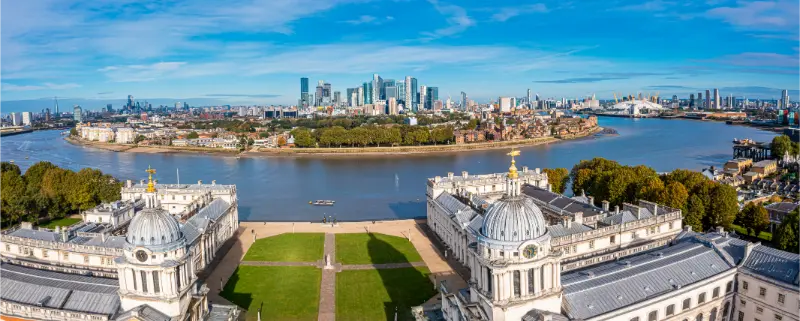
The central-to-Greenwich journey works because the city changes continuously. Westminster and the London Eye give way to the South Bank, Bankside and St Paul’s sightlines; farther east, Tower Bridge and the Tower of London mark the transition toward the old docks and modern Canary Wharf. By the time you reach Greenwich, the river has explained London’s geography far better than an Underground journey could.
Once there, use our Greenwich guide, Cutty Sark guide and Royal Observatory guide to decide how much of the afternoon to spend ashore.
Canary Wharf as a useful intermediate stop
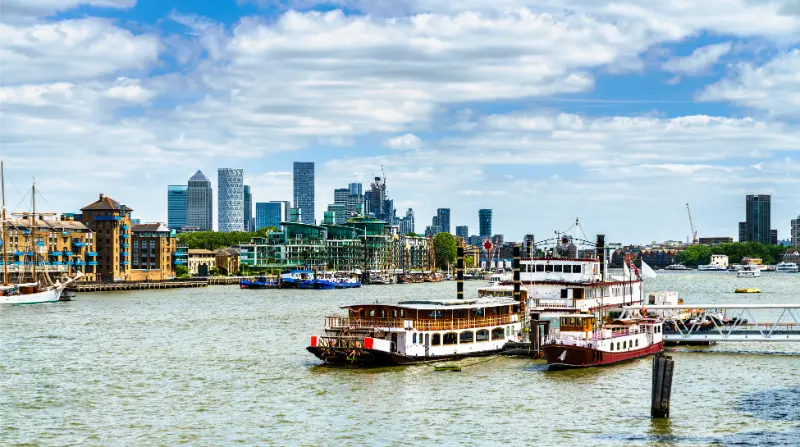
Canary Wharf can break up a long eastbound river journey and show a side of London that many first-time visitors miss. From the pier, the modern financial district contrasts sharply with the older City skyline you have just passed. London Museum Docklands, at West India Quay, adds the historical context of trade, docks and migration behind that transformation.
This combination is particularly strong for repeat visitors: boat from central London, Docklands museum and waterside walk, then continue by DLR, Elizabeth line or another river service. It turns transport into a narrative about how London expanded eastward.
River Bus or sightseeing cruise for families?
Families often enjoy the River Bus because movement is part of the experience and there is no expectation to sit silently through long commentary. A sightseeing cruise can be better when children are old enough to enjoy stories about landmarks or when the adults want narration without researching what they are seeing.
Weather matters less than many people assume because the boats are covered, but outside decks can be windy. Keep coats accessible rather than buried under luggage. If anyone is prone to motion sickness, the Thames is generally calmer than open water but conditions can still vary.
An evening boat ride can replace a paid viewpoint
After dark, the value of the river is not height but movement: illuminated bridges, the London Eye, St Paul’s sightlines and the City towers appear and disappear as the boat turns. For some travellers, that is more memorable than paying for another static skyline platform.
Check the last useful service for your route before committing to an evening plan. River timetables are not the same as the Night Tube, and pier or service changes can affect the return journey.
Choosing the right pier saves more time than choosing the “best” seat
Central London has several useful piers, and the nearest one to your current route is usually the right one. Westminster works naturally after Parliament; Embankment fits Trafalgar Square and Covent Garden; Bankside fits Tate Modern and Shakespeare’s Globe; Tower fits the Tower of London and Tower Bridge. Walking twenty extra minutes to a different pier rarely improves the river experience enough to justify the detour.
Check the live stopping pattern because not every service calls at every pier. If you are travelling to Greenwich for a timed attraction, leave a buffer rather than relying on the final theoretically possible boat.
Where to sit for views and photography
Outdoor deck space is limited on many River Bus boats, so you may not always get the position you imagined. Windows still provide strong views, but reflections can be a problem for photography. A polarising filter can help; otherwise hold the camera close to the glass and avoid bright clothing reflecting into the frame.
The best side of the boat changes as the river bends. Do not spend the entire journey chasing one rail. The value of the trip is the sequence of views, and most major landmarks can be seen from different angles as the boat approaches and passes them.
Accessibility is one of the River Bus strengths
TfL states that Uber Boat by Thames Clippers vessels are wheelchair accessible and use ramps for boarding, and most boats have accessible toilets. Individual pier access still matters, however, so check the exact origin and destination if step-free travel is essential. Water levels and operational conditions can also affect boarding procedures.
For a broader step-free itinerary, combine this information with our Accessible London guide rather than treating the river in isolation.
River timetables and fares are separate from most Tube fare assumptions. Check TfL and Uber Boat by Thames Clippers for the sailing you intend to use.
Cruises versus River Bus
For a narrated sightseeing experience rather than public transport, compare Thames cruises on GetYourGuide. Compare the boarding pier and route carefully so the cruise fits the rest of your day.